
Matsushima Bay
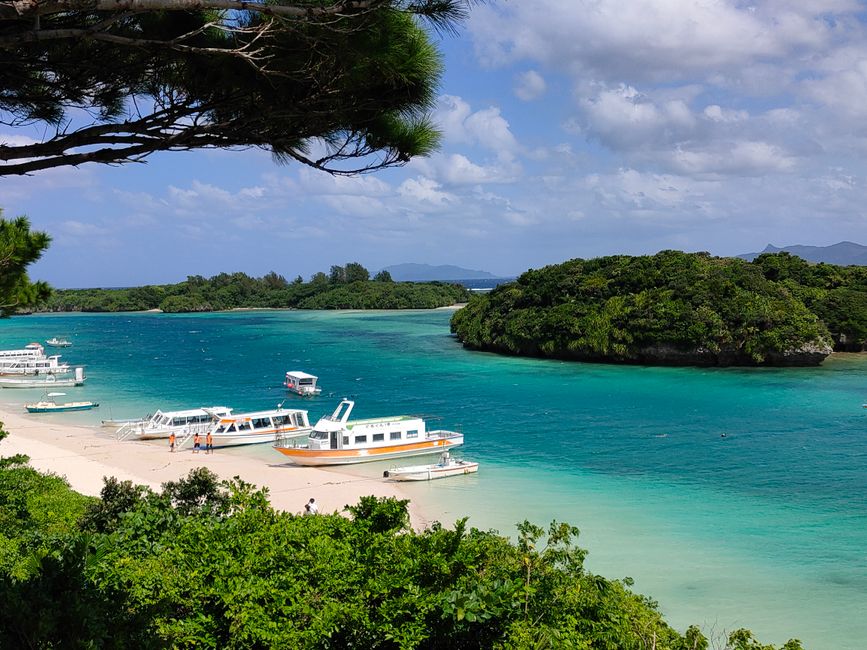
Matsushima Bay (松島湾) is one of Japan’s three most scenic landscapes (Nihon Sankei), alongside Itsukushima Bay (Miyajima) and Amanohashidate. It is home to more than 260 islands covered with centuries-old pine trees.
Main sights:
- Godai-dō (1604) — Sacred pavilion representing the five Buddhist elements (earth, water, fire, wind and sky).
- Zuigan-ji Temple (828) — Zen temple designated a national treasure, with refined Momoyama architecture.
- Matsushima Tower — Observation deck on Oku-shima Island.
- Boat cruise — 50-minute tour of the bay (1,500 yen).
- Fukuura Twin Islands — Connected by a red bridge.
Matsushima is 40 minutes from Sendai by JR Senseki Line train. See our seasonal guide.
Aoba Castle and the history of Date Masamune
Aoba Castle (青葉城, Aoba-jō) was built in 1601 by the famous warlord Date Masamune (1567–1636), nicknamed the “One-Eyed Dragon” after losing his right eye to smallpox. He replaced it with a glass or metal eye, and is often referred to as the “one-eyed dragon”.
Notable sights:
- Masamune Statue — Equestrian bronze statue located in the castle park, with views over the city.
- Goshōnin Shrine — Mausoleum of Masamune and his father.
- Castle reconstruction — Tower rebuilt in 2022.
- Wakamiya-jinja — Shrine associated with the Date clan.
The original castle was destroyed in 1871. The present-day park (Aobayama-kōen) offers panoramic views over Sendai. See our samurai guide.
Gyutan and Sendai’s food scene
Sendai is famous for its gyutan (牛タン, beef tongue), invented in 1948 by the Rikyu restaurant during post-war reconstruction.
Culinary specialities:
- Gyutan-yaki — Slices of beef tongue grilled over charcoal, served with rice, oxtail soup and pickles.
- Sasa-kamaboko — Fish cakes shaped like bamboo leaves.
- Hiyashi-chuka — Cold summer noodles, a Sendai speciality.
- Kakunizakana — Traditional New Year’s dish.
- Sake — Historic breweries such as Urakasumi and Nanbu-Bijin.
More than 100 restaurants specialising in gyutan in Sendai. See our guide to Japanese cuisine.
Sendai’s Tanabata Festival
The Sendai Tanabata Matsuri (仙台七夕まつり) is one of the three biggest festivals in Tōhoku, held every year from 6 to 8 August. It dates back to the late 16th century, under Date Masamune.
Features:
- Paper decorations (kazari) — More than 3,000 giant, colourful decorations suspended along the shopping streets (Ave Arcades).
- Seven streamers — Seven strips of paper symbolising the seven stars of the Plough.
- 3 million visitors over three days.
- Traditional parades with floats and dancers.
See our festival guide and our guide to fireworks.
Getting to Sendai
Sendai is accessible from Tokyo and northern Japan:
- Tōhoku Hayabusa Shinkansen — From Tokyo in 1 hour 30 minutes (covered by the JR Pass).
- Yamabiko Shinkansen — From Tokyo in 1 hour 40 minutes.
- Plane — Sendai Airport (SDJ) is 25 minutes away by train, with flights from Tokyo Haneda (1 hour), Osaka Itami (1 hour 15 minutes), Sapporo (1 hour 10 minutes), Nagoya (1 hour 15 minutes) and Hiroshima (1 hour 20 minutes).
- Bus — Tokyo–Sendai express bus in 5 hours 30 minutes.
The JR Pass covers the Tōhoku Shinkansen. See our Japan Rail Pass guide.
Classic combinations: Tokyo + Sendai + Hirosaki + Aomori (northern Tōhoku itinerary, 5–7 days).
Best times to visit: August (Tanabata), April–May (sakura), October (momiji). See our seasonal guide.
See our hotels in Sendai.
Also worth discovering
Continue exploring Japan with our related guides.