Shirakawa-go: Visit the Gasshō-Zukuri Village
Discover Shirakawa-go, a UNESCO-listed Japanese village with gasshō houses, Alpine scenery and practical advice for planning your visit.
Taking the train is the simplest way to travel from Kyoto to Nara: compare JR and Kintetsu services according to your arrival station and the places you want to visit. Journey times and ticket prices depend on the service you choose; check current train times and fares with the operator before setting off. A day trip lets you discover Nara Park, Todai-ji and, if time allows, Kasuga Taisha.

From Kyoto, two railway networks take you to Nara: JR and Kintetsu. The best choice does not depend only on the time spent on board; the location of the arrival station also matters, as it may make the start of your visit more direct or require a walk and an additional journey.
The JR line connects Kyoto Station with JR Nara Station. Kintetsu, meanwhile, serves Kintetsu-Nara Station, which is conveniently located for walking to the main tourist areas. Before buying a ticket, locate your first stop on a map: arriving close to the park may be more convenient if Todai-ji is your priority, while a different programme may justify arriving elsewhere.
The trains available, stops and journey times vary according to the service. To find the journey time and ticket price for your visiting date, check the latest information with JR West or Kintetsu. As timetables and fares may change, it is better to check them when preparing your journey rather than rely on an old indication.
Passes do not cover all networks in the same way. If you are travelling with a regional or national transport pass, check exactly which lines are included and whether any supplements apply; the Japan Rail Pass guide explains the principles of this pass, but does not replace checking its current conditions.
There is no single journey time for travelling from Kyoto to Nara: it varies according to the operator, train type, stops and operating conditions. Compare the complete route, not just the time shown between the stations. Arriving closer to your first visit may make up for a slightly different train journey.
The ticket price also depends on the option chosen and the type of transport pass used. To avoid an unpleasant surprise, check the fare for the exact service and confirm whether a pass covers this journey. Tickets and passes may have different rules; do not assume that a pass valid on one line will also work on the other.
Before leaving Kyoto, search for the route using the operator’s journey planner or app, then confirm the train times for the relevant day. This is particularly useful if you want to start early, return after an extended visit or coordinate the train with another stage of your trip.
The train is part of a wider transport network: connections, transport cards and local services may complete the journey. To plan the other stages of your trip, see the advice on getting around Japan and remember that the conditions for using transport passes can change.
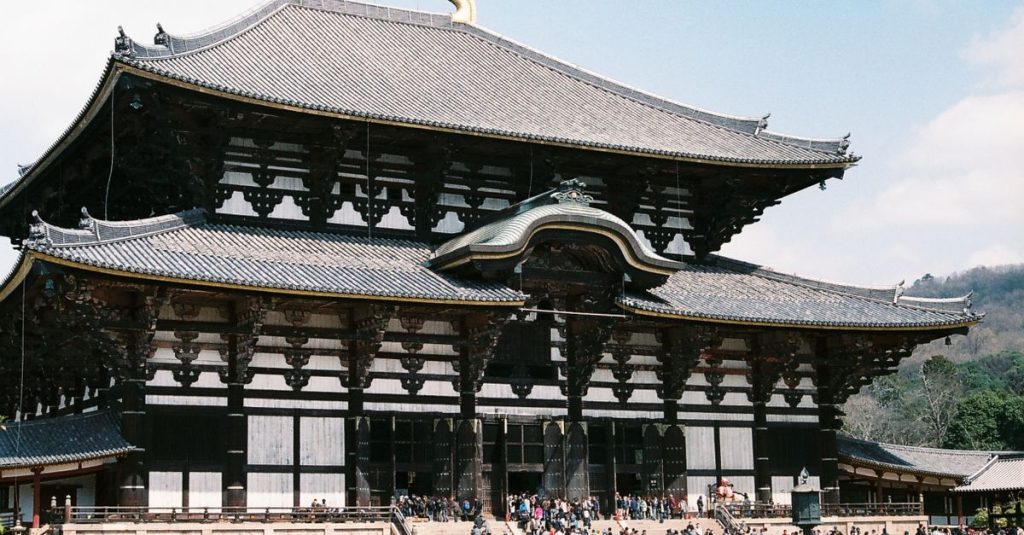
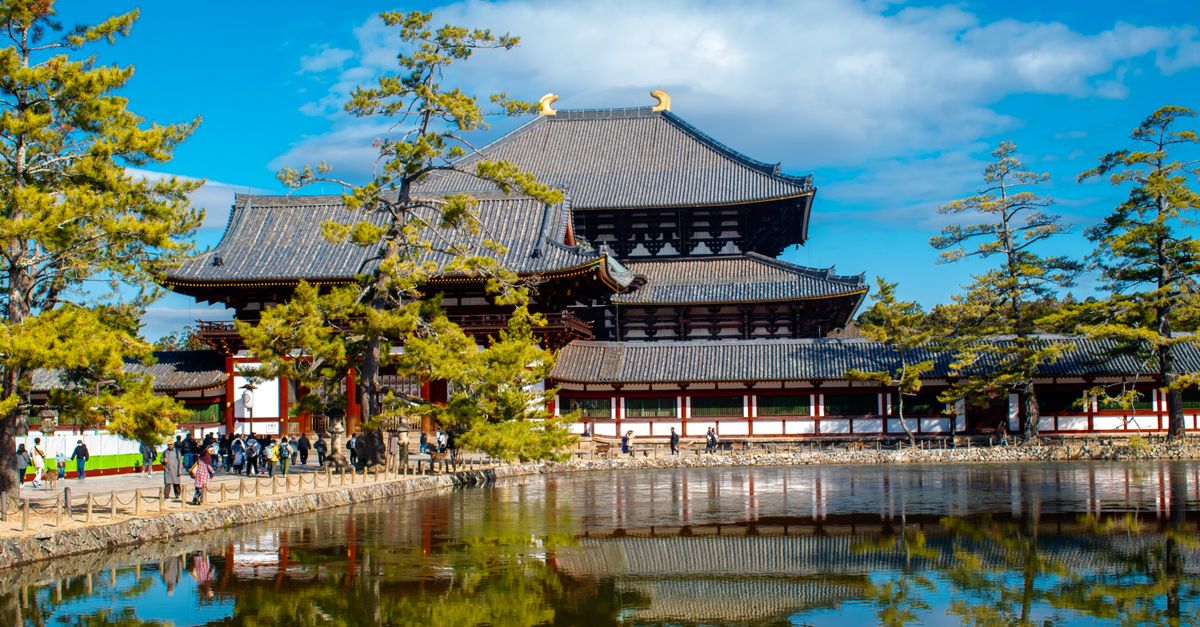
For a day trip, build your itinerary around a few major sights rather than trying to see everything. From the arrival station, head towards Nara Park, then spend time at Todai-ji and its Great Buddha. The temple complex is extensive and deserves an attentive visit: allow time to walk around, take in the buildings and enjoy the site without turning the day into a race.
You can then continue to Kasuga Taisha, known for its lanterns and wooded setting. The order of your visits depends on your station and your pace; checking a map before departure helps limit detours. If you would like to add Naramachi, the former merchant district with its lanes and traditional houses, leave this stop until the end or reduce the number of religious sites you visit.
Opening hours and access conditions may change depending on the site or period. Check them with the relevant establishments before finalising your programme, especially if a particular visit is the central focus of the day. For an overview of Nara’s role in the country’s history, this article on Nara, Japan’s former capital, provides useful context without requiring an additional detour.
A successful day comes down to a simple choice: it is better to visit a few places with time for each one than to multiply distant stops. The park, Todai-ji and Kasuga Taisha form a coherent route, to which Naramachi can be added depending on your energy and the timetable.
To book tours and activities in Kyoto ahead, see the options on Klook.
To get online as soon as you land, a Japan eSIM can be installed before you leave, with no need to look for a local SIM card.
Nara’s deer are wild, even though they are accustomed to the presence of visitors. Keep a reasonable distance, do not chase them and follow the instructions displayed on site. Interactions should remain calm: an animal approaching you is not an invitation to touch it or hold it for a photograph.
If you give them suitable crackers, buy them from authorised vendors and follow the local guidance. Put away food and packaging, avoid provoking the animals and do not allow children to approach them without supervision. These actions reduce stressful situations for both the deer and visitors.
The park is more than an animal attraction: it connects several historic sites and invites you to walk through a landscape where the city, wooded areas and temples meet. To prepare for a supervised activity or learn more about visiting rules, see the information on activities involving Nara’s deer and the guide dedicated to Nara deer.
The right approach is to regard the deer as animals to observe, not as props for your visit. This makes the walk more enjoyable and preserves the character of the park.
Before setting off, make sure you distinguish between JR Nara Station and Kintetsu-Nara Station: they are not interchangeable for a walking itinerary. Note the exact name of your return station and check its location in relation to your final stop. This avoids ending the day in the wrong area or having to improvise your journey.
For the return journey, check train times on the day and identify several possible departures rather than relying on a single service. If you have planned dinner or another activity in Kyoto, allow extra time to reach the station, buy your ticket if necessary and find the correct platform. As timetables and fares are variable, the operator’s information remains the reference.
A supplementary stop at Fushimi Inari can be considered on the way or at another stage of your trip, but check the connections before adding it. The shrine attracts many visitors and deserves time, particularly to walk along its torii paths. The guide to Fushimi Inari in Kyoto helps you prepare for this visit without confusing it with your Nara itinerary.
If you want to stay overnight, compare neighbourhoods and transport access according to your plans for the following day. A night in Nara may suit you if you want to explore at a slower pace; for a simple day trip, the train from Kyoto is generally enough to organise a return journey, subject to the available timetable.
JR and Kintetsu both offer journeys between Kyoto and Nara. Compare the arrival station, stops, timetable and ticket price according to your itinerary.
The journey time depends on the service chosen and its stops. Check the timetable for your date with JR West or Kintetsu.
Yes. Nara Park, Todai-ji and Kasuga Taisha make a coherent itinerary; add Naramachi if time and the timetable allow.
JR Nara Station and Kintetsu-Nara Station are in different areas. Choose according to your first stop, your final visit and your return train.
Updated on 19/11/2026
Scroll to see more articles →