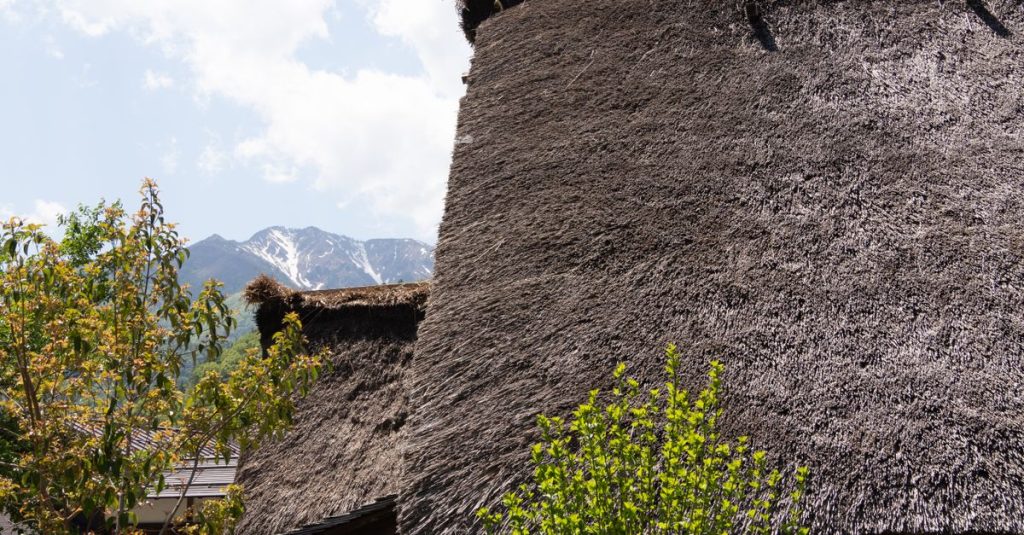
Shirakawa-go: Visit the Gasshō-Zukuri Village
Discover Shirakawa-go, a UNESCO-listed Japanese village with gasshō houses, Alpine scenery and practical advice for planning your visit.
Japan’s history can be understood through transformations in political power: prehistoric communities, the formation of an imperial state, samurai governments, the modernisation of the Meiji era and post-war democracy. The major periods do not all correspond to immediate breaks: institutions, religious practices and social relationships often evolved gradually.
The capitals help trace this development. Nara represents the construction of a centralised administration, Kyoto the influence of the court, Kamakura the rise of the warrior class and Edo the organisation of the Tokugawa government. Later renamed Tokyo, the latter then accompanied the birth of modern Japan.
In brief

Human occupation of the archipelago predates the Jōmon period. This period is known in particular for its pottery, some of which features designs made by pressing cords into the surface, and for communities living through hunting, fishing and gathering.
These activities did not imply permanent mobility. Marine resources, nuts and opportunities for storage enabled people in some areas to settle permanently around semi-subterranean dwellings.
Figurines known as dogū also testify to an elaborate symbolic life. Their precise function remains debated: presenting them systematically as fertility deities would be an overly definite interpretation of the archaeological evidence.
The Yayoi period corresponds to the spread of irrigated rice cultivation and new metalworking techniques, in a context of exchanges and migrations from the Asian mainland. This transformation did not reach all regions at the same time.
Managing rice paddies required the coordination of labour and water. Control of land, harvests and reserves helped strengthen certain ruling groups, while differences in wealth became more visible in burials.
This was therefore more than a change in diet. Agriculture transformed social relationships and encouraged the rise of competing political communities.
The Kofun period takes its name from large burial mounds, sometimes built in a keyhole shape. Their construction required considerable resources and reveals the power of the elites for whom they were intended.
Yamato power consolidated in this environment through alliances between dominant groups and mainland relations. The Japanese state therefore did not emerge from a single event: it resulted from a gradual concentration of authority.
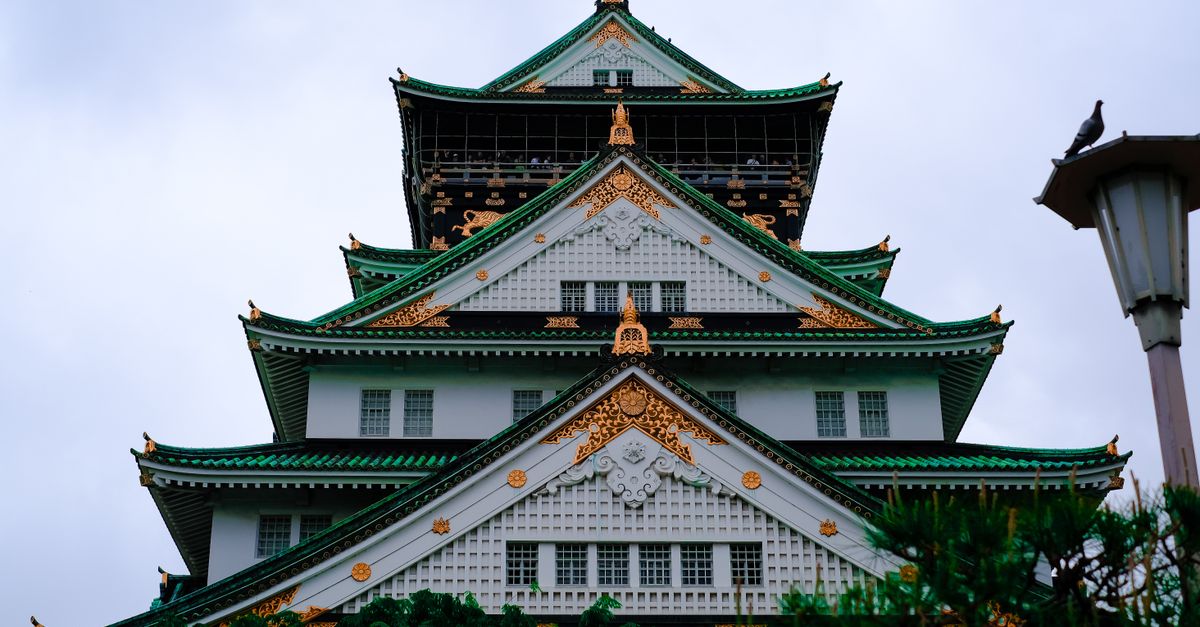
The Asuka period was a decisive stage in organising central power. Exchanges with the kingdoms of the Korean Peninsula and China brought religious, artistic and administrative knowledge that rulers adapted to local realities.
Buddhism transformed court practices and encouraged the construction of temples. Writing made it possible to formalise decisions, organise the administration and produce accounts that gave historical legitimacy to imperial power.
This development did not simply replace earlier beliefs. Kami worship and Buddhist traditions entered into complex relationships involving rapprochement and shifting distinctions.
During the Nara period, a capital organised according to continental models became the centre of administration. The authorities sought to regulate the population, land and levies needed to run the court.
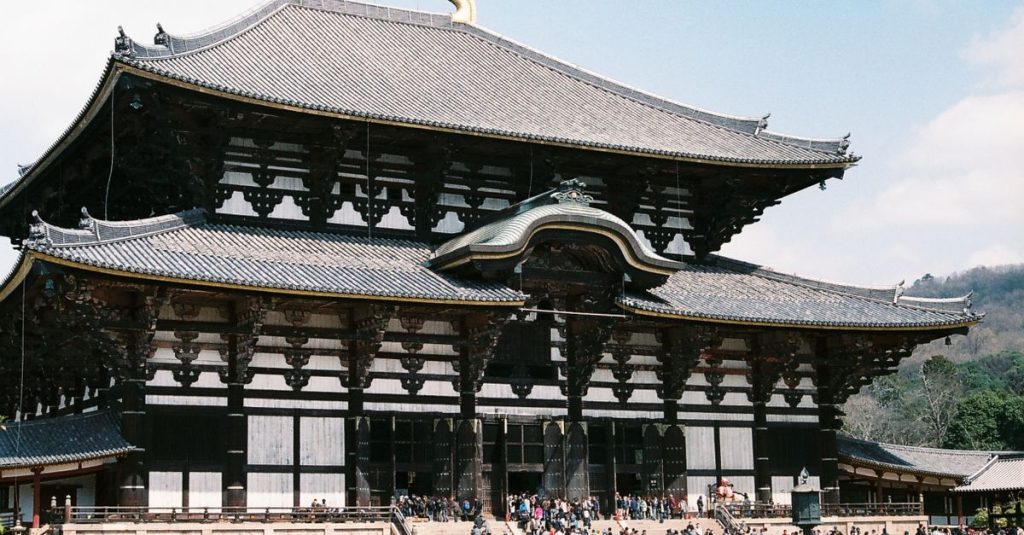
Tōdai-ji illustrates the connection between religion and government: major Buddhist projects contributed to the country’s symbolic protection and to the prestige of its rulers. They also demonstrate the centre’s ability to mobilise considerable resources.
During the Heian period, the court settled in the city that would become Kyoto. Poetry, calligraphy and literature played a major role in the social distinction of the elite.
The Tale of Genji, associated with Murasaki Shikibu, sheds light on this world of aristocratic relationships, feelings and rivalries. However, it does not represent the everyday life of the entire population: court culture remained that of a privileged milieu.
In the provinces, landed estates and armed families gained importance. Understanding the shift from Kyoto to Tokyo as the centre of power requires distinguishing between the imperial residence, cultural prestige and effective government.
The Minamoto victory over their Taira rivals encouraged the establishment of a military government in Kamakura. During the Kamakura period, the shogun and his vassals controlled military and land-related functions in particular, while the court retained certain prerogatives.
The emperor did not disappear with the shogunates. Authority was divided between competing or complementary institutions: reducing this history to an always-symbolic sovereign facing an all-powerful military leader would be misleading.
Mongol invasion attempts increased the need for defence. Their failure was due to Japanese resistance and the difficulties of the expeditions, to which storms contributed, rather than to an exclusively meteorological explanation.
Under the Ashikaga, the military government moved closer to the court in Kyoto. This period saw the flourishing of nō theatre, certain forms of garden design and tea practices, despite uneven political authority.
The fragmentation of power led to the conflicts of the Sengoku period. Territorial lords, or daimyō, sought to control land, roads and resources; Oda Nobunaga, Toyotomi Hideyoshi and then Tokugawa Ieyasu successively contributed to reunification.
Warriors did not all follow a uniform and unchanging code. The popular image of bushidō brings together traditions and interpretations developed at different times.
The Edo period rested on Tokugawa authority and the regulation of domains. The alternate residence of great lords between their territories and Edo helped monitor them while also stimulating travel and spending.
The country was not completely isolated: foreign relations were tightly controlled, but took place notably through Nagasaki, Tsushima, the Ryūkyū Islands and northern exchanges. Kabuki, woodblock prints and merchant culture flourished in the cities.
The origins of matcha and its uses in Japan also help trace exchanges between religious circles, warrior elites and cultural practices. Edo, the future Tokyo, thus became both a political and an urban centre.
To get online as soon as you land, a Japan eSIM can be installed before you leave, with no need to look for a local SIM card.
Pressure from Western powers, symbolised by the arrival of Commodore Perry’s fleet, weakened the Tokugawa. This took place amid internal tensions: imposed opening alone is not enough to explain the fall of the military government.
The imperial restoration ushered in the Meiji era. The emperor became the centre of political legitimacy, but reforms were largely led by figures from the former domains and by an administration still under construction.
The abolition of the domains, changes to land taxation, conscription and the development of schooling strengthened the central state. Former warrior privileges declined, sometimes at the cost of armed resistance.
Railways, the telegraph and textile industries connected the territories more closely and supported production. This transformation also relied on commercial networks, skills and education developed earlier: Japan did not start from nothing.
Institutional modernisation did not mean the immediate establishment of a parliamentary democracy comparable to the current system. The Meiji constitutional system retained strong imperial authority and limited political participation.
Industrial and military power accompanied colonial expansion, particularly in Taiwan and Korea. Victories over China and then Russia strengthened the archipelago’s international position, while dominated populations experienced coercion and assimilation policies.
The Taishō era saw the development of party politics and social movements. The subsequent rise of authoritarianism should therefore not be presented as a uniform development from Meiji onwards.
Expansion into Manchuria, the war against China and then the Pacific conflict brought mass violence and destruction. The surrender took place in a context combining atomic bombings, the Soviet Union’s entry into the war and military collapse, rather than as the result of a single cause.
After the defeat, the Allied occupation, led mainly by the United States, introduced far-reaching reforms. The post-war Constitution established popular sovereignty, guaranteed fundamental rights and defined the emperor as the symbol of the state and the unity of the people.
The government now depended on parliamentary institutions. Constitutional provisions concerning war remain a political issue, particularly in debates about the Self-Defense Forces and their role.
Reconstruction relied on investment, education, industrial capabilities and a favourable international environment. Cars and electronics became emblematic of this growth, which also transformed housing, travel and consumption.
Contemporary Japan then had to face the consequences of the collapse of its financial and property bubble. Demographic ageing, regional disparities and changes in work require lasting adjustments.
The Tōhoku earthquake and tsunami, followed by the Fukushima nuclear accident, also profoundly affected debates about energy, disaster prevention and reconstruction. The current Reiwa era refers to an imperial reign, not a change of political system.
Places help distinguish these legacies without confusing them. In Hiroshima, memorial heritage concerns the atomic destruction and its human consequences; in Kyoto, religious complexes bear witness to ancient traditions, often restored or rebuilt.
| Period | Key transformation | Cultural or material marker |
|---|---|---|
| Jōmon and Yayoi | Evolution of communities and spread of agriculture | Pottery, villages and rice paddies |
| Kofun to Heian | Construction of the imperial state | Tumuli, temples and court literature |
| Kamakura to Edo | Military governments and organisation of domains | Castles, merchant cities and woodblock prints |
| Meiji and empire | Centralisation, industrialisation and colonisation | Railway networks and factories |
| Post-war period | Democratisation and economic transformation | Memorials and industrial metropolises |
Manga, cinema and Japanese cuisine now contribute to the country’s international influence. These cultural expressions are not a fixed legacy: they change with exchanges, technology and social practices.
Human occupation began before Jōmon, during the Palaeolithic. Jōmon is best known for its pottery and communities living through hunting, fishing and gathering.
The emperor belongs to the traditional sovereign institution. The shogun led a military government. The actual distribution of authority between the court, warriors and local powers varied according to the period.
No. The Tokugawa severely restricted travel and foreign relations, but maintained several diplomatic and commercial channels under their control.
It marked the disappearance of the shogunate, administrative centralisation and accelerated industrialisation. These changes also accompanied the construction of a colonial empire.
Emperor Naruhito has a symbolic role and carries out the acts provided for by the Constitution, without directing government policy. The era associated with his reign is called Reiwa.
To book tours and activities in Japan ahead, see the options on Klook.
Updated on 31/10/2026
Scroll to see more articles →