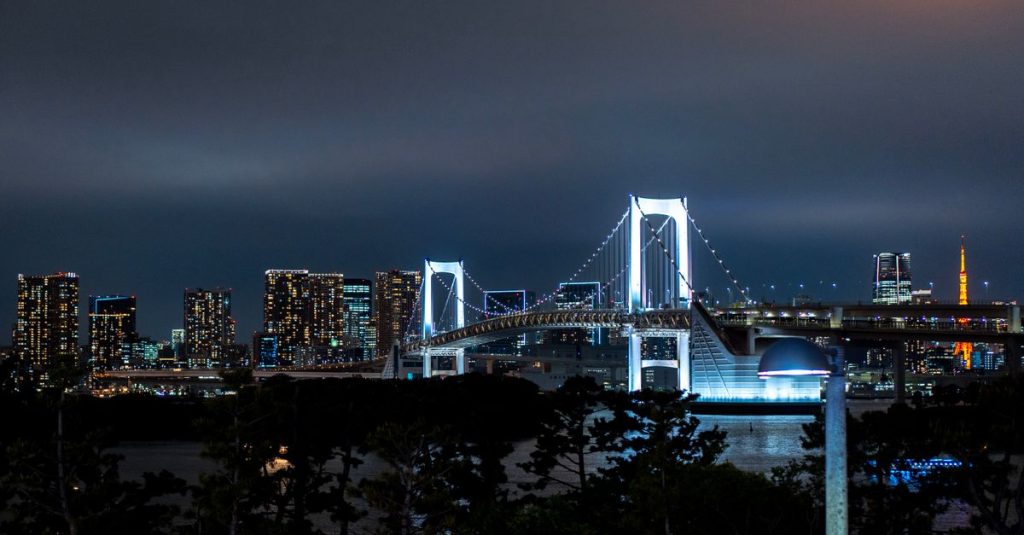
Odaiba Tokyo: Things to Do on the Artificial Island
Discover Odaiba, Tokyo’s artificial island: attractions, beaches, museums and bay views for a memorable waterfront escape in the capital.
To say hello in Japanese, use konnichiwa during the day, ohayō gozaimasu in the morning and konbanwa in the evening. To thank someone politely, remember arigatō gozaimasu; when saying goodbye, the expression depends on who you are speaking to: mata ne among close friends, a thank-you in a shop, or a professional expression at work.
Japanese greetings cannot always be translated word for word. They also indicate the relationship between people, the time of the encounter and sometimes the intention to meet again. Understanding these nuances helps you speak simply without making the exchange sound too familiar or too formal.
In brief
Konnichiwa is the daytime greeting, but it does not replace every other greeting. The morning calls for a different expression, while the evening is suited to konbanwa. There is no need to look for a universal changeover time, as usage also depends on the context.
| Situation | Japanese writing | Rōmaji | Usage |
|---|---|---|---|
| Greeting someone in the morning | おはようございます | Ohayō gozaimasu | Polite form |
| Greeting someone close in the morning | おはよう | Ohayō | Informal form |
| Greeting someone during the day | こんにちは | Konnichiwa | Common usage |
| Greeting someone in the evening | こんばんは | Konbanwa | Common usage |
| Answering the telephone | もしもし | Moshi moshi | Common telephone expression |
In こんにちは and こんばんは, the final character は is pronounced wa, not “ha”. For French speakers, “kon-nitchi-wa” and “kon-ban-wa” provide useful guidance, although a French transcription cannot reproduce Japanese sounds exactly.
The mark over the ō indicates a long vowel: in ohayō, slightly lengthen the “o” sound. The final “u” in gozaimasu is often barely audible, although there is no need to force it out of the pronunciation.
At the entrance to a shop, you will often hear いらっしゃいませ — irasshaimase, a welcoming expression addressed to customers. You do not have to repeat it: a slight nod is enough, after which you can ask your question or look at the products.
Moshi moshi is mainly used in ordinary telephone conversations. It is not the right choice when approaching a passer-by; to ask for information in the street, start with sumimasen.
These expressions will be useful in Tokyo as well as in a small town. Local expressions do exist, but the common forms are the best starting point: choose according to the situation first, not according to an isolated translation.

To say thank you in Japanese to someone you do not know, ありがとうございます — arigatō gozaimasu is a safe choice. This form works after receiving directions, placing an order or getting brief assistance, without sounding excessively ceremonial.
ありがとう — arigatō is more familiar. It is natural among friends or family; with hotel or station staff, keeping the complete expression avoids sounding too brief.
ありがとうございました — arigatō gozaimashita generally expresses thanks for an action that has been completed. You can use it when leaving a restaurant, at the end of a guided visit or after collecting an item that someone brought back for you.
The difference from the present-tense form is not a strict boundary. It mainly highlights that the exchange or service has just ended: a beginner can continue using the usual expression without turning a sincere thank-you into a breach of etiquette.
To add emphasis, say どうもありがとうございます — dōmo arigatō gozaimasu, meaning “thank you very much”. Used on its own, dōmo can serve as a brief thank-you, but it is less explicit and does not suit every relationship as well.
どういたしまして — dō itashimashite means “you’re welcome”. The expression is correct; you will also hear いえいえ — ie ie, a modest reply that minimises the service provided.
After ongoing assistance or a thoughtful welcome, お世話になりました — o-sewa ni narimashita expresses broader gratitude. It is particularly suitable when leaving accommodation where you have been looked after, but it is not necessary for a simple purchase.
At the table, ごちそうさまでした — gochisōsama deshita expresses thanks for the meal. You can say it to the people who cooked for you or hosted you; our guide to Japanese cuisine places this expression in the context of mealtime customs.
The degree of gratitude matters more than piling up expressions: a clearly spoken thank-you at the right moment is generally enough.
To say goodbye in Japanese, you need to consider the relationship and the circumstances of the departure. さようなら — sayōnara is perfectly correct, but it is not the all-purpose expression that its fame might suggest.
In some exchanges between adults, it can suggest a definite separation. However, it is also used in ordinary situations, particularly at school: it therefore does not invariably mean “farewell”.
じゃあね — jā ne corresponds to “bye” or “see you”, while またね — mata ne suggests “see you soon”. These expressions are informal: they work among friends, but are not the best choice with an unfamiliar professional contact.
To specify the next meeting, use また明日 — mata ashita, “see you tomorrow”, or また来週 — mata raishū, “see you next week”. また今度 — mata kondo leaves the idea of another occasion more open.
では、また — dewa, mata offers a less familiar transition than jā ne, without becoming a highly ceremonial expression. Context remains decisive: leaving a meeting and parting from friends do not necessarily call for the same words.
In a shop, a thank-you often serves as the final greeting. After receiving service, arigatō gozaimashita lets you express thanks and say goodbye at the same time.
At work, お先に失礼します — osaki ni shitsurei shimasu is addressed to colleagues when you leave before them. お疲れ様でした — otsukaresama deshita, meanwhile, acknowledges the work completed; it is not simply a literal translation of “good evening”.
At home, いってきます — ittekimasu announces that you are leaving with the idea that you will return. The usual reply is いってらっしゃい — itterasshai; when you return, ただいま — tadaima prompts お帰りなさい — okaeri nasai.
Finally, おやすみなさい — oyasumi nasai means “good night”. The expression accompanies going to bed, but can also be used when parting late in the evening depending on the context; what happens after the departure helps you choose the words.
すみません — sumimasen is used to apologise for causing a disturbance, get someone’s attention and sometimes thank someone who has gone out of their way to help. On Japanese public transport, this expression can be used to ask people to let you pass without addressing other passengers abruptly.
In a restaurant, it can come before a request to staff. By contrast, ごめんなさい — gomen nasai expresses a more personal apology: it is not the usual way to ask for the bill.
失礼します — shitsurei shimasu accompanies an action that encroaches on someone else’s space or time: entering an office, briefly interrupting someone or taking your leave in a formal setting. The expression acknowledges the intrusion, even when no mistake has been made.
申し訳ありません — mōshiwake arimasen expresses a stronger apology, particularly in a professional setting. It would be disproportionate when asking for information or passing through an aisle.
Japanese politeness is therefore not about always choosing the most solemn expression. The aim is to adapt your tone to the relationship and the actual importance of the situation.
At a first meeting, begin with はじめまして — hajimemashite, “nice to meet you”. You can then give your name followed by です — desu, and finish with よろしくお願いします — yoroshiku onegai shimasu.
This last expression has no single French equivalent. In an introduction, it conveys a favourable attitude towards the relationship that is beginning; in a request, it can come close to “thank you in advance”.
When you meet someone again after an absence, お久しぶりです — o-hisashiburi desu, “it has been a long time”, is more suitable. お元気ですか — o-genki desu ka genuinely asks how someone is and is not an automatic phrase to place after every hello.
A slight nod naturally accompanies these exchanges. Cheek-kissing is not part of usual greetings, while handshakes may occur in some international contexts; our guide to Japanese culture and daily life explores these differences in greater depth.
An attentive attitude is better than an exaggerated bow: let your conversation partner set the tone.
Greetings are most useful when they allow you to follow up with a simple request. To expand your Japanese vocabulary, remember expressions that you can reuse in shops, restaurants and stations.
お願いします — onegai shimasu is used with a request or choice. ください — kudasai appears in specific constructions, such as これをください — kore o kudasai, “this one, please”, while pointing to a product.
いくらですか — ikura desu ka means “how much does this cost?”. To ask for the bill, use お会計お願いします — o-kaikei onegai shimasu; depending on the establishment, payment may be made at the till rather than at the table.
To find a place, the structure … はどこですか — … wa doko desu ka means “where is…?”. Thus, 駅はどこですか — eki wa doko desu ka asks where the station is, while トイレはどこですか — toire wa doko desu ka asks where the toilets are.
Before eating, いただきます — itadakimasu expresses gratitude connected with the meal you are about to receive. It is not exactly “bon appétit” directed at other people; this nuance is useful in a restaurant and when trying Japanese street food.
日本語が分かりません — nihongo ga wakarimasen means “I do not understand Japanese”. If you understand a few words, もう一度お願いします — mō ichido onegai shimasu, “once again, please”, lets you ask someone to repeat themselves.
大丈夫です — daijōbu desu requires some caution: depending on the question and intonation, this expression can reassure, accept or decline. To refuse an offer, いいえ、大丈夫です — iie, daijōbu desu makes your intention clearer.
To improve, associate each expression with a specific function rather than memorising an isolated translation. A guide to Japanese writing and pronunciation can help you work on listening and scripts.
Asking someone to repeat themselves is fully part of conversation: a short sentence you understand well is more useful than a long expression recited without being able to recognise the reply.
Konnichiwa is used during the day. In the morning, choose ohayō gozaimasu; in the evening, konbanwa. There is no universal changeover time that applies in every situation.
Arigatō is informal and is mainly suitable for people close to you. Arigatō gozaimasu is a polite form suitable for strangers, shop staff and people who help you.
No. Sayōnara can mark a more definite separation than other expressions, but it is also used in some ordinary exchanges, particularly at school. Among close friends, mata ne or jā ne are often more natural.
No particular verbal reply is expected. A slight nod is enough; you can then look at the products or begin your request with sumimasen.
Updated on 18/10/2026
Scroll to see more articles →