Odaiba Tokyo: Things to Do on the Artificial Island
Discover Odaiba, Tokyo’s artificial island: attractions, beaches, museums and bay views for a memorable waterfront escape in the capital.
Himeji Castle is easy to visit as a day trip from Osaka or Kyoto: travel to Himeji Station, then walk up Otemae-dori towards the white keep. The ordinary train is the budget-friendly option, while the Shinkansen shortens the rail journey, provided you take the journey to your departure station into account.
The site is interesting both for its defensive architecture and its wooden interior, which is very different from a museum housed in a modern reconstruction. Expect a physically demanding visit, with steep stairs, then choose between the nearby Koko-en Garden and a more demanding excursion to Engyo-ji Temple.
In brief
Access from Osaka mainly depends on which neighbourhood you are leaving from. The JR Special Rapid service goes directly to Himeji from Osaka Station on the ordinary network; the Shinkansen, meanwhile, leaves from Shin-Osaka, a separate station.
The advertised time saving of high-speed rail applies to the journey between stations, not necessarily to the journey from your accommodation. If you are staying near Osaka Station, a direct ordinary service may be more convenient than going via Shin-Osaka and changing platforms.
Check updated timetables and fares with JR West, then compare the complete door-to-door routes. Our guide to the Shinkansen can help you place these departures within your travel plans.
You can travel from Kyoto by Shinkansen or on the ordinary JR network. For high-speed rail, look for a service whose stop at Himeji is confirmed: the train category alone does not guarantee that it will stop there.
On ordinary lines, check the destination shown and the connections offered. This option is worth comparing if your priority is cost, but it leaves less flexibility for adding a visit away from the centre.
| Departure and option | Main advantage | What to check |
|---|---|---|
| Osaka, JR Special Rapid | Direct service on the ordinary network | Destination of the chosen service |
| Shin-Osaka, Shinkansen | Faster rail journey | Time needed to reach Shin-Osaka |
| Kyoto, Shinkansen | More time available at the destination | Whether it actually stops at Himeji |
| Kyoto, ordinary network | Option worth comparing to save money | Total duration and any changes |
If you have a pass, check with its issuer which lines and train categories are covered and whether any supplements apply. A regional pass and a national pass are not interchangeable; our guide to the Japan Rail Pass explains how to assess the decision across your entire trip.
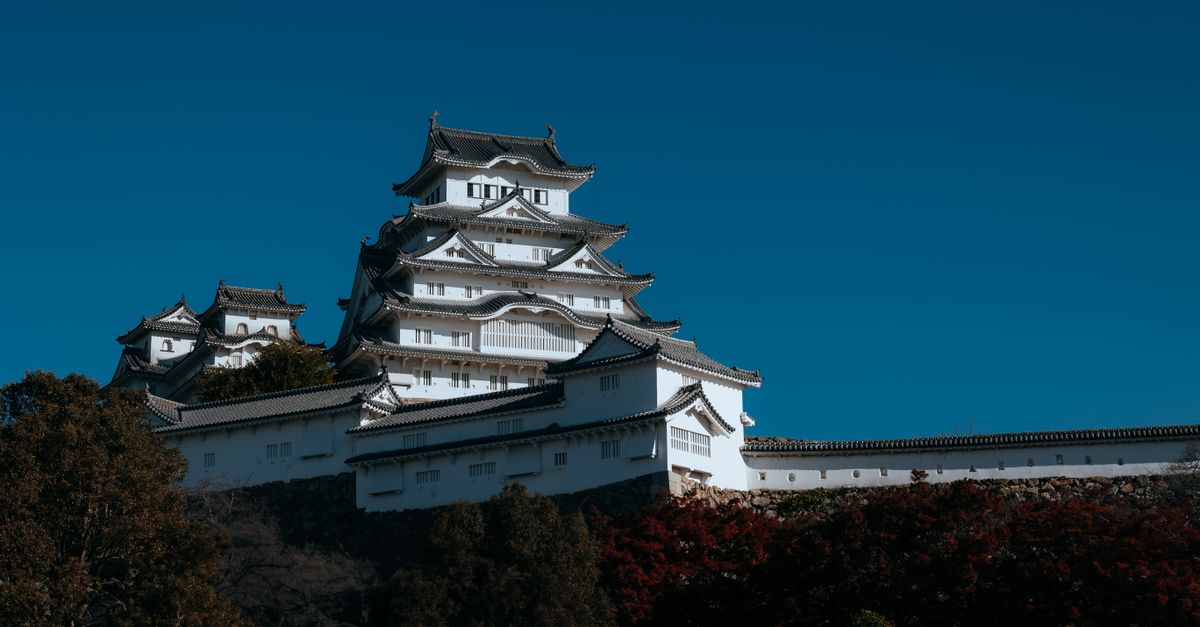
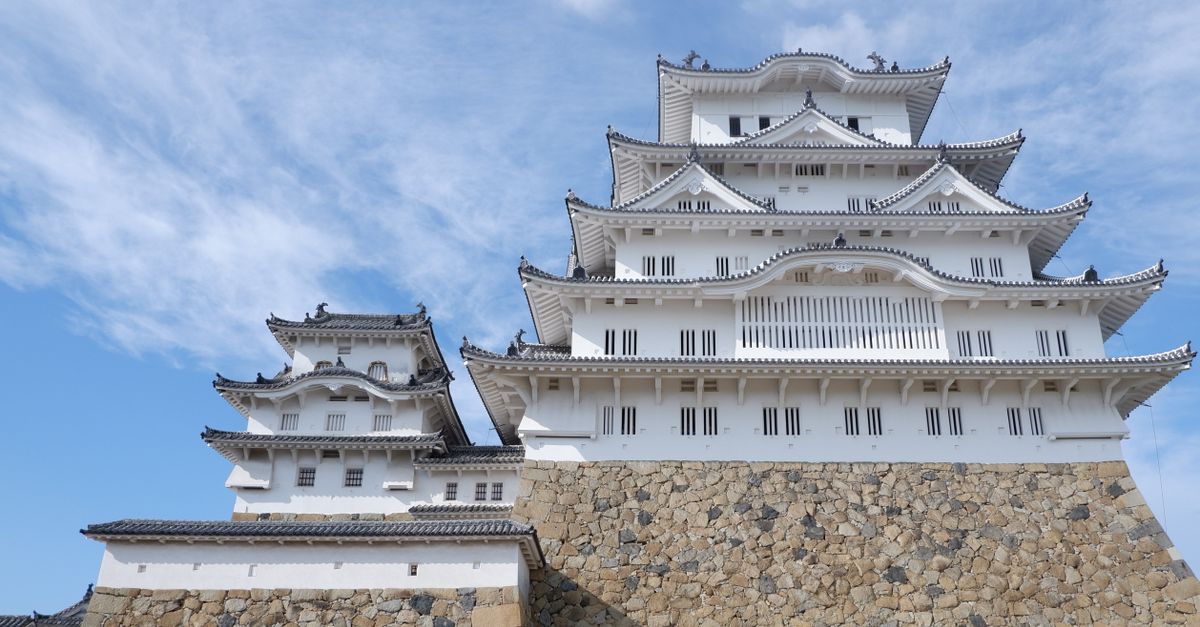
At Himeji Station, take the north exit and follow Otemae-dori. The keep appears along the axis of this broad avenue: the approach helps you understand its dominant position even before entering the grounds.
The urban route is generally flat, but reaching the surrounding area does not mean you have arrived at the keep entrance. The outdoor spaces, ticket check and routes within the grounds all add to the walk from the station.
In very hot weather, or if walking is difficult, ask about local buses or take a taxi. These options reduce the effort of the approach, but do not remove the obstacles on the interior route.
For admission tickets, check the information published by Himeji City before travelling. Check separately the price of the castle, the price of Koko-en and whether a combined ticket is available: commercial conditions may change.
Do not confuse an admission ticket with a guided service or a reseller’s offer. Booking in advance may make purchasing easier, but it does not guarantee that there will be no queues in the narrow passageways or by the stairs.
Visiting hours also require careful reading: the last admission time is not necessarily the closing time. Check the day’s conditions with the municipal authorities, particularly temporary restrictions and which areas are accessible.
Lockers are available at the station, but their availability and capacity are not guaranteed. Avoid planning a tight connection around the assumption that a large locker will be free when you arrive.
For lunch, the area around the station and the approach avenue offer a practical option before or after visiting the grounds. Entering with a light bag and no immediate need to find a meal makes the visit considerably more comfortable.
According to UNESCO, Himeji-jo has been listed as a World Heritage Site since 1993. This recognition as UNESCO World Heritage concerns an architectural and defensive complex, not merely the white silhouette visible from the city.
The castle visit is most rewarding when you observe the changes of direction, successive gates and openings used for surveillance. The route forces you to go around obstacles rather than move directly towards the main building: this layout is part of the site’s defences.
Inside, look at the volumes, wooden joints and views over the approaches. The experience focuses more on the building itself than on a succession of display cases, so it complements a visit to a reconstructed castle housing a museum.
To extend this architectural interest, Matsumoto Castle is another worthwhile stop on a trip to Japan. It is better to compare the buildings in their context than to rank them solely by their appearance.
The keep has no lift, and its stairs are steep and narrow. The difficulty also applies to the descent: knee pain, balance problems or the need to carry a child can make the route more challenging.
With young children, keep your hands as free as possible and adjust your pace to the narrow sections. If you have reduced mobility, ask the manager which areas are accessible rather than assuming that the relatively flat approach means the whole site is accessible.
An independent visit suits travellers who want to move around freely. A guide mainly adds historical and architectural context; before booking, check the language, meeting point and services included.
Understanding the defensive access routes is just as valuable as climbing to the top. Skipping part of the route to preserve your comfort therefore does not mean missing all the monument’s interest.
Koko-en Garden, next to the castle grounds, is the easiest extension after visiting the keep. Its landscaped areas, ponds and paths offer a different experience, focused on perspectives and plant composition.
Do not confuse it with a garden that has remained untouched since the samurai era: it is a contemporary garden inspired by Japanese landscaping traditions. Its appeal lies in this presentation of the landscape, which you discover as you move through it rather than from a single viewpoint.
The route is less demanding than the castle stairs, but this does not guarantee complete accessibility. Check the conditions with the manager if you use a wheelchair or if uneven ground is a problem.
The castle and garden are the most flexible combination if you want to keep time for lunch, photographs and the return journey. This is particularly suitable when Himeji is fitted between already busy days in Kyoto or Osaka.
Engyo-ji Temple, on Mount Shosha, has a completely different atmosphere. Its wooden buildings are spread through a wooded setting; visiting them involves moving around the site rather than simply arriving at a single entrance.
The usual route combines a bus, a cable car and walking. Check the services with Shinki Bus, the cable-car operator and the temple, particularly return options and any possible interruptions.
Why avoid adding it at the last minute? Waiting between transport services, walking over uneven ground and access hours can greatly reduce the time actually available at the sanctuary.
If Engyo-ji is a priority, build the day around this constraint and accept that you may have to skip the garden. The temple deserves time on site, not merely a return trip to the cable car.
For an excursion focused on the castle, set off early, visit the interior, then take a meal break and visit Koko-en depending on your energy levels. Check the actual opening time before choosing your train: arriving early is only useful if it matches access to the site.
Leave extra time for queues and movement through the keep. A reserved ticket does not turn a historic building with narrow passageways into a route with a constant flow of visitors.
A stop on the way to Hiroshima is also possible. However, you need to plan ahead for your luggage and next train; otherwise, watching the time can quickly take priority over discovering the site.
The cherry blossom attracts many visitors around the white walls, but the timing varies according to the weather. Check local information shortly before departure rather than treating the usual period as a guarantee.
In summer, humidity and the climb make the effort more noticeable; take water and breaks in areas where they are permitted. In rainy weather, take extra care on wet surfaces and protect your belongings without making the stairs difficult to navigate.
Our guide to the best season to travel to Japan can help you weigh up atmosphere, weather and visitor numbers. Your choice also depends on your tolerance for heat and waiting.
Adding Kobe on the way back may work for a meal or a specific walk, but much less so for another full day of visits squeezed into the schedule. After the keep and a possible mountain excursion, keep your plans compatible with your actual level of tiredness.
For a wider trip, place Himeji in your itinerary with a guide to Japan’s regions. The best balance is to preserve the time devoted to the monument rather than adding numerous destinations to the same day.
Yes. Himeji lets you discover a historic wooden keep and its defensive layout, while Osaka’s present keep is a reconstruction housing a museum. The experiences complement each other.
Yes. The keep can be seen from Otemae-dori and the surrounding public areas. This option lets you appreciate its silhouette, but not the interior spaces or the full paid route.
No. From Osaka, the JR Special Rapid is a direct alternative on the ordinary network. Compare the total cost, your departure station and the conditions of any pass you may have with JR West.
It depends on access conditions, visitor numbers and transport. To keep a comfortable pace, prioritise the castle and garden, or organise a more demanding day around the castle and Engyo-ji.
Updated on 19/10/2026
Scroll to see more articles →