Odaiba Tokyo: Things to Do on the Artificial Island
Discover Odaiba, Tokyo’s artificial island: attractions, beaches, museums and bay views for a memorable waterfront escape in the capital.
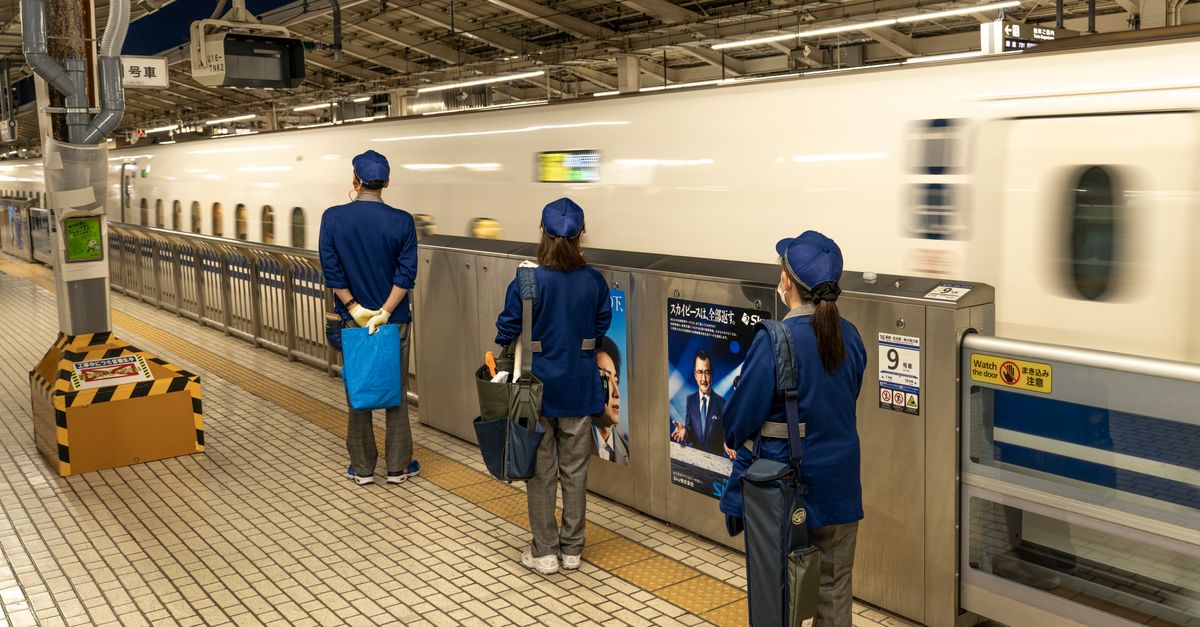
The Shinkansen is the high-speed train linking Japan’s main cities along the archipelago’s major routes. To travel between Tokyo, Kyoto, Osaka and Hiroshima, it offers direct connections between stations with good links to urban transport. Your choice of ticket depends on your destination, the stops made by the service you take and the level of comfort you want. A reserved seat guarantees you an assigned seat; an unreserved seat, when available, does not guarantee that you will travel seated.
However, Shinkansen speed alone is not enough to determine the best journey. You must also consider the arrival station, connections and the conditions of the fare chosen. The Japan Rail Pass is not automatically cheaper than individual tickets, while luggage and boarding rules depend on the route. To plan your train journey in Japan, start with your actual itinerary rather than buying a pass by default. Fares, train timetables and commercial conditions change: check them with the relevant JR company before paying.
In brief
A high-speed train does not travel at its maximum speed throughout the entire journey. Acceleration, stops, the characteristics of the line and operating conditions determine the journey time. The time shown for your specific departure is therefore more useful than a theoretical maximum speed.
On the Tokaido route, the Nozomi mainly serves major stations, the Hikari makes more stops and the Kodama serves every station. Their differences therefore concern the service offered, not simply the rolling stock used.
To reach Kyoto from Tokyo, a limited-stop service avoids intermediate stops. To get off at Kakegawa, however, the Kodama is the more relevant choice: the fastest train between major cities is not necessarily the one that serves your destination.
Add the journey from your accommodation to the railway route, as well as the transfer on arrival. From Shinjuku, for example, you first need to reach a station served by the Tokaido line, such as Tokyo or Shinagawa, before boarding.
A simpler connection may justify choosing a different departure. Our guide to transport in Japan helps distinguish intercity services, local JR lines and metros, whose tickets are not interchangeable by default.
Punctuality does not mean you should avoid leaving a margin: bad weather, technical problems or an earthquake can disrupt operations. The best service is the one that gets you to your destination with manageable connections.
Japan’s railway network combines high-speed lines, conventional trains and urban networks. The Shinkansen does not serve every region directly: some destinations require a connection with a regional express, local train or bus.
| Line | Main route | Practical reference |
|---|---|---|
| Tokaido | Tokyo, Nagoya, Kyoto, Shin-Osaka | The main route linking the capital with Kansai. |
| Sanyo | Shin-Osaka, Hiroshima, Hakata | Extends the journey towards western Honshu. |
| Tohoku | Tokyo, Sendai, Morioka, Shin-Aomori | Serves northern Honshu. |
| Hokkaido | Shin-Aomori, Shin-Hakodate-Hokuto | Provides access to Hokkaido, with a connection for Hakodate. |
| Hokuriku | Tokyo, Nagano, Kanazawa, Tsuruga | Provides access to the Sea of Japan coast. |
| Joetsu | Tokyo, Echigo-Yuzawa, Niigata | Useful for Niigata and the surrounding mountains. |
| Kyushu | Hakata, Kumamoto, Kagoshima-Chuo | Crosses western Kyushu. |
Shin-Osaka and Osaka are separate stations. To continue towards Namba, the metro is one option from Shin-Osaka. Choose your connection according to the area where you are staying, using our guide to Osaka.
In Fukuoka, Hakata is the station to look for when taking major railway services. In Yokohama, high-speed services use Shin-Yokohama, not Yokohama station.
Services to Akita and Yamagata combine high-speed sections with adapted tracks on which trains travel more slowly. Takayama, meanwhile, is reached by conventional Japanese railway lines after a connection, notably at Nagoya or Toyama depending on the route.
Always check the exact station, then the journey to your accommodation. This avoids confusing arrival in an urban area with arrival in its centre.
A standard ticket generally combines a basic fare and a Shinkansen supplement. The distance, service used, seat category and commercial conditions influence the final amount. Some electronic offers display a single total price.
In ordinary class, a reservation assigns you a seat on a specific train. It does not upgrade you to the Green Car: a reserved seat and a higher class are separate choices.
The Green Car generally offers wider seats and more space. Gran Class is a higher category available on certain services, particularly in the north and on the Hokuriku route; it is not offered on the Tokaido service between Tokyo and Shin-Osaka.
Facilities depend on the service chosen. Do not assume that a meal, a particular power socket or a specific facility is automatically included with a comfort category.
The Japan Rail Pass should be compared with the total cost of the journeys it actually covers during its validity period. A trip split between Tokyo and Kyoto does not offer the same financial benefit as an itinerary including several long crossings.
The national pass alone is not enough to take a Nozomi or Mizuho: a special additional ticket is required under the system provided for pass holders. Check the conditions with Japan Rail Pass before buying; regional passes have their own rules.
Also compare advance-purchase offers, without overlooking their restrictions on changes. Our Japan Rail Pass guide helps you make this comparison, which should then be included in your Japan travel budget.
Whether it is worthwhile depends on the journeys you use, not the number of destinations shown on a map.
Tickets can be booked at JR ticket offices, from compatible ticket machines and through the railway companies’ online sales services. SmartEX mainly covers the Tokaido, Sanyo and Kyushu routes; JR East has its own tools for its services.
When travelling together, booking avoids relying on the seats still available at boarding. This is particularly useful during major Japanese travel periods, including Golden Week, Obon and New Year. Also consult our guide to the best season for travelling to Japan to anticipate busy periods.
The access method depends on the product purchased: a ticket to collect, a code to present or an IC card previously linked to the booking. An IC card with money loaded on it does not automatically replace a high-speed train ticket.
An order confirmation may also require an additional step before departure. Check the seller’s instructions, particularly the stations and ticket machines where collection is possible.
For paper tickets, several coupons may correspond to the same journey. Keep all the documents provided and follow the instructions at the gates; ask staff if you are unsure.
At the platform, match the service name, destination and carriage number with the display. A successful purchase also includes a clearly identified boarding method.
Small suitcases can generally be placed in the storage areas provided, subject to their size and the space available. A large suitcase requires a check before departure: the rules are not the same on every line.
On some routes, bulky luggage requires a suitable reservation. Check with the operating company for the permitted dimensions and the arrangements applying to your service, rather than applying a rule read for another region.
The space behind the last seats is not necessarily free to use. Luggage must not block the aisle, doors or a space intended for wheelchair users.
For a journey involving several changes, sending suitcases between accommodation may make travelling easier. Confirm the delivery times, accepted items and receipt arrangements with the carrier and the establishments concerned before relying on this solution.
Eating at your seat is permitted; ekiben, boxed meals sold at stations, offer a chance to discover regional specialities. Buy your meal before boarding if you want to be self-sufficient, as on-board catering depends on the service.
Keep conversations quiet and make calls in the appropriate spaces between carriages. If you need to work, prepare your documents for offline use: Wi-Fi, when available, may be interrupted, particularly in tunnels.
Travellers who need a suitable space or assistance should contact the railway company in advance. Our guide to accessibility in Japan also helps you prepare transfers at stations and urban journeys.
Finally, check traffic conditions before an important journey, particularly if it precedes an international flight. Journey comfort is prepared just as much before boarding as on board.
Yes, when a service has unreserved carriages and your ticket gives you access to them. This does not guarantee a seat. Some trains or periods require a reservation: check with the relevant JR company.
No. Its coverage depends on the service and comfort category. Nozomi and Mizuho require a special additional ticket for national pass holders. Regional passes have different conditions.
The options depend on the fare, sales channel and timing of the request. Check the conditions before paying, particularly for promotional offers, and contact the seller before departure if your plans change.
Choose Shin-Osaka. Osaka station is separate and can then be reached by a local connection. For other areas, particularly Namba, travelling by metro may be more convenient.
Updated on 11/10/2026
Scroll to see more articles →