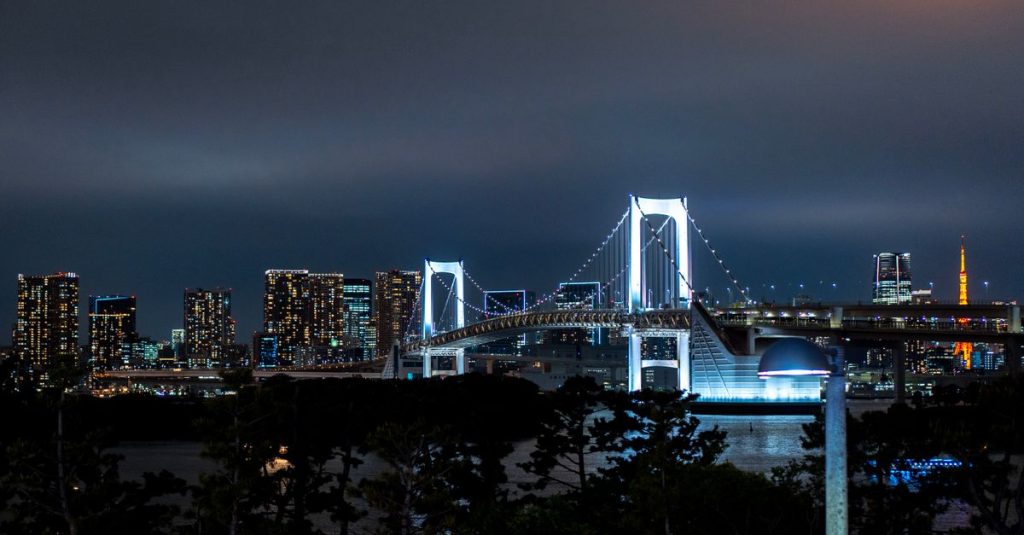
Odaiba Tokyo: Things to Do on the Artificial Island
Discover Odaiba, Tokyo’s artificial island: attractions, beaches, museums and bay views for a memorable waterfront escape in the capital.
Earthquakes in Japan are frequent because the archipelago lies where tectonic plates meet, and their movements build up stress in the rocks. When the rocks break, the released energy makes the ground shake; some underwater ruptures can also cause a tsunami.
When you are there, your first response should be to protect your head and take cover, without running for the exit during the shaking. On the coast, a strong or prolonged tremor means you must quickly reach higher ground, without waiting for a notification. Building preparation and warning systems reduce the consequences, but never eliminate the danger.
In brief
Japan lies on the Pacific Ring of Fire, a group of regions marked by strong volcanic and seismic activity. The expression describes a geological setting: it does not mean that eruptions cause the archipelago’s major earthquakes.
Plate tectonics explains the movement of the large rigid fragments forming the Earth’s outer layer. They rest on an essentially solid mantle, which can deform very slowly, rather than on an ocean of liquid rock.
Around the archipelago, the Pacific and Philippine Sea plates sink beneath neighbouring plates. These subduction zones contain sections that remain locked while movements continue around them: stress builds up until the rocks break.
The local geometry is complex, particularly around the Okhotsk and Amur blocks. Reducing this structure to a simple collision therefore hides different mechanisms, alongside active faults inland.
Magnitude describes the size of an event, while intensity describes its local effects. In Japan, the shindo scale records the intensity of the shaking: it helps explain why cities can experience different effects from the same rupture.
The depth of the focus, the distance and the nature of the ground all affect the movement you feel. Soft ground can amplify vibrations; water-saturated ground can lose its strength through liquefaction, with consequences for foundations and underground networks.
An annual count depends on the thresholds used and the area studied: events detected by instruments and tremors felt by people are not the same measurement. For travellers, the national frequency tells you less than the exposure of the place where you are staying.
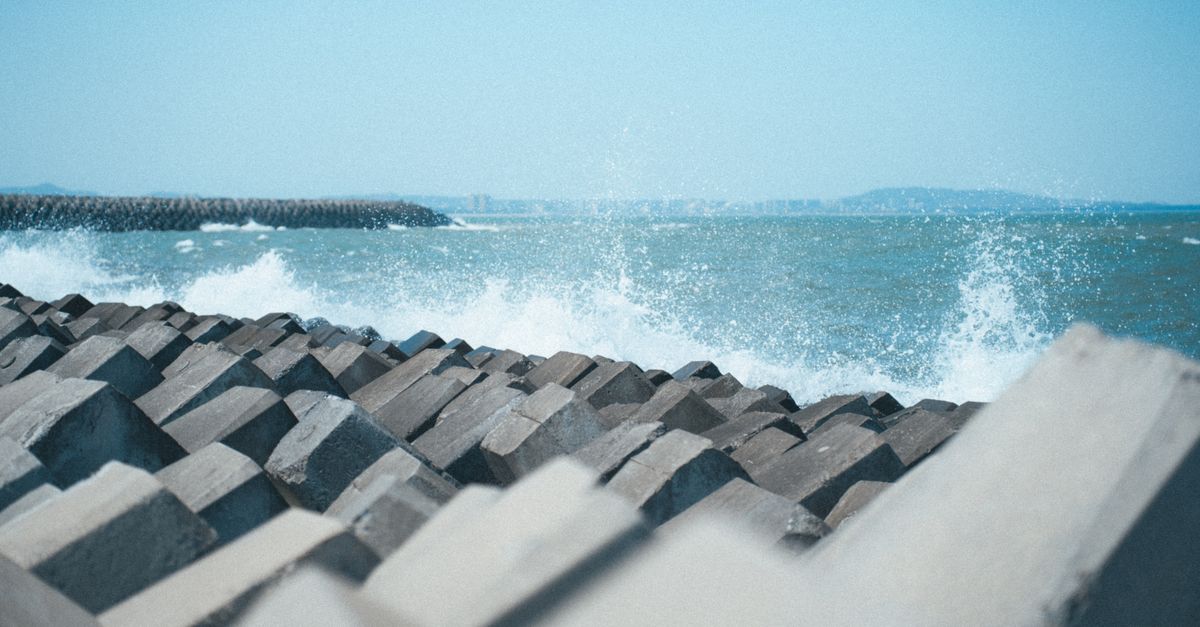
Earthquake prevention cannot prevent geological ruptures. It aims to reduce injuries, damage and difficulties after the event through suitable construction, emergency organisation and practising the right actions in advance.
When you arrive, check the evacuation plan, locate the stairs and ask where the assembly point is. In your room, avoid leaving a suitcase in front of the door and identify heavy objects that could fall near the bed.
Earthquake-resistant techniques include strengthening structures, energy-dissipating devices and, in some buildings, base isolation. Not all buildings have the same equipment: a suitably designed building is not a guarantee that there will be no damage.
The neighbourhood also matters. During a stay in Tokyo or another large city, consult the municipal hazard maps: they distinguish exposure to flooding, unstable ground and refuge routes.
Keep your medication, water, a portable battery, a torch and closed shoes within easy reach. Save your accommodation address, contacts and useful documents offline; also agree on a meeting point with your companions in case communications become difficult.
Our guide to useful apps in Japan helps you prepare your information tools. Check with the publishers which languages are available, what permissions are required and how notifications work: a SIM card alone does not guarantee that you will receive every alert.
Finally, distinguish between a place for immediate safety and a temporary accommodation centre. The expression earthquake shelters does not refer to a universal refuge: a facility receiving disaster victims is not necessarily suitable for a threat coming from the sea. The right refuge depends on the danger announced.
During the shaking, first follow the safety instructions appropriate to your surroundings. Trying to leave immediately can expose you to falling glass, façade elements or crowds.
Drop down, protect your head and neck, then take cover under a sturdy table if one is within reach. Hold on to one of its legs to remain covered if it moves; otherwise, stay low, away from windows, tall furniture and hanging objects.
A door frame is not automatically a reliable refuge. Do not cross the room to retrieve a phone and do not rush towards a flame while the ground is moving: take action only when it can be done without exposing yourself to danger.
In a hotel, museum or shop, listen to the staff. Do not use the lift to evacuate; if you are already inside and become stuck, use the intercom and do not try to force the doors open.
| Situation | Preferred response | Danger to avoid |
|---|---|---|
| In the street | Move to a nearby open space if it is safe to do so. | Façades, shop windows, signs and boundary walls. |
| On a train | Hold on firmly and follow staff announcements. | Going onto the tracks alone. |
| In a car | Slow down gradually and stop in a safe place. | Braking sharply or blocking emergency access routes. |
| In the mountains | Move away from cliffs and unstable slopes if possible. | Falling rocks and landslides. |
Once the movement has stopped, check for injuries and observe your surroundings before moving. A smell of gas, a fire or visible damage means you should move away and alert staff or the emergency services without taking additional risks.
Aftershocks can cause further objects to fall. The end of the shaking is therefore not a signal that everything has immediately returned to normal.
A tsunami can form when an underwater movement suddenly displaces a mass of water. Not every offshore event produces one, but it is impossible to judge the threat simply by looking at the beach.
On the coast, a strong or prolonged tremor should trigger your departure towards higher ground, even if you have received no message. Tsunami warnings can also concern distant events: not feeling any vibrations is not a reason to ignore an evacuation order.
Follow marked routes towards higher ground or towards a building officially designated for vertical evacuation. Do not choose a building at random and do not go to watch the sea, even if it appears calm.
Emergency evacuation is generally carried out on foot to avoid traffic jams, according to local instructions and each person’s abilities. People with limited mobility should ask their accommodation, on arrival, what arrangements are available.
Waves can arrive in succession, and the first one is not necessarily the largest. The danger can also travel up rivers: leaving the seafront but remaining near an estuary is not enough.
The Japan Meteorological Agency publishes seismic information and tsunami bulletins; local authorities specify evacuation procedures in each area. Check their current communications and follow announcements made locally.
Do not go back to collect your luggage and do not descend because other people are doing so. Wait until the official instructions applying to your area have been lifted.
Seismic risk may sometimes require you to remain under cover indoors, while a marine threat means leaving an exposed area quickly. This difference explains why checking the coast in advance is essential.
After a major event, prioritise information from the Japan Meteorological Agency, the municipality and the operators concerned. A dramatic image shared online cannot tell you the condition of your neighbourhood, a station or a particular route.
Trains may be stopped for inspection, even when their infrastructure shows no apparent damage. Check directly with the operator for the status of the service: usual timetables and route planners are not always sufficient. Our guide to the Shinkansen can help you understand the main high-speed rail network, but services must still be checked after an earthquake.
The guide to transport in Japan helps you identify the networks on your route. However, avoid going to a station without confirmation that services have resumed or undertaking a long walk through areas that have not been checked.
Send your relatives a brief message and limit non-urgent calls. To request suitable assistance, keep the information from our page dedicated to useful emergency contacts accessible, along with your insurance details and those of your consular representation.
The Great Kantō earthquake is a reminder that fires can considerably worsen the consequences of shaking. The Hanshin-Awaji earthquake, around Kobe, showed the importance of building resistance, as well as the continuity of roads and essential networks.
The Tōhoku disaster illustrates the possible chain of an underwater rupture, a tsunami and an industrial crisis, including the Fukushima Daiichi nuclear accident. This event resulted from a major tectonic rupture, not from activity by small underwater volcanoes.
These experiences inform evacuation drills, stockpiles and the organisation of accommodation for disaster victims. They cannot predict the next event precisely: long-term assessments do not constitute a timetable.
To resume your journey, rely on confirmed reopening of access routes and local instructions. The absence of visible damage guarantees neither a building’s safety nor that of a particular route.
There is no season that allows you to avoid tectonic earthquakes. Choose your dates according to the climate and your activities, but prepare to use the same safety measures all year round.
Not during the shaking if doing so requires you to cross dangerous areas. Protect yourself first, then follow the staff’s instructions. On an exposed coastline, a strong or prolonged tremor means you must then quickly reach a refuge suitable for a tsunami.
Reception depends on the phone, its settings, the network and the system being used. Check compatibility before departure and do not rely only on notifications: also listen to local announcements.
Do not assume that a pass gives you access to a replacement option. Consult the operator regarding interruptions, any alternatives and the commercial conditions applicable to your ticket.
Updated on 21/10/2026
Scroll to see more articles →