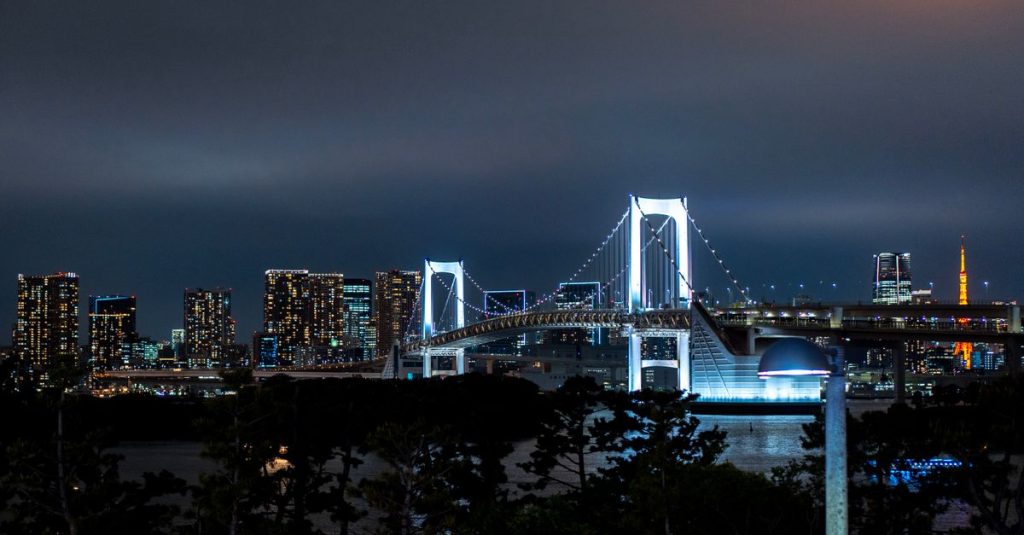
Odaiba Tokyo: Things to Do on the Artificial Island
Discover Odaiba, Tokyo’s artificial island: attractions, beaches, museums and bay views for a memorable waterfront escape in the capital.
Choose the Ghibli Museum to discover how films are created in Tokyo, and Ghibli Park to explore their settings in Aichi Prefecture. The former, located in Mitaka, focuses on drawing, the mechanics of animation and an architecture full of detail. The latter, in Nagakute near Nagoya, offers a walk among buildings, exhibitions and landscapes inspired by the studio’s works.
These differences affect both the experience and the organisation of your trip. A visit to Mitaka fits easily into a stay in Tokyo; an excursion to Nagakute involves more travel and deserves a free day. In both cases, Ghibli ticket reservations should be made before finalising this part of your itinerary. The ticket offices are separate, and access to certain areas depends on the ticket purchased. To plan your visit in 2026, check prices, opening hours and sales conditions directly with each establishment: an old price list or previous calendar is not a guarantee.
In brief
The most useful criterion is what you want from the visit: understanding how a film is made or stepping into its world. In Mitaka, drawings, animation devices and recreated workspaces invite you to look at images differently. In Nagakute, houses, objects and structures give a physical presence to places familiar to viewers.
| Criterion | Ghibli Museum | Ghibli Park |
|---|---|---|
| Location | Mitaka, western Tokyo | Nagakute, Aichi Prefecture |
| Main experience | Artistic creation and animation techniques | Settings, architecture and exploration |
| Layout | A concentrated route inside one building | Travel between several areas |
| Photography | Not allowed indoors | Permission varies by area |
| Place in your itinerary | An outing during a stay in Tokyo | A stop organised around Nagoya |
If your stay focuses on Tokyo and its neighbourhoods, travelling to Aichi solely for this excursion adds a significant journey. Conversely, Nagoya is geographically coherent as a stop between the capital and Kyoto, but the site is on the outskirts: a railway connection in Nagoya is not enough to make the most of it.
With children, avoid the simplistic idea that one establishment is for adults and the other is reserved for families. The former can be captivating because of its visual effects; the latter involves more walking, sometimes in rain or very hot weather.
You will find other ideas in our selection of activities to do with children in Japan. The best choice is the one that matches your interests without unbalancing your trip.
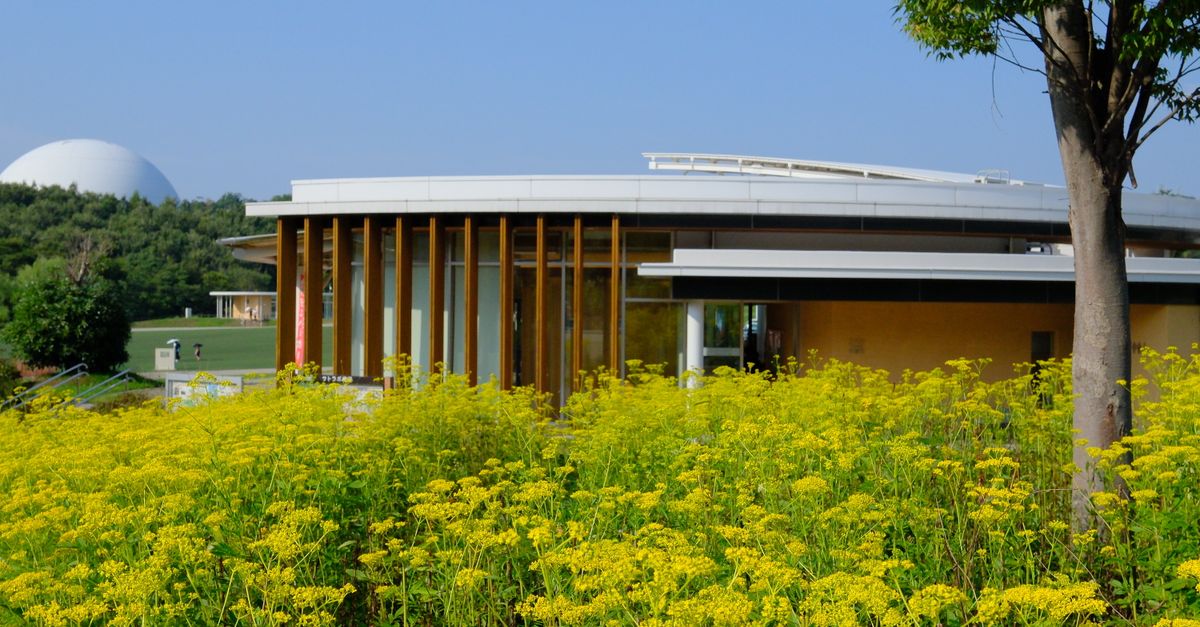
The Ghibli Museum makes the building itself part of the route. Stairs, passageways and openings encourage observation rather than a strictly linear progression; this architecture extends the attention paid to spaces in Hayao Miyazaki’s films.
The devices dedicated to movement show how still images produce continuous action. This approach remains accessible without knowing Japanese: watching a succession of positions become a gesture gives you a concrete understanding of the principle of animation.
The areas evoking artists’ work place drawings and reference objects at the centre. They remind visitors that a setting is not merely a background: light, furniture and props help tell a story and make a character believable.
The Saturn Theatre screens short films connected with the studio. The programme may change, so check the one announced by the establishment rather than booking in the hope of seeing a particular title.
On the roof, the robot from Castle in the Sky is an iconic landmark. For photographs, follow the displayed instructions: the indoor ban does not mean that all outdoor areas are automatically open to photography.
The nearby Inokashira Park makes it possible to extend your outing towards Kichijoji without travelling across the whole metropolitan area. Keep this walk flexible: a break after the galleries is more enjoyable than a tightly timed schedule that forces you to cut your observation short.
Mitaka’s appeal lies in discovering the artistic work, not in accumulating photographable settings.
Ghibli Park is laid out within the memorial park of the 2005 Aichi Expo. The areas are separated by paths: walking between them is part of the experience and should be included in your planning, particularly with a pushchair or reduced mobility.
Ghibli’s Grand Warehouse brings together exhibitions, settings and a screening area in a covered complex. It is a suitable choice for discovering references to several works, but its appeal also depends on the exhibitions available and the access conditions attached to your ticket.
Valley of Witches notably showcases the worlds of Howl’s Moving Castle and Kiki’s Delivery Service. Architecture takes centre stage; however, seeing a building from outside and being able to explore its interior are not necessarily included in the same package.
Dondoko Forest is home to Satsuki and Mei’s house, inspired by My Neighbour Totoro. Hill of Youth notably recreates the antique shop from Whisper of the Heart, while Mononoke Village evokes the rural and artisanal world of Princess Mononoke.
These places are best chosen according to your favourite films rather than a universal ranking. A house full of familiar details may interest you more than a spectacular space linked to a work you know little about.
Do not expect a theme park centred on thrilling rides: the experience is mainly based on buildings, exhibitions and walking, although some playful facilities do exist. Wear comfortable shoes, plan breaks and bring protection suitable for the season of your trip to Japan.
It is better to explore the worlds that attract you than to rush through every area.
A ticket for Mitaka does not provide access to Nagakute, and vice versa. Start with the ticket office designated by the establishment concerned, then select the route intended for international visitors where one exists; arrangements for the Japanese market may differ.
For the museum, consult the official information about Lawson Ticket and purchases from overseas. For the Aichi site, check the currently designated international portal, the categories offered and the calendar corresponding to your travel dates.
Sale dates, ticket-release times and prices must be confirmed with the Ghibli Museum or Ghibli Park. Check the stated time zone and convert it for France on the relevant date, taking the French daylight-saving change into account.
Prepare alternative dates, the information requested for visitors and a payment method that can be used internationally. If the platform requires an account, create it beforehand; displayed availability is not confirmation until the order has been completed.
At Nagakute, examine which areas are included, which interiors can be accessed and whether any time slots apply. A more extensive package is worthwhile only if you genuinely want to explore the additional spaces and can fit them into your day.
Before paying, also check the cancellation, amendment and identity-verification conditions. Keep your confirmation and prepare the required documents; avoid offers whose transferability or validity is not explicitly recognised.
To compare costs, add transport and, if necessary, a night in Nagoya to your travel budget. The real cost of this outing is more than the admission price alone.
From Shinjuku, the JR Chuo Line reaches Mitaka. Check the destination and stops of the service shown on the platform, then use the south exit to continue towards the building. See our guide to Shinjuku if you are staying in the area.
Walking is one option, particularly if you would like to discover the neighbourhood. A bus also serves the museum’s surroundings; check its stop, operation and timetable with the operator before relying on this connection.
Kichijoji can provide another approach for combining the visit with Inokashira. Choose your route mainly according to your reserved time slot and the weather, rather than turning arrival into a compulsory long walk.
From Nagoya Station, take the Higashiyama metro line to Fujigaoka, then the Linimo to Ai-Chikyuhaku Kinen Koen. This station serves the memorial park, but you still need to walk to the area corresponding to your reservation.
Check timetables with Nagoya Metro and Linimo, then consult the map published by Ghibli Park. Arriving at the station is not the same as reaching the entrance to a building: allow extra time for finding your way and going through checks.
If you are coming from Tokyo or continuing to Kyoto, the Tokaido Shinkansen serves Nagoya. Do not assume that every train and every section is covered by your pass: check the issuer’s conditions and our Shinkansen guide.
The metro and Linimo should be considered separately from the main railway journey. Our guide to transport in Japan helps distinguish between the networks; for an early entry, staying overnight in Nagoya simplifies the connections.
Do not rely on buying a ticket at the entrance. Book through the channels designated by each establishment and check their current arrangements before travelling.
This is not recommended: the establishments are in different regions and require local transport in addition to the journey between Tokyo and Nagoya. Plan separate days.
Mitaka offers a concentrated route centred on visual discoveries. Nagakute provides more space and settings, but involves more walking; choose according to the children’s stamina and the weather conditions.
Not necessarily. Check the details of the package chosen: access to an area, entry into a building and a possible visiting time slot may be subject to different conditions.
Updated on 20/10/2026
Scroll to see more articles →