Odaiba Tokyo: Things to Do on the Artificial Island
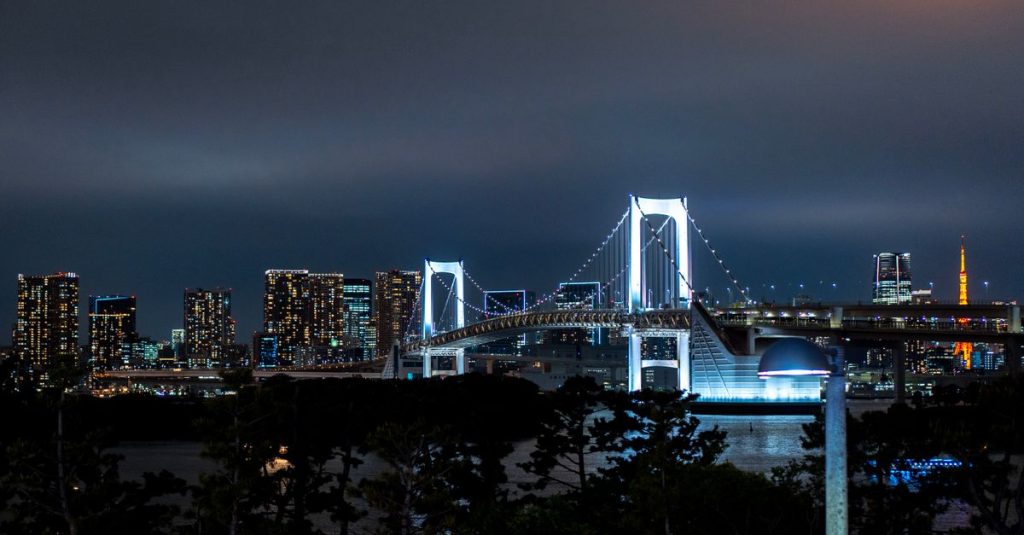
Discover Odaiba, Tokyo’s artificial island: attractions, beaches, museums and bay views for a memorable waterfront escape in the capital.
A capsule hotel in Japan provides individual sleeping space in a compact area, with shared bathrooms and facilities. It can be worth considering when travelling alone, spending a night near a station or reducing costs without sleeping in a completely open dormitory bed. However, a capsule is not a substitute for a private room: sound insulation remains limited, luggage is generally stored elsewhere and movement rules depend on the property.
The right choice depends less on the futuristic appearance of the cabins than on practical criteria: bedding quality, ventilation, access to showers, secure storage and location. The advertised price should also be compared with that of a conventional hotel, especially for a couple or a longer stay. Budget accommodation is only worthwhile if its constraints suit your trip. A late arrival, large suitcase or light sleep can therefore change your decision. Before booking, examine the features of the property you have chosen rather than relying only on a chain name: spaces and hotel services can vary considerably under the “capsule” label.
In brief
Capsule hotels work by separating different uses. You sleep in a personal compartment, store your belongings in a designated area and use shared bathroom facilities. This arrangement makes it possible to provide many sleeping spaces without installing a bathroom for every guest.
The modules are often arranged in rows and stacked. Depending on the layout, they may close with a curtain, blind or light partition. Do not treat this separation as a secure bedroom door: check what system is provided for keeping your valuables.
At reception, staff explain your allocated sleeping space, how to access the different areas and the storage instructions. Some properties ask you to leave your shoes in a locker and move around in slippers. Follow the on-site instructions, as the layout is not the same everywhere.
Then locate the toilets, showers and the area where you can open your suitcase. This avoids searching for your belongings in the sleeping area while other guests are asleep. Prepare a small pouch containing your toiletries, night clothes and useful accessories.
The space available for luggage should be checked before payment. A personal locker will not necessarily hold a large suitcase. The property may offer separate luggage storage, open storage or another solution whose conditions should be confirmed directly.
The sleeping space may have lighting, a power socket and a ventilation control. However, do not assume they are present based only on general photographs. Read the description of the exact category you are booking, especially if you need to charge several devices.
Towels, indoor clothes, washing products, laundry facilities and a shared lounge may be available. Some facilities are included in the stay, while others may cost extra. When arriving with few belongings, this difference affects both comfort and the final amount paid.
An internet connection does not necessarily mean that a workspace is available. If you plan to use a computer or join a call, look for a suitable lounge. The sleeping compartment is generally not the right place to work without disturbing nearby guests.
A booking covering several nights does not guarantee continuous access to your sleeping space. Depending on the cleaning arrangements, you may have to leave certain areas during the day or put your belongings away. Also ask whether the same space and locker remain assigned throughout your stay.
Check-in, check-out and late-access procedures vary by property: check them in the property’s official information. When preparing for a first trip to Japan, remember the basic principle: noisy tasks should be done outside the sleeping area, and personal belongings should be prepared before settling in.
Comfort depends more on your sensitivity to noise than on the décor. Comfortable bedding and a well-kept cabin do not always compensate for neighbours snoring, moving around or setting alarms. The visual separation provides useful privacy, but it is not genuine acoustic insulation.
This explains why reviews can be very different for the same property. A traveller used to dormitories may appreciate the personal space, while someone who normally sleeps in a quiet room may find the night difficult. The best comparison is your tolerance for communal sleeping.
Look at photographs of the interior, not just those of the corridor. The available height, shape of the entrance and position of the light determine how easily you can sit up or change position. A striking façade says nothing about mattress support.
If you are tall, ask the hotel directly for the usable bed dimensions. Do not rely on a supposedly standard size: models differ. Also check access to an upper sleeping space if you have difficulty climbing a ladder or moving around in a confined area.
Air conditioning in the building does not mean that each guest can freely choose their temperature. Some modules simply have airflow connected to the shared system. If you are sensitive to heat or draughts, look for precise information in the description and recent reviews.
Earplugs can reduce disturbances without removing them. An eye mask may also help when the closure lets corridor light through. Keep these accessories within reach rather than at the bottom of your suitcase, so you do not have to return to the luggage area during the night.
Use designated areas for calls, food and packing. Crinkling packaging and zips are easily heard when everyone is trying to sleep. Preparing your belongings beforehand is a practical courtesy, not a complicated ritual.
A vibrating alarm can reduce disruption when leaving early. Conversely, several audible alarms in a shared area may wake multiple people. To plan a journey to a station, use a Japan transport guide and then check times with the relevant operator.
An individual capsule remains a small, enclosed space. Being able to leave it freely may not be enough to reassure someone with claustrophobia. Wide-angle photographs can also give a misleading impression of the volume; a filmed tour can help you understand the proportions.
If you are very apprehensive, a conventional room is a more suitable choice. A taller cabin may feel less confined, but does not guarantee silence or privacy comparable to a room. The decisive factor is your ability to rest in this environment, not the desire to tick off a Japanese experience.
Shared bathroom facilities are central to this type of accommodation in Japan. Depending on the property, you may find individual shower cubicles, a shared bathing area or both. Check the arrangement before booking if you need privacy when washing.
Photographs of washbasins do not prove that enclosed showers exist. Similarly, a reference to a bath does not necessarily mean that it is a hot spring. The key is to understand which facilities are actually accessible with your booking category, without extrapolating from a commercial name.
In a Japanese-style shared bath, wash and rinse yourself before entering the pool. The pool is for relaxing in shared water, not for soaping yourself. Washing stations may include a stool and hand-held shower: use them without splashing nearby guests.
Your small towel should not be put into the bath water. Also follow the posted instructions concerning clothing, personal belongings and electronic devices. Areas where guests undress are not places for taking photographs.
Policies concerning tattoos vary between properties and their facilities. Ask about the policy applying to the bath at your chosen hotel, rather than assuming there is a general permission or ban. A private shower may be an alternative, provided its availability is confirmed.
Some hotels accommodate men only, others women only, while others have separate areas. The word “mixed” may refer to the property as a whole without describing the dormitory layout. Check the section associated with the sleeping space offered.
For a woman travelling alone, separate areas are not the only relevant criterion. Controlled access, a reception desk and the route from the station also matter. A Japan travel guide can help you include these questions in your overall planning.
If the categories offered do not clearly match your situation, contact the property before paying. Conditions are not uniform from one chain to another. Direct confirmation prevents you from discovering a restriction at check-in.
Put your passport, money and sensitive devices in the secure storage provided. A closed curtain protects you from view, not from theft. Check that the locker works and keep your key or access method according to the hotel’s instructions.
Also locate the exits and keep passageways clear. A suitcase left in a corridor obstructs movement, particularly when lighting is reduced. If the luggage area is far away, take only the permitted essentials into your sleeping space rather than blocking the entrance.
Finally, a relaxed atmosphere in a shared lounge does not remove the need to respect rules concerning consumption, noise and visitors. These instructions allow people with different schedules to coexist. Safety depends on the property’s facilities, but also on careful use of shared areas.
A capsule hotel may cost less than a conventional room, but this is not guaranteed. The neighbourhood, demand, sleeping-space category and cancellation conditions affect the amount charged. A well-located property with many facilities may lose its advantage compared with a simple hotel nearby.
To find the price applying to your dates, check the rate published directly by the property and confirm what is included. Amounts change: a general estimate does not replace a quote for your stay. Always compare offers shown in the same currency and under equivalent conditions.
Laundry, storage after check-out and certain facilities can change the final bill. Their inclusion should be checked in the conditions of the chosen offer. A presentation highlighting many hotel services does not mean that all of them are available without an additional charge.
Location also forms part of the calculation. A cheaper property far from your activities may add transport costs and make late returns more complicated. When planning your Japan travel budget, consider accommodation, transport and daily needs together.
| Criterion | Capsule hotel | Conventional room |
|---|---|---|
| Pricing | Check the amount per occupant and sleeping space | Check the amount for the intended occupancy |
| Bathroom facilities | Shared, depending on the layout | Private or shared, depending on the offer |
| Luggage | Locker or separate storage to be confirmed | Storage in the room, depending on available space |
| Daytime rest | Access sometimes limited by cleaning | Access conditions should be checked |
| Privacy | Visual separation, limited sound insulation | Enclosed space, variable soundproofing |
For a couple, add up the sleeping spaces required before comparing the total with a shared room. The individual price of a capsule should not be compared directly with the total price of a double room. Access to a private bathroom may also justify a moderate difference depending on your priorities.
The length of your stay also changes the balance. Opening your luggage in a shared area may be acceptable for a short stop, but can become restrictive during a longer trip. Similarly, a business stay with regular calls requires you to check whether a suitable space is available.
A business hotel, meaning a functional hotel often intended for work trips, should therefore be included in the comparison. Its room may be compact while still offering a closed door and greater independence. Check the exact facilities, however: this label does not guarantee the same layout everywhere.
A non-refundable offer does not have the same value as a flexible booking. If your arrival depends on transport or an itinerary that is not yet certain, the ability to change your stay may matter more than an immediate saving. Read the deadlines directly in the official sales conditions.
Finally, distinguish an overnight stay from a temporary rest package when a property offers several uses. The cheapest product displayed may not meet your needs. The right price is the price of the complete service you will actually use, with the right hours and facilities.
Choose the neighbourhood first, then the type of sleeping space. A property that suits your movements will generally be more convenient than a spectacular one in an out-of-the-way location. Examine the station useful for your itinerary, access from the hotel and the options for returning after your evening activities.
The advertised proximity of a station should be interpreted carefully. A large railway complex may have several entrances far apart from one another. Look at the actual route to the building entrance, especially if you are travelling with a suitcase or arriving after some passageways have closed.
In Tokyo, Shinjuku, Shibuya and Akihabara are among the neighbourhoods where you can look for this type of accommodation. They nevertheless suit different atmospheres and needs. Use a Tokyo neighbourhood guide to choose a base that fits your visits rather than automatically selecting the best-known area.
An arrival or departure by air requires an additional check: terminal, route and access conditions. A property described as close to an airport is not necessarily walkable from your terminal. Consult the hotel, airport and transport operator for information that may change.
In Osaka, the Namba and Shinsaibashi districts are central places to search. In Kyoto, you can consider the Kawaramachi area depending on your itinerary. These are starting points for your search, not a guarantee that a particular property will be available on your dates.
Names such as Nine Hours or First Cabin can help you identify different approaches to compact accommodation. Do not assume, however, that every property in a chain offers the same facilities. Check the category sold, bathroom areas and accommodation conditions in the official information for the relevant hotel.
Recent reviews are most useful when they describe observable details: ventilation noise, suitcase storage, shower cleanliness or staff availability. A general rating provides less information than a precise comment. Look for recurring remarks rather than basing your choice on an isolated testimonial.
To compare with a room in the same area, also look at accommodation options in Shinjuku. This local comparison is more relevant than comparing properties in very different neighbourhoods. It shows what you are actually gaining in exchange for shared facilities.
A mixed dormitory does not mean that a capsule can accommodate a couple. Sleeping spaces generally remain individual, unless an offer explicitly states otherwise. If sleeping together matters, look for a suitable category rather than inferring this possibility from the property being mixed.
For families, ask about conditions for minors and how the areas are organised. For a person with reduced mobility, check the complete route: entrance, lift, access to the bed, shower and toilet. A low capsule alone does not establish that the entire property is accessible.
Before paying, confirm luggage storage, bathroom facilities, daytime access and arrival procedures. A successful capsule hotel booking depends on these practical details: they determine whether the property really suits your stay, beyond the photographs.
A filmed tour can help you visualise the route between the sleeping space, lockers and bathroom facilities. Check that it concerns the property and category you are considering; for current services, the information published by the property remains decisive.
Do not expect a closure comparable to that of a private room. The system varies by model; use the secure locker provided for your valuables and check that it works on arrival.
A mixed property does not guarantee shared sleeping space. Book an option explicitly intended for a couple if you want to sleep together; otherwise, spaces are generally individual.
Depending on the property, in a luggage room or an area separate from the personal locker. Before booking, confirm storage capacity, security conditions and any possible fees with the hotel.
No. Compare the total amount for all travellers, included services, cancellation policy and transport with a conventional room in the same neighbourhood. Check prices directly with the properties.
The partitions mainly provide visual privacy. Other guests’ noises may remain audible; if silence is essential for your rest, a private room is generally more suitable.
Updated on 20/10/2026
Scroll to see more articles →