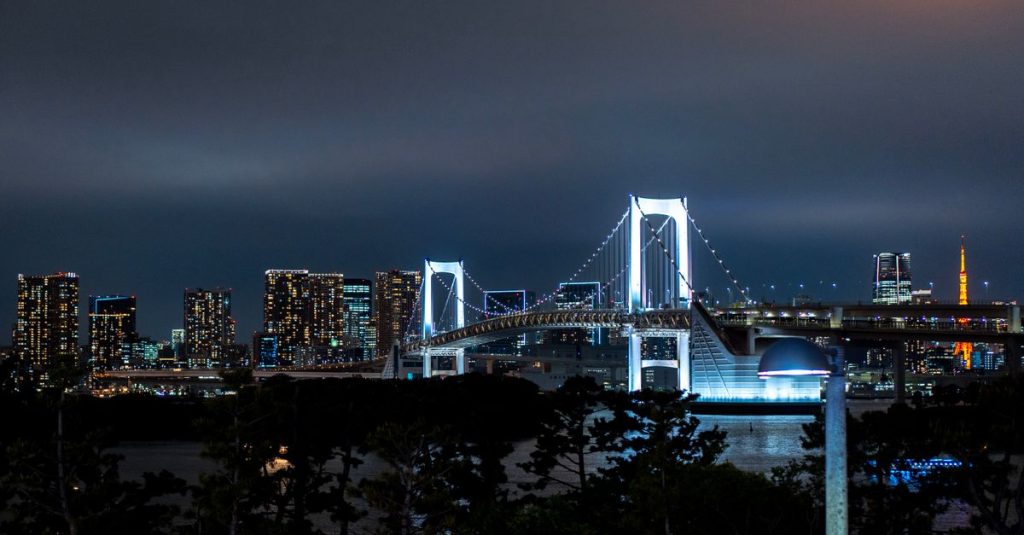
Odaiba Tokyo: Things to Do on the Artificial Island
Discover Odaiba, Tokyo’s artificial island: attractions, beaches, museums and bay views for a memorable waterfront escape in the capital.
A night in a ryokan generally follows the rhythm of arrival, bathing, dinner, bedtime and breakfast. This Japanese inn focuses on the comfort of the room, its cuisine and attention to guests rather than simply providing accommodation. Tatami, futon and yukata often form part of the setting, but facilities vary: not every property has a hot spring, serves kaiseki meals or offers only floor bedding.
In brief
Your stay begins with a welcome that organises the evening. Staff confirm your booking, explain which areas you can use and outline how meals will work. Some properties escort guests to their room; others operate with a reception closer to that of a hotel.
The main thing is to check the arrival instructions before planning your sightseeing. When dinner is included, the kitchen prepares a menu and coordinates its service, so a late arrival may mean missing the meal. Check the applicable times and the consequences of being late directly with the property.
In many traditional properties, shoes are left at the genkan, the entrance area. The change in floor level often helps you understand where the indoor area begins. Nevertheless, wait for the staff’s instructions, as larger establishments may organise this transition elsewhere.
Slippers are generally provided for moving around indoors. They are not worn on tatami, whose surface requires more care than an ordinary floor. If special slippers are provided in the toilet, leave them there when you come out.
For your luggage, use the place indicated in the room rather than rolling your suitcase over the mats. Wheels and corners can damage their surface. This simple precaution avoids a common problem without making your arrival complicated.
Japanese hospitality is expressed in particular through anticipating guests’ needs: explaining the baths, preparing the bedding or coordinating the meal. This does not mean that every property provides constant assistance. A small family-run inn and a large hot-spring property have different organisation and services.
Tea and a small sweet may be offered at reception or in your room. This welcome gesture is not necessarily a tea ceremony, a codified practice requiring a particular setting. If this activity interests you, look for a service explicitly advertised rather than inferring it from photographs.
Use this first exchange to settle practical questions: where dinner is served, how the heating works, where the toilets are and how to access the baths. Also ask whether a reservation is needed for a private area. These details save you from having to look for answers after you have changed.
Language can make detailed requests more difficult, particularly in small properties. A written translation of your allergy or accessibility needs will be more useful than a long improvised explanation. Do not assume that a high price guarantees a French-speaking welcome or even an English-speaking contact at all times.
Do you need to learn a complete protocol before coming? No: observing, reading the signs and asking a question is enough in most situations. Respecting shared spaces matters more than knowing every custom perfectly.
To organise this stage of a first trip to Japan, plan a relatively light arrival day. The point of staying at an inn is to spend time there, not simply to drop off your belongings between visits.
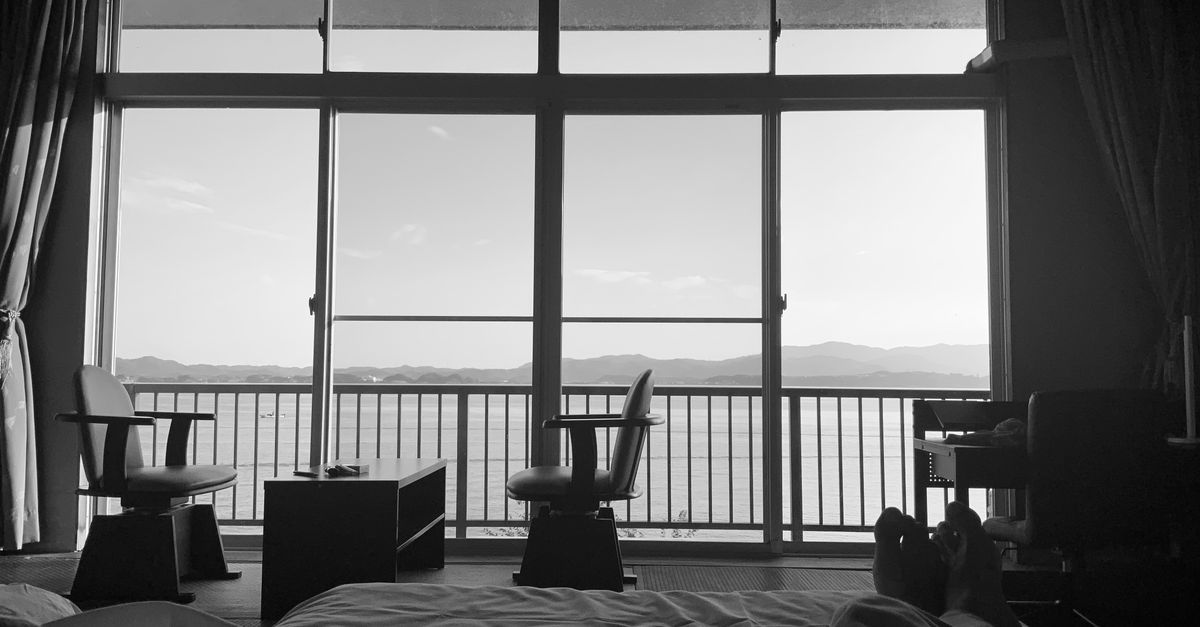
A traditional room changes its purpose throughout the day. The central space first contains a low table, then may become the sleeping area when the bedding is laid out. This explains why a room may look almost empty in photographs taken before the evening.
Tatami is a floor mat whose woven surface contributes to the character of the room. Walk on it without shoes or slippers, wearing clean socks or going barefoot. Also avoid placing a damp towel on it: the materials do not cope well with prolonged moisture.
Here, futon refers to Japanese bedding placed on the floor, with a soft mattress and a quilt. Its firmness and thickness depend on the property, so the experience is not always like sleeping in a Western bed. People with back problems should ask for details before choosing.
In some properties, staff prepare the bedding during dinner. Elsewhere, it is already laid out or guests are expected to do it themselves. Check this arrangement if you want to limit staff entering your room or put a child to bed before the adults’ meal.
Traditional accommodation does not necessarily mean sleeping directly on the floor. Mixed rooms combine a Japanese-style area with beds, while others have armchairs and a high table. These layouts may be more suitable when kneeling down or standing up is difficult.
Your choice should therefore focus on the exact room category, not just the name of the property. One inn may sell very different types of accommodation. General photographs guarantee neither the view, the bathroom nor the bedding type included in your booking.
| Configuration | What it involves | What to check |
|---|---|---|
| Japanese-style room with floor bedding | Flexible space and usually low seating | Bedding arrangements and the comfort you need |
| Room combining beds and a traditional area | More accessible sleeping with a mat-covered area | Exact layout and movement around the beds |
| Room without a private shower | Using shared facilities to wash | Whether there is a toilet in the room |
| Room with a private bath | Bathing in an area reserved for the occupants | Type of water and whether there is a shower |
A yukata is a lightweight garment, generally made of cotton, often provided for relaxing. It is closed by folding the left side over the right and tying the belt. Ask for another size if it does not let you walk comfortably.
It is often acceptable in corridors, in the restaurant and on the way to the baths. Customs vary from one property to another: going out into town dressed like this is not automatically expected. Comfortable personal clothing remains an option if you do not wish to wear it.
Finally, look at less visible facilities: sound insulation, blackout curtains, heating and storage. Sliding partitions can provide a different experience from that of a modern hotel building. For a comfortable traditional stay, practical comfort should guide your choice as much as aesthetics.
A ryokan does not necessarily have an onsen. This term refers to a bath supplied by a hot spring meeting Japanese criteria, not just any communal pool. A property may offer a large bath with heated water without claiming a hot-spring source.
The distinction matters if a natural spring is the reason for your booking. An outdoor pool, called a rotenburo, describes an open-air arrangement, not the origin of the water. A bath in your room therefore guarantees neither hot-spring water nor an unobstructed view.
In traditional communal baths, you undress in the changing room before going to the washing stations. Bathing is generally done without swimwear, unless a specific arrangement is explicitly announced. Always follow the local signs rather than assuming that every facility works in the same way.
Wash and rinse yourself thoroughly before getting into the water. The pool is for relaxing, not for soaping yourself. At the shower stations, avoid splashing other guests and put the equipment back neatly after use.
Keep the small towel out of the water; long hair should be tied up so that it does not go into the bath. When you leave, dry yourself sufficiently before returning to the changing room. These actions help preserve the cleanliness of a shared facility.
Phones and cameras have no place in an area where people are undressed. Even a bath that appears empty may soon be joined by someone else. To explore these practices further, see the rules of etiquette in onsen.
Access conditions for tattooed guests vary from one property to another. Some establishments accept tattoos, while others ask guests to cover them or restrict access to communal facilities. Obtain written confirmation describing your situation before paying for a non-refundable booking.
A private bath, sometimes called a kashikiri buro, is reserved for exclusive use during a time slot. It may suit a family, a couple or anyone who does not wish to undress in front of other guests. Access is not necessarily included in the stay.
Do not confuse this service with a bath attached to the room. Check the booking conditions, whether there is a changing area and any restrictions. For children, also ask about the applicable rules rather than relying on a general description intended for adults.
Hot water can be strenuous. Enter gradually, leave as soon as you feel uncomfortable and avoid bathing after drinking alcohol. If you are pregnant or have a health condition, seek medical advice suited to your situation.
Men’s and women’s areas may change according to how the property is organised. Check the signs each time; curtain colours alone are not sufficient guidance. Also check opening times with reception.
Bathing before dinner is an option, not an obligation. You may prefer to go after the meal or the following day, depending on your comfort and the access conditions. The right arrangement is the one that lets you relax without having to endure excessive heat or crowding.
Dinner is often the centre of the evening, but it is not always included. The same property may sell room-only stays, packages with breakfast or half-board. Read the offer carefully: photographs of a meal do not prove that it accompanies your booking.
Service may take place in your room, in a shared dining room or in a private space. None of these formats alone defines the quality of the cuisine. In-room dining requires particular organisation and should not be assumed to be automatic.
Kaiseki is Japanese cuisine made up of successive preparations, with careful attention to ingredients, seasons and presentation. Depending on the menu, you may find a starter, raw or cooked fish, vegetables, a simmered dish, rice and soup. There is no universal composition that applies to every property.
The tableware and cooking methods contribute to the meal as much as the choice of ingredients. A regional speciality may be highlighted without necessarily involving premium beef or expensive seafood. Other inns serve home-style cuisine or a buffet instead of a gastronomic menu.
To better understand the dishes on offer, our guide to Japanese cuisine can help you identify the main dishes. At the table, ask how to eat something if its use is not obvious. Staff can explain, in particular, which accompaniment or sauce is intended for it. You can also compare the experience with our guide to Japanese pub food.
Allergies must be reported before booking. Fish and seafood may be present in stock, sauces or seasonings, even when a dish appears mainly vegetarian. A request made when you sit down to eat may be impossible to accommodate.
A vegetarian or vegan menu also requires explicit confirmation. Removing a portion of meat is not enough to adapt a preparation containing fish dashi. If the property cannot guarantee a solution compatible with your needs, choose another place or a package without dinner.
After the meal, your bedding may already be prepared. The evening is suited to reading, resting or taking another bath when the facilities are open. Keep corridors quiet, particularly in buildings where sound travels easily.
If you plan to go out, ask about night-time access and nearby dining options. An isolated inn does not operate like a city-centre hotel surrounded by shops. The best approach is to anticipate your needs before settling down for the night.
A Japanese breakfast may include rice, miso soup, fish, eggs and pickled vegetables. Its composition depends on the property and the package chosen. A Western alternative is not guaranteed, so ask in advance if this matters to you.
In the morning, some properties put away the bedding while guests eat. Check the time by which you must vacate the room and plan to gather your belongings before leaving. A smooth stay depends on this discreet coordination between meals, rest and the staff’s work.
When comparing offers, first check exactly what the price covers. Depending on the platform and package, the displayed amount may apply to one person or to all occupants. Check the final total, meals, cancellation conditions and any additional charges before confirming.
A room with a private bath meets a different need from simple accommodation with access to shared facilities. Location, room category and dining also affect the comparison. A high price alone does not guarantee a more traditional experience.
Prices and conditions change according to dates and availability. Contact the property directly to confirm the applicable price, then check with the relevant local authority if you need to verify a local tax. Check the Japan travel information you need before planning your dates.
Ask which payment methods are accepted, particularly for expenses on site. Drinks, treatments and some private bookings may be charged separately. The guide to payment in Japan will help you prepare a suitable option.
If travelling alone, check that the category you want accepts single occupancy. For a family, specify the children’s ages and your requirements for meals and bedding: conditions are not uniform. If you have reduced mobility, ask for concrete information about steps, lifts and access to the baths.
Hakone is suitable for a stay organised around Tokyo, provided you study the route to the exact property. Accommodation is spread across different areas, and arriving at a station does not necessarily mean the journey is over. Look at accommodation with onsen in Hakone while allowing for the final transfer.
Kinosaki is particularly appealing to travellers who want to combine their accommodation with a walk around a hot-spring town. Check current access conditions for the outdoor baths with the inn and tourist office. Our selection of inns in Kinosaki Onsen can help you refine your choice.
From Kyoto, the Ogoto area, near Lake Biwa, is another possibility. Kii-Katsuura is better suited to an itinerary devoted to the Kii Peninsula. For these destinations, check times with official transport operators and ask your accommodation whether a shuttle is available.
At Koyasan, a shukubo is accommodation in a temple, not simply a commercial variation of a ryokan. The religious setting, Buddhist cuisine and any activities on offer give the stay a different meaning. Choose it for this distinctive feature rather than as an automatic substitute for a hot-spring inn.
The season affects landscapes, visitor numbers and travel. An outdoor bath in cold weather may be appealing, but snow can also make access to mountain properties more difficult. Consult our guide to the best season for travelling in Japan and leave some flexibility in your itinerary. If you are comparing regions, our guide to Hokkaido’s seasons may also help.
Finally, check practical facilities: in-room internet, luggage storage, supplied equipment and whether you can send requests before arrival. A property suited to your needs is better than a spectacular photograph accompanied by poorly understood conditions.
No, but the languages spoken vary by property. Prepare important requests in writing, particularly allergies and accessibility needs, and have them confirmed before booking.
Yes. Choose a room with a shower or private bathroom, or check whether you can reserve a bath for exclusive use. A private toilet does not necessarily mean that a shower is also available.
No. Some properties offer beds or mixed rooms with a tatami area. Check the exact category booked, particularly if you have difficulty getting up from the floor.
That depends on the property and package. Confirm that children are accepted, along with the bedding, suitable meals and bath-access conditions. A private area may make family bathing easier.
One night lets you experience the welcome, dinner, bedding and breakfast if your package includes them. A longer stay gives you more time for bathing and exploring the surrounding area, but means adapting your sightseeing schedule to the planned meals.
Updated on 22/10/2026
Scroll to see more articles →