
Shirakawa-go: Visit the Gasshō-Zukuri Village
Discover Shirakawa-go, a UNESCO-listed Japanese village with gasshō houses, Alpine scenery and practical advice for planning your visit.
The train from Osaka to Kyoto connects two nearby cities, but the best option depends mainly on your departure station. From Osaka Station, a rapid JR train runs directly to Kyoto; the Shinkansen leaves from Shin-Osaka, not Osaka’s central station. For most travellers, the conventional rapid train is therefore the simplest choice: it avoids a transfer and serves both central stations.
Journey times vary according to the service and departure point. The fare information provided for this page contains contradictory amounts, including averages that are clearly inconsistent with such a short journey, so it is best not to rely on it when setting a budget. Check ticket prices and train times at the time of travel with JR West or JR Central, depending on the line selected.
In brief

The first thing to check before booking is the exact name of the station. Osaka Station, in the heart of the Umeda district, serves JR conventional trains. Shin-Osaka, located further north, is the station used to take the Shinkansen towards Kyoto.
From Osaka Station, rapid trains on the JR Kyoto Line run directly to Kyoto Station. This is often the most convenient way to reach central Kyoto without changing trains. The duration depends on the service selected and any waiting time on the platform: check the JR West timetable on the day of travel rather than relying on a general estimate. For a broader overview of train travel in Japan, it is useful to understand how the different services operate.
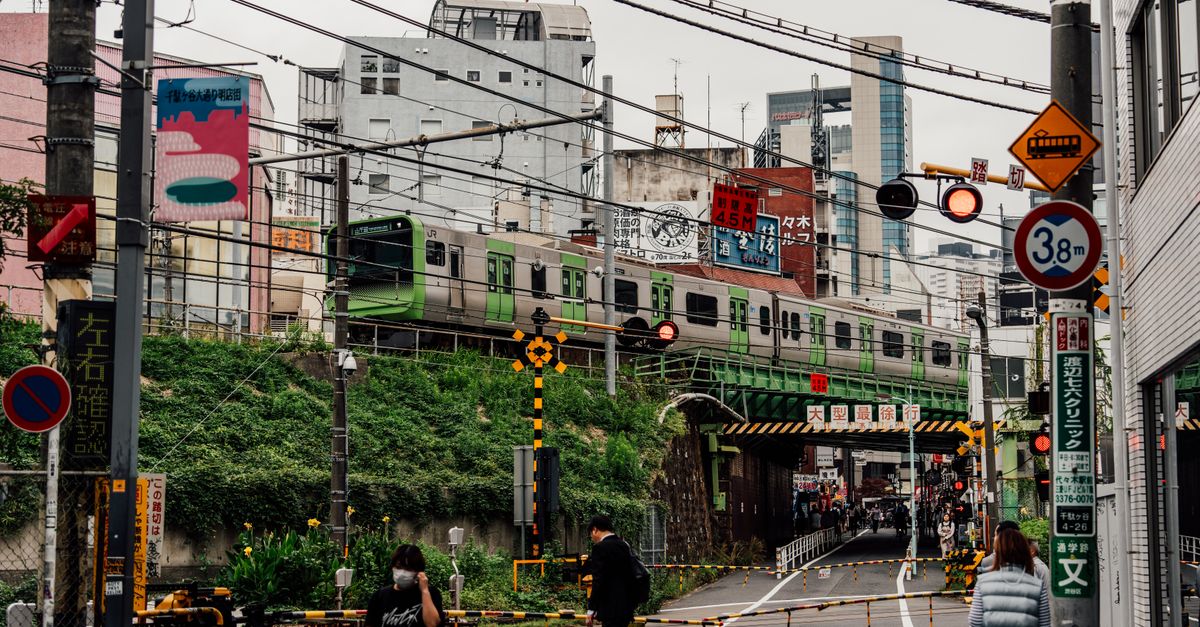
The Shinkansen connects Shin-Osaka and Kyoto without an intermediate stop on this short route. It may be suitable if you are already at Shin-Osaka, if you are continuing your journey on the high-speed network or if a particular departure time works for you. However, if you are starting at Osaka Station, you must factor in the time needed to reach Shin-Osaka: the Shinkansen journey is only one part of the total trip.
Kyoto Station is a major transport hub. It lies south of the historic centre and provides onward connections by metro, bus and other railway lines. Arriving at Kyoto Station is convenient for visiting some districts; for other destinations, check whether a private railway line or another Kyoto station would bring you closer.
Journey time depends first on the type of train and the stations selected. Estimates provided by Trip.com for this route show a fast journey of around thirteen minutes between Shin-Osaka and Kyoto, while journeys departing from Osaka Station are longer. These indications do not replace current timetables: they do not always clearly specify the departure station or the service concerned.
The rapid JR train is generally the direct choice from central Osaka. It serves several stations along the route, which explains why its travel time is not identical to that of the Shinkansen. The local train stops more frequently; it may be useful if you are travelling to an intermediate station, but it is rarely the fastest option for travelling from one central station to the other.
| Option | Departure in Osaka | What to remember |
|---|---|---|
| Rapid JR train | Osaka Station | Direct to Kyoto Station; convenient from Umeda. |
| Shinkansen | Shin-Osaka | Direct and fast between the two Shinkansen stations; allow time to reach Shin-Osaka. |
| Local train | Depending on the line and station | More stops; consider it if an intermediate station is your destination. |
To compare the options properly, add together the time needed to reach the station, waiting time, the rail journey and the time needed to leave the station at your destination. A very fast Shinkansen on the tracks may not save time if you have to cross Osaka to reach Shin-Osaka. You can also compare it with other options in this guide to long-distance train travel in Japan.
To book tours and activities in Osaka ahead, see the options on Klook.
The price depends on the route, train, seat type and booking channel. The fare data provided for this page shows several amounts in euros that do not agree with one another, as well as an inconsistent average. It is therefore not possible to announce a reliable fare. Check the price shown by JR West or JR Central before buying; if you pay in euros, the exchange rate and any fees charged by the provider may change the amount debited.
For a single journey between Osaka and Kyoto, compare the price of a single ticket with a pass that is genuinely suited to your complete itinerary. A national pass is not automatically good value for this route alone: its usefulness depends on the other long-distance journeys planned during its validity period. Pass prices and conditions change, so check them with the railway organisation selling the pass.
The conventional rapid train is often the first option to consider when departing from Osaka Station and travelling to Kyoto Station. The Shinkansen may make sense because of its timetable, a connection with another high-speed train or the convenience of your departure point, but you should compare the total cost rather than just the time spent on board. See our guide to Shinkansen tickets and reservations before booking.
If Kyoto is one stop on a longer trip, these resources can help you build a coherent route: a ten-day Japan itinerary or a three-week itinerary. The right ticket depends on the number of journeys and the cities visited, not only on this route.
Tip: set up a Japan eSIM before departure so your data works on arrival.
Timetables vary according to the day, service and any engineering works or operational changes. Before setting off, search for trains on the correct date and select the exact station: Osaka Station and Shin-Osaka are not interchangeable. Departure boards at the stations and JR’s official tools can confirm the platform and any connections.
Booking a ticket is not necessary for every conventional train, but it may be useful if the service offers reserved seats and you are travelling in a group or during a busy period. For the Shinkansen, the arrangements depend on the train and ticket purchased. Read the conditions for changes, cancellations and refunds before paying, as discounted fares may have stricter rules.
An IC card, such as ICOCA or Suica, is convenient for many ordinary trains and urban transport. However, it should not be treated as a universal ticket for the Shinkansen: check the procedure applicable to the service selected. If you have bought an electronic ticket, check in advance how to pass through the gates, particularly if a reservation must be linked to an IC card.
Travellers with a large suitcase should also check the rules for the line and train. Conditions may differ depending on the service; do not assume that every carriage has the same amount of space. When travelling during a very busy period, booking early and arriving at the station with a reasonable amount of extra time makes boarding easier.
From Umeda or the area around Osaka Station, the rapid JR train is the most direct choice for reaching Kyoto Station. From Shin-Osaka, or if you are continuing immediately to another city served by the high-speed network, the Shinkansen may fit your itinerary better. The best route is the one that minimises access journeys and changes, not necessarily the one with the shortest journey time shown on board.
If your accommodation is near a station served by a private railway line, compare those services as well. Hankyu and Keihan serve different areas of Kyoto and Osaka; they may be useful depending on your precise destination, even though they do not depart from the same central stations as JR. Check your hotel address and the district you want to visit before buying.
In practice, follow this order: find the closest station, choose the line serving your destination, then compare the confirmed door-to-door journey time and fare. This approach avoids booking a Shinkansen simply because it is faster on the rail section, when a direct train from the centre may be easier.
From Osaka Station, the rapid JR train to Kyoto Station is a direct and convenient option. The Shinkansen leaves from Shin-Osaka, a different station that you must reach first.
The duration varies according to the train and the departure and arrival stations. The indications provided for the Shinkansen between Shin-Osaka and Kyoto are shorter than those for the rapid train departing from Osaka Station; check the day’s timetable with JR.
The fare depends on the service and ticket type. The amounts in euros shown in the available fare information are contradictory: check the confirmed price with JR West or JR Central when buying.
It depends on the train and ticket. A reservation may be useful during busy periods or when travelling together, but check the conditions of the selected service and the change rules before paying.
Updated on 03/11/2026
Scroll to see more articles →