
Shirakawa-go: Visit the Gasshō-Zukuri Village
Discover Shirakawa-go, a UNESCO-listed Japanese village with gasshō houses, Alpine scenery and practical advice for planning your visit.
Japanese given names combine a sound with one or more written forms, often kanji, whose meaning can vary according to the characters chosen. To understand a name’s meaning, you therefore need to consider its pronunciation, its Japanese spelling and the cultural associations it evokes.
The same given name can be written in several ways: Yuki, for example, may be associated with snow or happiness depending on the kanji used. The examples below illustrate these choices without suggesting that only one spelling or interpretation is possible for each name.

Japanese given names are often composed using kanji, characters that carry meaning and may have several pronunciations. Parents therefore choose more than just a sound: they also select characters and the meanings they want to associate with it. A name may be written with a single kanji, such as Ren 蓮, or with several characters, such as Haruki 春樹, generally interpreted as “spring tree”.
Kanji notably have Chinese-derived readings, known as on’yomi, and Japanese readings, known as kun’yomi. In names, usage varies: a reading may be specific to the name or differ from the one expected when the characters are read in an ordinary word. This is why a kanji reading cannot always be deduced from the characters’ appearance alone.
Some given names are also written in hiragana, a Japanese syllabary, or katakana, another syllabary used notably for words of foreign origin. In these cases, the writing emphasises pronunciation rather than the meaning associated with kanji. The chosen written form therefore contributes to the name’s identity, even when the sound remains identical. For more background, see this Japanese language guide.
The same sequence of sounds may have several written forms. Yuki can be written 雪, “snow”, while other spellings may suggest happiness or other ideas. Conversely, a character in a given name may have a different reading from the one it has in another context. Name tables therefore provide examples of spellings, not a universal rule applying to everyone with that name.
This flexibility explains why dictionaries do not always give a single answer to the question “what does this name mean?”. To interpret a specific name correctly, you need to know its official spelling and, if necessary, ask how the person reads it. The sound offers a clue; the characters clarify the intention.
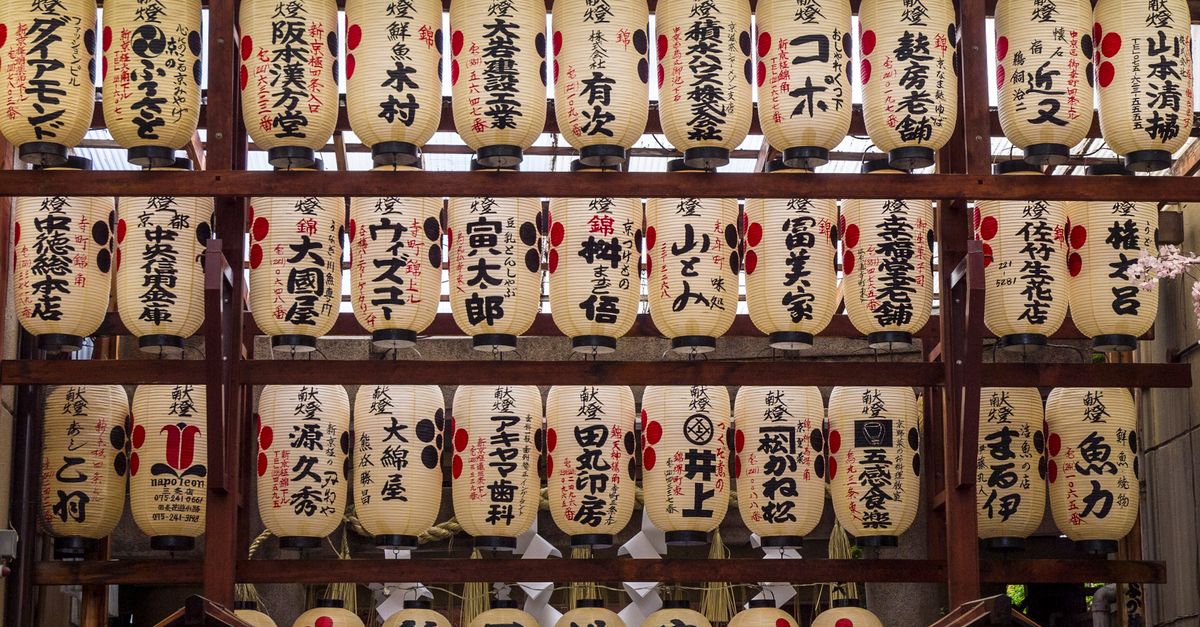
A kanji may evoke a concrete object, a quality or a poetic image. 花 refers to a flower, 光 to light, 海 to the sea and 春 to spring. In a compound given name, the characters may form an overall idea: 美咲, for example, combines 美, “beauty”, with 咲, “to bloom”. This literal translation helps explain the choice but does not necessarily capture all its nuances.
Names inspired by nature are common in familiar examples. Sakura 桜 evokes the cherry blossom, Kaede 楓 the maple tree and Sora 空 the sky. These images carry cultural associations, but it is better not to assign them a fixed meaning: the cherry blossom, for example, may suggest spring and ephemeral beauty, without everyone named Sakura sharing the same interpretation.
Characters associated with personal qualities are another source of inspiration. Makoto 誠 evokes sincerity, Akira 明 clarity or light, and Yui 結 the idea of connection or union. Here too, the meaning depends on the exact spelling. It would be unwise to conclude that a name guarantees a quality or reveals someone’s character: it expresses an intention or image chosen by the family.
Here are some examples of spellings and meanings often associated with them. They are not exhaustive, and other kanji may be used for similar sounds.
| Given name | Example of kanji | Associated meaning |
|---|---|---|
| Sakura | 桜 | Cherry blossom |
| Hana | 花 | Flower |
| Ren | 蓮 | Lotus |
| Haruki | 春樹 | Spring and tree |
| Akira | 明 | Light, clarity |
| Makoto | 誠 | Sincerity |
To better understand the place of characters and usage in everyday life, you can also consult this guide to Japanese culture and daily life. It helps place given names in a broader context than their literal translation.
Tip: set up a Japan eSIM before departure so your data works on arrival.
Lists of Japanese names often include female, male and unisex examples. Some sounds or endings are traditionally more common for one gender, but usage cannot be reduced to an absolute rule. The names Sora, written 空, and Hinata, which may be written 陽向 or 日向, are notably used for different genders depending on the person and family.
Female names illustrating natural or luminous themes include Hana 花, Yuki 雪, Akari 明里 and Misaki 美咲. Their sound may seem gentle to a French-speaking ear, but this impression must be distinguished from the meaning of the characters. Akari, for example, evokes a glow in the spelling shown; another spelling of the same sound could carry a different nuance.
Male names may highlight nature, movement or moral qualities. Ren 蓮 evokes the lotus, Minato 湊 a port or gathering place, while Makoto 誠 refers to sincerity. Haruto 陽翔 is a combination associating characters linked to the sun and taking flight, but the precise meaning and reading should always be checked for the name in question.
Popular culture also gives visibility to certain names. Chihiro 千尋 is associated with the main character in the film Spirited Away; Tanjiro 炭治郎 is known through Demon Slayer. These references may attract attention, but a name used by a character was not necessarily created for a work. It is worth distinguishing the real name, its spelling and the fictional story that made it familiar.
To explore examples without confusing popularity with personal preference, this short list can provide a starting point:
Given names offer a glimpse into the richness of Japanese, but they do not replace Japanese family names, which follow their own conventions and may also be written with different kanji. To understand a person’s complete identity, you therefore need to consider both given name and family name in context, without assuming that every element has a simple translation.
A brush-writing demonstration shows that characters are not merely decorative elements: their form, stroke order and reading all contribute to mastering Japanese writing. You can explore this further through these Japanese calligraphy classes.
For a French-speaking family, choosing the characters is only one part of the decision. Japanese pronunciation may differ from French habits: the Japanese “r” is not exactly the French “r”, and some sound combinations, such as “tsu”, require a little attention. Saying the name aloud and then having speakers of both languages repeat it can help identify possible hesitations.
Length also matters in everyday life. Ren, Mei and Yui are short and easy to remember, whereas Haruka, Natsuki and Tsubasa may sometimes require a pronunciation explanation in France. This is not a reason to rule out longer names: the key question is whether the family wants to preserve a distinctly Japanese sound or favour a form familiar to French-speaking listeners.
It is useful to check the name in its exact written form rather than relying on an isolated romanisation in the Latin alphabet. The same romanised form may correspond to different kanji; the chosen characters then determine the intended nuances. If the name is to be used in Japan, it is also sensible to check how it will be read and understood in administrative and school contexts.
Before deciding, consider the following points:
Japanese traditions cannot be reduced to a list of symbols: family choices, sounds and usage continue to evolve. To explore this context further, this guide to Japanese cultural life offers useful background before settling on an interpretation.
Yes. The same pronunciation may be written with different kanji, which bring different meanings. You need to know the exact spelling to interpret the name.
No. Some names are written in hiragana or katakana. These scripts mainly indicate pronunciation and do not carry the same meanings associated with kanji.
They are used for different genders. Habits may vary according to families and the spellings chosen; it is best to check the name in context.
Ask the person concerned or a competent speaker for the exact spelling and intended reading. Pronunciation cannot always be deduced from the kanji alone.
To book tours and activities in Japan ahead, see the options on Klook.
Updated on 10/11/2026
Scroll to see more articles →