Shirakawa-go: Visit the Gasshō-Zukuri Village
Discover Shirakawa-go, a UNESCO-listed Japanese village with gasshō houses, Alpine scenery and practical advice for planning your visit.
In Kanazawa, Kenroku-en is a Japanese garden where you discover both a carefully composed landscape and a place shaped over time. Ponds, meticulously maintained pine trees, pathways and open views combine to create different atmospheres depending on where you are and the season. Considered one of Japan’s three great gardens, it deserves an attentive visit: walking around without rushing allows you to notice the details that give this landscape its character.
A visit fits easily into a stay in the city, particularly when combined with other places in the historic centre. To enjoy the garden, it is best to plan a flexible route, take breaks and check practical information with the official organisation before setting out: opening hours, prices and access conditions may change. Kenroku-en is not only a famous setting, but also a living Japanese heritage site, maintained and appreciated throughout the year.

Kenroku-en stands out for the variety of its perspectives. Rather than appearing as a uniform whole, the garden invites you to follow its paths and gradually discover areas with different characters. A pond may open up an unobstructed view, while a tree-lined path creates a more intimate impression. This alternation between openness and retreat is part of the pleasure of the walk.
Its name is associated with the idea of bringing together several qualities sought in a landscaped garden: space, tranquillity, artifice, antiquity, water and panoramas. These notions should not be understood as a checklist. Instead, they help you read the choices behind the composition: an element shaped by gardeners may appear natural, while a carefully framed view can sometimes seem to have been discovered by chance.
The garden is connected with the history of Kanazawa and that of the Maeda clan, which left its mark on the city. Its development over successive generations explains the variety of its layouts. For visitors, this history is easier to understand when taking time to observe the details: the way a tree accompanies a path, the position of a bridge in the landscape or the relationship between the water and the banks.
Kenroku-en is therefore much more than a stop dedicated to taking a few photographs. Its logic becomes clear as you change your viewpoint and compare the areas you pass through: the garden reveals itself through movement as much as through its best-known sites.
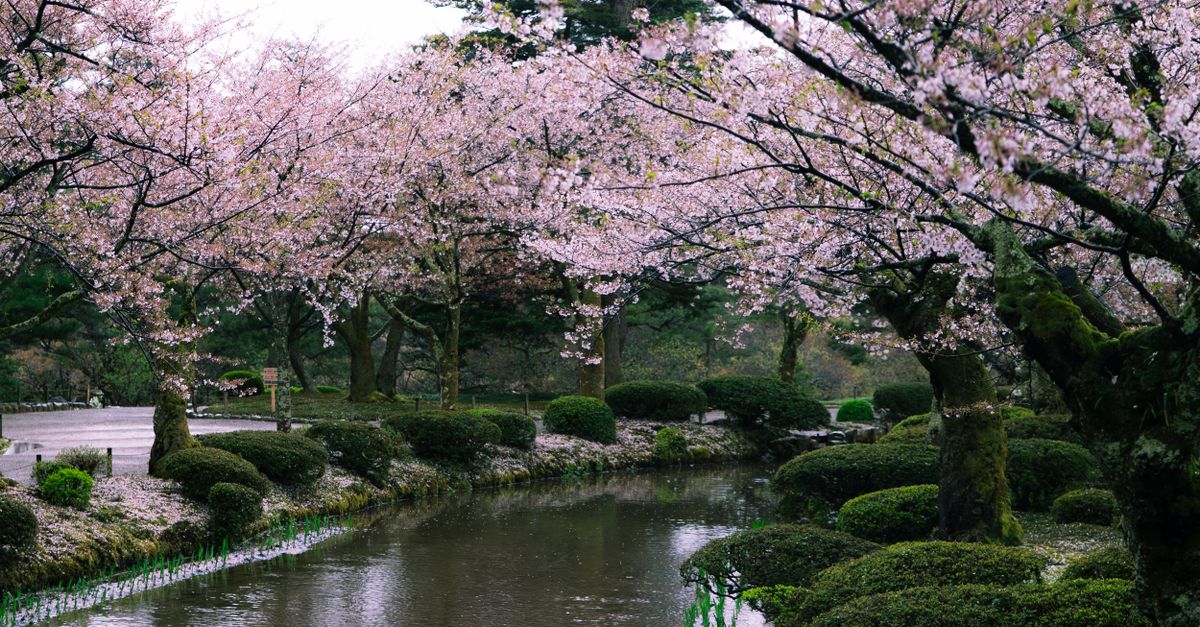
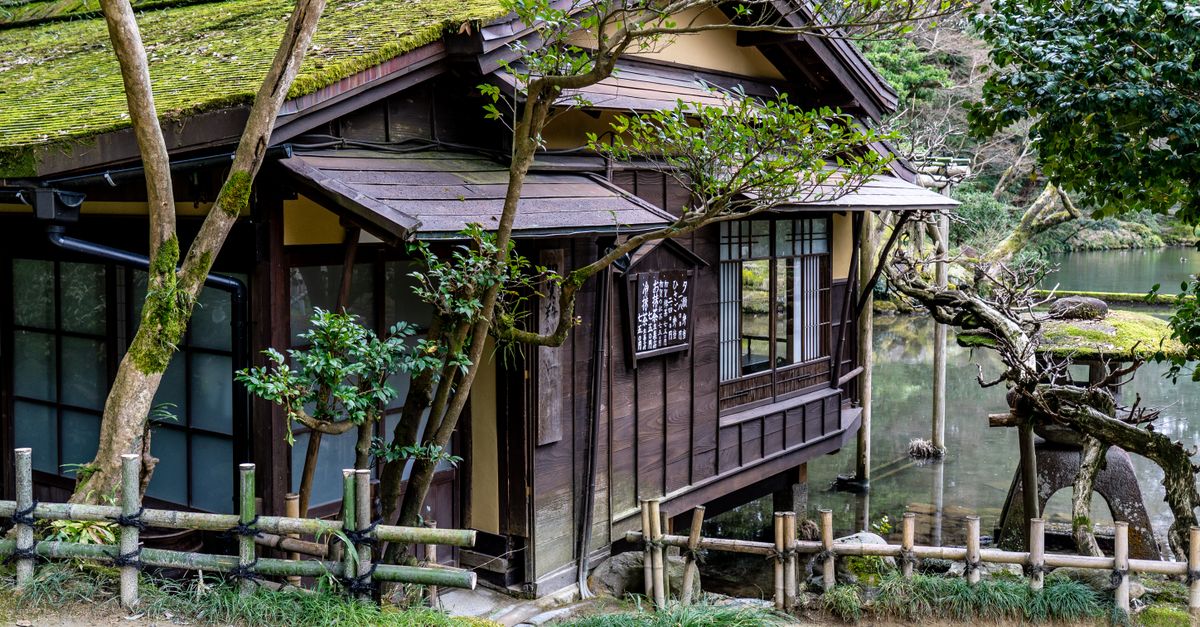
Water plays an essential role in the garden’s sense of balance. The ponds reflect the trees and nearby features, but they also organise the views: from a bank, your gaze follows the surface before settling on a bridge, a shoreline or a planting area. The perspective changes with the visitor’s position. This is why it is better not to limit yourself to a single viewpoint.
The pine trees are among the most striking visual elements. Their shape results from careful maintenance that highlights the line of the branches and their silhouette. In winter, some protections installed around the trees, known as yukitsuri, are characteristic of Kanazawa. They illustrate a care practice adapted to the region’s heavy snowfall, without reducing the garden to a merely seasonal setting.
The paths also encourage you to pay attention to transitions. One path may lead from an open area into a shadier passage; a viewpoint may only be revealed after a bend. These changes give rhythm to the walk and explain why a visit that is too fast can easily overlook the site’s richness. The bridges, rocks and plantings are not isolated objects: they help create a coherent landscape.
To look at the garden differently, choose an element visible from several places, such as a pond or a large tree, and observe how its role changes as you move around. This simple approach turns the walk into a reading of the Japanese garden rather than a succession of snapshots.
To get online as soon as you land, a Japan eSIM can be installed before you leave, with no need to look for a local SIM card.
Each season changes the garden’s appearance without erasing its structure. In spring, the cherry trees attract attention and the blossoms give the paths a new tone. The exact period varies according to the conditions of the year, so it is best to check local information if seeing the blossoms is an important aim of your trip. The garden remains interesting outside this period, thanks to the views over the water and the shapes of the trees. For broader seasonal planning, see our guide to Japan’s seasons.
In summer, the foliage reinforces the shaded areas and the ponds’ reflections take on a different role in the landscape. The heat encourages you to slow down and plan breaks. In autumn, the colours of the foliage can transform certain viewpoints, while winter highlights the structure of the branches and the protective arrangements. These variations give Kenroku-en an identity that cannot be reduced to a postcard season.
To organise a visit centred on cherry trees or autumn colours, leave some flexibility in your schedule. Weather conditions influence the development of blossoms and foliage, and dates cannot be guaranteed far in advance. If you are travelling during a very busy period, also enquire about the access arrangements communicated by the garden’s managers.
The best time therefore depends on what you want to observe: blossoms, contrasts in the foliage or the shape of the trees during the cold season. Whatever you choose, the garden changes its expression and offers a different reason to linger.
Kenroku-en is well suited to a day spent discovering Kanazawa. To avoid rushing, choose in advance the places you want to combine with the garden and leave time to walk between stops. The city has several neighbourhoods and cultural sites that allow you to extend your exploration of Japanese heritage. The guide to accommodation in Kanazawa can help you think about which area to stay in.
The information most likely to change includes opening hours, prices, temporary access arrangements and any instructions related to weather conditions. Check them with the official organisation before your visit rather than relying on an old indication. This precaution is particularly useful if your itinerary depends on entering at a specific time or attending a seasonal event.
A walk allows you to appreciate the surroundings of the garden and the transitions between sites more fully. Cycling may be suitable for extending your urban route, provided you check local traffic rules, parking possibilities and rental conditions. The guide to renting a bike in Japan provides useful pointers for preparing this type of journey.
Kanazawa can also form part of a regional itinerary. Travellers continuing towards the Japanese Alps can consult the guide to Takayama to compare stops and organise their journey. It is still best to check transport details with the relevant operators, as timetables and service conditions may change. Our Kanazawa travel guide can help put Kenroku-en into the wider context of the city.
There is no need to try to see everything in a strict order. On a first visit, you might prioritise the water features, notable trees and most open perspectives. Another visit could focus on details of the composition or on the atmosphere of a particular season. In both cases, moving slowly makes observation easier and leaves room for unexpected discoveries.
The table below offers points of reference for your visit, not a fixed itinerary. Adjust the time you spend according to your interest in gardens, the weather and the access information in force.
| Part of the visit | What to observe | Why linger |
|---|---|---|
| By a pond | Reflections, banks and viewpoints | The water connects the elements of the landscape and changes the perspectives. |
| Along the paths | The alternation between open spaces and shaded passages | The route reveals a composition that cannot be seen from a single place. |
| Among the pine trees | The shape of the branches and the care given to the trees | The carefully shaped forms illustrate the attention devoted to the landscaped garden. |
| During a seasonal visit | Cherry trees, foliage or winter protections | The seasons change the atmosphere and the way the site is read. |
To enjoy Kenroku-en, pay particular attention to the transitions rather than focusing only on the list of famous places. A slow detour, a view seen again from another angle or a pause beside the water can offer more than a hurried route. This way of visiting makes the gardeners’ work and the relationship between nature and human intervention easier to understand.
Kenroku-en is known for its landscaped garden, ponds, pine trees and varied perspectives. It is considered one of Japan’s three great gardens.
The garden changes throughout the seasons: the cherry trees attract attention in spring, while the foliage and winter arrangements offer different atmospheres. Blossom periods vary according to the conditions of the year.
Yes. Opening hours, prices and access conditions may change. Check the information published by the official organisation before setting out.
Yes. The garden can form part of a day dedicated to Kanazawa, combined with other neighbourhoods and cultural sites according to the time available and the access conditions.
To book tours and activities in Kanazawa ahead, see the options on Klook.
Updated on 17/11/2026
Scroll to see more articles →