
Shirakawa-go: Visit the Gasshō-Zukuri Village
Discover Shirakawa-go, a UNESCO-listed Japanese village with gasshō houses, Alpine scenery and practical advice for planning your visit.
To bring back useful, authentic and easy-to-carry souvenirs from Japan, consider Japanese tea, stationery, textiles such as tenugui, handicrafts and sweets packaged for travel. Before buying food, liquids or valuable items, check the rules applying to transport and French customs: allowances and restrictions depend on the nature and quantity of the products and must be checked with the official authorities before departure.

The best souvenirs from Japan are not necessarily the largest or most expensive. An object used every day can bring back memories of a trip for longer than a trinket bought in a hurry: a notebook, wrapping cloth, cup or tea tin can find a place at home without taking up too much space in your suitcase. To choose well, think about the item’s origin, use and transport conditions before considering its packaging or how “typical” it is.
The “Made in Japan” label can help identify an article manufactured in the country, but it does not always tell the whole story. Ask the seller where the object was made and, if this matters to you, favour a craft shop, workshop or specialist store. Labels and information provided at the time of purchase are also useful for explaining the gift’s origin to the person receiving it.
For an easy selection to share, Japanese gift ideas can be adapted to the recipient. Tea and packaged sweets suit people who enjoy discovering new flavours; a tenugui, pair of chopsticks or notebook may appeal more to someone who prefers practical objects. For children and fans of popular culture, choose licensed products from recognised shops and keep their packaging if you intend to give them as presents.
A travel notebook lets you create a personal souvenir without buying an entire collection of objects. At some stations, tourist sites and institutions, you can find stamps to add to a notebook, sometimes called Eki Stamp when associated with railway stations. Flyers, tickets and maps can complete these pages, provided you follow the rules specific to the places visited. Decorative plaques discovered from town to town offer another idea: photographing them lets you preserve local designs without taking anything away.
The season can also influence what you buy. Textile and confectionery designs sometimes change with festivals or times of year; to plan the stages of your trip, see the guide to weather and seasons in Japan. If your finds exceed the space available, advice on choosing a travel bag for Japan can help you anticipate the volume and distribution of your belongings.
Before buying anything, ask yourself three simple questions: was the item really made in Japan, will it be used and can it travel without being damaged? This approach avoids impulse purchases and gives souvenirs greater meaning.
Food souvenirs are easy to give and let you extend the journey over a tasting. Japanese tea is a particularly practical choice: leaves and teabags take up little space, generally keep better than fresh products and come in a range of styles. Sencha offers an everyday green tea profile, genmaicha combines tea and roasted rice, while hōjicha has toasted notes. Matcha may be intended for preparing drinks or cooking; ask the seller for advice if you are looking for a product for a particular use.
Tea houses and some specialist shops sometimes allow you to smell or taste several varieties before buying. This is useful because the name of the tea alone does not tell you its intensity, origin or preparation method. For a gift, choose sealed packaging, check the storage instructions and avoid leaving the packet in a car or suitcase exposed to heat. Small formats are easy to distribute among several recipients.
Wagashi, traditional sweets often associated with tea, are appealing for their shapes and seasonal designs. Mochi and daifuku are also popular, but their shelf life varies according to the recipe and packaging. For a long journey or one involving connections, choose individually wrapped, clearly labelled products and check the date shown before buying. A fresh sweet bought at the beginning of your stay is not always the best choice to keep until the return journey.
Regional flavours and limited editions also attract travellers. Biscuits, chocolates and snacks may feature ingredients or designs associated with a region; they are often easier to share than fresh products. Individual assortments avoid having to open one large packet to give several small gifts. Read the ingredients list if the recipient has allergies or follows a particular diet: the packaging may be in Japanese, and you should not assume that a recipe is suitable without checking its composition. For more ideas, see this guide to Japanese cuisine.
Condiments—soy sauce, miso or wasabi in tubes or powder—are interesting for cooking, but require more care. Bottles and jars can leak under pressure or break; place them in watertight packaging and protect them among clothes in checked luggage when the format is unsuitable for cabin transport. Air-safety rules concerning liquids and pastes vary according to the departure point and journey: check the airport and airline instructions rather than relying on a general rule.
Commercially packaged dry foods are simpler to transport than fresh products, but this does not automatically guarantee that they will be admitted into France. Import rules may depend on the product’s composition, origin and presentation. Before buying, check the official instructions concerning foodstuffs and prohibited products; a legible label and original packaging make identification easier in the event of an inspection. The best food souvenir is one that can be transported, stored and eaten without an unpleasant surprise.
Japanese handicrafts include objects designed to be beautiful, but also useful: bowls, textiles, paper, fans and table accessories. Japanese ceramics vary according to region, techniques and workshops. A small bowl or cup can make a memorable gift, provided you check its weight and arrange protective packaging. In a shop, ask whether the piece was made locally and whether it is dishwasher- or microwave-safe; these uses are not guaranteed for every ceramic item.
Craft markets and workshops often offer more choice than standardised souvenir sections. You can observe differences in glaze, shape and finish and, when the craftsperson is present, ask questions about how the item was made. A slightly irregular piece is not necessarily defective: some craft methods specifically value variations in shape and surface. However, keep the information about its origin and the care instructions supplied with the object.
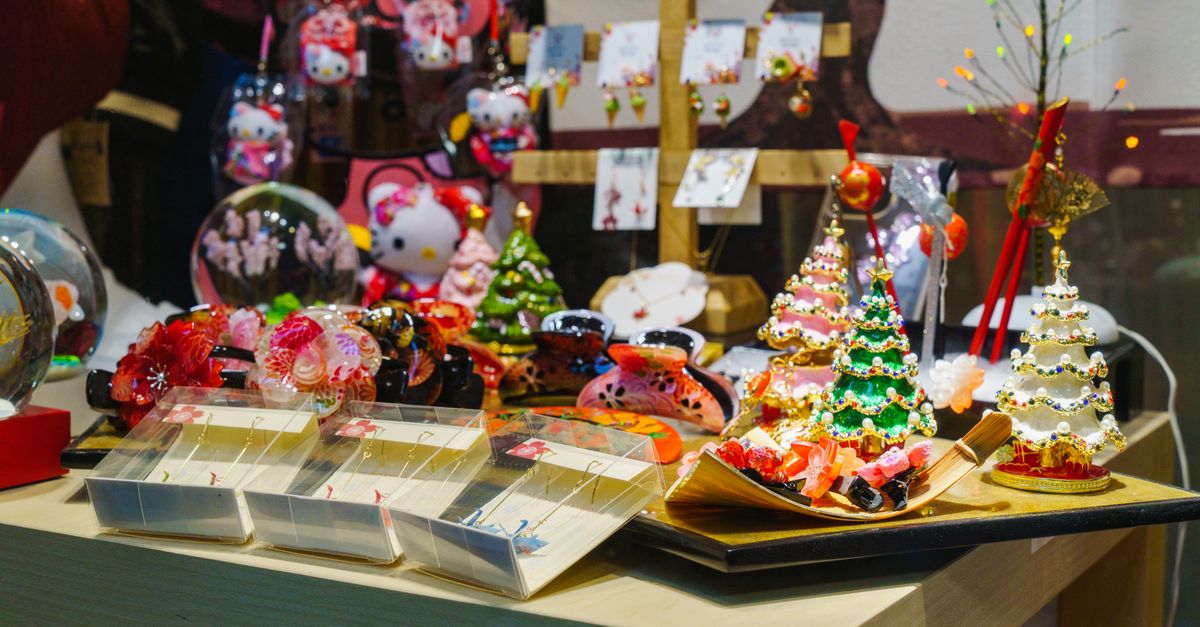
Traditional textiles are easy to fit into a suitcase. A tenugui, a decorated cotton cloth, can be used as a towel, decoration or lightweight wrapping. A furoshiki, a square cloth used to wrap and carry objects, is both a gift and a reusable accessory. Both can be rolled or folded without taking up much space; their designs often evoke the seasons, landscapes or scenes from everyday life.
Yukata and kimono meet different expectations. Yukata is generally lighter and simpler to wear, while a traditional kimono requires accessories and a way of tying it that may take some practice. A haori, a jacket worn over an outfit, is often easier to incorporate into contemporary clothing. Specialist and second-hand shops allow you to compare fabrics, condition and sizes; ask for advice before buying a vintage piece, particularly if the label does not clearly state its composition.
Washi paper, folding fans and origami kits are compact and relatively resistant when stored properly. To protect a print or decorative sheet of paper, place it between two rigid supports rather than leaving it to bend in a bag. Japanese stationery also makes practical gifts: notebooks, gel-ink pens, decorative tape and stickers can form a coherent set without taking up much space.
Chopsticks, or hashi, are another useful souvenir. They come in simple models and finely crafted pieces; check their material and care instructions, especially if they are lacquered. Whatever object you choose, buying from a workshop or shop that pays attention to provenance gives the gift a precise context. A craft object becomes more valuable when you can explain where and how it was made.
Tip: set up a Japan eSIM before departure so your data works on arrival.
Souvenirs connected with temples, shrines and traditions require a little context. An omamori is an amulet associated with protection or a wish, for example for health, studies or safety while travelling. Practices vary according to the location; it is best to follow the instructions given there and avoid opening the amulet. An omikuji, meanwhile, is a fortune slip that you may receive or draw at some shrines and temples. If the prediction is unfavourable, it is customary to tie it in the designated place rather than keep it.
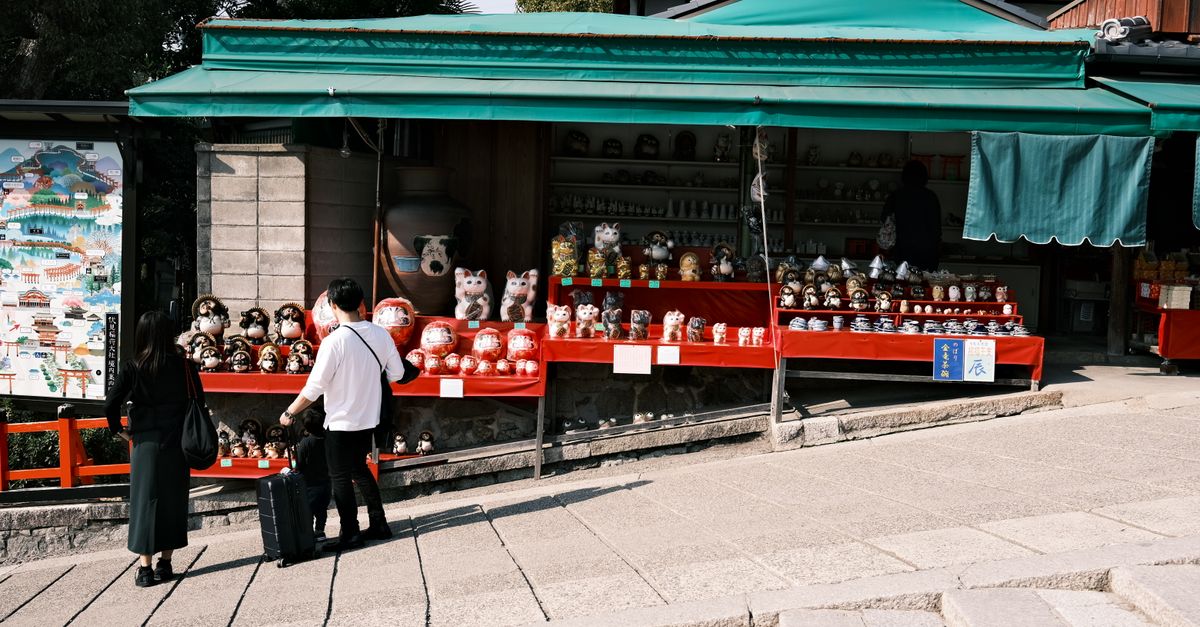
The daruma, a figurine associated with perseverance and achieving a goal, is often sold without requiring you to know every detail of its symbolism. The maneki-neko, a cat with one raised paw, suggests welcome and prosperity. Choosing these objects in a shop connected with the place you visited can help you understand their meaning and avoid confusing them with simple decorations. A short explanation given with the gift is often more appreciated than an object accompanied by an uncertain story.
A goshuinchô is a notebook designed to collect the seals and calligraphy known as goshuin at temples and shrines that offer them. It is not an ordinary notebook: follow the rules of the location and reserve it for this purpose. Procedures and availability differ from one site to another; ask before presenting the notebook and keep it protected from moisture. For a freer souvenir, an ordinary travel notebook can receive stamps from stations, museums or tourist sites when these are accessible to the public.
Prints and reproductions are easy to give as gifts, but their format calls for suitable protection. A tube or rigid envelope prevents creasing, while a sleeve protects the sheets from water. Small desktop Zen gardens, calligraphy accessories and decorative objects may also appeal, but check that they do not contain fragile materials or liquids that could cause transport problems.
For children and popular-culture fans, gachapon—small figurines sold in capsules—stickers and character merchandise are compact. Larger figurines and plush toys take up more space; compare their size with the room remaining in your luggage. For Pokémon, Ghibli and other licensed products, favour official shops or recognised retailers and check the packaging, especially if the object is intended as a gift.
Japanese cosmetics are another option: sheet masks, lip balms, lotions and sunscreens are often sold in practical formats. Read the ingredients, date and directions for use, particularly for someone with sensitive skin. A small product allows the recipient to check that it suits them before receiving a larger one. When choosing, the gift’s suitability matters more than whether it is fashionable: a product suited to the recipient will actually be used.
French customs does not treat every souvenir in the same way. Rules may vary depending on whether the item is a personal possession, a purchase, food, a product of animal or plant origin, alcohol or an article subject to restrictions. There is therefore no single customs allowance applying to every item in a suitcase. Before departure, check with French customs the thresholds and formalities in force for your situation, as well as the health rules applying to products brought back from Japan.
Do not assume that a product is permitted simply because it is freely sold in Japan. Some foods or objects may be subject to import restrictions in France or the European Union; prohibited products and products requiring a declaration must be checked according to their category. If you are unsure about the composition or origin, keep the original packaging and ask the competent authorities for advice before travelling. Rules change: check them at the time of departure rather than relying on old information or another traveller’s experience.
Customs declarations depend on the nature and value of the goods, as well as the rules applying to the traveller. Keep proof of purchase for expensive items and find out what procedures are required if you exceed an allowance or carry an article subject to formalities. Receipts can also prove the price of a craft object or second-hand purchase. For tax-free purchases in Japan, procedures may change: ask the retailer which process applies at the time of purchase and keep the documents provided.
To plan your shopping and identify different types of shops, the guide to shopping in Japan can help organise your itinerary. In Tokyo, Asakusa is known for traditional objects and souvenirs, while Akihabara is home to shops selling figurines, electronics and games. In Kyoto, tea, stationery and craft shops are particularly common in the areas visited by tourists; in Osaka, lively districts offer many snacks and popular-culture items. Shops vary from one street to another: compare products and check labels rather than relying solely on the neighbourhood.
Fragile objects should travel in the centre of the suitcase, surrounded by clothes, rather than against the sides where they are more likely to be knocked. Bottles and jars should be protected in a watertight bag; papers and prints in a rigid sleeve. For products carried in the cabin, follow the airport and airline safety rules, which may depend on the route and security checks. Kitchen knives must be packed in checked luggage and never be accessible in the cabin; check the carrier’s instructions before check-in.
If a purchase cannot be transported easily, sending it to France may be a solution, but this does not remove the need to check customs formalities. Costs, shipping restrictions and required documents depend on the item and carrier. Read the advice on sending parcels between Japan and France before entrusting a fragile or valuable item to a postal service. For a first stay, the guide to a first trip to Japan also helps you anticipate shopping, travel and the space available in your luggage.
| Souvenir | Practical advantage | Precaution before returning |
|---|---|---|
| Tea in sealed packaging | Lightweight and easy to distribute | Check the label and rules applying to foodstuffs |
| Tenugui or furoshiki | Compact and reusable | Protect it from dirt and choose a suitable design |
| Ceramics | Durable and useful object | Pack it in the centre of the suitcase, protected from impacts |
| Condiment or drink | Food-related gift | Prevent leaks and check transport and import rules |
| Cosmetic | Often an easy format to give as a gift | Check the ingredients, date and transport instructions |
| Kitchen knife | Craft or practical tool | Place it in checked luggage and check the carrier’s instructions |
Teabags, tenugui, furoshiki, stationery, stickers and cards are easy to fit into luggage. Prints and decorative sheets remain compact if protected by a rigid support.
The rules depend on the type of food, its composition and its origin. Check the official instructions from French customs and the health authorities before departure, particularly for fresh products or products of animal or plant origin.
If possible, keep the seller’s packaging, wrap each piece and place it in the centre of the suitcase, surrounded by clothes. Avoid the edges and areas likely to be compressed.
This depends on the nature and value of the goods, as well as the allowance and formalities in force. Check the official rules before returning and keep proof of purchase for valuable items or goods subject to declaration.
To book tours and activities in Japan ahead, see the options on Klook.
Updated on 11/11/2026
Scroll to see more articles →