Parcel ready for international shipping
LOGISTICS GUIDE 2026

Sending your souvenirs from Japan to France

Don’t let your luggage weight hold you back. Find out how to bring your Japanese treasures home safely, from Tokyo to Paris.

To send a parcel from Japan to France, first choose the shipping method according to the urgency, weight and fragility of the items. Pack each item separately, fill in an accurate customs declaration and check that the contents are permitted. Japan Post, EMS, surface mail and private couriers do not have the same tracking, cost or customs clearance requirements.

Before paying, compare the price quoted at the counter with that of a private carrier and keep the receipt. The rules for gifts, food, valuable items and knives may differ: if in doubt, ask Japan Post and French Customs for confirmation.

eSIM: online on arrival

The overstuffed suitcase syndrome

It’s an experience shared by almost all travellers and expats in Japan: after a few weeks of intensive shopping in the districts of Akihabara or the markets of Kyoto, reality sets in. Your two 23 kg suitcases are packed to the brim, and you haven’t even bought presents for your family yet.

In 2026, airlines have become increasingly strict about excess baggage, sometimes charging several hundred euros for a few extra kilos. Fortunately, the postal service in Japan is one of the most efficient in the world. This guide explains how to turn this logistical nightmare into a simple and affordable formality.

Cardboard packaging Logistics warehouse

Choosing the right shipping method

Each method has its advantages depending on your budget and how urgent your shipment is.

EMS

EMS (Express Mail Service)

It’s the Rolls-Royce of international shipping. Ideal for valuable items or urgent gifts.

  • ✓ Delivery time: 2 to 5 working days
  • ✓ Ultra-precise online tracking
  • ✓ Insurance included up to 20,000¥
Maximum Priority

Airmail (Air)

The right balance between speed and price for medium-sized parcels.

Delivery time: 7–10 days

Surface Mail (Ship)

The most economical solution for removals or heavy books.

Delivery time: 1–3 months

Small Parcels (-2kg)

If your shipment weighs less than 2kg, you can benefit from a very competitive “Small Packet” rate. Please note that the combined dimensions (Length + Width + Thickness) must not exceed 90 cm.

Economy Option

No tracking available (or optional)

Private Courier (FedEx/DHL)

Often more expensive, but they take care of everything, including collection from your home. Essential for commercial exports.

See FedEx rates →

Japan → France Shipping Calculator (2026 Estimate)

Step by step: Preparing your shipment

1

Packaging (Packing)

You can buy boxes directly at the post office. They are extremely sturdy. Size L (Yu-Pack): Approximately 220 ¥. Don’t forget the bubble wrap! If you pack the items yourself, make sure to remove all traces of old labels.
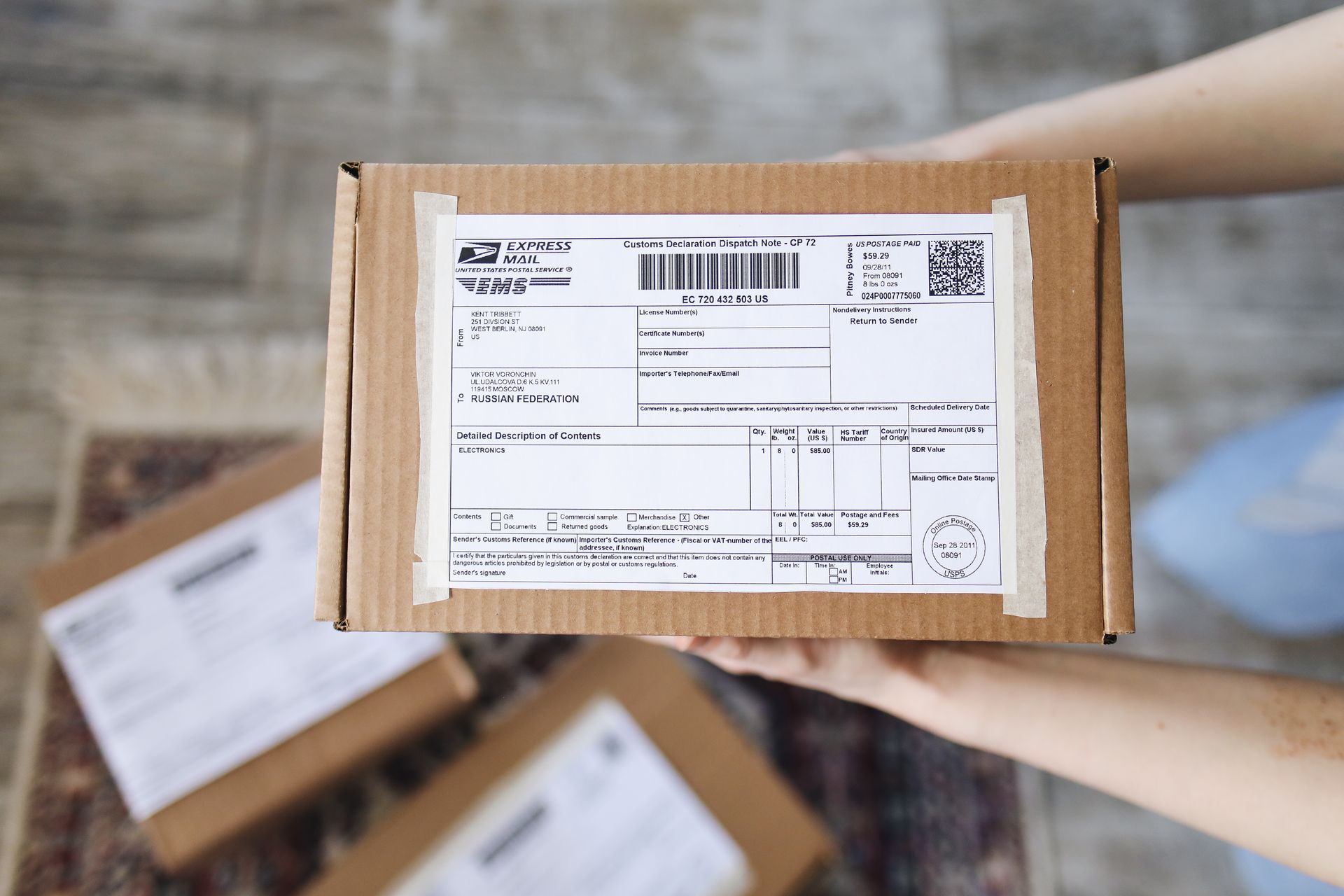
Japanese Cardboard Box

Tip: Japanese cardboard boxes are designed to withstand humidity and long sea journeys.

2

Filling in the CN23 / EMS form

Since 2024, handwritten paper forms have often been refused in favour of electronic declarations.

  • Sender: Your temporary address in Japan (hotel/Airbnb), written in the Latin alphabet.
  • Addressee: The address in France.
  • Contents: Be precise. Don’t write “Souvenirs”; write “T-shirt (cotton) x3”, “Wooden Toys x1”.
  • Value: State the actual value in Yen. This is crucial for insurance and customs.
3

At the counter

Bring your parcel open if you have any doubts, as postal staff may ask to see the contents (especially for Lithium batteries). Payment is generally made by cash or IC card.

Note: Keep the receipt with the tracking number safe!
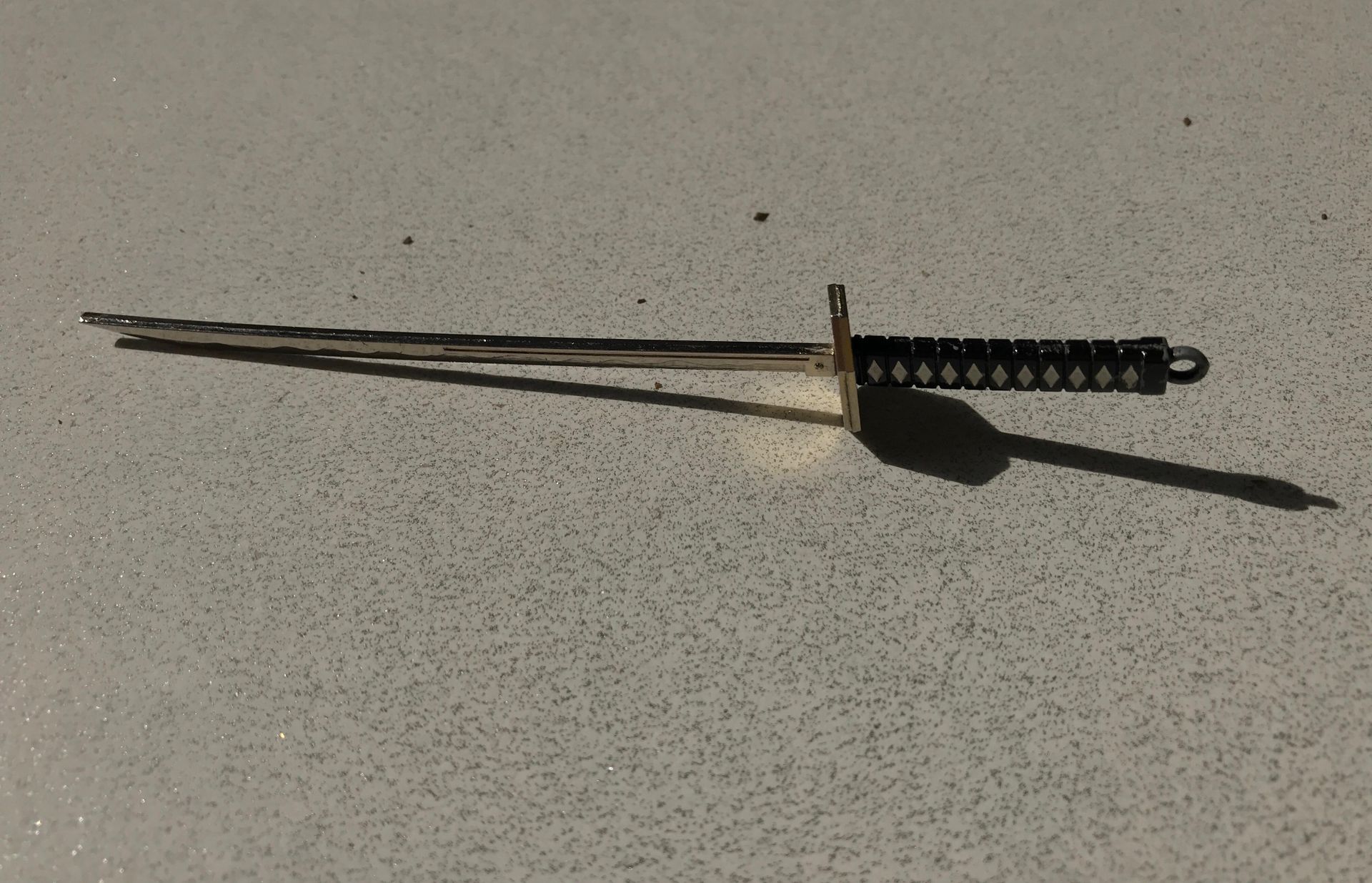
Japanese Katana

Special case: Knives and Katanas

Sending high-end Japanese katanas or kitchen knives to France is subject to strict safety regulations.

Postal Shipping

EMS allows kitchen knives if they are properly protected in their original box. For a katana, an export certificate (Torokusho) is often required by the Japanese cultural authorities.

In the aircraft hold

These items may not be carried in the cabin. You must declare them at check-in and place them in the hold in secure packaging that prevents them from puncturing the luggage.

What you are PROHIBITED from sending

🔋

Lithium batteries

Power banks, certain laptops (subject to quota)

🧴

Aerosols / Perfumes

Flammable and pressurised items are prohibited

🍶

Spirits

More than 24% alcohol may cause problems with EMS

🧨

Fireworks

Includes lighters and matches

French Customs: Anticipating costs

Since July 2021, European rules have changed. Even for small consignments, VAT may apply from the very first euro.

  • !
    €45 allowance: For shipments between private individuals (Gift), no tax is applied if the value is less than €45.
  • !
    Over €150: In addition to VAT (20%), customs duties may be added depending on the nature of the product (shoes, electronics, etc.).
  • !
    Handling fees: Carriers (La Poste, Chronopost, DHL) often charge between €12 and €25 for customs clearance.

Example customs invoice

Parcel value (Yen)50,000 ¥
Euro conversion≈ €320
VAT (20%)€64
Customs duties (Est.)€12
TOTAL TO PAY€76 + Post Office fees

To get online as soon as you land, a Japan eSIM can be installed before you leave, with no need to look for a local SIM card.

Frequently asked questions (FAQ)

Can you send food? ▼
Yes, dry products (snacks, tea, ramen) generally get through without any problems. Avoid fresh products, meat (even vacuum-packed) and anything perishable. Note that certain products containing meat are prohibited from entering France as a health precaution.
What happens if I am not there when the delivery is made? ▼
For EMS, a delivery attempt notice will be left. In France, Chronopost generally takes over. You will often have to pay the taxes online before delivery or when collecting the parcel from a collection point.
Is there a special rate for books? ▼
Yes! The "Special Mail for Printed Matter" or "Educational Materials" rate is very advantageous if you are sending printed matter only. Ask for it explicitly at the counter.
Is my parcel insured? ▼
EMS includes basic insurance. For other services, it is a paid option recommended for expensive items. Always declare the exact value, as the insurance only pays out upon presentation of proof.
What is the cheapest option for a large parcel? ▼
Surface Mail is unbeatable for 20–30 kg parcels, but be prepared to wait (around 90 days). It is perfect for clothes or household items if you are returning after a long period abroad.

Ready to ship your finds?

Don’t forget to check out our other guides to help you settle in Japan or manage your finances with peace of mind.

Updated on

Which shipping method should you choose for a parcel from Japan to France?

The best choice depends less on the carrier’s name than on your priority. A fragile or expensive souvenir requires reinforced packaging and reliable tracking. Clothes or books can cope with slower transport. For a consistent comparison, enter the actual weight, the box dimensions, the nature of the items and their declared value.

Your priorityOption to considerPoints to check
Receive it quicklyEMS or express courierContent restrictions, insurance, customs clearance fees
Keep costs downEconomy air or sea mailTracking available, variable delivery time, sturdy packaging
Send booksRate reserved for printed matter, if offeredConditions applying to the contents and weight
Send a fragile itemTracked service with reinforced packagingCompensation, exclusions and proof of value

Rates and services may vary depending on the post office, destination or the state of the postal network. Ask for an up-to-date estimate before finally sealing your parcel.

Air mail, EMS or Surface Mail

Air mail is suitable for parcels you need relatively quickly, without seeking the most premium service. EMS focuses more on speed and tracking. Sea mail can reduce the cost for heavy or non-urgent belongings, but you must accept a longer transit time and protect the box against handling and moisture.

A private courier may offer collection or administrative support. However, it is not automatically cheaper. Compare the total price, particularly handling fees, any taxes paid in advance and the delivery conditions in France.

Prepare the parcel properly before departure

Choose the box and protect the contents

Use a clean, sturdy box suited to the volume. Fill the empty spaces so that the items cannot move, then separate items that could scratch or break. Textiles can provide additional protection, but do not replace suitable padding for ceramics, glass or fragile crafts.

The stated weight must correspond to the sealed parcel, including its protective materials. A difference between the online estimate and the weight taken at the counter may change the price or the option offered.

Completing the customs declaration

Avoid vague descriptions such as “souvenirs”, “gifts” or “miscellaneous”. State the type of item, the material where useful, the quantity and the actual value. An incomplete declaration may delay inspection, result in a request for information or complicate compensation in the event of loss.

The destination must include a complete French address, a reachable telephone number and, when requested, an email address. If you are still staying in Japan, check that the return address is clearly understood by the postal service. The electronic declaration must be completed with the same care as a paper form.

French Customs: what the recipient should anticipate

A parcel sent from Japan arrives from a country outside the European Union. The recipient may therefore have to provide information and pay amounts upon or before delivery. The amount depends in particular on the nature of the products, their value, the reason for the shipment and the authorities’ decision.

Marking a parcel as a “gift” is not enough to avoid checks. Declare its contents and value honestly. Gifts between private individuals are subject to specific conditions; check the rules currently in force with French Customs before sending, especially if the parcel contains several categories of products.

The formalities may vary depending on the shipping method chosen. An express courier may sometimes advance certain sums and then charge them to the recipient. La Poste and its partners may also apply their own presentation or administration fees. The carrier will indicate the arrangements applicable to the parcel concerned.

Sensitive items, food and prohibited articles

Each service has a list of prohibited or restricted items. Batteries, liquids, aerosols, perfumes, alcohol, food products, medicines and sharp objects require separate checks. Authorisation in the country of departure does not guarantee entry into France.

For food products, check the French health regulations before putting the product in the box. Fresh products, foodstuffs containing certain ingredients of animal origin and incorrectly labelled items may be refused. Do not mix an uncertain product with the rest of the shipment: if it is held, the entire parcel may be delayed.

Knives and similar objects must be protected and declared. For a katana or an antique item, seek information from the relevant Japanese authorities and French Customs before buying it. Do not send an item whose status, origin or required documents are unclear.

Track the shipment and act if there is a problem

Take a photograph of the label and keep the tracking number until delivery. Check the carrier’s tracking information rather than relying solely on automatic notifications. An absence, incomplete address, customs inspection or payment request may interrupt the delivery.

  1. First check the latest tracking event and its date.
  2. Ask the recipient to check their emails, telephone and missed-delivery notice.
  3. Contact the carrier with the shipment number and proof of posting.
  4. If the parcel is damaged, report it promptly and keep the packaging.

To organise your return journey and avoid buying more items than you can transport, also compare the advice on flights to Japan and luggage. If the shipment is part of a longer-term move, the information on finances in Japan can help you plan for payment at the counter and delivery-related expenses. For a stay with children, also look at the activities and leisure options in Japan while the parcel is in transit.

Frequently asked questions

How much does it cost to send a parcel from Japan to France?

The price depends on the weight, dimensions, shipping method, destination and options selected. A small parcel may be covered by a specific rate, while a heavy box may be more economical by sea. Use the carrier’s estimate, then check the final amount after the parcel has been weighed at the counter.

Can you send a parcel from Japan to France by sea?

Yes, sea freight may be suitable for clothes, books and items that are not urgent. You should use a sturdy box, protect it against moisture and choose tracking according to the service available. Ask the post office about accepted dimensions, exclusions and compensation terms before sealing the parcel.

Do you have to pay customs charges for a parcel from Japan?

Taxes or presentation fees may apply depending on the contents, value, reason for sending and rules currently in force. Marking a parcel as a “gift” does not guarantee an exemption. The recipient should keep the supporting documents and consult French Customs or the carrier to find out what sums may be payable.

How can you send souvenirs from Japan without damaging them?

Choose a suitable box, wrap fragile items separately and fill any empty spaces. Reinforce the closure and photograph the contents before handing over the parcel. For an expensive item, check the compensation limits and keep the proof of purchase. Careful packaging is not a substitute for suitable insurance.

Can you send Japanese snacks to France?

Some dry products may be accepted, but the rules vary according to their composition, packaging and origin. Fresh products, meat and certain ingredients of animal origin are subject to more restrictions. Check the French customs and health regulations as well as the carrier’s terms before sending them.

To book tours and activities in Japan ahead, see the options on Klook.