Shirakawa-go: Visit the Gasshō-Zukuri Village
Discover Shirakawa-go, a UNESCO-listed Japanese village with gasshō houses, Alpine scenery and practical advice for planning your visit.
Yes, the hike from Magome to Tsumago is one of the most accessible and best-preserved sections of the Nakasendo. This historic trail crosses the mountains of the Kiso Valley, links two former post towns and can be completed in a few hours, with an uphill section towards Magome Pass followed by a descent through woodland and hamlets.
The route can be walked in either direction. Starting from Magome means beginning with a gradual climb before descending towards Tsumago; in the opposite direction, the effort is greater at the start. Both villages are also worth visiting separately: their paved streets, wooden houses and former inns recall their role on the road that connected Kyoto with Edo, present-day Tokyo.
At a glance

The Nakasendo was one of the main overland routes during the Edo period. Its stages allowed travellers to reach the capital from Kyoto while crossing the interior of the country. Magome and Tsumago were post towns, where travellers could find accommodation and services before continuing their journey.
The hiking section between the two villages follows a preserved part of this former route. It passes along paved paths, forest trails and rural areas, with points of interest such as the Odaki and Medaki waterfalls and the Tateba-jaya teahouse. Some walkers stop here to catch their breath and enjoy the scenery rather than trying to complete the route as quickly as possible.
The trail is generally well signposted and does not require technical equipment, but it includes slopes and uneven surfaces. Walking shoes are preferable to everyday footwear, especially after rain. The time required varies according to your pace, the weather and the visits you make; allow extra time if you need to catch a bus or train afterwards.
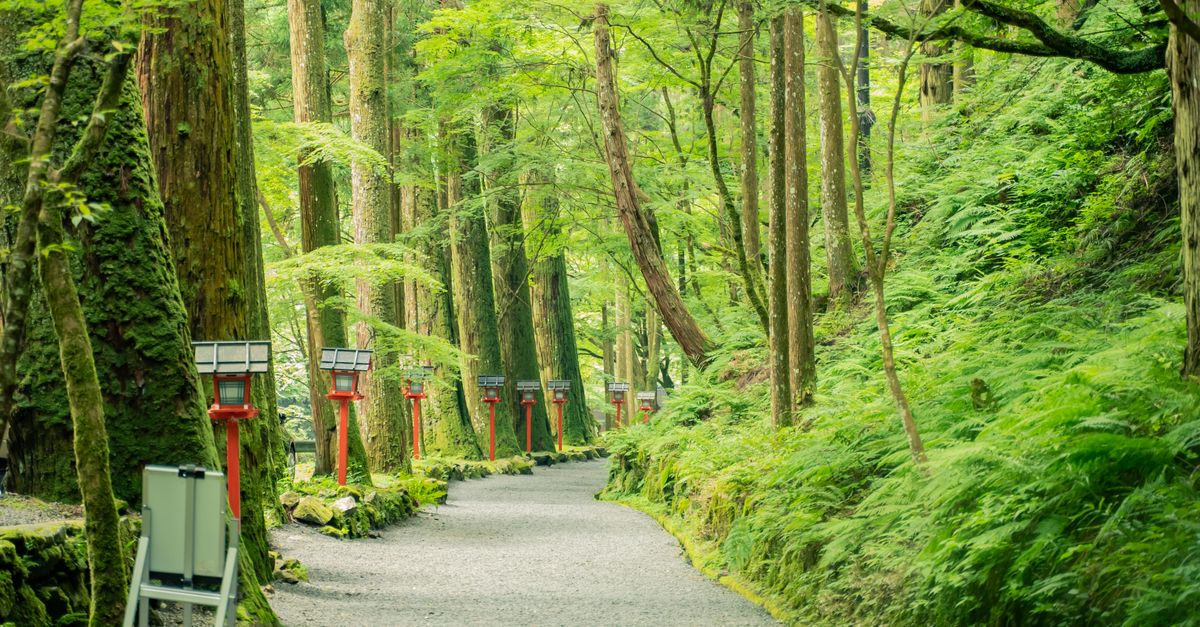
Most hikers start from Magome. The trail climbs gradually to Magome Pass, then descends towards Tsumago through forest and hamlets. This direction suits those who prefer to tackle the main climb at the beginning, while they are still rested.
At the start, take time to explore Magome’s main street and identify the trail signs. Along the way, bear bells installed at certain points can be rung to signal your presence. They do not replace local guidance: stay on the trail, do not approach animals and check the notices displayed before setting off.
In the opposite direction, the climb towards the pass comes at the beginning of the stage and requires more effort. This option may be convenient if you are staying in Tsumago or if your arrival takes you first to Nagiso. The final descent towards Magome then offers a different perspective on the houses and landscapes of the valley.
In both cases, the walk is only part of the day. The waterfalls, village breaks and visits to the former inns can easily extend your schedule. To avoid rushing for transport, choose your direction according to your departure station and check bus timetables with local operators in advance.
For access to Magome, the most direct journey from Nagoya is to take the train to Nakatsugawa, then a local bus to the village. From Takayama, the journey generally combines train and bus and takes longer. Connections and frequencies may vary depending on the season and day, so check with transport companies and tourist information offices before leaving. If you are also visiting the region, our guide to Takayama Old Town may help you plan the wider route.
Access to Tsumago often involves Nagiso Station, which is connected to the village by local transport. You can also reach Tsumago after hiking from Magome, or walk the route in the opposite direction. Nakatsugawa and Nagiso stations are therefore useful reference points when planning an arrival or return without a car.
| Starting point | General access | What to check |
|---|---|---|
| Nagoya | Train to Nakatsugawa, then bus to Magome | Connections and bus timetable |
| Takayama | Journey combining train and bus to the Kiso Valley | Total journey time and changes |
| Nagiso | Local transport or walking to reach Tsumago | Bus availability and trail conditions |
If this stage is part of a wider circuit, the guides to getting around Japan and the Japan Rail Pass can help you compare journeys. Conditions of use and timetables change: confirm them with the official operators before travelling.
To get online as soon as you land, a Japan eSIM can be installed before you leave, with no need to look for a local SIM card.
Magome stretches along a hillside around a paved street lined with traditional houses, watermills, shops and teahouses. The village has been restored, and its central route is particularly lively during the day. The house of Toson Shimazaki, a Japanese writer from the region, and the former buildings associated with travellers offer a better understanding of the history of this stage.
Tsumago focuses on preserving its historic character. The former Honjin and Waki Honjin inns, along with the local museum, provide an insight into the welcome given to travellers and representatives of the feudal authorities. Opening hours and admission fees may change; check this information with tourist information offices before your visit.
Staying overnight is a good option if you want to enjoy quieter streets. Family-run inns, minshuku and ryokan often serve Japanese meals prepared with local ingredients. As accommodation is limited in the villages, book in advance and confirm the arrangements for meals, arrival and payment directly. For more details about this type of accommodation, see our guide to staying in a ryokan.
Spring and autumn are popular for their mild temperatures and the colours of the valley. Summer brings dense vegetation, but the heat and humidity can make the walk more demanding. In winter, snow and ice are possible; check the condition of the trail and whether establishments are open before travelling.
A luggage-transfer service between Magome and Tsumago is offered by tourist information offices, subject to arrangements that may vary. It allows you to walk with a lighter bag, but you must respect the locally indicated drop-off and collection times. Check how the service works, its prices and opening hours on the day of your visit, and do not rely on it until you have confirmed that it is available.
To adjust the season and budget for this stage, also see the advice on the best time to visit Japan, the cost of living in Japan and the Japan travel budget.
Walkers who want to spend more time on the Nakasendo can connect other stages, including by starting from Nakatsugawa or continuing from Tsumago towards Nagiso. Further north, Narai-juku offers another chance to discover the architecture of former post towns. These extensions require separate preparation: distances, trail conditions and accommodation options are not the same throughout the route.
A full day allows you to walk the classic section and visit both villages, provided you organise your transport carefully. For a more relaxed experience, a night at an inn gives you time to explore the streets after the day visitors have left and sample the local cuisine. Soba specialities and dishes made with mountain vegetables are common in the region; to place these meals in the context of the country’s gastronomy, see our guide to Japanese cuisine.
The Magome-to-Tsumago hike can therefore work as a self-contained stage or as the beginning of a longer walk: the right choice depends above all on the time available, transport and how much you want to walk.
Allow several hours for walking, then add time for the waterfalls, breaks and visits to both villages. The duration depends on your pace, trail conditions and the stops you make.
Starting from Magome means a gradual climb to the pass followed by a descent towards Tsumago. From Tsumago, the climb comes earlier; choose according to your accommodation and connections.
The route is accessible to occasional walkers wearing suitable shoes, but it includes slopes and uneven surfaces. Check the weather and trail conditions before setting off.
A transfer service is offered by tourist information offices according to timetables and arrangements that may change. Contact them or check the information displayed locally before relying on the service.
To book tours and activities in Japan ahead, see the options on Klook.
Updated on 02/11/2026
Scroll to see more articles →