Japan Working Holiday Visa: Requirements, Steps and Budget
Discover the requirements, application steps and budget for a Japan working holiday visa, and prepare your arrival, insurance and job search.
To discover the Japanese Alps, choose a travel itinerary linking Matsumoto, the Kamikōchi valley, Takayama and the village of Shirakawa-go. This route combines urban heritage, waterside walks and traditional villages without requiring technical hiking. Kanazawa provides a coherent cultural extension towards the coast, while the Tateyama Kurobe Alpine Route deserves a separate stop organised around its transport and access conditions.
Your choice of stops depends mainly on your mountain experience. Walking through a developed valley, reaching a mountain hut and crossing a rocky ridge require different preparation. The season also matters: snow at altitude does not follow the calendar of nearby cities. It is better to build your trip around a few well-connected bases and then adapt your outings to local conditions than to change accommodation repeatedly. Hot springs, old districts and regional specialities also keep the programme interesting when the peaks are hidden in cloud.
In brief
Matsumoto is a useful base for combining cultural visits with access to the mountains. Its castle, old shopping streets and museums allow you to begin your trip without immediately depending on favourable weather. A guide to Matsumoto and its districts can help you decide which visits to keep before leaving for the valleys.
From Tokyo, the railway journey can notably be made by an express train from Shinjuku. Matsumoto is not served directly by the Shinkansen: this distinction prevents you from planning an impossible connection based on a simplified map of the network. Consult JR East for services and reservations matching your journey.
To reach Kamikōchi, the journey from Matsumoto usually combines a train to Shin-Shimashima with a road connection. Arrangements may change depending on the season and service chosen; check them with Alpico. A day trip returning to the same accommodation simplifies luggage management, while a night in the valley lets you enjoy the walks more fully.
When seasonal connections are operating, continuing via Hirayu Onsen to Takayama avoids systematically retracing your steps. This crossing forms the backbone of the route: leave the Matsumoto side, cross a mountain environment, then reach a town where crafts and cuisine play an important role.
Do not, however, turn this crossing into a simple succession of connections. A walk, a hot-spring bath and a long journey do not always fit together easily, especially when the last departures are early. Check services with Alpico and Nohi Bus before fixing accommodation on either side of the range.
Takayama then serves as a base for reaching Shirakawa-go. Continuing to Kanazawa may make more sense than returning to Takayama if your journey continues towards the coast or Kansai. Conversely, keeping one fixed base is preferable if you want to explore Hida-Furukawa and the surrounding area without carrying your belongings at every stop.
| Stop | Main interest | Point to watch |
|---|---|---|
| Matsumoto | Castle, old districts, eastern access | Connections to the valleys |
| Kamikōchi | Riverbanks, forests and mountain views | Seasonal access and trail conditions |
| Takayama | Merchant heritage and regional cuisine | Intercity coach departures |
| Shirakawa-go | Rural houses with thatched roofs | Transport and luggage reservations |
| Kanazawa | Gardens, crafts and historic districts | Link with the rest of the trip |
The Tateyama Kurobe Alpine Route is not an interchangeable shortcut for the crossing via Kamikōchi. It links the Toyama and Ōmachi sides through a succession of different forms of transport, with its own booking, opening and luggage-handling constraints.
Choose this option if high-altitude landscapes are your priority and you can give it a proper place in your programme. A stop in Toyama, on the Sea of Japan side, helps organise the approach from the west. Consult the official Tateyama Kurobe Alpine Route operator for available services.
Finally, the Hida, Kiso and Akaishi ranges cover different areas: they do not all combine naturally. The Southern Alps are better suited to a trek planned around a specific starting point than to an excursion inserted between urban visits. A good route follows valleys and transport, not just the apparent proximity of places on a map.
Shirakawa-go is mainly discovered through Ogimachi, its collection of gasshō-zukuri houses. Their large, steeply pitched thatched roofs respond to the demands of a snowy environment. Their silhouette is interesting to observe; entering a house open to visitors gives a better understanding of its interior layout and rural activities.
UNESCO World Heritage status covers the historic villages of Shirakawa-go and Gokayama. In the latter area, Ainokura and Suganuma offer other groups of traditional buildings. This is therefore not one village with several names, but separate places whose access must be planned individually.
Your choice between these stops depends as much on transport as on your expectations. Ogimachi concentrates visits and useful services for a first discovery; the hamlets of Gokayama require more attention to connections. None of these places guarantees an absence of visitors, especially when snowy scenery or autumn colours attract excursions.
These houses stand in inhabited areas. Respect property boundaries, avoid photographing private interiors without permission and follow fire-prevention instructions. Thatched roofs are not merely decoration: preserving them requires maintenance and collective vigilance.
Takayama offers another perspective on mountain Japan, focused on merchant districts, woodworking and sake breweries. The Sanmachi façades show the continuity between homes, commerce and craft production. A guide to Takayama and its heritage is a useful complement to this stop.
To understand the town, alternate its shopping lanes with a historic building or a space devoted to local traditions. This avoids reducing the visit to a walk between shops. Festival floats, when displayed to the public, help explain the role of craft trades in urban celebrations.
Hida-Furukawa offers a complement around the Setogawa canal, warehouses with pale walls and old streets. Its interest lies in the continuity of the urban fabric rather than an accumulation of monuments. The visible presence of carp depends on the season: do not build the entire visit around this single image.
These stops also allow you to discover regional products. Hida beef has an important place in Takayama, while miso and dishes served on a magnolia leaf illustrate other local practices. To understand the ingredients and ways of ordering, consult the guide to Japanese cuisine.
Magome and Tsumago belong to another geographical area: the Kiso Valley and the old Nakasendō road. Their streets evoke travel between the former capitals, with inns, shops and buildings connected with welcoming travellers. This stop fits more naturally with Nagoya and the Kiso railway corridor than with Shirakawa-go.
Walking between the towns gives meaning to the visit: the heritage is no longer limited to façades but is part of a landscape and transport network. Nevertheless, plan the transport at both ends, as the walking route is not a loop. Choose villages for their history and position in the route rather than collecting similar landscapes.
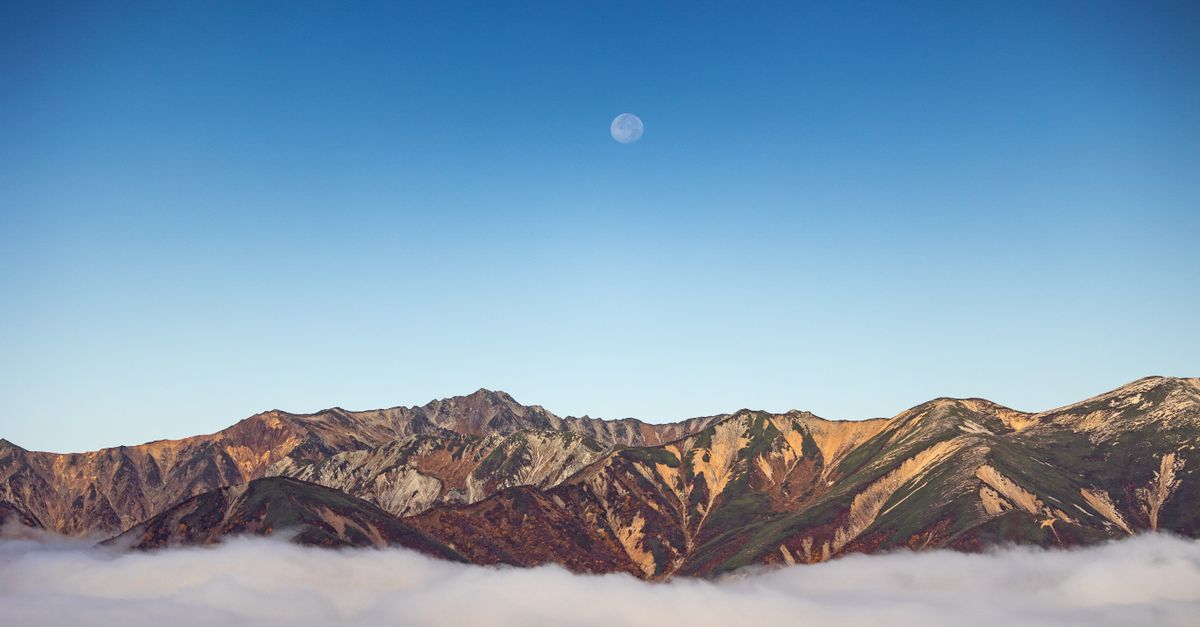
The Kamikōchi valley is suitable for discovering mountain scenery without immediately undertaking an ascent. Paths near the Azusa River, Kappa Bridge and Taishō Pond allow you to view the peaks from a less demanding environment than the ridges. Your choice of route must nevertheless take account of your mobility and the conditions on the day.
Walks towards Myōjin extend the discovery through woodland and along the riverbanks. Do not confuse a gently sloping route with a path that is always easy: rain, wet roots and uneven sections can slow you down. A local map helps you choose a realistic return without relying solely on an app.
Set your turnaround time according to the return transport, not simply the distance you want to cover. Also allow time for navigation, eating and dealing with a shower. Check access conditions and any diversions with the Kamikōchi information centre.
Reaching the Karasawa cirque is considerably more demanding than walking beside the Azusa. Distance, elevation gain, accumulated fatigue and the possibility of residual snow change the preparation required. An overnight stay in a mountain hut may be part of the plan, but it must be arranged with the establishment concerned.
Routes towards the Hotaka or Yari peaks are not minor extensions of a valley walk. Some sections may be rocky, exposed and equipped with ladders or chains. Their difficulty depends on the exact route and conditions: good stamina cannot replace experience of alpine terrain.
Mount Tsurugi is also an objective requiring specific preparation. If you cannot assess exposed sections confidently, choose a less demanding route or use a qualified guide. Mountain hiking should be prepared around the most difficult section, not the most photogenic one.
Around Murodō, on the Tateyama Kurobe Alpine Route, options range from local walks to alpine routes. Mechanised access does not remove the effects of altitude or rapid weather changes. In spring, an area accessible to visitors may still be surrounded by snowy terrain unsuitable for a summer-style walk.
In the Central Alps, the Senjōjiki cirque can be reached by the Komagatake ropeway. The terrain quickly becomes steeper once you leave the developed surroundings. Again, distinguish access to the viewpoint from the ascent continuing above it: they do not require the same equipment.
Between Magome and Tsumago, hiking trails cross a forested and rural environment rather than a high-mountain landscape. This option suits a heritage-focused trip better, but includes ascents and descents. After heavy rain, ask local tourist offices about conditions.
For every outing, take waterproof protection, a warm layer, water, food and an offline-capable navigation method. For a demanding route, add suitable equipment, tell someone your itinerary and check local hiking registration procedures. Keep wildlife at a distance: do not feed it and follow posted instructions. Choosing a walk suited to you leaves more time to observe the landscape and deal with unexpected situations.
The best period depends on the activity and altitude, not on one season that suits the whole region. In spring, cities may be pleasant to visit while high-altitude access remains snow-covered. The opening of a road or tourist transport does not mean that nearby routes are passable without winter equipment.
The Tateyama snow corridor illustrates this difference: it allows visitors to discover an environment that is still wintry in an organised setting. Its configuration and accessibility depend on snowfall and opening operations. Check with the official operator before booking a visit specifically motivated by this attraction.
In summer, valleys and plateaux attract travellers looking for more freshness than in large urban areas. This does not rule out a hot walk on the valley floor or a feeling of cold on an exposed section. Wind and rain can quickly affect comfort, even when you set off in sunshine.
The rainy season and thunderstorms call for a flexible programme. On steep ground, water makes rocks slippery and can make stream crossings more difficult. Consult forecasts and alerts from the Japan Meteorological Agency, followed by local information on trail conditions.
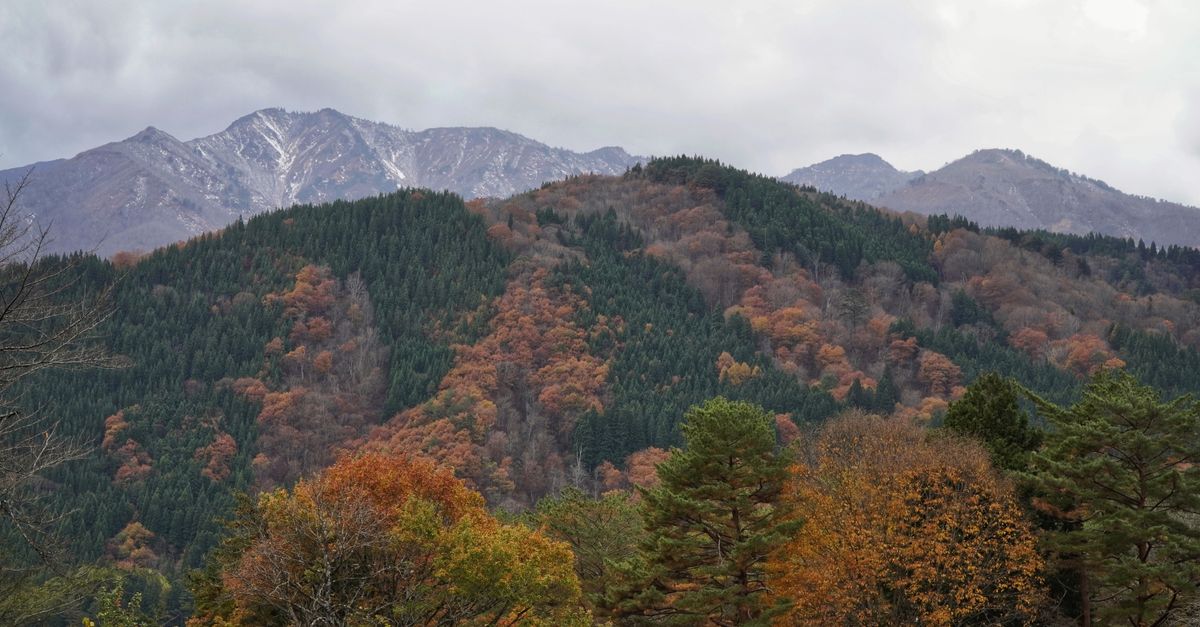
Foliage changes gradually according to altitude, exposure and the conditions of the year. A photograph of Karasawa therefore cannot be used to infer what the trees in Takayama will look like at the same time. To choose a period, match your landscape objective with the actual possibilities for accommodation and transport.
Areas known for autumn colours can be very busy. Booking essential nights and transport avoids depending on last-minute availability. Still, keep some flexibility to replace a hike with a cultural visit if wind, rain or snow makes the outing unsuitable.
As the season progresses, frost can make normally accessible sections more difficult. Hut closures and reduced services matter just as much as the weather. Advice on the best season to travel in Japan provides a general framework, to be completed with information for each valley.
Hakuba and Shiga Kōgen are suitable destinations for a skiing holiday. Their operation must be examined area by area: accommodation, equipment hire, shuttles and access to the slopes cannot be inferred from the region’s name alone. Consult operators about openings and available services.
Snowshoeing and off-piste skiing are not simply winter versions of a summer walk. Avalanche risk, visibility and navigation require specific skills. A guided outing helps you choose terrain compatible with your experience, without assuming that existing tracks guarantee safety.
For a less sporty stay, Takayama’s old districts, hot-spring inns and some snow-covered villages are coherent objectives. Take shoes suitable for slippery surfaces and check for road disruption. At Jigokudani, the macaques’ presence in the hot spring is never guaranteed: they are animals, not a scheduled attraction. In winter, it is better to organise your stay around a well-served base than to try to reproduce a summer crossing.
The main stops can be visited by public transport, but connections shape the journey. Trains serve the access towns; coaches often take over for villages and trailheads. Consult the guide to transport in Japan to distinguish the networks and booking arrangements.
The Japan Rail Pass should not be regarded as a universal ticket for mountain travel. Road services, private companies and high-altitude facilities may use different tickets. Check coverage for each journey with the operators and compare expected costs with the Japan Rail Pass analysis.
A car can make isolated accommodation easier to reach, but it does not solve every constraint. Kamikōchi restricts private vehicles: visitors arriving by car use transfer points before continuing by authorised means. Check current arrangements with local authorities and transport providers.
For a crossing, also consider luggage transport. A left-luggage facility, hotel storage or delivery service may make a stop easier, but availability and conditions vary. Do not plan a hike with a suitcase assuming that storage will necessarily be available at the start.
A city hotel is suitable when you want a choice of restaurants and to remain close to a station. A ryokan is more suited to a stay focused on traditional hospitality, meals and sometimes baths. A guide to traditional Japanese accommodation helps explain these differences before booking.
In Takayama, choose the location according to your priority: proximity to the bus terminal for departures, or the old district for walks. Consult accommodation options in Takayama, then confirm directly the facilities and services that matter to you. The word “traditional” guarantees neither a hot spring nor a private bathroom.
An overnight stay in a mountain hut follows a different logic. It forms part of a walking route and requires you to check opening dates, meals, bedding, available water and reception arrangements. For your budget, always compare equivalent services: a rate including meals cannot be read like a room-only rate. Prices should be checked directly with the establishments.
Hirayu Onsen fits naturally into a journey between Kamikōchi and Takayama. Gero is a hot-spring stop on the railway corridor south of the latter, while Shibu and Yudanaka fit more naturally with Nagano. Choosing a resort on your route avoids a major detour purely to take a bath.
Usual etiquette involves washing before entering the bath and keeping your towel out of the water. Conditions concerning tattoos, private baths and access for non-guests vary between establishments. Ask the establishment directly; a reservable private bath may be preferable if you want greater privacy.
Hot springs are a relaxing experience, without needing to attribute therapeutic effects to them. Avoid a very hot bath if you feel unwell or dehydrated after a walk, and seek medical advice if you have a known contraindication. Book the stages that are hardest to replace first, then arrange secondary visits around them.
Yes, by prioritising towns and sites served by trains and coaches, such as Matsumoto, Takayama, Kamikōchi and Shirakawa-go. Connections and seasonal services should be checked with transport operators before booking accommodation.
The developed walks along the Azusa in Kamikōchi let you admire the peaks without undertaking an ascent. Adapt the route to your mobility, the weather and the return transport. The walk between Magome and Tsumago is another option, with more emphasis on rural heritage.
Kamikōchi is particularly suitable for a stay focused on valley walks. Tateyama Kurobe prioritises a transport-based crossing through high-altitude landscapes, with walking options depending on conditions. Including both requires more organisation and separate stops.
Some houses accommodate travellers. Check availability, meals, arrival conditions and the type of bedding directly. Also plan your onward journey, as staying there does not remove the constraints of road services.
Updated on 23/10/2026
Scroll to see more articles →