Japan Working Holiday Visa: Requirements, Steps and Budget
Discover the requirements, application steps and budget for a Japan working holiday visa, and prepare your arrival, insurance and job search.
A non-stop Paris–Tokyo flight takes around 13 to 14 hours, a guideline to confirm in the schedules published for 2026 by Air France, Japan Airlines or ANA. The exact duration depends on the route chosen, the authorised flight path and weather conditions. With a connection, you must add any detour and the time spent waiting between aircraft: the total time shown when booking is therefore the best basis for comparison.
The journey does not end when you land, however. The arrival airport, formalities, transfer to your accommodation and time difference will also affect how tired you feel. Compare the complete journey to your hotel, rather than only the hours spent on board. A cheaper ticket may lose its appeal if it involves an overnight stay in transit or arrival after public transport has stopped running.
In brief
The duration shown when booking generally corresponds to the scheduled time between departure and arrival at the boarding gates. It therefore includes taxiing on the ground, not only the time spent in the air. It does not include your journey to Paris-Charles-de-Gaulle or the procedures before boarding.
The straight-line distance and the route actually followed are not the same. Approved air corridors, overflight restrictions, weather conditions and air-traffic-control decisions can take the aircraft away from the shortest geographical route.
High-altitude winds also affect speed over the ground. This is why the outbound and return journeys may show different durations, even with the same airline and airports.
The aircraft model alone cannot explain these differences. When choosing your ticket, compare the times for the specific service rather than a general promise of speed associated with a recent aircraft.
| Stage | What it includes | Where to check |
|---|---|---|
| Before departure | Getting to the airport, luggage, checks and boarding | Airline and Paris Aéroport |
| Air journey | Taxiing and the journey to the arrival gate | Airline booking |
| Connection | Disembarking, changing gates and any required checks | Airline and transit airport |
| Arrival in Japan | Formalities, baggage collection and transfer | Airport and transport operator |
Do not simply subtract the Paris departure time from the Japanese arrival time: they belong to different time zones. Look at the total duration and landing date shown on your booking, particularly before reserving your accommodation.
Our guide to the Japan time difference complements this explanation when comparing ways to enter the archipelago. The right indicator remains the total time needed to reach your actual destination.
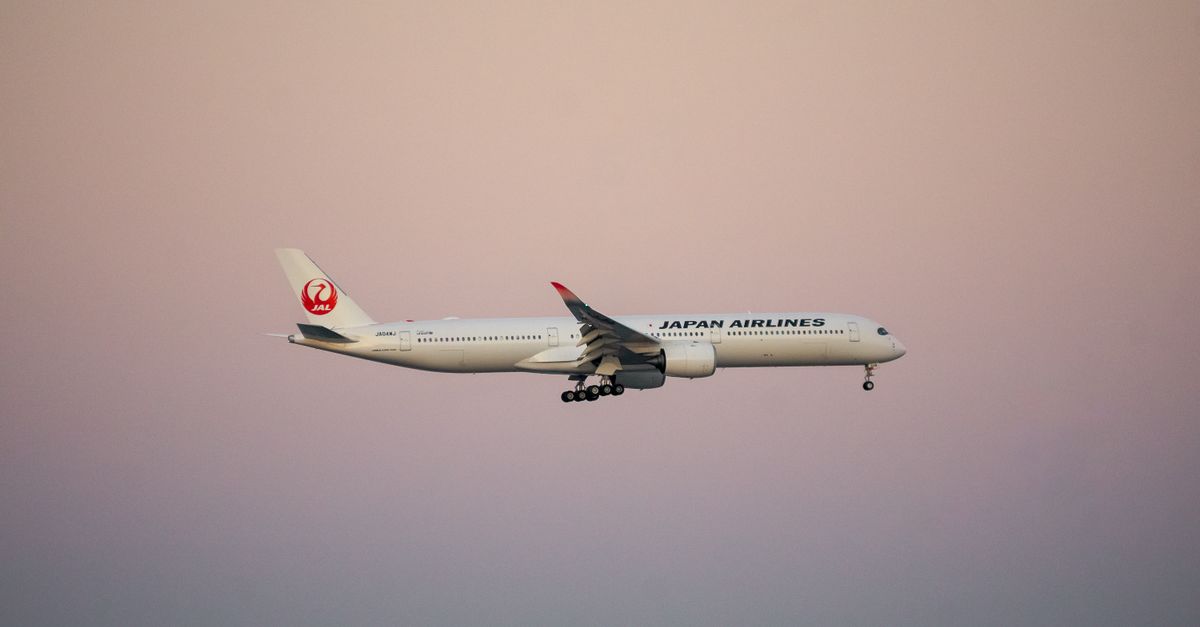
A direct flight is generally the simplest way to reach Tokyo. It removes the need to change aircraft and reduces the handling of hand luggage. This simplicity is particularly useful when travelling with children, reduced mobility or a tight schedule after arrival.
Air France, Japan Airlines and ANA are the airlines to check for non-stop services from Paris-CDG. Check their schedules, the airport served and the fare conditions directly for your dates: frequencies and availability may change.
A connecting flight may offer a financial advantage, but no saving is guaranteed. Compare the final price, including baggage, seat selection and any accommodation costs during transit.
The connecting city does not tell you everything. A journey via Helsinki, Frankfurt, Doha or Dubai may be convenient or restrictive depending on the waiting time, terminals and departure time of the next flight.
Choose a connection sold as a single itinerary when you want simplicity. In the event of disruption, assistance arrangements depend on the contract and applicable rules; they are not the same as for tickets bought separately.
With a self-organised connection, you may have to collect your suitcase, pass entry checks and check in again. Also check the transit country’s requirements with its official authorities, according to your nationality and itinerary.
A stopover in Tokyo mainly concerns travellers continuing to another Japanese city. Make sure that the segments use the same airport: travelling between Haneda and Narita involves an overland journey and is not like simply changing gates.
Ask the airline where you will collect your baggage and complete entry formalities. To assess the financial value of each option, include these expenses in your Japan travel budget: a lower fare is only worthwhile if the additional constraints remain acceptable.
Haneda is generally more convenient for reaching central districts, but your accommodation address remains decisive. Tokyo is a sprawling metropolis: the ease of the transfer depends on the available lines, changes and the amount of walking required with your luggage.
Narita, located in Chiba Prefecture, remains an important gateway. A service suited to your district can make this arrival comfortable, even though the airport is farther away.
From Haneda, the Keikyu and Tokyo Monorail networks provide access to the urban rail system. From Narita, Keisei and JR East services are among the railway options to compare.
Do not choose solely on the basis of the fastest airport section. Look at the journey to your hotel: arriving in Ueno does not offer the same connections as arriving in Shinagawa or Shinjuku. For ideas once you arrive, see our guides to things to do in Shinjuku and Shibuya.
Buses can be useful when they serve your area or hotel directly. Check current timetables and fares with the official operators; our guide to transport in Japan helps explain the different options.
The aircraft’s arrival time is not the time when you leave the terminal. Disembarking, checks, baggage and customs take varying amounts of time. Avoid booking a non-refundable activity immediately after landing.
For a late arrival, check the last departures with railway companies and bus operators. Do not assume that public transport runs all night; plan a backup solution suited to your budget.
Conversely, an early arrival does not guarantee immediate access to your room. Ask your accommodation whether it can store your luggage and find a quiet walk in our Tokyo guide. The best airport is the one that makes your journey to where you will sleep easiest.
Tokyo is ahead of Paris. For 2026, the time references from the National Institute of Information and Communications Technology, the organisation responsible for Japanese time, and the French rules presented by Service-Public give a difference of 8 hours during French winter time and 7 hours during French summer time.
Japan’s time zone is UTC+9, with no seasonal change. The difference therefore varies when France switches to summer or winter time, not because Japanese clocks change.
On your booking, the arrival time normally corresponds to the local time in Tokyo. Also check the date shown: the length of the journey and Japan’s time difference may place your landing on the day after departure.
This distinction prevents you from booking a room for the wrong night or transport for the wrong date. Also check which time zone your calendar app uses when you import the flights.
Jet lag results from the gap between your body clock and the local routine. Its effects vary: daytime sleepiness, waking during the night or difficulty concentrating can disrupt the start of your stay.
Displaying Japanese time on board helps you understand the destination’s rhythm, but it is not enough to resynchronise your body. Try to rest when this corresponds to local night-time, without turning sleep into a stressful objective.
After arrival, gradually adopt local meal and bedtime schedules. A gentle daytime walk and a lighter programme are preferable to a succession of demanding visits; a long nap can make it harder to fall asleep in the evening.
If you take regular medication, ask a healthcare professional for advice on adjusting doses to the time-zone change. Plan the most tiring activities for when your alertness has returned.
Compare tickets offering equivalent services. An introductory fare may exclude a checked suitcase or impose strict change conditions. Also check the identity of the carrier actually operating the flight, especially in a codeshare.
Holiday periods and popular tourist seasons can affect availability. For cherry blossoms, consult our guide to sakura in Japan, without treating flowering as a guaranteed date.
There is no purchase day that systematically guarantees the lowest price. Compare several dates and consult our advice on when to book your flight, then confirm the amount and conditions directly with the seller.
Check the requirements with Japan’s Ministry of Foreign Affairs or the Embassy of Japan. They depend in particular on your nationality and the purpose of your stay; our page on visas for Japan provides a starting point but does not replace this official check.
For departure, follow the check-in and presentation instructions provided by your airline and Paris Aéroport. A bag to check or assistance to arrange may change your schedule.
Drink regularly, limit alcohol and move around when safety instructions allow it. If you have a particular circulatory risk, seek medical advice before choosing compression devices.
Preparing the details you can control — documents, luggage and transfers — avoids adding stress to long-haul fatigue.
Prevailing winds, authorised routes and operational constraints may differ depending on the direction of travel. Compare the scheduled durations for each segment of your booking.
No. Compare the final fare, included baggage, any transit costs and the change conditions. A long connection may lead to additional expenses.
Haneda is generally closer to central districts. The best choice nevertheless depends on your accommodation, arrival time and the available overland connections.
Check your airline’s official notifications and tracking, followed by the information from Paris Aéroport. Do not delay your arrival at the airport without explicit instructions from the carrier.
Updated on 23/10/2026
Scroll to see more articles →