Shirakawa-go: Visit the Gasshō-Zukuri Village
Discover Shirakawa-go, a UNESCO-listed Japanese village with gasshō houses, Alpine scenery and practical advice for planning your visit.
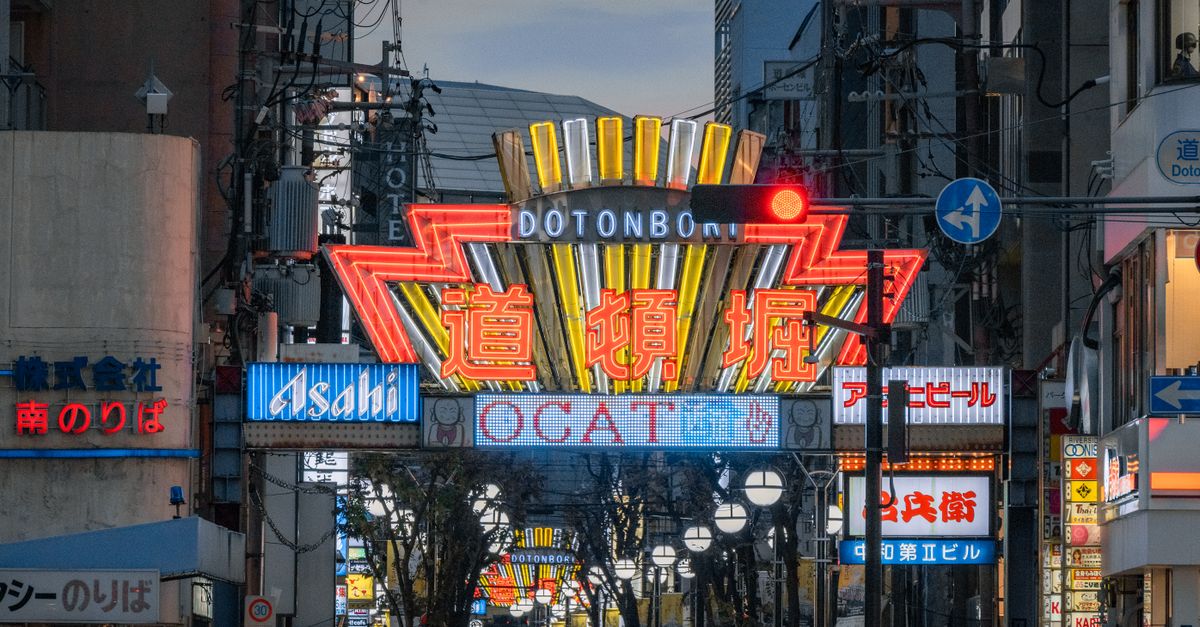
Dōtonbori is one of Osaka’s liveliest districts: visitors come to walk along the canal, see the neon signs and Glico sign, try specialities such as takoyaki and okonomiyaki, then enjoy the nightlife. The promenade works just as well for a first discovery on foot as for an evening devoted to restaurants and street food. To understand what gives it its character, you need to look beyond the famous signs: the district combines waterfronts, shopping streets, theatres and small places where you can eat standing up or around a table.
The best choice depends on what you want to do. A short visit can focus on the canal and its surroundings; a longer outing allows you to add a meal, a night cruise or a stop in nearby districts. As activity times, access conditions and prices may change, check them with the official operators before setting out.
In brief

The canal is the most obvious landmark when discovering Dōtonbori. Walking along its banks, you can see commercial façades, illuminated signs and boats passing through the middle of the district. This succession of images explains why the walk is so closely associated with Osaka, but it is not limited to a single view: each bridge and each stretch of waterfront offers a different perspective on the activity in the streets.
The Glico sign, installed near Ebisubashi Bridge, is the best-known visual meeting point. It is recognisable by the silhouette of a runner with his arms raised. The site attracts visitors who want to take a photograph, but it is also a useful landmark for finding your way between the waterfront and the shopping streets. At the busiest times, it is better not to stop in the middle of the walkway: move to the edge of the bridge or look for another viewpoint along the water.
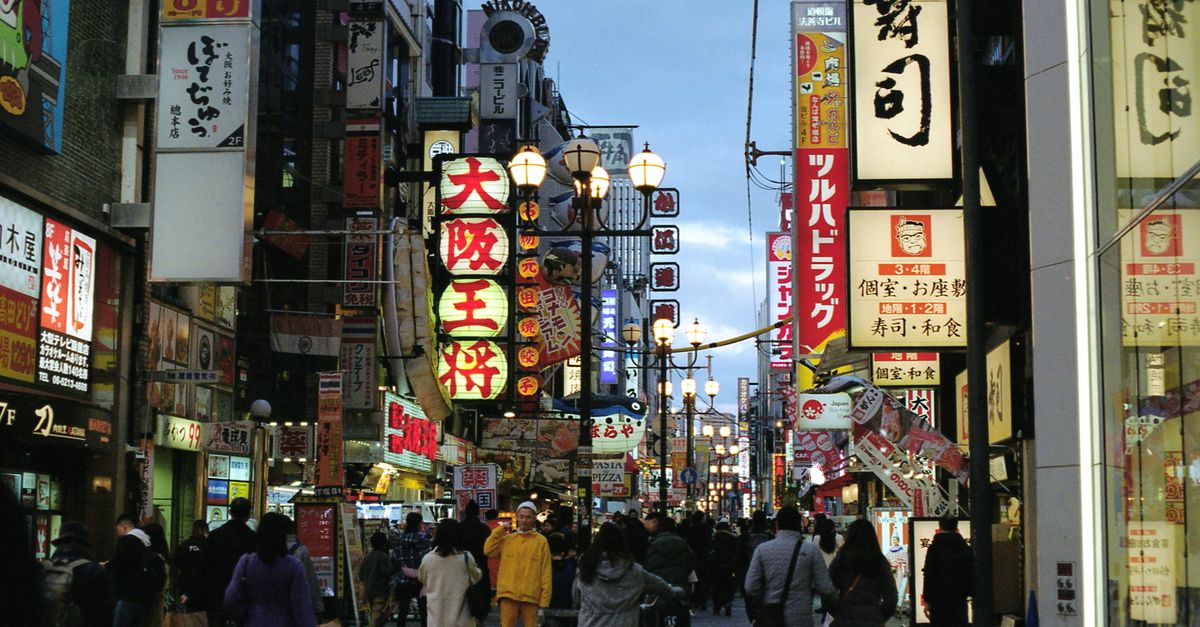
The large three-dimensional signs contribute to the district’s identity. Some represent dishes served in the restaurants, while others take the form of animals or giant characters. They make the façades easy to recognise and give the street an almost theatrical quality. The contrast between the bright signs, shop windows and movement on the canal is part of the experience, although the area may seem noisy and highly commercial to travellers looking for quieter streets.
For a first visit, walk around without trying to photograph everything immediately. First observe both banks, then return towards Ebisubashi Bridge when you want to frame the Glico sign. The light changes the overall impression: during the day, architectural details and shopfronts are easier to make out; after dark, the neon signs dominate. The district therefore feels different depending on the time of day, without requiring a complicated route.
Those who want to place this walk within a longer stay can consult the guide to Osaka and its districts. Dōtonbori naturally combines with Namba and the nearby shopping streets, but its atmosphere is distinctive: crowds, signs and the canal concentrate much of the spectacle within an area that is easy to explore on foot. For an overview, the best approach is to start along the waterfront, then head into the side streets.
The key point is simple: the Glico sign attracts attention, but the canal helps you understand the district’s layout and appreciate its different viewpoints.
Dōtonbori is a convenient destination for trying several Osaka specialities in the same district. Takoyaki, small balls made from batter and filled with octopus, are often sold in takeaway portions. Their exterior may be well browned while the inside remains very hot and soft: let them cool for a moment before taking your first bite. The sauce, toppings and texture vary from one shop to another, making it worth comparing preparations rather than looking for a single definitive version.
To better understand this iconic dish, see the guide to Osaka takoyaki and octopus balls. On site, street food makes it easy to eat quickly between walks, but it requires some consideration: counters and shop entrances can become crowded. Eat in the space provided by the establishment when there is one, and avoid stopping in a narrow passage.
Okonomiyaki offers a different experience. This dish, cooked on a hotplate, is often served as a complete meal, with ingredients and toppings that may vary. In a restaurant, you take time to sit down and eat instead of continuing your visit with a takeaway bite. If you are hesitating between the two specialities, takoyaki work well for eating on the move, while okonomiyaki fits more naturally into a sit-down meal.
Dōtonbori’s restaurants are not limited to these dishes. Signs often display illustrated menus, which helps you understand portions and ingredients, but the information may be presented in different ways. Before ordering, check whether the stated price covers a portion or a set menu, and ask the staff for clarification if necessary. As prices vary and may change, it is better to rely on the menus displayed at the time of your visit than on a general estimate.
The district also lends itself to eating in stages: a savoury speciality, a walk along the canal, then a dessert or drink on a quieter street. This avoids trying to taste too many things at once and lets you enjoy the atmosphere without turning the evening into a restaurant tour. For more places and tasting ideas, the guide to street food in Osaka is a useful complement to your visit.
Kuromon Market is another food-focused stop, with an atmosphere that differs from Dōtonbori’s illuminated façades. The guide to Kuromon Market in Osaka can help you plan the two together. Above all, remember that eating in the district is not just about ticking off two famous dishes: meal formats and atmospheres vary from one place to another.
To choose without rushing, first identify what appeals to you, then compare the menus and the space available. The pleasure of local cuisine lies as much in the pace of the walk as in the tasting.
In the evening, neon signs transform the waterfront and shopping streets into an illuminated setting. Reflections on the canal draw the eye, while restaurant signs remain visible above the crowds. This is when the image commonly associated with Dōtonbori comes fully to life: you can move from a busy street to an open view of the water in just a few steps, then quickly return to shop windows and food counters.
This lively atmosphere also has a practical consequence: the area around Ebisubashi Bridge and the best-known routes can become crowded. Keep your belongings close, walk without blocking the passages and choose an identifiable meeting point if you are visiting as a group. When taking photographs, wait until you find a place where you will not obstruct pedestrians. Crowds are part of the district’s nightlife, but a more pleasant walk often depends on simple consideration for others.
A night cruise can offer a different view of the signs and bridges. From the canal, the perspectives are not the same as from the banks: the façades appear as a whole and the lights reflect on the water. Routes, times and operating conditions may vary according to the operator and the season. Check this information directly with the official organiser before travelling, particularly if the boat trip is the central element of your evening.
You can enjoy the district without boarding a boat. A loop on foot along both banks, with a stop to look at the canal, is already enough to appreciate the atmosphere. To avoid seeing only the most famous signs, briefly leave the main route and explore the nearby streets, while keeping an easy-to-find landmark in mind. The restaurants and small establishments there form a less spectacular but equally useful part of the visit.
The choice between walking and cruising therefore depends on the kind of evening you want. Walking lets you stop, change route and choose your meal according to your wishes. The boat provides a continuous view of the canal frontage, but requires you to check departure arrangements and any reservation requirements. In either case, it is best not to build your programme around an unconfirmed time.
The night also reveals the district’s commercial and popular character. Dōtonbori is not a silent place for contemplating the water: lights, conversations and people coming and going create an intense sensory experience. To discover Osaka from a different angle, you could spend another day at Kaiyukan Aquarium, presented in this guide to the Osaka aquarium. The contrast between a visit focused on exhibitions and an evening beside the canal helps vary the atmosphere.
For a successful evening outing, remember that the canal is the guiding thread: it lets you enjoy the lights without remaining constantly in the busiest streets.
Tip: set up a Japan eSIM before departure so your data works on arrival.
Your visit can be short or take up part of the evening, depending on how much time you give to meals, shops and the waterfront. Rather than trying to see everything in a fixed order, choose one main objective: photographing the signs, tasting specialities, taking a night cruise or simply wandering. This priority helps avoid unnecessary backtracking, especially when the streets are busy and you often stop to look at menus or shop windows.
A simple route is to reach the Namba area, head towards the canal, pass near Ebisubashi Bridge and then choose a street where you would like to eat. Depending on the crowds, you can continue along the waterfront or move towards a nearby shopping district. Station names and the most convenient access points depend on your starting point and the line you take: check up-to-date transport information on the day rather than relying on an old route.
The table below helps you choose how to discover the district, without assuming that every activity will be available at every hour or in all conditions.
| Priority | Suggested route | What to check |
|---|---|---|
| See the best-known landmarks | Canal, Ebisubashi Bridge and Glico sign | Crowds and pedestrian circulation conditions |
| Try the specialities | Takeaway takoyaki, followed by an okonomiyaki meal | Menus, ingredients and available space |
| Enjoy the lights | Walk along the waterfront after dark | Local conditions and access to the quays |
| See the canal from the water | A night cruise if it fits your plans | Times, prices and operating arrangements with the operator |
| Extend the food outing | Combine Dōtonbori with Kuromon Market | Opening times and days with the relevant businesses |
For a food-focused visit, avoid having a very heavy meal just before arriving. A small tasting lets you try a street speciality, then sit down if a place appeals to you. Conversely, if you would rather look at the signs without working through a succession of dishes, choose a restaurant as a proper break rather than eating while walking. The pace is different, and that is precisely what allows you to adapt the experience.
If you have more time in Osaka, do not try to fit every attraction into one day. An outing to Dōtonbori can be combined with nearby places, while more distant sights deserve a separate itinerary. The general guide to Osaka helps you distribute districts according to your interests. For food, the resources about Osaka, Japan’s culinary capital, also offer ideas for extending your tastings beyond the canal area.
The best organisation is therefore not the most packed: it is the one that leaves room to stop, choose a dish and observe the district without rushing from one point to another.
Dōtonbori is easy to enjoy when you accept its lively pace and keep realistic expectations. The best-known streets bring shops, restaurants, visitors and pedestrian traffic together in a very active space. If you prefer a calmer experience, favour the waterfront at a quieter time or explore the side streets, then return to the signs when you want to see the iconic landmarks.
The food calls for a few ordinary precautions. Takoyaki are often served extremely hot, and sauces or toppings can make them awkward to eat while walking. Sit down when the establishment provides a suitable space, and avoid leaving rubbish in the street. For okonomiyaki and other dishes, read the menu and ask for an explanation if an ingredient concerns you, particularly in the case of an allergy or dietary restriction.
Illustrated menus are useful, but a photograph does not always provide all the information about a dish’s ingredients or portion size. Check the available information before ordering and clearly explain your needs to the staff. Prices vary between establishments and menus: check the prices displayed on site. The same caution applies to cruises and any activity whose conditions may change.
A food-focused visit can continue towards Kuromon Market, but the two places do not offer exactly the same atmosphere. Dōtonbori combines a canal, signs and evening entertainment, while a market is discovered more through its stalls and the products on offer. The practical information on the page about Kuromon Market in Osaka can help you organise this stop. Check the days and opening times directly with the relevant businesses, as this information may change.
For getting around, identify a return point before entering the busy streets. Giant signs and the canal are useful landmarks, but an up-to-date map remains helpful for reaching the station or the next district. If you are continuing your journey elsewhere in Japan, the guides to getting around Japan and the Japan Rail Pass can help with general planning; transport rules and conditions should nevertheless be checked with the relevant organisations before purchase or departure.
Finally, adapt your visit to what you genuinely enjoy. Photography enthusiasts can take time to compare views from the bridges and waterfront; food lovers can focus on a small number of tastings; those seeking lively entertainment can stay for the neon lights and nightlife. In Dōtonbori, a good visit depends less on an exhaustive list than on a balance between canal, meal and walk.
Start by walking along the canal and finding Ebisubashi Bridge and the Glico sign. The illuminated façades and giant signs complete the walk.
Takoyaki and okonomiyaki are two popular Osaka specialities. Compare the menus on site and be aware that takoyaki are often served very hot.
Yes, evening brings out the neon lights and their reflections on the canal. The famous streets can be very crowded, particularly around Ebisubashi Bridge.
Canal cruises may offer a different view of the signs and bridges. Check times, prices and operating conditions directly with the operator, as they may change.
To book tours and activities in Osaka ahead, see the options on Klook.
Updated on 20/11/2026
Scroll to see more articles →