
About Kaiyukan
Kaiyukan follows a spiral route around a 5,400 m³ central tank, lit by a transparent roof. Visitors descend from the 8th to the 3rd floor, passing through 15 themed zones: Forest of Japan, Forest, Sea, Pacific Ocean, Southern Ocean, and more.
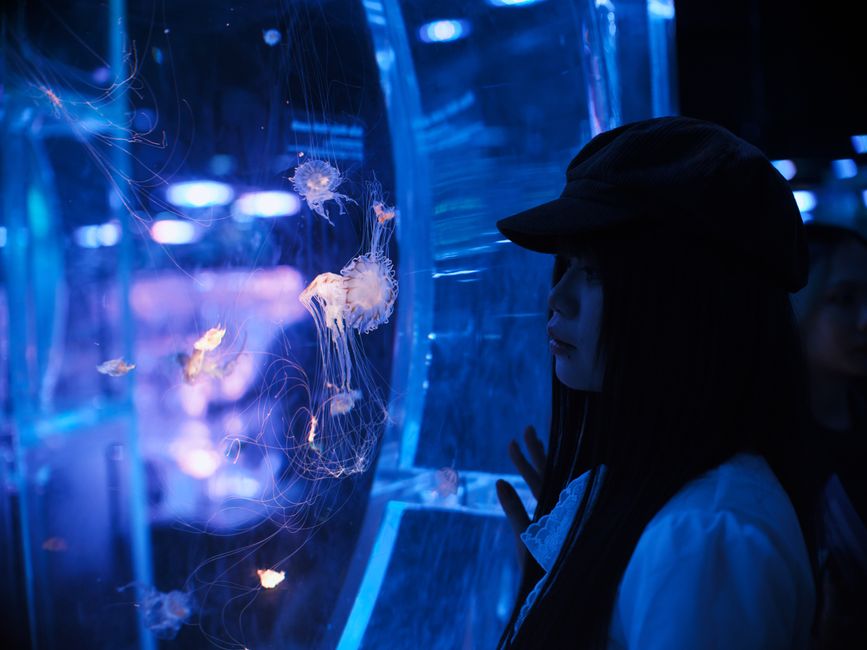
The highlight: the whale shark (up to 12 m) and the manta ray (3 m wingspan). Other notable animals include otters, penguins, moon jellyfish and giant Pacific octopuses.
Prices, opening hours and tickets
Adult: 2,700 yen. Child (7–15 years): 1,400 yen. Junior (16–18 years): 2,000 yen. Opening hours: 10 am – 8 pm (last admission 7 pm).
Average duration: 2 to 2½ hours. Skip-the-line ticket: 3,500 yen (online booking). Kaiyukan + Tempozan Ferris Wheel combo: 3,700 yen (saving 1,000 yen).
The Tempozan district
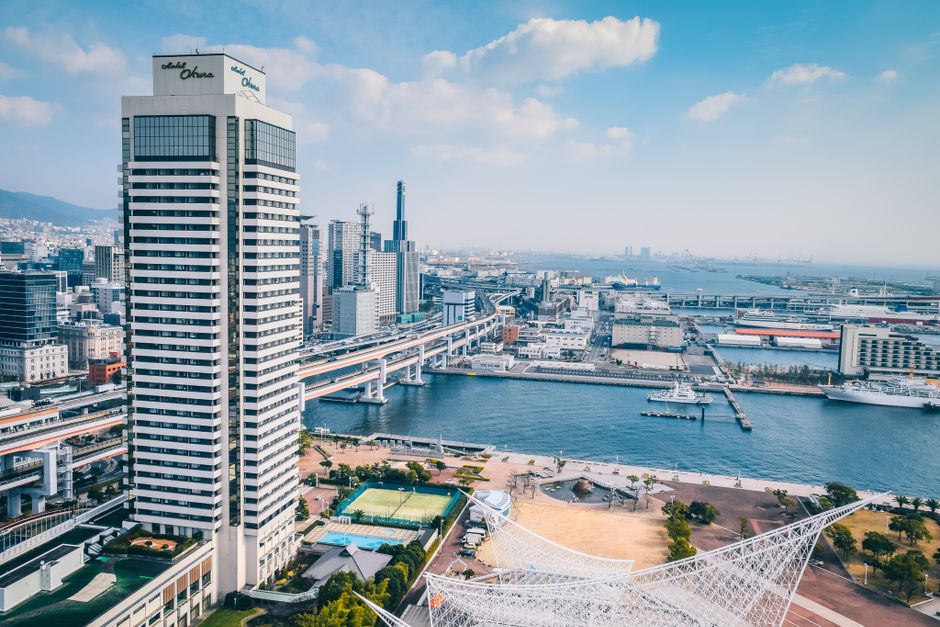
Tempozan Harbor Village is home to the aquarium, the Tempozan Ferris Wheel (112 m, 1,000 yen), Legoland Discovery Center (2,300 yen) and Tempozan Market (street food).
The Santa Maria Cruise (45 minutes, 1,800 yen) departs from the nearby pier and offers views of Osaka from the bay. Universal Studios Japan is a 5-minute walk away (tickets from 8,600 yen).
Best time to visit
Avoid: weekends and public holidays (2–3 hours’ waiting), and the summer holidays. Ideal: Thursday or Friday morning, at opening time at 10 am. Evenings (after 5 pm) are quieter, and the low-angle light beautifully enhances the tanks.
Key feeding shows: whale sharks (11 am, 2 pm, 4 pm), otters (11:30 am, 3:30 pm) and penguins (2:30 pm).
Practical tips
Accessibility: prams and wheelchairs available to hire free of charge. Lockers (300 yen). Flash-free photography permitted. Restaurants on site: 3 (each serving dishes priced at 1,500–2,500 yen).
To book in advance: GetYourGuide Osaka offers skip-the-line tickets for 3,200 yen.
Accommodation and access
Access: Chuo Line metro to Osakako, Exit 1 (5-minute walk). From Umeda: 20 minutes. From Namba: 25 minutes. Namba Hotel is ideal for combining your visit with Dotonbori.
To compare organised options: GetYourGuide Japan.
To book a guided tour: Viator Japan.
Also worth discovering
Continue exploring Japan with our complementary guides.

Kaiyukan ticket prices: rates vary by date
The price of a Kaiyukan Aquarium ticket depends on the visit date and the visitor’s age. To find out the applicable adult or child price for your day, check the official ticketing calendar: a price found in an old guide is not a reliable reference for 2026.
This variable pricing is worth checking before finalising your Osaka itinerary. If your trip allows some flexibility, compare several dates, then consider the available times and expected crowds rather than the displayed price alone.
Adult, child and young child tickets: which category should you choose?
The ticketing system distinguishes between several age categories. Select the one corresponding to each visitor at the time of booking, particularly when travelling with children close to changing category.
The table below helps you prepare your booking without repeating prices that may change. Any discounts and the required proof of eligibility should be checked in the official terms and conditions.
| Category | Age | Price to check |
|---|---|---|
| Adult | 16 and over | Rate corresponding to the selected date |
| Child | 7 to 15 years | Child rate shown on the official calendar |
| Young child | 3 to 6 years | Specific rate shown when booking |
| Under 3 years | 0 to 2 years | Free admission; check the booking arrangements |
Booking Kaiyukan in advance: what the ticket really allows
Buying in advance avoids going to the ticket counter, but does not guarantee admission without waiting. A queue may still be required for ticket checks or access to the building, particularly during busy periods.
Also check whether your admission ticket includes a time slot. Do not assume that a dated ticket allows you to arrive at any time: the arrangements stated on your booking apply.
Before paying, check the date, any applicable time, age categories and amendment conditions. For a family, an error in these details can be more restrictive than a small price difference between two offers.
Keep the confirmation and access code on your phone, available without relying on a connection on site. If several tickets are included in the same booking, have them ready before reaching the ticket check to avoid searching for each document in the queue.
Tempozan combination tickets: compare what is included before the price
Offers combining the aquarium with another activity may be available depending on the period and the distributor. Their value depends on the services actually included, their availability and the time you have in the bay.
Compare the price of the pass with that of separate admission tickets for the attractions you actually want to visit. An offer that includes a cruise is only worthwhile if the departure times fit your plans and sailing conditions allow you to use it.
Also check the rules for each component: whether it is valid on the same day or not, whether an additional reservation is required, independent opening hours and cancellation terms. Admission to Kaiyukan does not automatically include access to the Ferris wheel, Santa Maria or LEGOLAND Discovery Center.
Finally, do not assume that a general Osaka sightseeing pass includes the aquarium. The right ticket is the one whose date, access and conditions match your outing precisely.
Kaiyukan opening hours, visit duration and the best times to go
Allow around 90 minutes to two hours in the aquarium and check the exact opening hours for your date on the official website. Opening and closing times may vary depending on the calendar, so it is best not to build your day around a time slot presented as permanent.
Also check the last admission time, which is separate from the closing time. Entering late may still be possible, but may not leave enough time to enjoy the different levels of the main tank.
How long does it take to visit Osaka’s aquarium?
A visit of 90 minutes is enough for a relatively continuous walk through the route. Two hours allow you to spend longer at the large viewing windows, read some of the information and watch the animals without limiting yourself to taking just a few photographs.
With children, frequent breaks or a particular interest in marine life, allow some extra time. The route is easy to follow, but visitors’ attention rarely falls evenly on all the exhibits.
The Pacific Ocean tank naturally accounts for much of the viewing time. As it can be seen from several heights, it invites you to stop and look again even after an extended first viewing.
When planning your day, therefore distinguish between the time spent inside the building and that of the full outing. The journey, admission, toilets and a meal at Tempozan can easily turn this visit into a half-day outing.
When should you visit Kaiyukan to avoid the crowds?
A weekday shortly after opening is generally the best choice for limiting the crowds. This strategy is relative, however: Japanese school holidays, public holidays and organised groups can change the usual visitor numbers.
Weekends and major holiday periods require more flexibility. Golden Week in spring and the summer holidays are particularly times when you should expect high visitor numbers rather than hope for an almost empty route.
Arriving later can also work when the aquarium closes sufficiently late. However, check how much time remains before closing and the opening hours of nearby activities: a quiet time slot loses its appeal if the whole visit then has to be done at a rush.
No time slot guarantees an unobstructed view of the whale shark. If a viewing spot is occupied, calmly continue to another level rather than waiting for a long time in the same place.
Feeding times, weather and planning your day
Check the activities or feeding sessions announced for your day, when available. They can enhance your visit, but their schedule should be checked on site or in the latest official information.
Avoid organising the entire route around an event whose time has not been confirmed. Moving between the different areas and the crowds in front of certain viewing windows make tightly timed itineraries unpleasant.
Most of the visit takes place indoors, making Kaiyukan convenient during hot weather or rainy days in Kansai. However, access from the metro and some waiting areas are still exposed to outdoor conditions.
A rainy day can also attract more visitors to covered activities. Booking your admission and leaving some flexibility in your schedule is more useful than looking for a time slot supposedly without any crowds.
To get online as soon as you land, a Japan eSIM can be installed before you leave, with no need to look for a local SIM card.
What to see at Kaiyukan: whale sharks and the Pacific Ocean tank
The whale shark in the Pacific Ocean tank is Kaiyukan’s main attraction, but the route also explores several environments around this ocean. The aquarium’s appeal comes as much from its animals as from the way it presents aquatic environments at different depths.
After the first exhibits, the route leads to the upper levels before gradually descending. This layout allows you to see some of the tanks from several angles, rather than passing just once in front of a succession of separate viewing windows.
The whale shark: observing the world’s largest fish
The whale shark belongs to the largest fish species alive today. Despite its name and impressive size, it feeds by filtration, so it should not be confused with the large predatory sharks generally portrayed in films.
At the viewing window, take time to observe its swimming, the movements of its tail and its changes of direction. These details give you a better impression of the animal than a photograph taken as soon as it first passes by.
The maximum size of the species does not necessarily correspond to that of the individuals housed in the aquarium. The information displayed on site is the reference for learning about the residents currently present, rather than treating general dimensions as though they were their exact measurements.
Nor is there any guarantee that the animal will pass by at a particular minute or location. Observation depends on the animals’ behaviour, and waiting a few moments can turn a distant view into a much closer pass.
Why the vertical route changes the experience
The main central tank is viewed from several depths as you descend. Near the surface, attention focuses on movements in the upper part; lower down, the perspective gives you a better sense of the volume of water and the distribution of the fish.
This repetition is therefore not simply a return in front of the same scenery. It shows how different animals use the space and how an aquatic scene changes depending on the observer’s height.
Schools of fish and rays contribute just as much to this perspective as the iconic animal. Watching their movements for a few minutes makes it possible to notice coordinated behaviour that can easily go unnoticed during a quick visit.
Other areas not to rush through
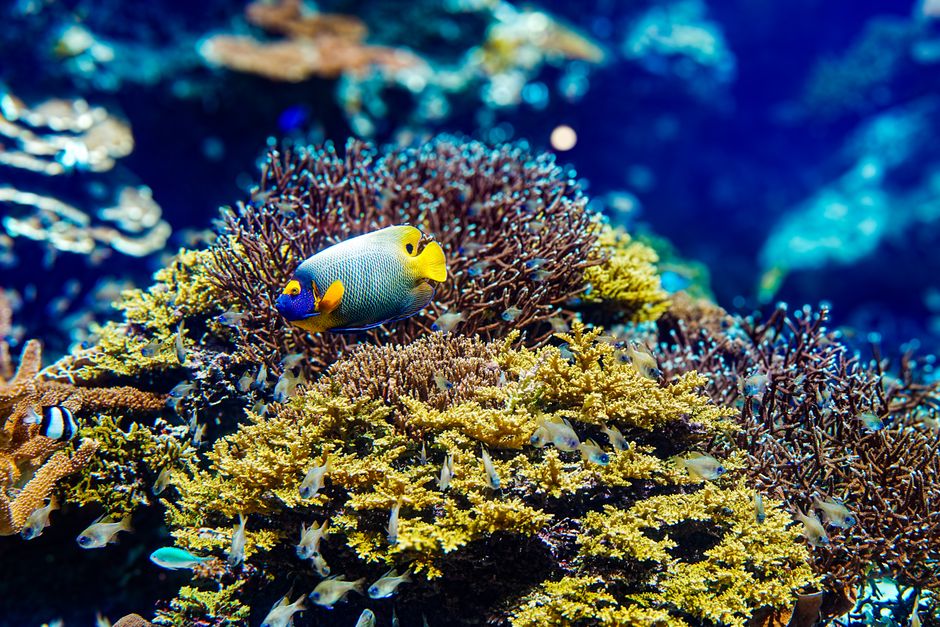
The displays devoted to Japanese forest environments, cold environments and jellyfish offer very different atmospheres. They are a reminder that the Kaiyukan’s project is not limited to bringing together large fish in a spectacular tank.
- Japanese forest environments connect waterways, riverbanks and aquatic life.
- Penguins allow you to observe the contrast between movement on land and swimming.
- The jellyfish invite you to focus on their pulsations and shapes rather than look for fast-paced action.
- The Pacific displays show the diversity of habitats associated with the same ocean region.
The layout of the spaces and the species on display may change for care or refurbishment reasons. Avoid basing your entire visit on an old list of residents or on a temporary exhibition mentioned in a travel account.
For photographs, follow the displayed instructions and avoid using flash or letting reflections from your screen show on the glass. The best pace is to alternate exploring the route with proper observation breaks.
Getting to the Kaiyukan from Osakako and things to do around Tempozan
Osakako Station, on Osaka Metro’s Chuo Line, is the most convenient way to reach the Kaiyukan. From there, allow around five to ten minutes on foot to the aquarium, located in the Tempozan Harbor Village area.
Osakako should not be confused with Osaka Station or Universal City, which serves Universal Studios Japan. These names refer to different arrival points, even when the attractions are grouped together in guides under the name “Osaka Bay”.
Getting to Osaka Aquarium by metro
From the city centre, the journey mainly depends on your starting neighbourhood and the connection needed to reach the Chuo Line. Hommachi is a useful interchange, particularly from the Midosuji Line.
From Namba or Umeda, check a route to Osakako rather than relying on a general journey time. Time spent reaching the platform, changing lines and walking to the entrance must be added to the rail journey.
An estimate of around twenty to thirty minutes may be suitable for some journeys by public transport from the central areas, but it does not necessarily describe the door-to-door journey. With a pushchair or luggage, allow extra time for lifts and routes through the stations.
On arrival, follow the signs to Kaiyukan and Tempozan. If you have booked a time slot, aim to reach the area slightly before the scheduled time rather than the metro platform at exactly that time.
Tempozan Marketplace, Ferris wheel and Santa Maria cruise
Tempozan makes it easy to extend your visit without immediately taking public transport again. The nearby Marketplace offers places to eat and shops, which are convenient for lunch after the aquarium or a break before another activity.
Its Naniwa Kuishinbo Yokocho area draws on a retro atmosphere linked to Osaka’s popular culture. It provides a change of scenery after the tanks, but the establishments’ opening hours and menus should still be checked on site.
The Ferris wheel offers a different perspective on the area, looking out towards the port facilities and urban landscape. Choose this activity according to visibility: in very cloudy weather, the panoramic appeal may be reduced.
The Santa Maria offers sightseeing cruises around the bay departing from the area. Check the cruise duration, departure times and operating conditions before including it in your plans, as not all trips necessarily follow the same format.
LEGOLAND Discovery Center, also located in the complex, is aimed particularly at families with young children. Its entrance is separate, and its admission rules should be checked before counting on it as an additional activity.
Can you visit the Kaiyukan and Universal Studios Japan on the same day?
The combination is possible geographically, but it generally leaves little room for a relaxed visit. Universal Studios Japan can easily take up a full day, while travelling between the two sites requires separate planning.
Do not consider these attractions to be next to each other and simply walk between them. The available connections, their timetables and the transfers should be checked for your chosen day.
For a first visit, set aside half a day for the aquarium and its surroundings, then a separate day for the park. Tempozan works particularly well with just one additional activity, chosen according to the weather and your available energy.
Visiting the Kaiyukan with children: comfort, breaks and practical tips
The Kaiyukan is suitable for a family outing, provided you plan breaks and check the arrangements for bringing pushchairs. The route offers a variety of points of interest, but crowds, dark spaces and the amount of time spent standing can tire younger children.
How enjoyable the visit is depends less on the number of displays you see than on the pace you adopt. Spending a long time in front of an animal that captures your attention is often better than rushing through a succession of tanks to finish quickly.
Pushchairs and accessibility: preparing to get around the building
Do not assume that every journey follows exactly the same route with a pushchair. Changes in level and visitor flow may mean following staff directions or using lifts.
Check the official information on accessibility, pushchair parking and the services available. Do not rely on borrowing or rental facilities without checking that they exist and confirming the arrangements for your day.
When it is busy, getting close to the windows becomes more difficult. Keep the walkways clear and choose a less crowded viewing area rather than always trying to stand closest to the glass.
For anyone with reduced mobility, the accessible route and facilities also deserve checking in advance. This preparation helps you anticipate changes in level instead of discovering the constraints halfway through your visit.
Helping children observe without turning the outing into a lesson
The animals provide simple points of comparison: the way they swim, their body shape or their position in the water. You do not need to know the name of every species to notice that a ray moves differently from a schooling fish.
The central tank is particularly well suited to this approach, as it comes into view from different angles. Ask children to find an animal they have already seen or spot those that stay together: their attention then focuses on the living creatures rather than the next room.
The jellyfish offer a slower pace, while the penguins may prompt more immediate observation of movement. Alternating between these atmospheres helps maintain interest without requiring you to stop for the same length of time everywhere.
The advertised feeding sessions can be a highlight, but they also attract crowds. Choose one if its time fits naturally into your route, without promising a spectacle whose visibility is not guaranteed.
Meals, luggage and small needs during your visit
Take care of essential needs before entering: toilets, meals and storing bulky belongings. Comfort is particularly important with young children, who cope less easily with an additional wait when they are hungry or tired.
The nearby Marketplace makes it easy to arrange a meal before or after the aquarium. For drinks and food in the visitor areas, follow the displayed rules rather than assuming that snacks are allowed in front of the tanks.
Check where the baby facilities are located and the conditions for using the lockers if you need them. Do not assume that a locker suitable for a large suitcase will be available.
If you are considering leaving and coming back, first find out about the re-entry arrangements. They may depend on your ticket and the procedures in force; it is better to know them before exiting.
Finally, keep your afternoon plans flexible. With children, a successful visit leaves time to look around, rest and abandon an additional activity if necessary.
Frequently asked questions about Kaiyukan Aquarium
How much does a ticket to Osaka’s Kaiyukan Aquarium cost?
The price depends on the date and age category. Check the official ticketing calendar for the adult, child or young child price applying to your visit; children under 3 enter free according to the stated arrangements.
What are Kaiyukan’s opening hours and how long should you allow?
Opening hours vary according to the calendar: check the opening time, closing time and last admission for your date. Generally allow 90 minutes to two hours inside, plus extra time for breaks and children.
Which metro station serves Kaiyukan?
Get off at Osakako Station on the Osaka Metro Chuo Line. The aquarium is then around a five- to ten-minute walk away, in the Tempozan Harbor Village area.
Do you need to book a time slot to visit Kaiyukan?
Check the arrangements for your chosen ticket: it may include a timed entry slot. Buying in advance avoids the ticket counter, but does not necessarily eliminate waiting at the checks or entrance.
What can you do around Osaka Aquarium?
The Tempozan area brings together the Marketplace for food, the Ferris wheel, Santa Maria cruises and the LEGOLAND Discovery Center. These activities have their own tickets, opening hours and access conditions.