Shirakawa-go: Visit the Gasshō-Zukuri Village
Discover Shirakawa-go, a UNESCO-listed Japanese village with gasshō houses, Alpine scenery and practical advice for planning your visit.
Untranslatable Japanese words are not impossible to translate: they often require a sentence where English is satisfied with a single word. Komorebi, describing sunlight filtering through leaves, and natsukashii, describing a happy memory tinged with nostalgia, show how Japanese vocabulary can precisely name a sensation, a moment or a relationship. Their meaning sometimes depends as much on context as on definition.
This selection of twenty Japanese words and expressions explores nature, memories, emotions and everyday interactions. It does not claim to sum up Japanese culture in a few terms; instead, it highlights linguistic nuances that encourage us to look more closely at what we feel and express. To understand their scope, you need to distinguish the meaning of Japanese words from their literal translation and avoid attributing a single, universal philosophy to them.
In brief

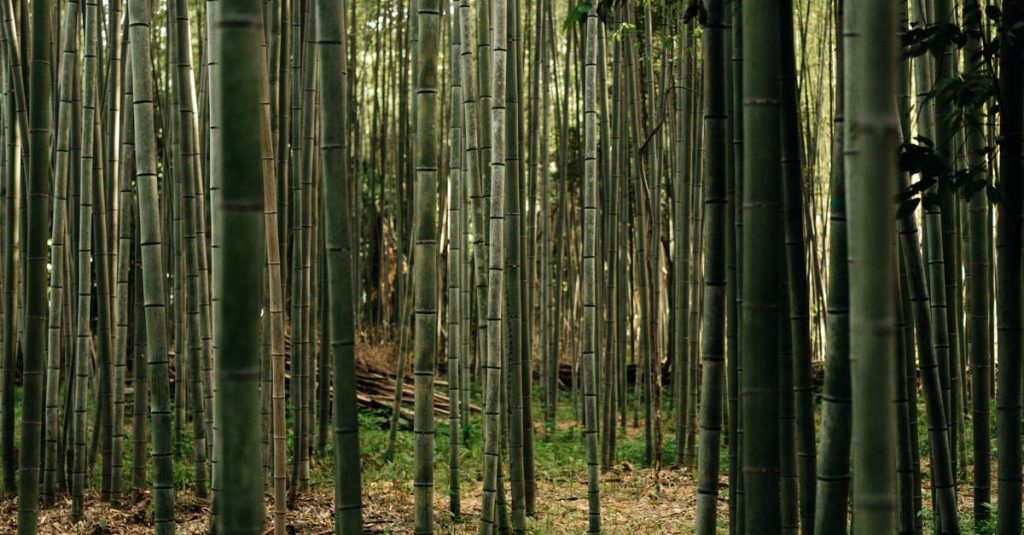
Nature provides several particularly striking examples of words without a single-word English equivalent. Komorebi (木漏れ日) describes sunlight filtering through leaves and branches. “Sunbeams filtering through the trees” conveys the idea, but has neither the same concision nor the same lexical unity. The word draws attention to an ordinary phenomenon that is easy to overlook: leaves do not merely block the light; they break it up and transform it.
You can use komorebi to describe a walk in a park or forest, when the sun creates shifting patches on the ground. The term does not necessarily imply spiritual reflection: it first names a precise natural spectacle. Its poetic quality comes from the image it evokes and from the way the language brings several elements together in a short expression.
Kogarashi (木枯らし) refers to the cold wind that announces the arrival of winter. “The first cold wind of the season” is an approximation, but loses the sense of transition contained in the word. It is not simply any wind: the term evokes the move from a milder period to weather that calls for different clothes and habits. As with all vocabulary linked to the seasons, its use depends on the context and the region concerned.
Two other words broaden this view of time and landscape. Shinrin-yoku (森林浴), often rendered as “forest bathing”, means spending time in a woodland environment while paying attention to your surroundings. The expression does not mean that you have to bathe in a forest; it combines the idea of a forest with that of immersion. It can be explained in English, but the translation struggles to preserve this compact metaphor.
Yūgen (幽玄) describes a mysterious depth or beauty that is suggested rather than shown directly. Mist concealing part of a landscape, a work that leaves room for interpretation or a silence charged with meaning can help convey the idea. There is no single translation: “mysterious depth” or “veiled beauty” works only depending on the context. The concept is also used in discussions of art and literature, and is not limited to a simple description of nature.
These terms do not prove that all Japanese people perceive landscapes in the same way. Rather, they show that Japanese vocabulary contains words that identify certain impressions economically. To place these images in the context of a trip, the guides to Kyoto and Hiroshima can help you discover landscapes and places where nature has a visible presence, without these words being reserved for any particular destination.
Natsukashii (懐かしい) is often translated as “nostalgic”, but it frequently evokes a past memory remembered fondly, sometimes with a touch of melancholy. Hearing a song from your childhood or seeing a familiar place again can arouse this feeling. The word does not necessarily mean that you want to go back: it can also describe welcoming the warmth of a memory in the present.
Wabi-sabi (侘寂) refers to an aesthetic associated with imperfection, simplicity and the ephemeral nature of things. A handmade bowl with an uneven surface, wood marked by time or a repaired object can illustrate it. It would be reductive to turn it into a rule according to which every old or damaged object is automatically beautiful. Rather, the term invites you to consider the marks of time and the non-standardised nature of things.
Mono no aware (物の哀れ) expresses a sensitivity to the beauty of things because they pass. The brief blossoming of a tree can produce an emotion in which admiration mingles with an awareness of its end. “Emotion at impermanence” approaches the meaning, but the Japanese expression condenses attention to things and the feeling they arouse. It is associated particularly with literature, but can also describe an everyday experience.
Ma (間) refers to an interval or space, which may be physical or temporal. In a room, it can mean the arrangement and the spaces left between objects; in a conversation, it can be a pause that contributes to the rhythm of the exchange. Translating ma as “emptiness” risks suggesting that nothing is happening. In fact, this interval can structure a scene, highlight an element or give the other person time to respond.
These concepts sometimes overlap in discussions of art, but they are not interchangeable. Wabi-sabi concerns an appreciation of imperfection and the ephemeral; mono no aware focuses on the emotion linked to the passing of things; ma concerns the interval and the relationship between elements. Confusing them would erase the linguistic nuances these terms distinguish.
| Word | Approximate meaning | Example of context |
|---|---|---|
| Komorebi | Light filtering through the trees | A walk in the forest |
| Natsukashii | A happy memory tinged with nostalgia | An old song |
| Wabi-sabi | The beauty of imperfection and the ephemeral | A handmade object marked by use |
| Mono no aware | Emotion at the fleeting nature of things | A brief flowering |
| Ma | An interval that provides structure or rhythm | A pause in a conversation |
Japanese vocabulary does not provide a universal framework for interpreting every landscape or work of art. It offers tools for expressing distinctions that English usually reformulates using several words. Understanding these differences makes it possible to approach Japanese culture precisely, without turning every term into a maxim.

Ikigai (生きがい) refers to what gives a person’s life value or meaning, giving them a reason to get up or continue an activity. “Reason for living” is one possible translation, but it can sound more solemn than some uses. A hobby, responsibility, relationship or professional activity can form part of someone’s ikigai. It does not have to be a spectacular calling.
A popular representation associates ikigai with the intersection of what you love, what you are good at, what the world needs and what can be paid for. This formula can be a useful tool for reflection, but it does not by itself sum up the meaning of the word in Japanese. In particular, ikigai does not necessarily require a passion to become a job. Translating it as “ideal career plan” would therefore reduce its scope excessively.
Mottainai (もったいない) expresses regret that a resource, object or opportunity is being wasted. You might say it when food is thrown away, but also when a still-useful object is abandoned. “What a waste” is a practical translation; depending on the situation, it does not always convey the value attached to what risks being lost. The term can encourage repairing, reusing or appreciating what you own more, without attributing all of Japan’s ecological practices to it alone.
Tsundoku (積ん読) refers to accumulating books that have been bought or borrowed but remain unread. The word combines the idea of piling up with that of reading, and humorously names a familiar gap: wanting to discover books while not having enough time to open them. It does not necessarily describe a disorder or a moral failing. A pile of books can also reflect several interests or planned reading for different moments.
Shōganai (しょうがない), also written shouganai, means that a situation cannot be avoided or that nothing can be done. “There’s nothing we can do” is an approximation. The expression can signal pragmatic acceptance, but its tone depends on the person, situation and way it is said. Presenting it as proof of Japanese resilience every time would be too general: it can also simply acknowledge a constraint or bring a discussion to a close.
These four terms concern different relationships with everyday life: what gives meaning, what deserves to be preserved, what accumulates and what lies beyond our control. They do not form a single philosophy, but show how precise words can reveal useful distinctions. You can therefore speak of the ikigai of an activity while feeling mottainai about wasting your resources, without confusing the two ideas.
To place these concepts in everyday life, it is useful not to separate words from their uses. Food, for example, offers contexts in which respect for ingredients and reducing waste take on a tangible meaning; the guide to Japanese cuisine adds culinary reference points. A word cannot, however, replace observing practices or recognising the diversity of individual experiences.
Tip: set up a Japan eSIM before departure so your data works on arrival.
Kidoairaku (喜怒哀楽) brings together four characters associated with joy, anger, sadness and pleasure. The expression is used to refer to these broad categories of emotion or the range of human feelings. It does not necessarily mean that emotions should be experienced as a perfectly balanced set. Its interest also lies in its construction: several emotional states are brought together in a compact formula, whereas English would generally list them.
Neko no te mo karitai (猫の手も借りたい) literally means that you would even like to borrow a cat’s paw. The expression is used to say that you are so busy that any help would be welcome. Its effect is vivid and humorous: of course, a cat’s paw cannot actually complete a task. “I don’t know which way to turn” or “any help would be welcome” convey the intention in English, but not the same image.
Amae (甘え) refers, depending on the context, to relying emotionally on someone else’s kindness or counting on their understanding. The translation varies, because “dependence”, “familiarity” and “trust” do not cover exactly the same idea. It should not be treated as a trait attributed to all Japanese people: the word describes a relational dynamic whose interpretation depends on the people involved and their relationship.
Enryo (遠慮) refers to restraint, reserve or refraining out of consideration for others. In a social situation, someone may decline an offer out of politeness or avoid imposing on others. “Showing restraint” conveys part of it, but the precise use varies with the context. Enryo does not mean that everyone must always hide what they think; rather, it helps describe one way of managing distance in certain interactions.
These terms are useful for understanding why a word-for-word translation sometimes fails in conversation. Language does more than name emotions: it also carries choices of tone, closeness and restraint. To learn Japanese expressions, it is therefore better to observe who is speaking, to whom and in what situation, rather than memorising a single English equivalent.
This attention to context relates to everyday usage, but it does not allow a general rule to be drawn about every interaction in Japan. Habits vary according to the people, relationships and circumstances. These variations are precisely what make translating Japanese more interesting than simply substituting one word for another.
Yoroshiku onegaishimasu (よろしくお願いします) is a very common expression whose translation changes according to the situation. At a first meeting, it can express a wish to establish a cordial relationship; in a professional exchange, it can accompany a request or signal an expectation of cooperation. “Pleased to meet you”, “I’m counting on you” or “thank you in advance” may work in certain contexts, but none covers all its uses.
Learning this expression therefore involves less choosing a fixed equivalent than recognising its role in the exchange. The translation depends on what comes before and what is expected afterwards. Using it mechanically in English would sometimes produce a strange sentence; in Japanese, its meaning becomes clearer through the situation and the relationship between the speakers.
Otsukaresama (お疲れ様) is addressed to someone in connection with work or an effort they have made. It can acknowledge a completed task or serve as a formula between colleagues, particularly at the end of the day. “Good work” or “thank you for your efforts” convey some of its uses. Yet the expression is not merely a compliment: it can function as a conventional greeting whose nuance depends on the time and the relationship between the people.
Itadakimasu (いただきます) is said before a meal. “Bon appétit” is sometimes used to render it in English, but the context of use is not identical. The expression marks the beginning of the meal and can convey a form of gratitude for what is received. It is better presented as an everyday expression than given one single interpretation or assumed to be spoken with the same intention by everyone.
Kuchisabishii (口寂しい) literally means that the mouth feels lonely; the term refers to wanting to eat or snack when hunger is not necessarily the main reason. “Feeling like a snack” conveys the essential meaning, but does not retain the expressive image of the Japanese. In conversation, it can help distinguish an appetite caused by hunger from the desire to eat something out of habit or for pleasure.
These four examples show why untranslatable Japanese words are not riddles reserved for specialists. They become understandable once you know their context of use, even if several English words are sometimes needed to explain them. To expand your Japanese vocabulary, it is therefore useful to learn an expression with a concrete situation, rather than as a single isolated translation.
The best approach is to ask what the word does in the sentence: does it express thanks, open a meal, mark a relationship or describe a sensation? This question prevents linguistic nuances from becoming rigid claims about an entire society. Words reflect usage; their meaning becomes clearer through contact with speakers and situations.
The term generally indicates that no single English word captures all its nuances. A translation explained in a short sentence is still possible, but it is less concise.
Komorebi describes sunlight passing between leaves and branches. “Light filtering through the trees” provides an English explanation.
No. Ikigai refers to what gives a person’s life meaning or value. It may be connected to work, but also to an activity, relationship or responsibility.
Memorise each expression with its situation of use, tone and relationship between the speakers. A single English equivalent is not always enough to convey how it is used.
To book tours and activities in Japan ahead, see the options on Klook.
Updated on 07/11/2026
Scroll to see more articles →