
Mastering Japanese:
The Key to Your Expatriation
From learning your first Hiragana to mastering Keigo, discover tried-and-tested methods for speaking Japanese and successfully settling in during 2026.
To learn Japanese, start with hiragana and katakana, then work on grammar, vocabulary and listening in parallel. Quickly add short conversations so that you can speak, even as a beginner. Regular practice, specific goals and resources suited to French speakers will help you progress without relying on romaji in the long term.
If you are preparing for a trip, first learn useful phrases for transport, shops and accommodation. For expatriation, supplement this learning with reading, kanji and speaking practice related to your professional life.
Recommended by expatriation experts

Why learn Japanese in 2026?
Learning Japanese is not merely a practical necessity for anyone wishing to live in Japan; it is a fascinating gateway to a unique psychology and culture. In 2026, despite advances in artificial intelligence translation, mastering the language remains the only genuine way to build deep connections with local people.
-
✓
Cultural insight: Experience the nuances of films, literature and traditions without a filter.
-
✓
Professional advantage: For those who want to work in Japan, speaking the language increases career opportunities tenfold.
-
✓
Everyday comfort: Handling your administrative procedures becomes child's play rather than a source of stress.
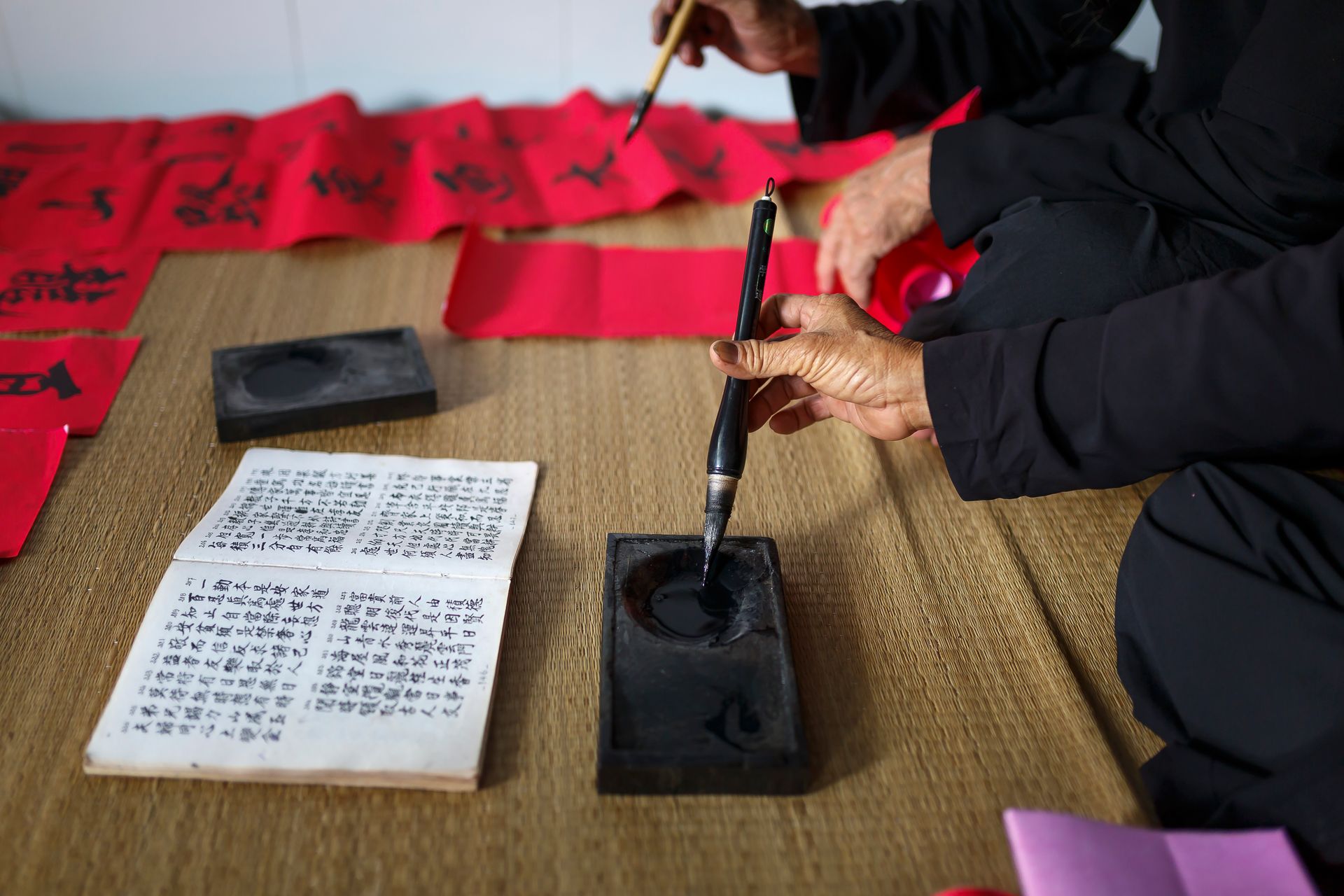
"Language is the mirror of culture. Learning Japanese means learning to see the world with different eyes."
The Interdependence of Language and Society
Japanese is a "social" language. Your choice of words depends directly on whom you are speaking to and the context.
Keigo (Politeness)
Essential in the local culture, Keigo defines social distance and hierarchical respect.
- • Sonkeigo (Respectful)
- • Kenjougo (Humble)
- • Teineigo (Standard polite)
Idiomatic Expressions
Terms such as "Otsukaresama" or "Itadakimasu" have no direct translation but express collective gratitude.
The Symbolism of Kanji
Characters are not merely letters; they are visual concepts that structure Japanese thought.
The Writing Triptych
Hiragana (ひらがな)
The first system to learn. It is used for words of Japanese origin, particles and grammar.
46 basic charactersKatakana (カタカナ)
Used for words borrowed from foreign languages (Gairaigo), onomatopoeia and emphasis.
Essential for reading menusKanji (漢字)
Logograms of Chinese origin. Each character has its own meaning and several readings (On-yomi and Kun-yomi).
Discover memorisation methods →Romaji
Transcription into the Latin alphabet. Useful at first, but should be abandoned as soon as possible so as not to slow your progress.
JLPT Progress Simulator
How long will it take you to reach your goal? Based on the official 2026 standards.
Estimated time required
Approximately -- months of regular effort.
Note: These calculations are estimates based on diligent study including grammar, kanji and listening.
The Logic of Grammar
Forget everything you know about Romance languages. Japanese follows an **SOV (Subject-Object-Verb)** structure. The verb always comes at the end, which requires careful listening right to the end of the sentence.
The "WA" Particle (Topic)
It marks the subject or topic being discussed. Without particles, a Japanese sentence is merely a string of unrelated words.
The "O" Particle (Object)
It indicates the direct object affected by the verb's action.
The Advantages (It's easy!)
- ✓ No gender (Masculine/Feminine)
- ✓ No plural (no complex agreement)
- ✓ Regular conjugation (very few irregular forms)
- ✓ The subject is often omitted if the context is clear
"Watashi wa ringo o tabemasu."
(I [topic] apple [object] eat [verb]) = I eat an apple.
Immersion: Active vs Passive
To speak like a native, your surroundings need to "breathe" Japanese.
Active Immersion
This is conscious effort. You listen to understand, note down vocabulary and analyse the grammar.
Recommended Apps
Anki (SRS), Wanikani, HelloTalk.
Resources
Genki or Minna no Nihongo textbooks.
Passive Immersion
This means constant exposure to the sounds of the language. Your brain gets used to the rhythms and pitch accent without any apparent effort.
Media
Podcasts (Nihongo con Teppei), anime with Japanese subtitles, J-Pop music.
2026 Tip
Set your smartphone interface to Japanese.
The 5 Beginner Traps
Putting off Kanji
Waiting until you are "good enough" to start learning kanji is a mistake. In fact, they make reading easier by visually separating words.
Relying on Romaji
Romaji is a crutch that interferes with your perception of Japanese sounds. Learn the Kana within a week at most.
Fear of making mistakes
Japanese people are extremely forgiving towards learners. The important thing is to communicate, not to be perfect.
Discouragement at the "Plateau"
The intermediate level (N3) is a mountain to climb. The key is consistency, even if it is just 15 minutes a day.
Ignoring Pitch Accent
Japanese is not flat. A word such as "Hashi" can mean "Chopsticks", "Bridge" or "Edge", depending on the intonation.
Need help?
Join our community to share your tips.
Frequently Asked Questions
Is Japanese really the most difficult language?
For a French speaker, it is classified as Category 4 (difficult). However, its pronunciation is very simple (similar to French) and its grammar is extremely logical.
How long does it take to be work-ready?
To work in Japan in a Japanese-speaking environment, N2 is generally required, which takes between 2 and 4 years of regular study.
Can I learn without Kanji?
No. From a certain level onwards, the absence of kanji makes reading impossible because there are no spaces between words in Japanese.
Should I prioritise private lessons or apps?
The ideal approach is a mix: apps for everyday vocabulary and a tutor to correct your spoken Japanese and grammar mistakes.
What is the JLPT?
It is the Japanese Language Proficiency Test, the official, internationally recognised exam for certifying your language level.
How can I learn when I do not have much time?
Use your "dead time" (on public transport, in queues) with spaced-repetition applications (SRS) such as Anki.
Is it possible to live in Japan without speaking the language?
Read our guide: Living in Japan without speaking Japanese. It is possible in large cities, but very limiting.
Where can I find native speakers?
Apps such as Tandem or HelloTalk, or language-exchange meet-ups in Japan's major cities.
What are the best dictionaries?
Jisho.org (web) and Midori (iOS) are the essential references.
How much should I budget for studying?
You can learn for free with NHK World, but expect to pay €20-40/hour for a good tutor.
Recommended Resources for 2026
Complete Beginner's Guide
A structured starting point for your first few weeks.
Free Methods
A selection of resources for learning without spending money.
NHK World Japan
Learn Japanese gently with high-quality audio lessons.
Embassy of Japan
Official information on scholarships and certifications.
Platform Guide
A comparison of the best online courses.
Mastering Kanji
Our in-house guide to no longer being afraid of the characters.
To get online as soon as you land, a Japan eSIM can be installed before you leave, with no need to look for a local SIM card.
Every great journey begins with a small step
Learning Japanese is an adventure that requires patience, perseverance and humility. As the Japanese proverb says: "Nanakorobi yaoki" (Fall seven times, get up eight). In 2026, the tools have never been more effective; all that is missing is your determination.