Mochi in Japan: How It’s Made, Types and New Year Traditions
Discover how mochi is made, its varieties and the Japanese New Year traditions surrounding this iconic rice-based treat.
A bento is an individual meal ready to take away, generally made up of rice and cooked dishes brought together in a box. In Japan, you can buy them in konbini, supermarkets, the food halls of department stores and railway stations, where ekiben showcase regional specialities.
Its history connects travellers’ provisions, urban leisure and the development of the railway. To choose one properly, look at the ingredients as well as the storage conditions: an attractive presentation guarantees neither a balanced meal nor a box suitable for a long day without refrigeration.
In brief
The history of bento is part of the history of food that could be carried far from home. Cooked and then dried rice, called hoshi-ii, was one of these old travel provisions: easy to transport, it could be rehydrated before eating.
These ancient practices should nevertheless be distinguished from the filled box we know today. The portable meal did not develop around a single invention: its contents, packaging and uses evolved alongside ways of travelling and eating.
During the Edo period, outings to admire the cherry blossoms and attend theatre performances helped develop meals prepared to be eaten away from home. Presentation then became increasingly important: food was no longer simply being transported, but made part of a leisure experience.
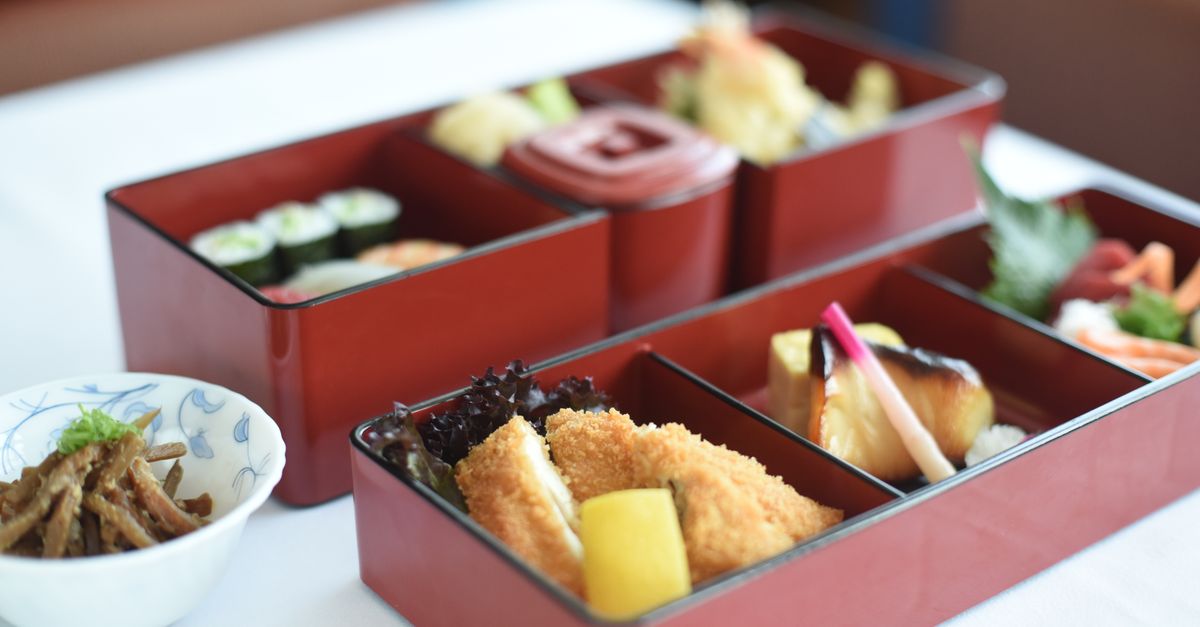
Makunouchi is associated with meals eaten during theatre intervals. Its assortment of rice and small dishes remains a reference for understanding the classic box, in which several flavours coexist without necessarily mixing.
The development of the railway then gave this portable lunch a new dimension. Ekiben, a name combining the ideas of a station and a boxed meal, accompanies journeys while showcasing local recipes.
Today, homemade preparations and shop-bought products coexist. School lunches are not, however, always brought from home, and decorative boxes do not represent every everyday meal: the format is primarily designed for practicality—eating away from home.
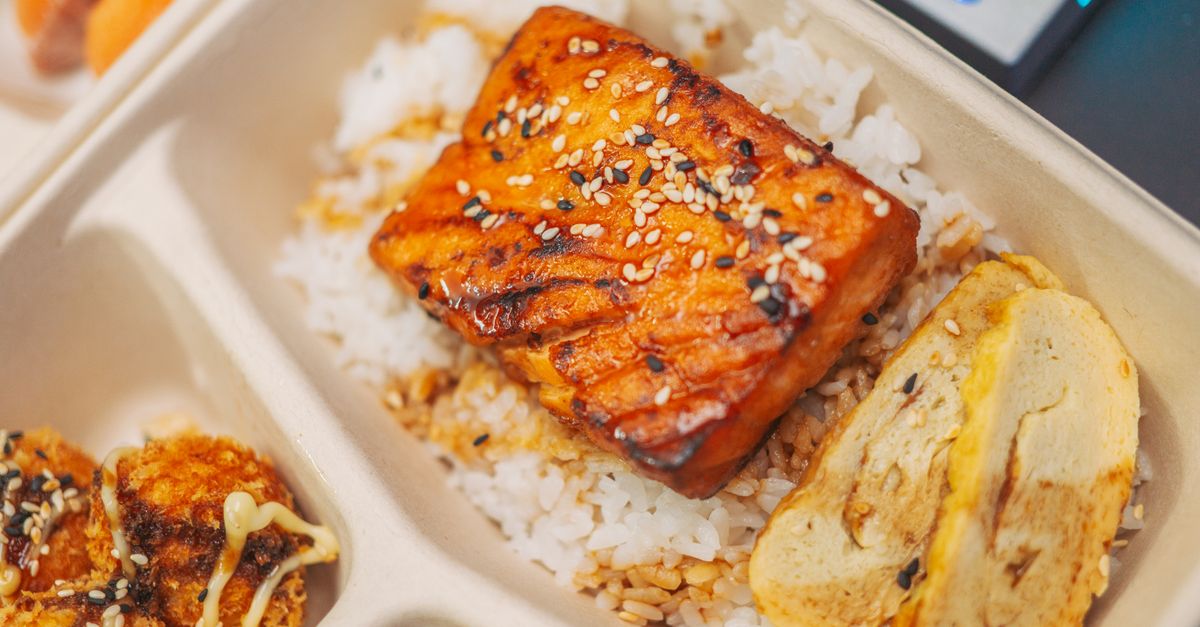
The contents of a bento often consist of a starchy food, a main dish and side dishes. Japanese rice is a common base, but some meals use noodles, seasoned rice or preparations similar to sushi.
Common fillings include grilled salmon, fried chicken karaage, breaded pork tonkatsu and tamagoyaki, a rolled omelette that is sometimes slightly sweet. Simmered vegetables, seasoned spinach or tsukemono, pickled or fermented vegetables depending on the recipe, complete the meal.
Each preparation has a role in the overall flavour: a sharp garnish contrasts with fried food, while rice complements a stronger sauce. Our guide to Japanese cuisine and its specialities can help you identify these dishes on labels.
Contrasting colours make the contents easy to read and encourage a variety of ingredients. The yellow of the omelette, the green of the vegetables and the colours of the fish or mushrooms create an attractive presentation without elaborate decoration.
But a compartmentalised box is not automatically balanced. A large portion of rice accompanied mainly by fried food and a few pickles is not a substitute for a genuine selection of vegetables; no single proportion suits every appetite.
When choosing one, therefore, examine the actual quantities rather than just the photograph. Sauces, marinades and salted vegetables can also make a significant contribution to salt intake.
Finally, a box that appears vegetarian may contain fish stock, bonito or a sauce made with animal products. If you have an allergy or follow a strict diet, ask for the ingredients to be confirmed: the appearance of the meal is not enough.
The different names do not all describe the same thing. Some refer to the contents, others to the container, place of sale or presentation: a meal bought at a station may therefore use a makunouchi-style selection.
| Type | Characteristic | Suitable for |
|---|---|---|
| Makunouchi | Rice and an assortment of small dishes | Discovering several flavours in one box |
| Ekiben | Station meal, often associated with a regional speciality | Taking on a railway journey |
| Shokado | Compartmentalised presentation, often served in a restaurant | Enjoying a carefully presented meal, generally at a table |
| Kyaraben | Food arranged as characters or patterns | Giving lunch a decorative element |
| Hot takeaway meal | Rice and a topping prepared or assembled at the counter | Eating soon after purchase |
In Japanese railway stations, regional boxes offer more than the classic chicken and rice combination. Toyama’s masuzushi showcases trout on vinegared rice; in Sendai, grilled beef tongue is a speciality found in some selections.
Around Miyajima, anago meshi combines rice and conger eel, which should be distinguished from freshwater eel. This discovery can complement a visit to the Hiroshima region, without assuming that every recipe is available in every shop.
Kyaraben notably uses shaped rice and cut nori seaweed to depict animals or characters. It is a creative practice, not a cultural obligation imposed on every family.
Shokado, meanwhile, shows that a boxed meal is not always intended for transport. Its presentation can also be used to serve separate dishes at the table, with distinct textures and seasonings.
Konbini, particularly Seven-Eleven, Lawson and FamilyMart, are a practical way to buy lunch without going to a restaurant. The selection varies according to the shop and the time of day: see our guide to Japanese convenience stores and their services to better understand how they work.
Reheating may be available, but you should check whether the packaging and all the toppings allow it. A product sold chilled should not be considered suitable for a long walk without being kept cold.
Japanese supermarkets also sell prepared dishes, often in the delicatessen section. Compare the contents, portion and displayed price; any discounts depend on the shop and its stock and are not guaranteed.
Depachika, food halls generally located in the basements of department stores, bring together counters selling Japanese cuisine and other specialities. They are suitable if you are looking for a more elaborate presentation, a particular filling or seasonal products.
In Tokyo, a visit to a department store can be combined with exploring Shinjuku and its shopping districts. Check opening times and services with the official retailer before setting out.
Large stations have specialist shops, sometimes inside areas accessible only with a valid transport ticket. Find out where they are before passing through the ticket gates, and do not automatically assume that food will be sold on board.
Chains specialising in hot takeaway meals are another option. To manage your travel budget in Japan, compare current prices with the official retailers: the place of sale alone does not predict the price or quality.
A bento box should suit the meal being transported and the available cleaning options. Food-safe plastic is lightweight; stainless steel suits some uses but cannot go in a microwave; wood requires care in accordance with the manufacturer’s recommendations.
Magewappa, a traditional bentwood container associated particularly with Akita, is appreciated for its presentation and contact with rice. Its care nevertheless depends on its finish: do not assume that it is dishwasher-safe or watertight.
Compartments limit mixing, but they do not replace a watertight seal. Put sauces in a suitable container and check the instructions separately for the lid, dividers and body of the box.
To start, combine rice with well-cooked salmon or prepared tofu, followed by drained vegetables. Separating moist toppings prevents them from making the rest soggy; ingredients intended to remain crisp are best wrapped separately.
Cooling food does not mean leaving it on the worktop. After cooking, arrange for rapid cooling and refrigerated storage, particularly for rice and perishable preparations.
To transport a cold meal, use an insulated bag with a freezer pack when necessary, then return it to the refrigerator as soon as possible. Umeboshi, vinegar or a salted topping do not make the entire preparation safe at room temperature.
A boxed lunch is suitable for long-distance trains where you can eat in your seat. On urban transport, it is better to wait for a suitable place; our guide to Japan’s trains and Shinkansen can help you plan your journeys.
Keep the packaging until you find a suitable bin and follow local waste-sorting instructions. The right choice also depends on when you will actually be able to eat, not just on what looks appetising at the counter.
It depends on the preparation. Some are designed to be eaten without reheating, while others are better hot. Follow the storage and reheating instructions on the packaging.
Bento refers to an individual meal in a box. Ekiben refers to a category associated with stations and railway travel, often characterised by a regional recipe or regional ingredients.
Yes, but a vegetable or tofu filling does not guarantee that a recipe is vegetarian. Check in particular for stocks, sauces and bonito; ask the seller to confirm if the ingredients are not clearly stated.
Not without considering its storage conditions. For a chilled product, plan to keep it cold or buy it shortly before eating. Follow the instructions on the packaging.
Updated on 26/10/2026
Scroll to see more articles →