Wagyu vs Kobe Beef: Differences, Grades and Where to Try Them
Discover the differences between Wagyu and Kobe beef, their grading system and where to taste these exceptional Japanese meats.
Japanese sake, called nihonshu in Japan, is an alcoholic drink made by fermenting rice rather than distilling it. When choosing one, focus mainly on the ingredients, how the grain was treated and the style you are looking for: a junmai may pair well with savoury dishes, while a ginjo often favours a fruitier, more floral expression.
It can be served chilled, at room temperature or warmed, depending on the bottle. The best approach is to understand how it is made, read the main information on the label and adapt the serving style to the meal: neither price, polishing nor temperature alone defines its quality.
In brief
Sake production involves a particular difficulty: unlike grape juice, rice does not directly provide yeast with the sugars needed to produce alcohol. Its starch must first be transformed, which explains koji’s central role.
Brewers may use varieties of sake rice selected for their brewing properties, but not all nihonshu is made exclusively from these varieties. The choice depends on the desired result, supply and the brewery’s expertise.
Rice polishing removes some of the outer layers, which are particularly rich in proteins and lipids. These components influence flavour: reducing them helps shape the aromatic profile, but does not by itself guarantee a better bottle.
The term seimai buai expresses the proportion of the grain remaining after this process, not the proportion removed. The rice is then washed, soaked and steamed to obtain a texture suited to the next stages.
Koji is rice on which a selected mould, generally Aspergillus oryzae, is grown. The enzymes it produces convert starch into sugars, while yeast converts those sugars into alcohol.
In the main tank, these transformations take place simultaneously: this is multiple parallel fermentation. The brewer controls factors including temperature and the addition of ingredients to shape the balance between aromatic expression, acidity and texture.
After brewing, pressing separates the liquid from the solids. Depending on the desired style, clarification, pasteurisation, dilution or maturation may follow; some sake deliberately avoids certain of these processes.
The final character therefore comes from a set of decisions, not just the degree of polishing.
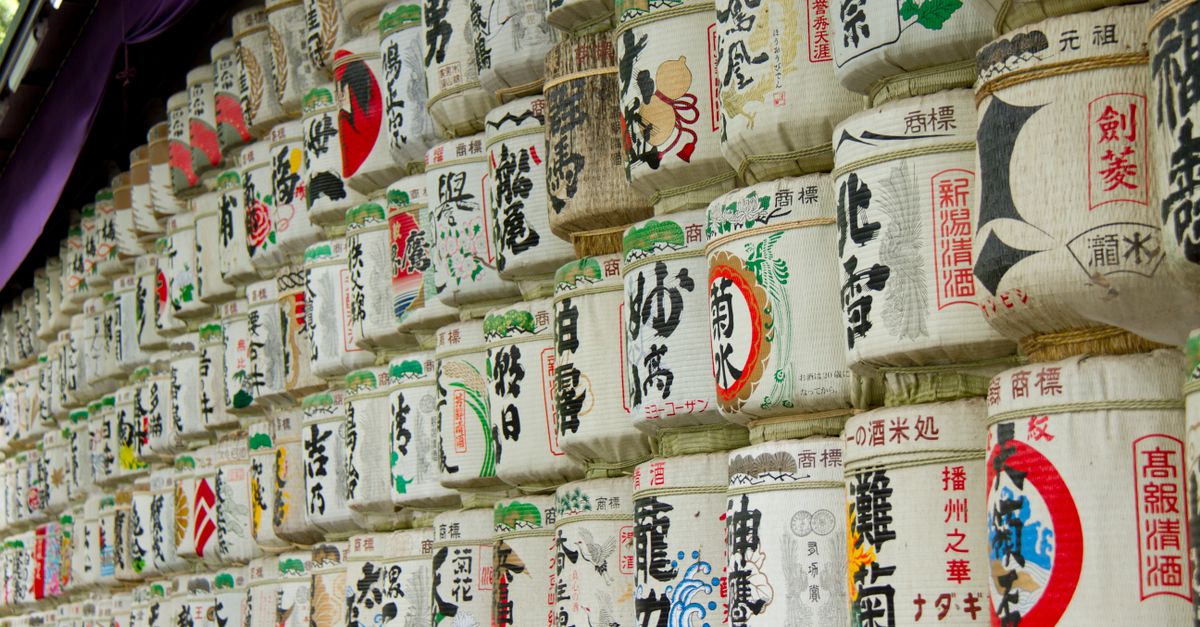
Sake types describe ingredients and methods rather than a universal scale from best to worst. Futsushu refers to production that does not fall under the specific classifications grouped under the term tokutei meishoshu; it is not reserved for cooking.
Junmai means that no distilled alcohol has been added. Fermentation still involves yeast, even when the commercial presentation mentions only rice, water and koji.
Honjozo contains a regulated addition of brewing alcohol, which can contribute to aromatic expression and lightness on the palate. This addition is not, in itself, a sign of poor quality.
| Classification | What it indicates | Tasting guide |
|---|---|---|
| Junmai | No added distilled alcohol | Varied profiles, sometimes body and umami |
| Honjozo | Limited addition of brewing alcohol | Often smooth and clean |
| Ginjo | Extensive polishing and a specific brewing method | Often fruity or floral |
| Daiginjo | More extensive polishing requirements | Frequently seeks aromatic finesse |
| Junmai ginjo or junmai daiginjo | Corresponding category without added alcohol | Balance specific to each sake |
A junmai daiginjo is therefore not automatically dry, nor necessarily preferable with every dish. A simmered dish may pair better with a full-bodied sake than with a very delicate expression.
Nigori retains rice particles after a coarser separation, giving it a cloudy appearance: simply describing it as “unfiltered” lacks precision. Its texture may be creamy, but its appearance does not guarantee a sweet flavour.
Genshu refers to sake that has not been diluted after fermentation and has no direct connection with lightly polished rice. Namazake indicates that it has not been pasteurised; koshu refers to ageing, while taruzake indicates time spent in a wooden container, traditionally Japanese cedar.
The classification tells you about the method; the tasting notes provide more detail about the flavour.
Tasting temperature changes how aromas, sweetness, acidity and alcohol are perceived. There is no rule that all good bottles should be cold and ordinary ones warm.
A delicately aromatic ginjo is often a good candidate for chilled service. Excessive cold can nevertheless hide its expression: allow it to develop in the glass before judging its balance.
At room temperature, some sake reveals more body and cereal notes. This serving style is not systematically better than the others, especially since room temperature varies according to the season and the home.
Gentle heating can bring out profiles rich in umami or rice notes. Some junmai and honjozo work well this way, but the brewer’s recommendation is more useful than the category alone.
On a menu, reishu generally means chilled service, nurukan means warm service and atsukan means hotter service. The term hiya may refer to room temperature despite its apparent meaning of “chilled”: it is better to clarify your preference with the staff.
For controlled heating, place a suitable carafe in a bain-marie and monitor how it develops. Avoid boiling and repeated reheating, which can alter the intended balance.
Pour a small amount, smell it without excessive swirling, then take a sip. Observe the texture, freshness, any sweetness and the finish: fruity notes do not necessarily mean that the drink is sweet.
Comparing the same sake chilled and then slightly warmed helps you understand what the serving temperature really changes. The best guide remains the balance in your glass, together with the producer’s advice.
Sake service can remain simple: clean tableware, a suitable temperature and small quantities are enough. The vessel nevertheless affects the experience, particularly the concentration of aromas and how quickly the drink warms up.
The tokkuri is a carafe often used to serve warmed sake. Small ochoko cups and guinomi are suitable for tasting in small sips, while a wine glass can make aromas easier to identify.
The sakazuki, a wide and shallow cup, appears particularly in ceremonial settings. The masu, a square wooden vessel, offers another experience, but its aromas can interfere with the delicate nuances of the contents.
To create a pairing, first bring the intensity of the dish and the drink into balance. Delicate raw fish often calls for a discreet expression, while yakitori coated in sauce can support greater body and character.
Mushrooms, dashi stock and miso-based dishes offer possibilities centred on umami. A lively profile can also balance the richness of fried food: our guide to Japanese food helps identify these flavour families.
In a Japanese izakaya, ask for a recommendation based on the dishes ordered rather than for a bottle reputed to be “better”. Say whether you prefer something light, fruity, dry or generous.
Serving your neighbours is a convivial custom, particularly in a formal setting. Receiving the cup while supporting it with your other hand is a sign of courtesy; gestures nevertheless vary according to the context.
When making a toast, the usual expression is “kanpai”. Sharing never means that you have to finish your glass: refusing another serving or choosing a non-alcoholic drink is perfectly legitimate.
When buying a bottle, start with its purpose: accompanying dinner, discovering a style or giving a regional speciality as a gift. Luxurious packaging and extensive polishing do not guarantee that it will suit the meal or the recipient’s preferences.
Look for the brewery’s name, the classification, treatment details and storage instructions. A label stating namazake deserves particular attention regarding the cold chain; staff should be able to explain how the bottle was stored.
Names worth exploring include Mutsu Hassen, from Hachinohe Shuzo in Aomori, and Kokuryu, in Fukui Prefecture. Above all, compare the individual bottles: one brewery may offer very different expressions.
In Takayama, breweries are also a way to discover local production. Before visiting, check opening hours, tasting options and any reservation requirements directly with the establishment.
As prices vary according to the seller, format and distribution, check the current price with the shop or brewery. To plan your spending, you can also consult our guide to the cost of living in Japan.
Light and heat should be avoided. Follow the producer’s instructions, particularly for unpasteurised products, and do not leave your purchase in a hot vehicle or near a window.
After opening, reseal it carefully and keep it in the refrigerator. How it develops depends on the style: there is no universal period guaranteeing the same aromatic freshness for every bottle.
For transport, protect the glass with absorbent, shock-resistant packaging. Check the applicable rules with the airline and customs authorities before bringing alcohol home.
Suitable storage protects your purchase better than the prestige of its label. Alcohol abuse is dangerous to your health; drink responsibly.
No. Nihonshu is made by fermenting rice. It differs from Japanese shochu and from spirits sometimes served under the name sake in some restaurants.
Ask for a bottle based on your tastes and the planned meal: light and fruity, discreet and dry, or fuller-bodied. The classification alone cannot predict every sensation.
No. Some sake is best served chilled, while other varieties work better warm or at room temperature. Follow the brewer’s recommendations rather than a rule based only on price.
No. Nigori’s cloudiness comes from rice particles retained in the drink. It indicates texture and the separation method, not sweetness directly.
Updated on 27/10/2026
Scroll to see more articles →