Tip: set up a Japan eSIM before departure so your data works on arrival.
Why visit Kanazawa
Kanazawa stands out for its intact cultural heritage. Spared from bombing during the Second World War, it retains authentic historic districts where traditional crafts still thrive. The city combines nature, history and craftsmanship in a setting accessible to French-speaking travellers.
Its temperate climate, marked by snowy winters and hot summers, offers changing landscapes throughout the seasons. Kenrokuen Garden takes on vivid colours in autumn (November) and cherry blossoms in spring (March–April), while Ōmichō Market offers fresh seafood all year round.
What to see and do in Kanazawa
Visit Kenrokuen Garden and its surroundings
Kenrokuen Garden embodies classic Japanese aesthetics, with its ponds, bridges and lanterns arranged according to traditional landscaping principles. Allow at least two hours to walk along its paths and observe the details: the two-legged Kotojitoro lantern, the Neagashi fountain, which operates by natural gravity, and the pine trees supported by ropes in winter to protect their branches from the weight of the snow.
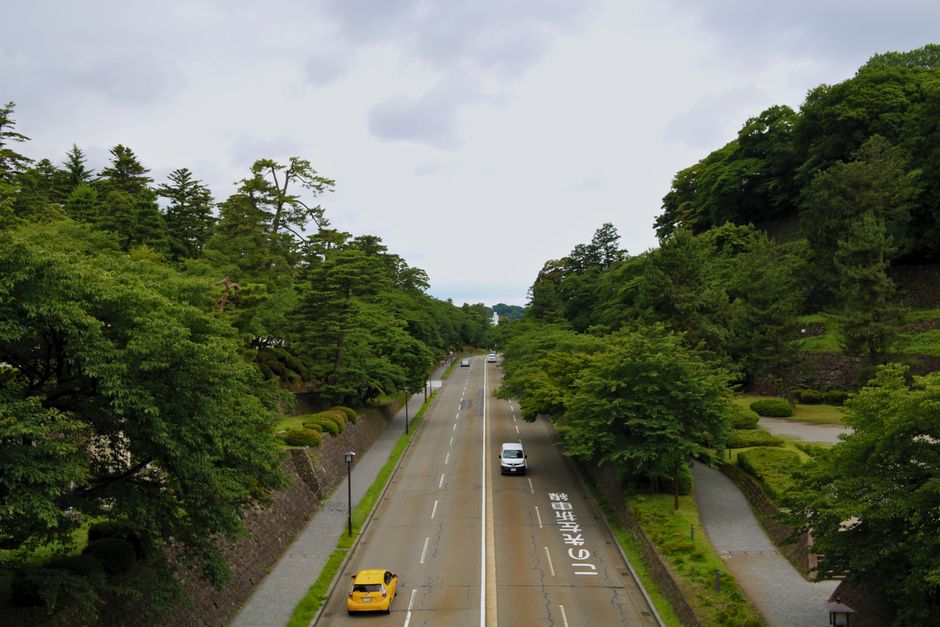
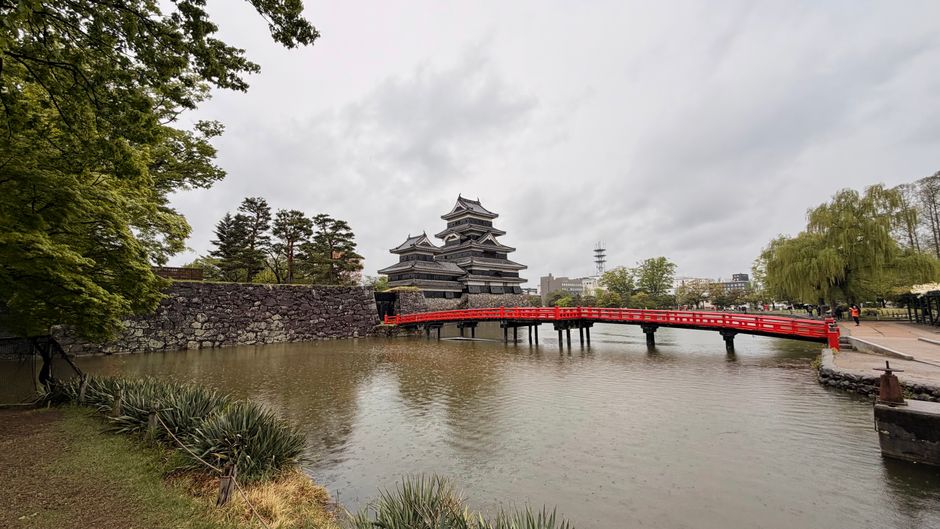
Immediately nearby, Kanazawa Castle Park (Kanazawa-jō) features recent reconstructions of the original gates and towers. Together, they form a coherent cultural route that can be reached on foot from the city centre.
Explore the historic districts
The Nagamachi district preserves the atmosphere of samurai residences, with its ochre earthen walls, canals and wooden gates. Nomura House (Shinryōkaku) is open to visitors and showcases the typical interior layout of a high-ranking warrior’s home, with its private garden and reception rooms.
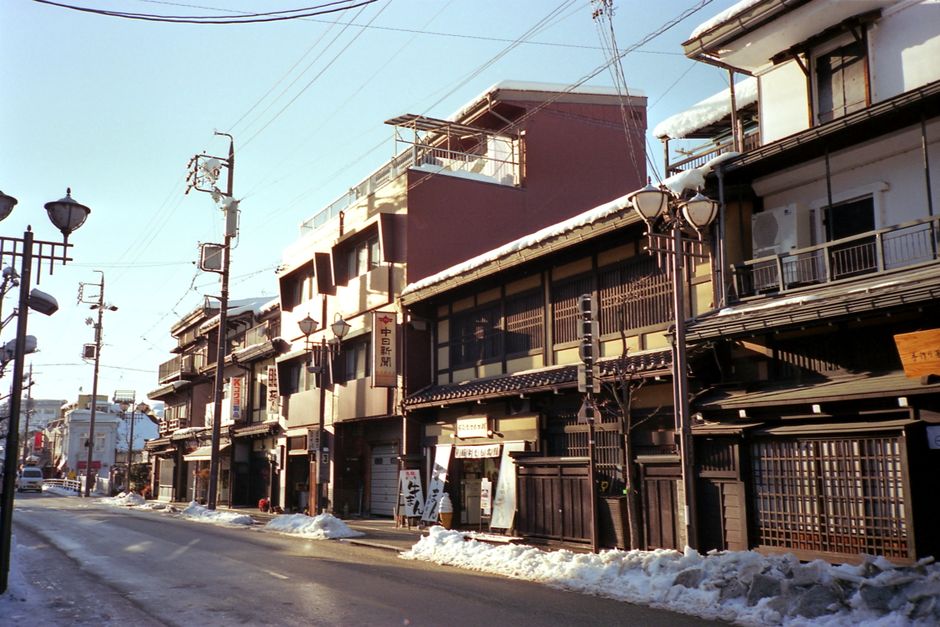
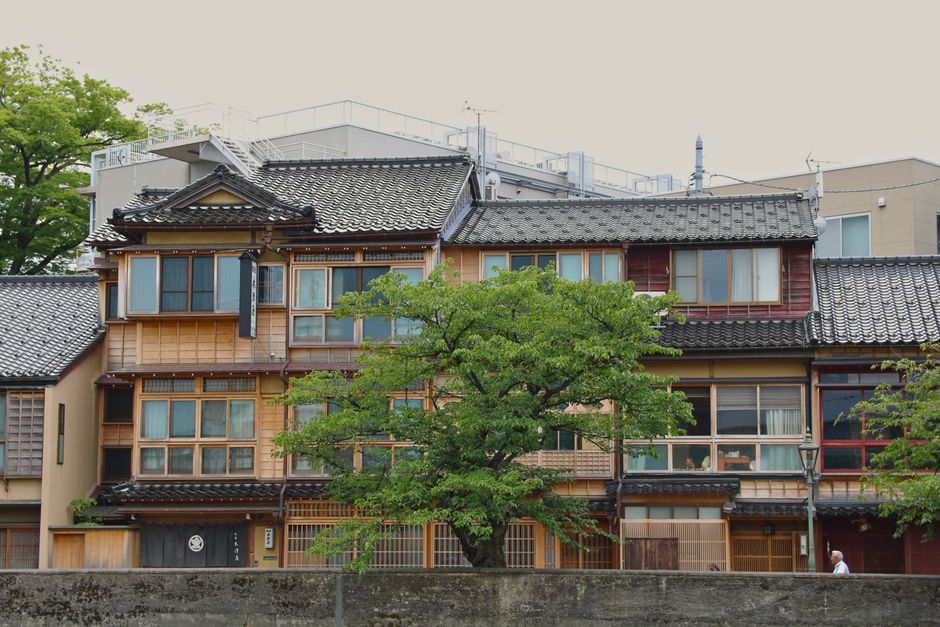
The geisha districts of Higashi Chaya and Nishi Chaya are lined with wooden houses (machiya) featuring lattice façades. Some, such as Shima Teahouse, are open to the public and offer a glimpse of the salons where music and dance performances took place. To learn more about these traditions, see our guide to matcha and the tea ceremony.
Discover local crafts
Kanazawa is home to several traditional crafts protected by the Maeda clan since the Edo period. Gold leaf craft (kinpaku) predominates: workshops offer demonstrations and introductions to applying gold leaf to objects. You will also find food products covered with edible gold in shops and restaurants.
Kutani-yaki ceramics, recognisable by their colourful patterns, and Wajima-nuri lacquerware represent other local skills. The Ishikawa Kutani Museum displays historic and contemporary pieces, while galleries sell modern creations.
Enjoy Ōmichō Market
Ōmichō Market brings together stalls selling fresh produce and food stands where you can sample specialities from the Sea of Japan. Scallops, snow crabs and sea urchins are particularly popular. Several restaurants serve kaisendon (bowls of rice topped with raw fish) prepared on site.
The market generally opens between 9am and 5pm, with opening times varying from one business to another. Arrive early to enjoy the freshness of the produce and avoid the crowds. For more Japanese culinary experiences, discover our guide to bento.
When to visit Kanazawa
Spring (March–April) and autumn (November) offer the most pleasant conditions for visiting Kanazawa. Cherry trees bloom in Kenrokuen Garden and the city’s parks in early spring, while the maples turn red and gold in November.
Winter brings snow, creating picturesque landscapes but requiring warm clothing. Summer (July–August) is hot and humid, with temperatures regularly exceeding 30°C. Each season has its advantages depending on your preferences: snow and yukitsuri (ropes protecting the pine trees) in winter, summer festivals, or autumn colours.
| Season | Advantages | Disadvantages |
|---|
| Spring (March–April) | Cherry blossom, mild temperatures | High tourist numbers |
| Summer (July–August) | Local festivals, lively market | Significant heat and humidity |
| Autumn (November) | Red autumn foliage, pleasant weather | More expensive accommodation |
| Winter (December–February) | Snowy landscapes, yukitsuri | Cold, short days |
How to organise your stay
Recommended duration
Two days are enough to visit Kanazawa’s main sights: one day for Kenrokuen Garden, the castle and a historic district, and a second for Ōmichō Market, the museums and local crafts. A third day allows you to explore the surrounding area, such as the villages of Shirakawa-gō or the Noto Peninsula.
Itinerary combinations
Kanazawa fits naturally into a route between Tokyo and Kyoto via the Hokuriku Shinkansen. A classic itinerary includes Takayama and Shirakawa-gō before or after Kanazawa, forming a cultural loop through the Japanese Alps. To plan your trip, see our guide to Tokyo and Kyoto.
From Kanazawa, you can also reach Tottori and its dunes by express train, or travel down to Kyoto by combining train and bus.
Accommodation and budget
Kanazawa offers modern hotels near the station, ryokan (traditional inns) in the historic districts, and budget options such as capsule hotels. Prices vary depending on the season: allow for a higher budget in autumn and spring.
Meals at Ōmichō Market remain affordable (kaisendon between 1500 and 3000 yen), while restaurants specialising in gourmet food with gold leaf charge higher prices. Entry to Kenrokuen Garden costs 320 yen, and several museums offer combined tickets.
Getting around Kanazawa
Kanazawa’s historic centre can be explored on foot or by bicycle. Bicycle hire services are available near the station and at several locations around the city. A tourist bus (Kanazawa Loop Bus) connects the main sights with a day pass.
To reach the surrounding areas (Noto, Shirakawa-gō), regular buses depart from Kanazawa Station. Hiring a car offers more flexibility for exploring the region at your own pace. Find more information in our guide to konbini, which are handy for breaks during your journeys.
Frequently asked questions
How long does it take to visit Kenrokuen Garden?
Allow at least two hours to walk around Kenrokuen Garden and see its main features: lanterns, ponds, bridges and notable trees. An in-depth visit with photo stops can take three hours. The garden opens from 7am to 6pm depending on the season, and entry costs 320 yen.
What is the best season to visit Kanazawa?
Spring (March–April) and autumn (November) offer the best conditions: cherry blossom or red foliage in Kenrokuen Garden, pleasant temperatures and photogenic landscapes. Winter brings picturesque snow but cold weather, while summer is hot and humid. Each season has its own advantages depending on your preferences.
Can you visit Kanazawa in a day from Tokyo or Kyoto?
Technically possible thanks to the Hokuriku Shinkansen (2h30 from Tokyo, 1h30 from Kyoto via Tsuruga), one day is still a short time to appreciate Kanazawa. You can see Kenrokuen Garden and one historic district, but will miss Ōmichō Market and the museums. Two days there allow for a more complete and relaxed discovery.
Where can you eat fresh seafood in Kanazawa?
Ōmichō Market is home to the best fresh seafood stalls and restaurants serving kaisendon (rice bowls topped with raw fish). Open from 9am to 5pm, it offers snow crabs, scallops, sea urchins and other local specialities. Arrive early to enjoy maximum freshness and avoid the crowds.
How do you get between Kanazawa’s tourist attractions?
Kanazawa’s historic centre can be explored on foot (15 to 20 minutes between the main sites) or by bicycle (rentals are available near the station). The Kanazawa Loop Bus connects the tourist attractions with a convenient day pass. The Kenrokuen, Nagamachi and Higashi Chaya districts form a compact triangle that can be reached without a car.
What craft souvenir can you bring home from Kanazawa?
Gold leaf (kinpaku), in the form of cosmetics, decorative items or food products, is Kanazawa’s iconic souvenir. Colourful Kutani-yaki ceramics, Wajima-nuri lacquerware and Kaga Yuzen dyed fabrics are other high-quality local crafts. Workshops in the city centre offer demonstrations and direct sales.