Tip: set up a Japan eSIM before departure so your data works on arrival.
Why visit Tottori in Japan?
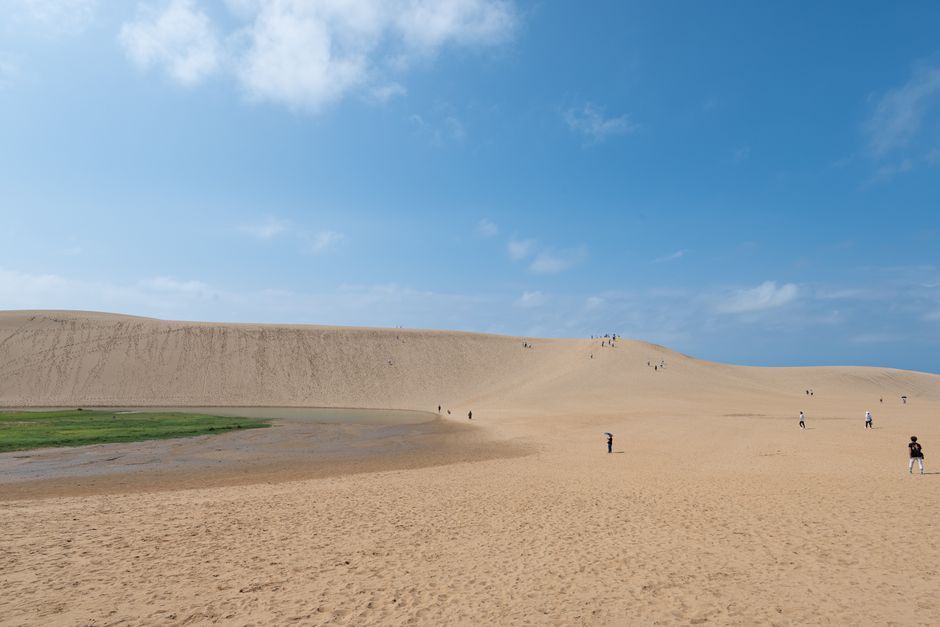
Tottori offers a landscape not usually associated with Japan: a vast expanse of golden sand between the city and the Sea of Japan. The site gives the impression of a desert, but these are coastal dunes shaped by deposits from the Sendai River, sea currents and winds. The landscape changes with the light, season and weather conditions.
A visit is not limited to a walk on the sand. You can combine it with a cultural exploration of the city centre, an excursion to Mount Daisen or a meal featuring regional specialities. To plan a broader itinerary along the coast, you can also consult our guide to Kanazawa and the Sea of Japan.
The Tottori Sand Dunes: what is there to see?
A walk facing the sea
From the site entrance, the sandy terrain gradually rises to viewpoints overlooking the Sea of Japan. Walking can be physically demanding, as the sand sinks beneath your feet and some slopes are steep. Avoid limiting yourself to the area closest to the entrance: by walking a little further, you can generally enjoy a more open landscape.
- Bring water, a hat and sun protection.
- Wear closed shoes that fit securely.
- Protect your phone and camera from the sand and wind.
- Respect signposted areas and do not pick vegetation adapted to the dune environment.
Activities and facilities
The dunes are explored on foot, but the site also offers activities depending on the season, weather and availability: camel rides, paragliding or sandboarding. Access conditions, prices and opening hours may change. Check the information with the operators on site before booking.
The Sand Museum complements the visit with monumental sculptures made from sand. Its exhibitions follow a changing theme, which can affect the appeal of a visit from one year to the next. Check the official programme before setting off.
Can it be called a Japanese desert?
The expression “Japan’s desert” is a convenient way to describe the appearance of the landscape, but the Tottori dunes are not a desert in the classical geographical sense. They are located in a humid coastal environment, with vegetation and wildlife specific to dunes. The sand is therefore not uniform: plants, animal tracks and more compact areas appear in different sections.
This distinction helps you understand the site better. You come looking for an arid and spectacular landscape, but you are also visiting a fragile natural environment. Wind and rain regularly transform the shapes of the sand. A photo taken at a different time may therefore show very different terrain.
What can you do around the Tottori dunes?
The city centre and castle remains
Tottori city centre allows you to round off your visit with an urban stroll. The castle ruins are located on higher ground and offer views over the city. The route includes steps and sloping sections: allow plenty of time and wear comfortable shoes. The site is particularly enjoyable when you want to alternate between natural scenery and historical heritage.
Mount Daisen and nature
Mount Daisen is located in Tottori Prefecture, west of the city. This sacred mountain is associated with temples, hiking trails and forest landscapes that contrast with the dunes. An excursion requires you to check access, the weather and trail conditions. In winter, conditions can be very different from those on the coast.
Travellers interested in Japanese religious traditions can plan this stop alongside some reading about matcha and the tea ceremony in Japan, or opt for a more contemplative visit to the temples and mountain trails.
What to eat in Tottori?
The prefecture is renowned for its seafood and agriculture. Depending on the season, restaurants and markets offer nashi pears, snow crab, tofu and rice or fish specialities, among other things. Availability varies according to deliveries and individual establishments.
For a simple meal during a day of sightseeing, convenience shops can be useful, but local specialities are mainly found in restaurants, markets and port areas. Our guide to bento in Japan can help you choose a practical meal for a journey or excursion.
How should you organise a visit to Tottori?
How much time should you allow?
One day is enough to see the dunes, the Sand Museum and part of the city centre. Add a night if you want to take your time, visit the castle ruins or plan an excursion to Mount Daisen. The most suitable length of stay depends mainly on your connections and your interest in hiking.
Transport and preparation
Tottori is served by express trains, long-distance buses and a regional airport. Services do not all run at the same frequency, and some excursions require a change. Before setting off, check timetables on the transport operators’ official channels, particularly if you are travelling early, late or during a busy period.
| Type of trip | Possible itinerary | Point to bear in mind |
|---|
| Quick getaway | Dunes, Sand Museum and city centre | Limit longer-distance travel |
| One night | Dunes, castle and local cuisine | Book accommodation according to the season |
| Nature and heritage | Dunes followed by Mount Daisen | Check transport and the weather |
For a longer trip, Tottori can be included in an itinerary around the Chūgoku region. Travellers staying for several weeks can also consult the official information concerning the Working Holiday Scheme in Japan, without confusing this scheme with a simple tourist stay.
Frequently asked questions
Are the Tottori dunes a real desert?
No, the Tottori dunes are a coastal area of sand, not a desert in the strict geographical sense. However, their extent, contours and sparse vegetation in some areas give the impression of a desert landscape. Wind and bad weather regularly alter their appearance.
What can you do at the Tottori dunes besides walking?
You can visit the Sand Museum and, depending on the season and weather, try activities offered on site such as sandboarding, paragliding or a camel ride. Availability and conditions change: ask the operators for information before your visit.
When should you visit the Tottori dunes?
The dunes can be visited all year round, but the experience depends greatly on the wind, rain, heat and visibility. Spring and autumn often offer pleasant conditions for walking. Check the weather and local information before choosing your day.
How do you get to the dunes from Tottori city?
The dunes are located close to the city and can be reached by local transport or by car. Timetables and frequency may vary depending on the season. Check your return journey before setting off, especially if you plan to stay until sunset.
What can you visit near Tottori after the dunes?
You can continue with the ruins of Tottori Castle, the city centre and the prefecture’s specialities. Mount Daisen is better suited to an outing focused on nature, temples or hiking. Arrange suitable transport and check trail conditions.