
Japanese street food: complete guide
📍 Travel Guide

Japanese street food: complete guide

Japanese street food (yokocho, shotengai, markets) is a cornerstone of the travel experience. Takoyaki in Osaka, Hiroshima-style okonomiyaki, yakitori in the backstreets of Shinjuku, taiyaki by the sea — every region has its specialities. Average prices: 200 to 1,500 yen (€1.5-10) per dish.

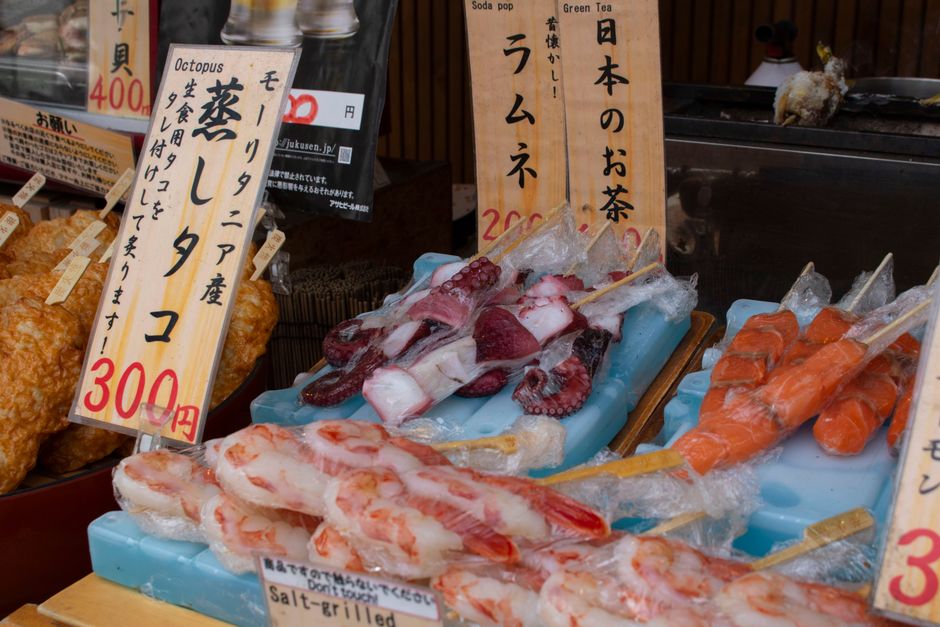
Street food in Japan includes savoury and sweet specialities sold in markets, backstreets, festivals, yatai, konbini and certain shopping districts. For your first taste, try takoyaki, yakitori, okonomiyaki, taiyaki and kushi-katsu in particular. It is best to eat in the designated area, follow the vendor’s instructions and keep cash on you for small stalls.

Your experience will depend greatly on the place and time: a market offers fresh produce, a matsuri snacks that are easy to eat standing up, while a yokocho favours small tables and skewers. Recipes, opening hours and payment methods vary from one establishment to another.

eSIM: online on arrival

Five regions, five street food cultures

Each region has its own street food identity:

  • Osaka (Kansai): takoyaki (500 yen), okonomiyaki (900 yen), kushi-katsu (200 yen), kuromon (fish).
  • Tokyo (Kanto): yakitori (200-400 yen), monjayaki (900 yen), nikuman (200 yen).
  • Hiroshima: Hiroshima-style okonomiyaki (1,200 yen), anago-meshi (1,500 yen), momiji manjū.
  • Kyoto: yudofu (1,200 yen), matcha sweets (500 yen), nishiki soba (1,000 yen).
  • Fukuoka (Kyushu): motsunabe (1,800 yen), mentaiko (400 yen), Hakata ramen (900 yen).

Iconic dishes to try

Top 15 Japanese street foods:

  1. Takoyaki — octopus balls, takoyaki sauce, mayo, bonito flakes. Originating in Osaka, 500 yen for 8.
  2. Okonomiyaki — “Japanese pizza”, batter + cabbage + meat/fish. Osaka-style (900 yen) vs Hiroshima-style (1,200 yen).
  3. Yakitori — charcoal-grilled chicken skewers, with tare sauce or salt. 200-400 yen each. Shinjuku yokocho.
  4. Taiyaki — fish-shaped pastry filled with anko (red bean), custard or chocolate. 200-350 yen.
  5. Nikuman — steamed bun filled with pork. 200-300 yen. Konbini, market.
  6. Yaki-imo — roasted sweet potato in autumn. 300-500 yen.
  7. Kushi-katsu — deep-fried breaded skewer. Shared sauce (no double-dipping). 200 yen.
  8. Conveyor-belt sushi (kaiten-zushi) — plates from 130 yen. Kura, Sushiro, Hamazushi.
  9. Ramen vending — ramen in jars from vending machines, available at konbini since 2022. 200-400 yen.
  10. Kakigori — shaved ice, syrup. Summer. 500-1,000 yen.
  11. Yakisoba — stir-fried noodles at festivals. 600 yen.
  12. Castella — cake from Nagasaki, eggs, sugar, flour. 800-1,200 yen.
  13. Melonpan — sweet bread with a biscuit crust. 200 yen.
  14. Dango — glutinous rice dumplings, sweet sauce. 200-400 yen for 3.
  15. Anmitsu — agar-agar, fruit, anko, kuromitsu syrup. 800-1,500 yen.

Best districts and markets

10 street food spots:

  • Dotonbori (Osaka) — the epicentre of Japanese street food. 800 m of restaurants, open 11am-11pm.
  • Kuromon Ichiba (Osaka) — “the kitchen of Osaka”. Fish, seafood, 170 stalls. 9am-6pm.
  • Nishiki Market (Kyoto) — 400 m of food, 130 shops. “Nishiki” = Kyoto cuisine.
  • Omoide Yokocho (Shinjuku) — yakitori and izakaya alleyways. Evening.
  • Ameyoko (Ueno) — open-air market, street food, Vietnamese snacks.
  • Tonkatsu Yokocho (Ginza) — premium breaded pork.
  • Tsukiji Outer Market (Tokyo) — sushi, grilled fish, kitchen utensils. 5am-2pm.
  • Shinsekai (Osaka) — kushi-katsu, kushikatsu, retro atmosphere.
  • Pontel-mae Yanaka Ginza (Tokyo) — nostalgic district, croquettes, sakura mochi.
  • Nagasaki Shinchi Chinatown — chuka-mura, champon, sara udon.

Street yokocho and izakaya

The yokocho (narrow alleyways lined with izakaya) offer a unique experience:

  • Omoide Yokocho (Shinjuku) — 60 izakaya, Showa-era atmosphere. Yakitori 300-500 yen, beer 500-700 yen.
  • Nonbei Yokocho (Shibuya) — 40 tiny bars. 8-12 seats per izakaya.
  • Golden Gai (Shinjuku) — 200 tiny bars, 1960s atmosphere. Cover charge 500-1,000 yen.
  • Gion (Kyoto) — traditional alleyways, machiya converted into izakaya.
  • Pontocho (Kyoto) — alongside the Kamo River, a unique atmosphere in spring.

See the Osaka guide for Dotonbori.

Etiquette and hygiene

Seven street food rules:

  1. Eating while walking: frowned upon. Stop at the counter or in a designated area.
  2. Kushi-katsu sauce: do not dip twice (an absolute rule). Shared sauce is forbidden.
  3. Yakitori sauce: tare or salt? Say “tare, sumimasen” (sauce, please) or “shio, onegaishimasu” (salt, please).
  4. Cash: many stalls do not accept cards. Make sure you have cash.
  5. Tipping: not allowed. Leave the change.
  6. Recycling: waste sorting is compulsory, with bins next to the stalls.
  7. Photos: ask before photographing a vendor (Japanese politeness).

The Fooding and Hopper apps for discovering local markets.

Street food by budget

3 price levels:

  • Low prices (200-500 yen): taiyaki, nikuman, yakitori, kushi-katsu, melonpan.
  • Mid-range (500-1,500 yen): takoyaki, okonomiyaki, kaiten sushi, ramen vending.
  • High-end (1,500-3,000 yen): anago-meshi, street kaiseki, premium sushi, omakase.

Tip: visit markets at the end of the day for reduced prices (-30%).

Updated on

Where to find Japanese street food

Japanese street food is not limited to major tourist attractions. You can find it in several types of places, each with a different atmosphere and way of eating.

To plan your journeys between several neighbourhoods, you can supplement your preparations with this three-week itinerary in Japan.

To get online as soon as you land, a Japan eSIM can be installed before you leave, with no need to look for a local SIM card.

What to eat according to your tastes

For a savoury and filling meal

Okonomiyaki, yakisoba, ramen, curry and donburi are suitable when you are looking for something more substantial than a simple snack. Recipes vary depending on the region and the establishment. In some restaurants, the food is cooked in front of you or at your table: check the instructions before touching the hotplate.

For a quick meal

Onigiri, nikuman, croquettes, yakitori and karaage are easy to take away. They are convenient during a day of sightseeing, but check where you can eat them. A station, market or shop may have a designated area, whereas a busy neighbourhood may have nowhere to sit.

For a sweet break

Taiyaki, dango, castella, melonpan, anmitsu and kakigori offer another way to discover local specialities. Fillings may include red bean paste, cream, chocolate, matcha or fruit. If you dislike a particular texture or flavour, ask about the ingredients before ordering.

Choosing a place according to the experience you are looking for

PlaceWhat you will find thereBest for
MarketFresh produce, regional specialities, snacksDiscovering several flavours during a stroll
MatsuriFood prepared at temporary stallsEnjoying a festive atmosphere
YokochoYakitori, izakaya and small dishesEating in the evening in a lively setting
ShotengaiNeighbourhood specialities and independent shopsObserving local life
KonbiniSnacks, prepared dishes and drinksShopping simply and quickly

How to order with ease

Before joining the queue, observe how the stall operates: whether you need to buy a ticket from a machine, order at the counter, and pay before or after the meal. Photos and displays often make choosing easier, but the ingredients are not always obvious to a French-speaking visitor.

  1. Find the queue and wait your turn without blocking the way.
  2. Point to the product or menu if you do not know its name.
  3. State your preference when the seller asks about a sauce, seasoning or cooking method.
  4. Pay using the accepted payment methods and collect your change before moving away.
  5. Move to the designated eating area or counter.

A few words may help: « sumimasen » is used to politely attract someone's attention, « onegaishimasu » accompanies a request, and « arigatou gozaimasu » thanks the shopkeeper. A gesture or photo of the menu is perfectly acceptable if communication is difficult.

Allergies, diets and ingredients to check

Street food may contain fish, seafood, pork, chicken, eggs, milk, soya or wheat. Sauces and broths are sometimes made with several ingredients. If you have an allergy or dietary restriction, prepare a sentence written in Japanese and show it to the seller before ordering.

The words « niku » for meat, « sakana » for fish and « tamago » for egg may help guide your search, but they are not always enough to identify the complete recipe. If you have serious doubts, do not eat the product and seek advice from a healthcare professional if your situation requires it.

Good habits while eating

For travellers who wish to anticipate minor problems during their stay, the guide devoted to safety in Japan provides a useful complement to these tips.

When to discover street food

Each season brings its own cravings. Kakigori and cold drinks are popular in hot weather, while steaming dishes, nikuman and yaki-imo are more suited to cooler periods. Matsuri and markets may also change their offerings depending on local events. Check the opening times on the day, as a temporary stall may be closed despite its reputation.

Visiting early in the day is suitable for markets and shopping districts. In the evening, yokocho and izakaya take over, with a livelier atmosphere and sometimes limited seating. If you want to eat in a very popular place, plan a nearby alternative.

Preparing a successful tasting

Choose a few specialities rather than trying to taste everything at once. Alternate a savoury dish, a sweet bite and a drink, then make a note of the names of dishes you would like to find elsewhere. This method helps you compare regional recipes without making unnecessary purchases.

If you live in Japan or are staying for a long time, your eating habits may also depend on your neighbourhood, your budget and your access to shops. The procedures related to settling in are explained in the guide to moving to Japan.

Frequently asked questions

What is the best street food in Japan?

There is no single best speciality: the choice depends on your tastes. Takoyaki and okonomiyaki represent Osaka, yakitori are ideal for an evening tasting and taiyaki for a sweet break. Start with a well-known speciality, then try a regional recipe.

Can you eat in the street in Japan?

It depends on the place. Eating while walking may be frowned upon in busy areas, and some markets ask you to eat in front of the stall or in a designated area. Observe other customers, look for standing tables and follow the vendor’s instructions.

What can you find at a Japanese yatai?

A yatai generally offers a short menu prepared in a small space. Depending on the city and neighbourhood, you may find noodles, skewers, fried bites or regional dishes. Seating is limited: only sit down if the vendor invites you to.

How can you report an allergy in a Japanese restaurant?

Prepare a written sentence in Japanese clearly stating the ingredient you must avoid and show it before ordering. Also ask whether the sauces, broth and cooking use this ingredient. If the vendor cannot guarantee the contents, choose another establishment or an identified product.

Is Japanese street food suitable for vegetarians?

Some preparations may be suitable, but broths, sauces and toppings sometimes contain fish or meat. Do not rely solely on the name of the dish. Explain your restrictions to the vendor, check the ingredients and favour establishments able to answer precisely.