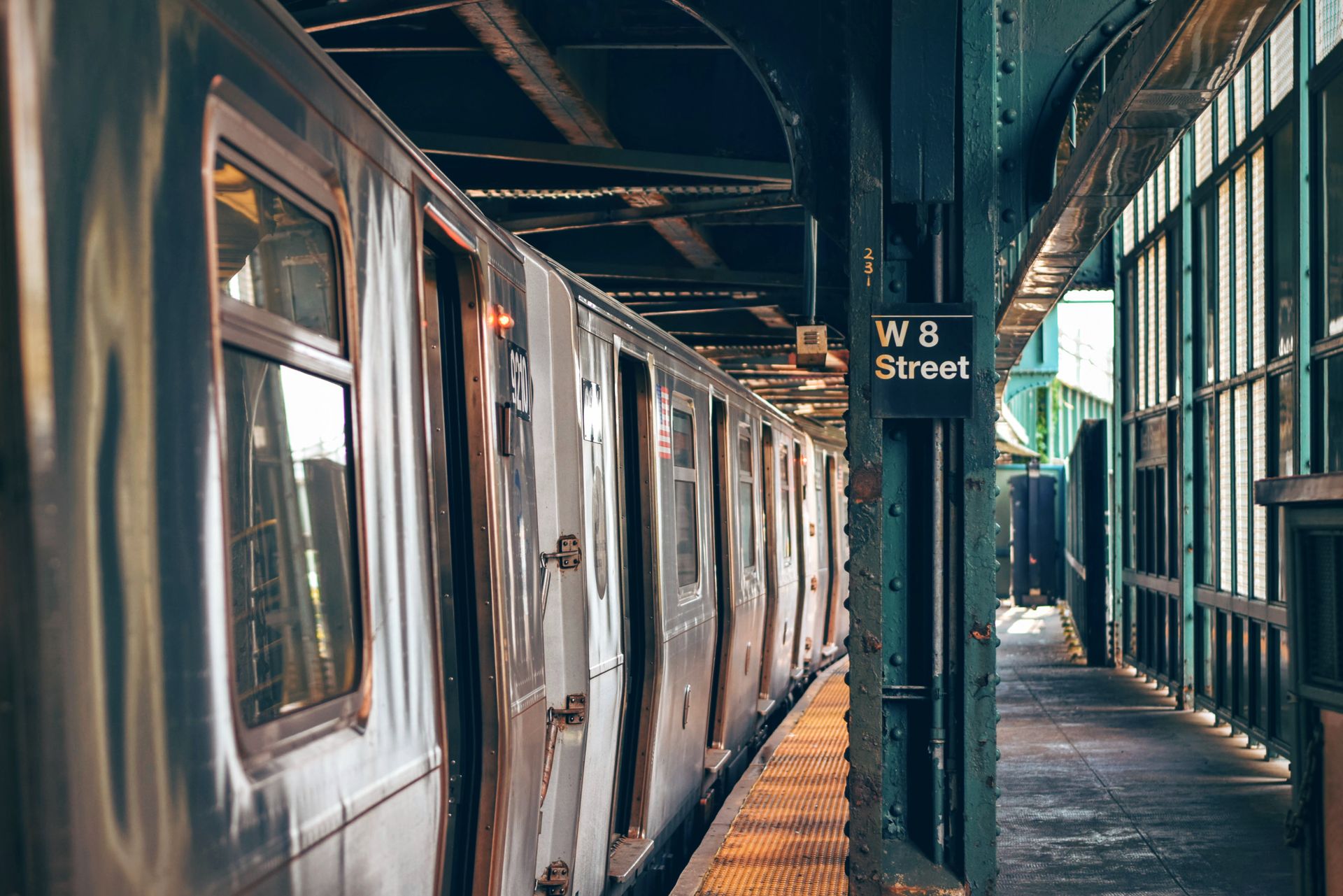
The Art of Precision:
Japanese Railways
More than just a means of transport, trains in Japan are a cultural institution. Discover how to navigate the world’s most efficient network with ease, from futuristic Shinkansen to charming local lines.
Trains in Japan are the most convenient way to connect major cities, explore the regions and get around day to day. The network combines Shinkansen, regional trains, private lines, metros and local services. For a smooth journey, identify the operator, check the train type, choose between an individual ticket, IC card or pass, then follow the station signs.
Travellers should mainly distinguish between the JR network and private companies, understand the difference between the basic fare and express supplement, and allow time for transfers in major stations. Timetables, booking conditions and card acceptance vary by line: check the operator’s information before departure.

Why the Japanese system is unique
Efficiency shaped by decades of innovation and exemplary discipline.
Absolute punctuality
The average annual delay of a Shinkansen is less than 60 seconds. A level of rigour that sets the rhythm of Japanese society.
An extensive network
From the snowy peaks of Hokkaido to the subtropical shores of Kyushu, no corner is inaccessible.
- +27,000 km of track
- 9,000+ stations
- 25 billion passengers/year
Cleanliness & comfort
“The 7-minute miracle”: the record time needed to clean an entire Shinkansen at its terminus.
Futurism in motion
In 2026, the Maglev (magnetic-levitation train) is continuing its testing phases, with the aim of connecting Tokyo to Nagoya in 40 minutes.
The Railway Heritage: From the Meiji Era to Futurism
The history of railways in Japan began in 1872 with the opening of the first line connecting Shimbashi (Tokyo) to Yokohama. Driven by the Meiji era, Japan called on British engineers to lay the foundations of what would become the most complex and efficient system on the planet. What began as a tool for industrial modernisation quickly became the backbone of the nation.
Today, the network is structured around the Japan Railways (JR) Group, created when the national railways were privatised in 1987. The group consists of six geographically distributed passenger transport companies (JR East, JR Central, JR West, JR Shikoku, JR Kyushu and JR Hokkaido). But the railway landscape does not end there: a multitude of private companies (such as Odakyu, Keio and Tokyu) add to the range of services, often managing shopping centres and entire neighbourhoods around their main stations.
A rigorous classification
It is essential for any expat or traveller to understand the train hierarchy to avoid going to the wrong platform:
- Futsu (Local): Stops at every station. Essential for getting around the neighbourhood.
- Kaisoku (Rapid): Skips some smaller stations, at the same fare as the local.
- Kyuko (Express): Fewer stops, sometimes requires a supplement.
- Tokkyu (Limited Express): Very fast, intended for long distances, supplement mandatory.
To find out more about getting around cities, see our guide on how to get around Japan.
Key figures (2026)
Overall network punctuality rate
Cruising speed of the Shinkansen Hayabusa
Daily passengers at Shinjuku Station (the busiest in the world)
Source: Japan’s Ministry of Land, Infrastructure, Transport and Tourism.
Shinkansen Journey Planner 2026
Compare journey times and costs between the different train categories.

Understanding the Shinkansen: Nozomi, Hikari, Kodama
Three types of train operate on the Tokaido Line (connecting Tokyo to Osaka). Although they look similar, their services differ radically:
Nozomi (Hope)
The fastest. Stops only in major cities. Not fully covered by the standard JR Pass (an extra charge is required).
Hikari (Light)
The ideal compromise. A few more stops than the Nozomi, but fully covered by the JR Pass.
Kodama (Echo)
The all-stations Shinkansen. Stops at every station on the high-speed line. Ideal for reaching secondary cities such as Shizuoka or Hamamatsu.
Mastering the logistics: tickets and luggage
Fare structure
The price of a Japanese train ticket is often the sum of two components:
- Joshaken: The basic fare calculated according to distance.
- Tokkyuken: The express supplement (for Shinkansen or Limited Express).
IC Cards & Transport
Suica, Pasmo, Icoca: these contactless cards are essential.
- 01. Universal use on buses, metros and local trains.
- 02. Payment method at vending machines and konbini.
- 03. Mobile version available on Apple Wallet and Google Pay (the famous “Suica Hack”).
Baggage Rules
For the past few years, new rules have applied to suitcases on the Shinkansen:
- Baggage > 160cm (H+W+D combined) requires a special reservation.
- Use the Takkyubin service to send your luggage from hotel to hotel.
For more details on sending parcels, see our guide: Sending parcels in Japan.
To book tours and activities in Japan ahead, see the options on Klook.
On-board Etiquette: A Guide to Social Survival
The train is considered a public space where the comfort of the group takes priority over that of the individual. For a smooth integration (see our guide to integration), follow these few unwritten rules:
Silence is golden: Do not speak loudly and set your phone to “Manner Mode” (vibrate).
No phone calls: Making calls in the carriages is extremely frowned upon. Use the platforms between carriages.
Eat neatly: Tolerated on long-distance trains (Ekiben), but best avoided on local metros.
Queueing: Carefully follow the markings on the floor when boarding.
Frequently Asked Questions About Trains
How can I buy a ticket if the machine is only in Japanese? ▼
Almost all ticket machines have an “English” or “International” button in the top right. Otherwise, look for the ticket offices with the green sign (Midori no Madoguchi), where staff often speak English.
Can I reserve seats in advance? ▼
Yes, this is even recommended for Shinkansen trains via the SmartEX app or directly at ticket offices, up to one month before departure.
What is a “Green Car”? ▼
It is equivalent to first class. More legroom, wider seats and guaranteed peace and quiet. The surcharge is generally around 30% of the fare.
Are there carriages reserved for women? ▼
Yes, on some urban lines during peak hours, “Women Only” carriages (marked in pink on the floor) are provided to ensure female passengers’ safety and comfort.
What should I do if I lose my Suica card? ▼
If it is registered in your name (MySuica), you can have it blocked and transfer the balance to a new card at any JR office.
Is the JR Pass still worthwhile in 2026? ▼
It depends on your itinerary. Since the price increase in 2023, you often need to make at least one Tokyo–Hiroshima return journey within 7 days for it to be worthwhile. Be sure to compare it with regional passes. Our detailed comparison of JR Pass prices in 2026 explains how to calculate whether it is worthwhile.
To get online as soon as you land, a Japan eSIM can be installed before you leave, with no need to look for a local SIM card.
Ready to explore Japan by rail?
Prepare for your move abroad with our specialist guides and settle in with peace of mind.