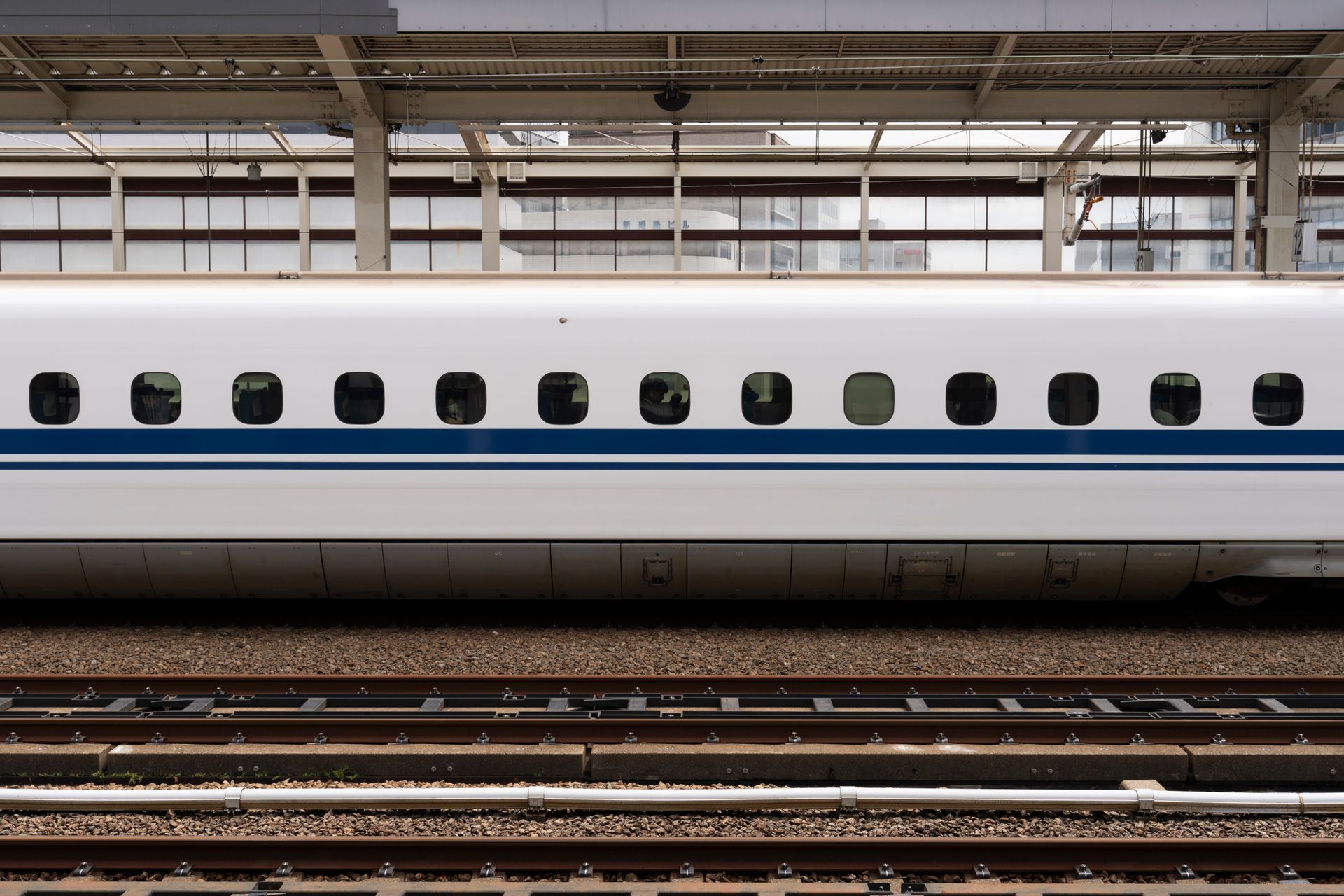
High-speed Shinkansen train in Japan
2026 Transport Guide

2026 JR Pass: price and value for money

¥50,000 for 7 days in ordinary class, official price before the increase on 1st October 2026. Work out whether the pass is really worthwhile for your itinerary.

The ordinary-class JR Pass costs ¥50,000 for 7 days, ¥80,000 for 14 days and ¥100,000 for 21 days until 30 September 2026. It becomes worthwhile if you make at least two long-distance return trips (Tokyo–Kyoto–Osaka, for example), as a single Tokyo–Kyoto return journey costs around ¥28,000 with standard tickets. For a stay focused on a single city or region, individual tickets or a regional pass are often cheaper.

eSIM: online on arrival

Key points to remember

  • ✔The ordinary-class JR Pass costs ¥50,000 (7 days), ¥80,000 (14 days) or ¥100,000 (21 days), the official price valid until 30 September 2026.
  • ✔From 1 October 2026, these prices will rise to ¥53,000, ¥84,000 and ¥105,000 for purchases made outside the official website.
  • ✔A Tokyo–Kyoto Shinkansen return journey costs around ¥28,000 with reserved standard tickets: you will often need at least two long-distance return trips to make a 7-day pass worthwhile.
  • ✔Available only to foreign visitors on tourist stays, not residents.

Sources: japanrailpass.net (official website), japan-guide.com — checked on 5 July 2026.

How much does the JR Pass cost in 2026?

The ordinary-class JR Pass costs ¥50,000 for 7 days, ¥80,000 for 14 days and ¥100,000 for 21 days, according to the official japanrailpass.net website. In Green Car (first class), expect to pay ¥70,000, ¥110,000 and ¥140,000 for the same durations. These prices are valid for purchases made up to 30 September 2026.

From 1 October 2026, prices will increase for purchases made outside the official website: ¥53,000, ¥84,000 and ¥105,000 in ordinary class. Buying online before this date, or directly on the official website, allows you to secure the old price for a while.

Official JR Pass price table

Duration Ordinary class Green Car (first class)
7 days50 000 ¥70 000 ¥
14 days80 000 ¥110 000 ¥
21 days100 000 ¥140 000 ¥

Source: japanrailpass.net, official prices valid until 30 September 2026. Children aged 6 to 11 pay half price.

The JR Pass covers most of the Japan Railways network, including the Hikari and Kodama Shinkansen services. It does not cover the Nozomi and Mizuho trains, the fastest services on the Tokaido–Sanyo line, unless you pay an additional supplement. Our guide to the Japanese railway system explains the differences between these trains in detail.

Is the JR Pass worthwhile for your itinerary?

A Tokyo–Kyoto Shinkansen return journey costs around ¥14,000 per journey in a reserved seat (japan-guide.com), or around ¥28,000 for the return journey. Compared with a 7-day pass costing ¥50,000, a single return journey is not enough to make the purchase worthwhile: you need to make several long-distance journeys during the period.

Cost in yen (¥) 1 Tokyo–Kyoto return 28 000 ¥ 7-day JR Pass 50 000 ¥ 2 Tokyo–Kyoto returns 56 000 ¥ Basis: reserved Tokyo–Kyoto ticket ≈¥14,000/journey (japan-guide.com) — 7-day ordinary JR Pass (japanrailpass.net)

In practical terms, the pass becomes worthwhile if your trip combines several long-distance journeys: Tokyo–Kyoto–Osaka–Tokyo, or day trips from a fixed base. For a stay focused on a single city, standard tickets or a regional pass are often cheaper.

Who can buy the JR Pass and how?

The JR Pass is reserved for foreign visitors on temporary tourist stays in Japan. It can be bought online from the official website or through authorised resellers, then exchanged for a physical pass or activated directly at JR ticket machines on arrival, by presenting your stamped passport.

Long-term residents, including expats living in Japan, are not eligible and should instead use regional passes or IC cards (Suica, Pasmo) for everyday travel. Our guide to rail travel in Japan explains these alternatives in detail.

What about flights to Japan?

A Paris–Tokyo return flight was listed at €699 on 5 July 2026 for a departure in early September 2026, according to an Aviasales Data API search. As with rail travel, prices vary considerably depending on the season: our guide to when to book your flight to Japan gives a month-by-month breakdown of fares.

Compare Paris–Tokyo flights

Frequently Asked Questions (FAQ)

How much does the JR Pass cost in 2026? ▼

In ordinary class, the JR Pass costs ¥50,000 for 7 days, ¥80,000 for 14 days and ¥100,000 for 21 days (official japanrailpass.net price, valid until 30 September 2026). In Green Car, expect to pay ¥70,000, ¥110,000 and ¥140,000.

Is the JR Pass still worthwhile in 2026? ▼

It depends on the number of journeys. A Tokyo–Kyoto return journey costs around ¥28,000 with standard tickets, so a single return journey does not make a 7-day pass costing ¥50,000 worthwhile. You generally need at least two long-distance return trips.

Who can buy the JR Pass? ▼

The JR Pass is reserved for foreign visitors on temporary tourist stays in Japan, upon presentation of a passport bearing the entry stamp. Long-term residents are not eligible.

Does the JR Pass cover all Shinkansen trains? ▼

No. It covers Hikari and Kodama trains, but not Nozomi and Mizuho, the fastest services on the Tokaido–Sanyo line, unless you pay an additional supplement.

Do you need to buy the JR Pass before departure? ▼

It is no longer compulsory, but is still recommended: buying online in advance from the official website guarantees the price in force before a price increase, such as the one planned for 1 October 2026.

To book tours and activities in Japan ahead, see the options on Klook.

Sources & updates

  • Japan Rail Pass, official prices, checked on 5 July 2026 — japanrailpass.net
  • Japan Guide, Tokyo–Kyoto Shinkansen fare — japan-guide.com
  • Aviasales Data API (Travelpayouts), Paris–Tokyo flight, checked on 5 July 2026

Article updated on 5 July 2026.

Tip: set up a Japan eSIM before departure so your data works on arrival.

Ready to plan your itinerary?

Compare the cost of rail travel and flights before packing your bags.

Updated on

When is the JR Pass really worth it?

The JR Pass is only worthwhile if you make several long-distance journeys during its validity period. A return trip from Tokyo to Kyoto on a reserved Hikari Shinkansen ticket costs around ¥28,000, so you would need to make at least ¥22,000 worth of additional journeys to recoup the cost of a 7-day pass at ¥50,000.

Examples of worthwhile itineraries include Tokyo-Kyoto-Osaka-Hiroshima-Tokyo over one week, or Tokyo-Kanazawa-Takayama-Nagoya-Tokyo. By contrast, if you are mainly staying in Tokyo with just one trip to Kyoto, two single tickets will cost less than the pass.

7-day pass vs individual tickets

ItineraryCost of individual tickets7-day JR PassSaving
Tokyo-Kyoto return~28 000 ¥50 000 ¥-22 000 ¥
Tokyo-Kyoto-Osaka-Hiroshima-Tokyo~65 000 ¥50 000 ¥+15 000 ¥
Tokyo-Kanazawa-Kyoto-Tokyo~52 000 ¥50 000 ¥+2 000 ¥

These amounts are indicative and based on reserved Shinkansen fares. To refine your calculation, list your planned journeys and add up the individual prices on the official JR website or japan-guide.com.

Regional passes and alternatives to the national JR Pass

If your trip is focused on a single region, regional JR passes often cost two to three times less than the national pass. The JR Kansai Area Pass covers Osaka, Kyoto, Nara and Kobe for around ¥6,000 over 3 days. The JR East Nagano Niigata Area Pass allows you to explore the Japanese Alps from Tokyo for around ¥18,000 over 5 days.

For daily urban travel, the Suica card remains more convenient and economical than the JR Pass: it works on all metro, bus and local train services, with no fixed validity period or break-even calculation required.

When to choose individual tickets

In these cases, buy your Shinkansen tickets at the station or online as you go. JR local trains remain free with a pass, but if you only take a few of them, their combined cost is still modest.

1 October 2026 price increase: what is changing

From 1 October 2026, ordinary-class JR Pass prices will rise to ¥53,000 for 7 days, ¥84,000 for 14 days and ¥105,000 for 21 days for purchases made outside the official website. This represents an increase of around 6% compared with the prices in effect until 30 September.

If you plan to travel after this date, buy your pass before 1 October on the official japanrailpass.net website to benefit from the old price. A pass bought online remains valid for several months after purchase: you simply need to activate it in Japan within three months of the issue date.

How to buy and activate the JR Pass in 2026

The JR Pass can only be purchased online, either from the official japanrailpass.net website or through authorised resellers. After payment, you will receive an electronic exchange order or a QR code by email. When you arrive in Japan, present this order and your passport (the mandatory tourist entry stamp) at a JR Exchange Office counter located in major stations or airports.

Activation starts on the day of your choice, not necessarily the day of the exchange: tell the staff at the counter your preferred date. Once activated, the pass is valid for the selected period (7, 14 or 21 consecutive days). You can reserve Shinkansen seats free of charge at JR ticket offices or ticket machines by presenting the pass.

Eligibility requirements

Only foreign visitors staying temporarily as tourists can buy the JR Pass. Your passport must bear the “Temporary Visitor” stamp when you enter Japan. Long-term residents and holders of work, student or permanent residence visas are not eligible and must use regional JR passes or regular tickets instead.

JR Pass-covered trains and exclusions

The JR Pass covers all Japan Railways trains, including Hikari and Kodama Shinkansen services on the Tokaido-Sanyo line (Tokyo-Kyoto-Osaka-Hiroshima), as well as JR local, rapid and express trains throughout the country. It does not cover Nozomi and Mizuho Shinkansen services, the fastest trains between Tokyo and Osaka, unless you pay a supplement at the ticket office.

In practice, taking a Hikari instead of a Nozomi adds around 20 to 30 minutes to the Tokyo-Kyoto journey, which remains acceptable for most travellers. The pass also covers the JR Yamanote Line in Tokyo, the JR Osaka Loop Line in Osaka, and JR trains to Nara, Nikko and Kamakura.

What the JR Pass does not cover

For daily urban travel, combine the JR Pass with a rechargeable Suica card: it works on all compatible IC Card transport services and at participating shops.

Planning your transport budget in Japan

Beyond the JR Pass, allow for a budget for journeys not covered: metros, local buses and occasional taxis. Allow around ¥1,000 to ¥2,000 per day for urban travel if you mainly use public transport. Taxis in Japan are expensive: a 10-minute journey in a city often costs more than ¥2,000.

If you are travelling as a family, check the child fare: children aged 6-11 pay half price for the JR Pass. Children under 6 travel free if they do not occupy a reserved seat. For a group of four with two children, the total cost of the pass can quickly account for a significant share of the travel budget.

Frequently asked questions

How many journeys do you need to make for the 7-day JR Pass to pay for itself?

You need to travel at least 50,000 ¥ worth of journeys using standard tickets to make a 7-day pass pay for itself. In practical terms, a Tokyo–Kyoto return journey (28,000 ¥) plus a Tokyo–Osaka return journey (around 29,000 ¥) is enough. A single long-distance return journey will never make the pass pay for itself.

Can you buy the JR Pass once you arrive in Japan?

Yes, but buying online before departure is still recommended to secure the current fare, especially ahead of a price increase such as the one on 1 October 2026. You can buy and exchange the pass at JR Exchange Office counters in major stations and airports.

Does the JR Pass cover the airport train from Narita to Tokyo?

Yes, the JR Pass covers the Narita Express (N'EX) between Narita Airport and Tokyo, as well as local JR trains. However, it does not cover the Skyliner (Keisei Line) or private shuttle buses.

Do you need to reserve Shinkansen seats with the JR Pass?

Reservations are free but optional. You can travel in an unreserved car without a reservation, but reserved seats guarantee you a seat, especially during the peak season. Make free reservations at JR ticket offices or ticket machines by showing your pass.

Is the JR Pass valid for expat residents in Japan?

No, the JR Pass is reserved for foreign visitors staying temporarily for tourism. Long-term residents must use regional JR passes, individual tickets or a rechargeable IC card for their daily journeys.

What is the difference between the JR Pass and a regional pass?

The nationwide JR Pass covers the entire JR network across the country, while regional passes are limited to a specific geographical area (Kansai, Hokuriku, Kyushu). Regional passes cost two to three times less but are only suitable if you are staying in a single region.