Tip: set up a Japan eSIM before departure so your data works on arrival.
How to Enjoy Nara’s Deer Without Disturbing Them
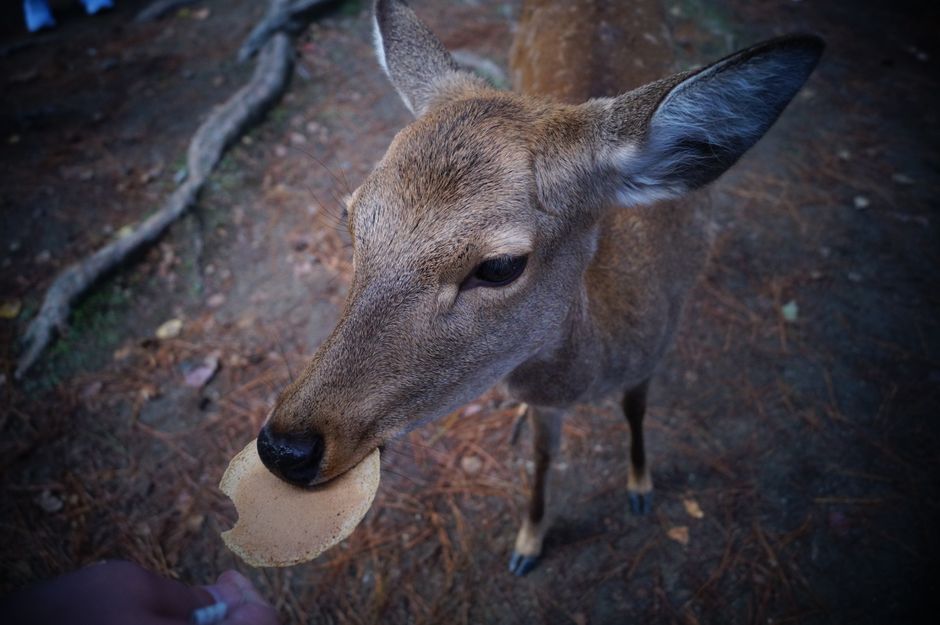
The encounter may seem spontaneous, but a few simple habits can completely change the experience. Deer often associate the crackers sold locally with the presence of visitors. Once you have bought a packet, keep it closed until you want to feed the animals. Avoid waving it in front of their noses and do not gesture with a cracker if you do not intend to give it to them.
- Approach slowly, without running or shouting.
- Offer one cracker at a time and keep your fingers clear.
- When the packet is empty, show both your open hands.
- Put away wrappers and other food immediately.
- Give animals that are walking away or seem agitated some space.
The bowing greeting can be amusing to watch, but it does not guarantee a specific reaction. Consider it a cultural gesture rather than a command given to the animal. Do not try to force a photo, touch a deer or block its path.
What should you do if a deer becomes persistent?
Stay facing the animal without making any sudden movements, protect your belongings and move away calmly. If you are still holding senbei, drop them rather than pulling on them or hiding them against your body. Children should remain accompanied, especially when several deer approach at once. In the event of a bite or injury, promptly ask a healthcare professional on site for advice.
Are Nara’s Deer Really Wild?
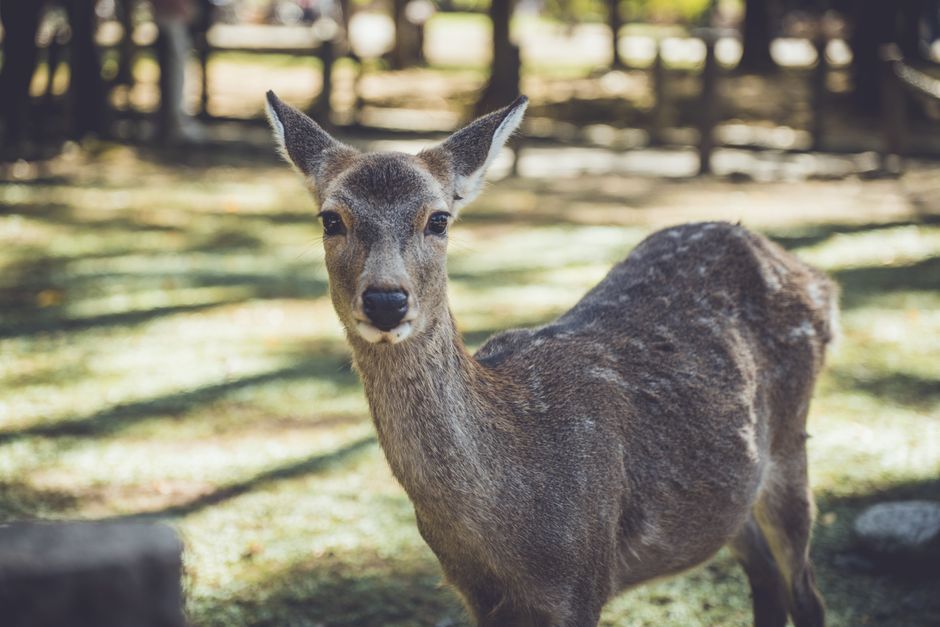
Sika deer roam freely in Nara Park, but their presence is part of a busy and organised environment. They move near roads, temples, cracker stalls and wooded areas. This freedom does not mean that they constantly seek human contact: some come to ask for food, while others prefer to keep their distance.
Their behaviour varies according to the season, time of day, crowd levels and availability of senbei. Males may have antlers, while females and young deer may be more sensitive during certain periods. Always respect barriers, signs and instructions given around protected areas.
An Ethical and Respectful Visit
A good visit is not about taking as many selfies as possible or feeding as many animals as you can. Observe their behaviour, let them move around and stop offering food if the situation becomes confusing. Do not bring biscuits, bread, fruit or leftovers: the official crackers are the only food intended for this interaction.
Also avoid chasing a deer to get a picture. To photograph the animals, crouch down at a distance, avoid sudden movements and leave a clear path in front of them. People who do not wish to approach should be able to cross the park without being surrounded.
Which route should you choose in Nara Park?
The park is large, and the temples are not grouped around a single point. Your route will therefore depend on how much time you have, your fitness level and your interest in religious sites. From Kintetsu Nara, you can quickly reach the park area, then continue towards the historic monuments.
| Time available | Recommended route | Who is it for? |
|---|
| Around two hours | Tōdai-ji, then Kasuga-taisha | Visitors passing through who want to see the deer and two major sites |
| Four to six hours | Kōfuku-ji, Tōdai-ji, lunch in Higashimuki, then Kasuga-taisha | Visitors wishing to spend half a day or more in Nara |
| A full day | Main route with breaks, wooded areas and Mount Wakakusa | Visitors wishing to take their time and avoid rushing between places |
Plan breaks between the temples: the deer are not all concentrated in the same place, and part of the enjoyment also comes from walking through the park between sites. If you are travelling with young children, choose a shorter route and save the crackers for an open area.
Combining Nara with other stops
Nara is easy to combine with Kyoto or Osaka for a day trip, but an overly busy itinerary leaves less time for the temples and animals. To extend your historical exploration, Hōryū-ji is a separate option. If your stay also includes Miyajima, you can consult our Hiroshima and Miyajima guide to compare the atmospheres and travel times.
When should you visit the deer in Nara?
Each season offers a different atmosphere. Spring is a good time to observe the births, although some areas may be cordoned off. In summer, mornings and late afternoons are more pleasant for walking and taking photographs. In autumn, the deer rut changes the atmosphere and means you should keep a greater distance from the males. In winter, the Yamayaki festival on Mount Wakakusa attracts a specific audience and requires you to check the event guidelines.
The recommended times mentioned in the existing text remain a good basis for planning around the light and limiting crowds, but they do not guarantee that the animals will be present or that visitor numbers will be low. Conditions vary depending on the weather, holidays and events. Check local information before setting off.
Access, budget and practical preparation
Journeys from Kyoto or Osaka can be made by train, with journey times and fares varying according to the operator and departure point. The JR train from Kyoto or Osaka, as well as the direct bus from Kyoto Station, are among the options indicated for reaching Nara. Compare the actual route from your accommodation rather than relying solely on the theoretical journey time.
Admission to certain temples, transport, meals and the crackers all add to the day’s budget. The prices mentioned in the existing information may change: check them with the official sites before you leave. Wear suitable walking shoes, take protection from the weather and use a bag that is easy to close.
If you are settling in Japan rather than travelling, arranging your medical cover also deserves a separate check. Consult our health insurance guide for expats in Japan to prepare for this aspect without confusing it with a simple tourist excursion.
Common mistakes to avoid
- Giving an animal food brought from outside.
- Keeping senbei visible after you have finished handing them out.
- Standing between a deer and the direction in which it wants to go.
- Touching the antlers or approaching an animal showing signs of agitation.
- Planning only around the deer and overlooking the distances between the temples.
- Relying on an old fare or timetable without checking the official source.
Frequently asked questions
Why do the deer in Nara bow?
This bowing is often associated with asking for food, as the deer have learnt that visitors have shika senbei. They do not all react in the same way, and the gesture does not mean that they understand a human greeting. Keep a proper distance and never give them any other food.
Can you stroke a deer in Nara?
It is best not to try to stroke the deer. They are still animals and may react suddenly, especially when startled, surrounded or competing for food. Observe them without holding them back, do not touch their antlers and always leave a clear passage.
Are the deer in Nara dangerous for children?
The encounter can go well if the child stays close to an adult, keeps their hands visible and does not run. Sudden movements, shouting and food held out for too long can provoke a persistent reaction. Choose an open space and stop feeding as soon as the situation becomes difficult.
Where can you buy crackers for the deer in Nara?
Shika senbei are sold around the busy areas of the park. Buy them from the vendors present on site and do not replace these crackers with food brought from outside. After the last one, show your empty hands and put away the paper before continuing your walk.
Do you need to visit Nara for a whole day to see the deer?
No, a shorter excursion is enough to combine the deer with Tōdai-ji and Kasuga-taisha. A full day does, however, allow you to walk at a more leisurely pace, take breaks and add Kōfuku-ji or Mount Wakakusa. Choose your route according to the transport, the weather and your pace.