
History and imperial heritage
Nara was Japan’s political, religious and cultural centre for 74 years. The capital was established in 710 by Empress Genmei, modelled on Tang China, with a rectangular imperial city, main avenues and a palace (Heijō Palace) rebuilt identically today.
In 784, the imperial court moved the capital to Nagaoka-kyō and then Kyoto, but Nara retained its major religious status. The city was given the honorary title of ‘Heijō-kyō’ (peaceful capital) and remains the birthplace of Japanese art, literature and Buddhism (the Kegon sect and Shotoku school). The historic site includes Heijō Palace, Yakushi-ji Temple and Kōfuku-ji, all listed by UNESCO since 1998.
For the wider historical context, see the Kyoto page, which became the capital after Nara.
Sacred deer in Nara Park
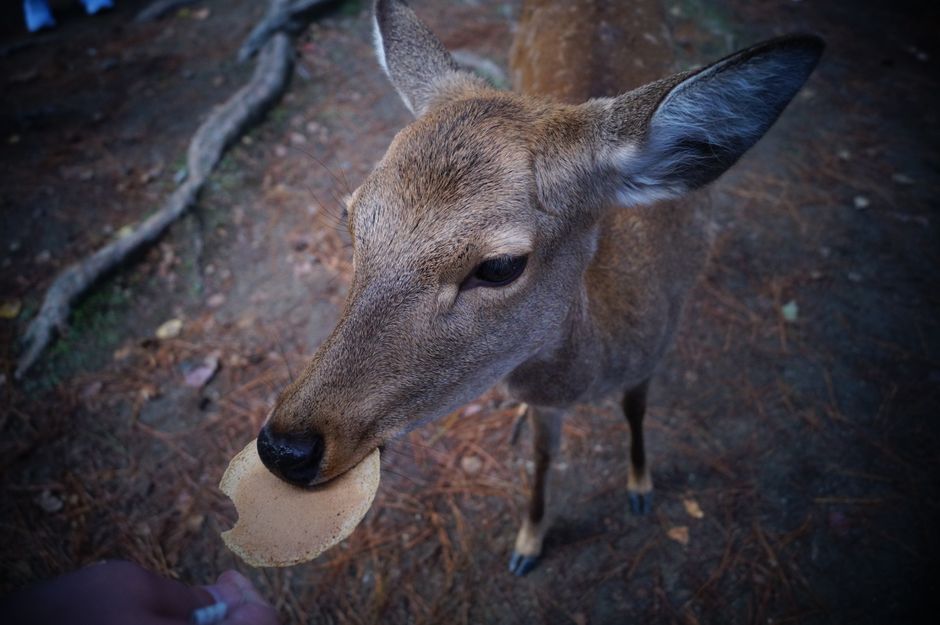
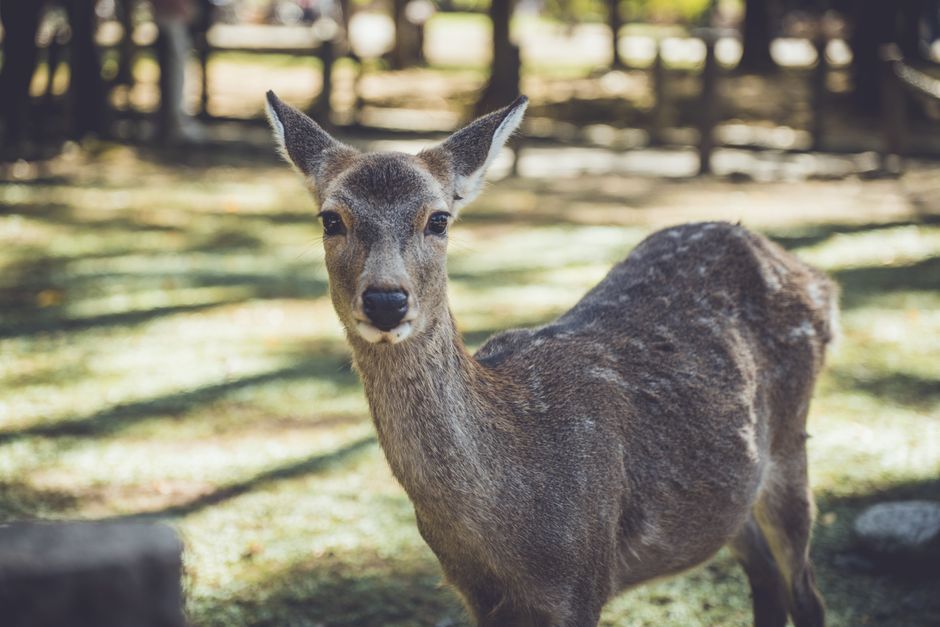
More than 1,200 sika deer (Cervus nippon) roam freely in Nara Park, designated a national treasure. Considered messengers of the Shinto gods since 768, they have been protected since 1882.
Visitors can buy shika senbei (special biscuits, 200 yen) to feed the deer. Be careful: the deer quickly learn to bow to receive a treat, but they may nibble bags and clothing. A few safety rules are explained in our guide to Japanese etiquette and manners.
The park covers 660 hectares at the foot of Mount Wakakusa (342 m), famous for its annual burning festival (Yamayaki) on the fourth Saturday of January.
Todai-ji and the Great Buddha
Todai-ji Temple (東大寺, Great Eastern Temple) was founded in 752 by Emperor Shōmu to house the Daibutsu, a 15-metre-high bronze Vairocana Buddha (22 m including its pedestal) weighing 500 tonnes. It is one of the largest bronze Buddhas in the world.
The current building (Daibutsuden, Great Buddha Hall) dates from 1709 and is the world’s largest wooden structure, despite being one-third smaller than the original. Admission: 600 yen. A pillar in the central hall has a hole the same size as the Buddha’s nostril: according to tradition, those who pass through it will attain enlightenment in their next life.
Other major temples and shrines
In addition to Todai-ji, Nara has several major sites:
- Kasuga-taisha — Shinto shrine founded in 768 by the Fujiwara clan, famous for its 3,000 stone and bronze lanterns, lit twice a year during the Setsubun (February) and Obon (August) festivals.
- Kōfuku-ji — Buddhist temple of the Hossō school, founded in 669, home to the Ashura statue (Asura Bodhisattva) with three faces and six arms, a national treasure.
- Hōryū-ji — Temple located in Ikaruga, 12 km from the centre. Founded in 607 by Prince Shōtoku, it is one of the oldest wooden complexes in the world and is UNESCO-listed.
- Yakushi-ji — Temple of the Hosso school, with its 34-metre-high eastern pagoda, one of the tallest in Japan.
See also our page on Nara, which can be combined with Kyoto on a day trip.
Getting to Nara
Nara is ideally located for a day trip from Kyoto or Osaka:
- From Kyoto — JR Nara Line (Rapid Express, 45 min) or Kintetsu train (35 min, closer to the park).
- From Osaka — JR Yamatoji Line (50 min) or Kintetsu Nara Line (35 min).
- From Tokyo — Nozomi Shinkansen to Kyoto (2h15), then JR Nara Line (45 min).
JR Nara Station is a 15-minute walk from the park; Kintetsu Station is closer (5 min). A tourist loop bus covers the main sites for 250 yen per journey. For long-distance travel, see our Japan Rail Pass guide.
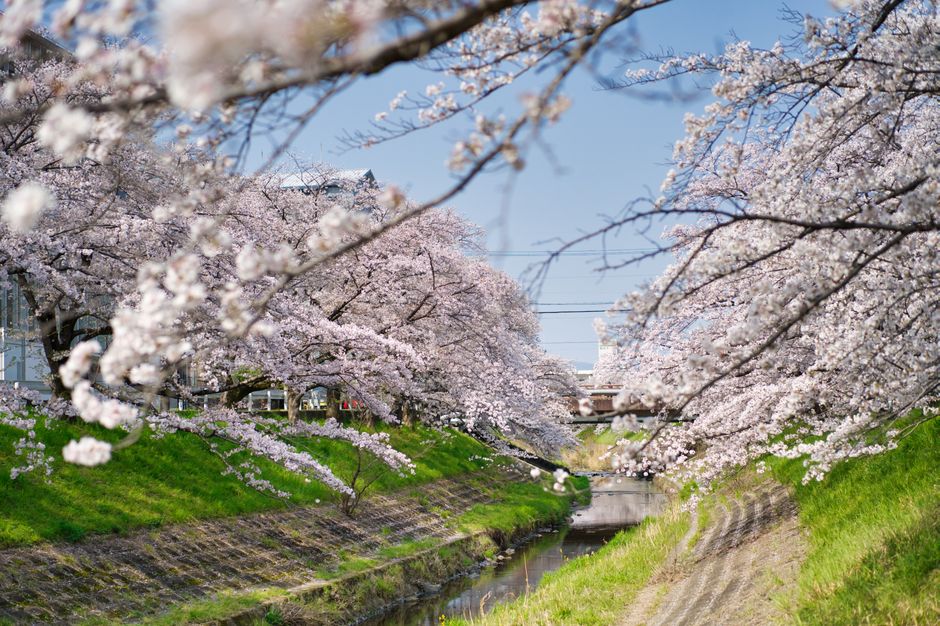
Spring (sakura from late March to early April) or autumn (mid-November), with momiji on Mount Wakakusa, are the best times to visit Nara.
Accommodation and local cuisine
For a complete experience, staying overnight in Nara is recommended:
- Traditional ryokans — Nara Hotel (1909, historic building), Tsukihitei (overlooking the park).
- Modern hotels — Hotel Nikko Nara (opposite JR Station), Onyado Nono Nara Natural Hot Spring.
- Boutique hotels — Seto no Yado, Hotel Asyl Nara.
Nara’s specialities:
- Kakinoha-zushi — sushi wrapped in a fermented persimmon leaf, originating in Nara since the 8th century.
- Yamato-cha — local green tea.
- Nara sake — the region has more than 30 breweries, including Harushika and Miwa.
- Persimmon (kaki) — Nara’s emblematic fruit, dried in winter.
Also worth discovering
Continue exploring Japan with our complementary guides.