
Hakata and the Tenjin district
The heart of Fukuoka is divided between two main districts:
- Hakata — On the east side of the Naka River, home to Hakata Station (Japan’s 10th-largest station), Tōchō-ji Temple (Japan’s oldest Sōtō Zen temple, 806) and Jōten-ji Temple (1255). The historic district is also home to Kushida-jinja, the starting point of the Gion Yamakasa festival.
- Tenjin — On the west side, the commercial and cultural centre, with department stores (IMPERIAL, Mitsukoshi, Iwataya), Canal City Hakata (a huge shopping centre with an indoor waterfall) and the Fukuoka Asian Art Museum.
See our hotels in Hakata.
Tonkotsu Ramen, Hakata’s speciality
Tonkotsu ramen originated in Fukuoka in 1937 at the Nankin Senryō restaurant. It consists of a creamy broth made from pork bones simmered for more than 18 hours, with chashu, a marinated egg, spring onion and green onions.
The most renowned chains:
- Ichiran — Individual booth system, internationally renowned.
- Ippūdō — Founded in 1985, with a worldwide presence (Paris, New York).
- Shin Shin — A local institution in Tenjin.
- Hakata Issō — An authentic local version.
Also worth trying: motsunabe (miso hot pot, a Fukuoka speciality) and mentaiko (spicy cod roe). See our ramen guide and Japanese street food.
The Hakata Gion Yamakasa festival
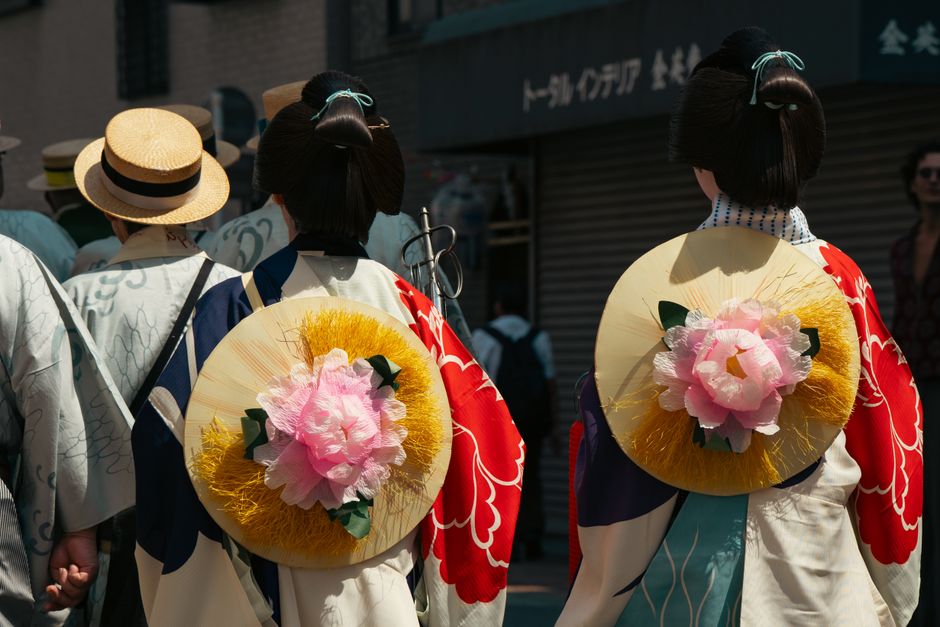
Hakata Gion Yamakasa (博多祇園山笠) is Fukuoka’s iconic festival, held from 1 to 15 July. It is designated an Important Intangible Folk Cultural Property of Japan.
Five teams of seven floats (kakiyama) compete in a race through the streets of Hakata, the most spectacular event being the Oiyama on 15 July at 4:59 am: bare-chested bearers run with a 1-tonne float for nearly 5 km in under 30 minutes.
Its origins date back to 1241, during an epidemic, when Shinto monks prayed for the disease to end while carrying offering floats. See our guide to festivals in Japan.
To get online as soon as you land, a Japan eSIM can be installed before you leave, with no need to look for a local SIM card.
Dazaifu Tenmangu Shrine
Dazaifu Tenmangu (太宰府天満宮), located 30 minutes by train from Fukuoka, is the most important shrine dedicated to Sugawara no Michizane (845–903), the god of learning and study, deified under the name Tenjin.
The current shrine dates from 1591 and houses calligraphy and statues of the god. Every year, more than 7 million visitors come to pray for academic success.
Nearby, the Kyushu National Museum (2004) presents the cultural history of Kyūshū. See our guide to traditional arts.
Yatai, the iconic street stalls
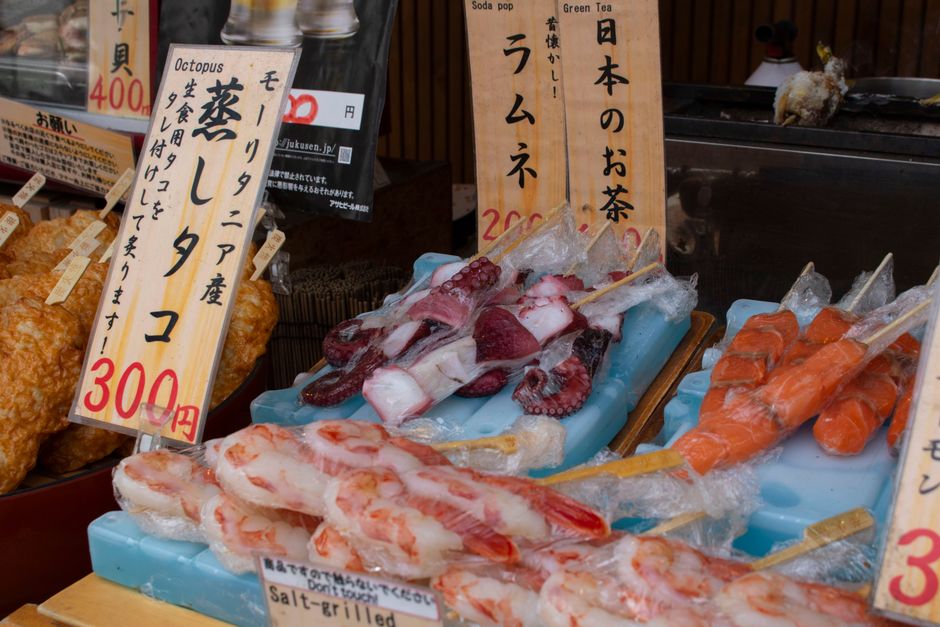
Yatai (屋台) are Fukuoka’s street food stalls, a legacy of the post-war tradition. There are around a hundred along the Nakasu River and at the Tenjin intersection, open from 6 pm to 4 am.
A typical yatai has 8–10 counter seats and serves ramen, gyoza, yakitori and beer. The atmosphere is intimate and friendly, with affordable prices (800–1,500 yen per dish).
The experience is considered emblematic of Fukuoka’s food culture. See our complete street food guide.
The number of yatai has fallen sharply in recent years (from 380 in 1956 to 110 in 2024), but they remain a cultural heritage worth preserving.
How to get to Fukuoka
Fukuoka is a major hub in southern Japan:
- Plane — Fukuoka Airport (FUK), Japan’s 4th-largest airport. Direct flights from Tokyo (1h30), Osaka (1h10), Sapporo (2h), Nagoya (1h15) and Hiroshima (40 min). Direct international connections from Korea (Seoul, Busan), Taiwan, Hong Kong, China, Thailand, Singapore, the Philippines and Vietnam.
- Train — Tsubame Shinkansen from Tokyo (5h), Shin-Osaka (2h30) and Hiroshima (1h).
- Ferry — Services to Busan (Korea, 3h, JR Beetle hydrofoil), Tsushima and the Gotō Islands.
Fukuoka’s underground system (3 lines, with the JR Pass accepted on some lines) and the Nishitetsu bus network cover the city. Popular combinations: Fukuoka + Hiroshima on a Chūgoku/Kyūshū circuit.
See our flight guide and the Japan Rail Pass.
Also worth discovering
Continue exploring Japan with our complementary guides.