
Airlines and direct routes
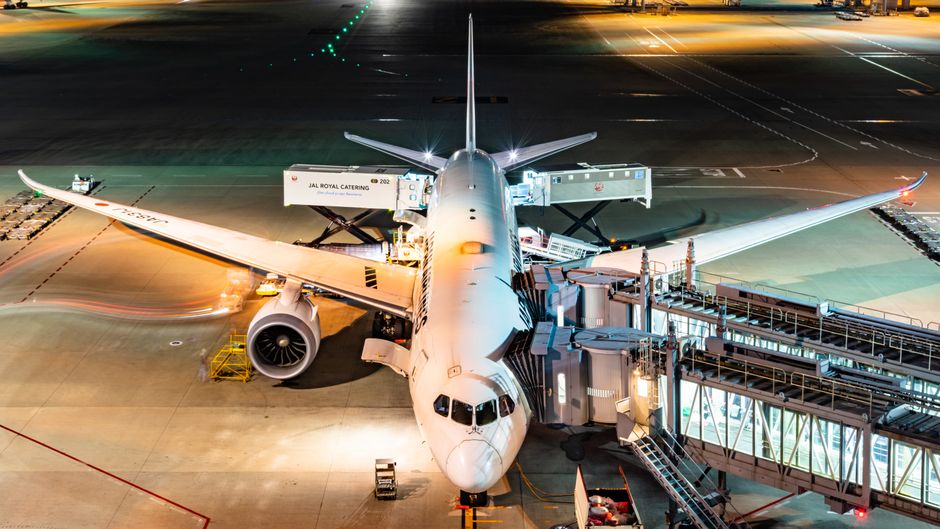
From Paris-CDG, two airlines offer direct flights to Japan: Air France (CDG → Tokyo-Haneda, daily flight AF226, 11 h 30) and JAL (Japan Airlines, CDG → Tokyo-Haneda, daily flight JL046). Since 2024, these two airlines have shared the same flight operated by Air France on certain rotations.
For Osaka-Kansai, Air France operates a seasonal direct flight (June–October) in a codeshare with KLM via Amsterdam. From regional France (Lyon, Marseille, Nice), you need to connect via CDG, Frankfurt, Amsterdam or London.
Airlines with a stopover: Lufthansa (via Frankfurt or Munich), KLM (via Amsterdam), Turkish Airlines (via Istanbul, cheaper but with a long stopover), Emirates (via Dubai), Qatar Airways (via Doha), Singapore Airlines (via Singapore), ANA (via London or Frankfurt).
Average prices by season 2025–2026
Price range observed over 12 months (return, economy):
- Low season (September, November, February): €550 to €750 direct, €450 to €650 with a stopover
- Shoulder season (October, March, May): €700 to €950
- Peak season (French school holidays, late-March sakura, Japanese New Year): €950 to €1,400
During the week, a direct flight on Tuesday or Wednesday is on average 15% cheaper than at the weekend. Booking 4 to 6 months in advance remains the optimum point for shoulder seasons.
For real-time comparisons: Skyscanner flights to Japan aggregates more than 1,000 airlines and agencies.
Arrival airports in Japan
Three main airports for France:
- Tokyo-Haneda (HND) — The most convenient, 30 minutes from central Tokyo by monorail. Ideal for stays beginning in Tokyo.
- Tokyo-Narita (NRT) — Further away (1 hour on the Narita Express, 2,070 yen), but often cheaper on arrival. Many low-cost airlines.
- Osaka-Kansai (KIX) — On an artificial island in Osaka Bay. Convenient for itineraries beginning with Kyoto–Osaka.
Multi-city strategy: arrive at Tokyo-Haneda and depart from Osaka-Kansai (or vice versa). This avoids an expensive domestic return trip. Domestic flights between Tokyo and Osaka cost €80 to €150 on ANA, JAL or Peach.
Stopovers: where to optimise
The most interesting stopovers for saving money: Doha (Qatar), Istanbul (Turkish), Dubai (Emirates), Helsinki (Finnair). European stopovers (Frankfurt, Amsterdam) add 2 to 3 hours but remain in the same time zone.
Avoid stopovers in Beijing or Shanghai: a Chinese visa is required even in transit (unless exempt for 24 hours), and formalities slow things down. Stopover in Seoul: K-ETA visa mandatory since 2022 (free online).
Tips for saving 30%
Seven practical ways:
- Mix airlines: outbound with a stopover (Turkish via Istanbul), return direct (Air France). Checked baggage has to be paid for twice, but you can save €200–300.
- Secondary airports: fly from Brussels-Charleroi, Geneva, Luxembourg or Paris-Beauvais. Beauvais with Ryanair (via a European city) remains the cheapest option.
- Flexible dates: shifting your trip by 2–3 days is often enough. Skyscanner offers a 30-day price graph.
- Price alerts: set up an alert on Skyscanner or Google Flights. Price drops last 24–48 h.
- Japanese resident status: a domestic Japan–France flight in Y class (full-fare economy) gives access to the expatriate fare on certain airlines.
- Hybrid airlines: Zipair (JAL’s low-cost airline, Tokyo → Paris flights €250–450), French Bee (Paris → Tokyo via Saint-Denis de La Réunion).
- Miles and points: Flying Blue (Air France-KLM) often allows a return trip to Tokyo for 50,000–70,000 miles. Programmeilleur ASAir / JAL.
Baggage, allowance and taxes
Standard economy allowance: 1 checked bag weighing 23 kg + 1 cabin bag weighing 8 kg. Low-cost airlines (Zipair) charge €40–80 per journey for checked baggage. Japanese taxes collected on board: 1,000 yen (€7) for an international departure, already included in the price.
Please note: since 2025, Japan has required a Visit Japan Web (free but mandatory online immigration + customs registration) before boarding.
Also worth discovering
Continue exploring Japan with our additional guides.