Suica Card in Japan: Price, Top-Up and How to Use It
Learn the Suica card price, how to top it up and how to use it easily on public transport and for everyday purchases in…
Shinjuku is a versatile choice for a first stay, Shibuya suits nights out, Ueno is ideal for cultural visits and Asakusa for walks around traditional Tokyo. Ginza and the area around Tokyo Station are more appealing to travellers who prioritise comfort and onward connections to other cities. The best area for visiting Tokyo depends above all on your itinerary: the exact hotel address, the lines you can access and your return journey matter more than an apparently central position on the map.
In brief
Choose your base according to the places you want to visit, but also according to your evenings. Tokyo does not have one single tourist centre around which every visit is organised. The main areas of interest are spread out, and an address that is convenient for Ueno’s museums will not necessarily be the easiest place to return to after dinner in Shibuya.
Start by marking your priorities on a map: temples, shops, museums, restaurants and excursions. Then group nearby visits together to avoid unnecessary crossings of the city. Our Tokyo neighbourhood guide helps you identify the main areas before choosing accommodation.
The Yamanote Line is a useful reference point: it serves Shinjuku, Shibuya, Ueno, Akihabara and Tokyo Station, among others. However, it is neither the only network to consider nor always the most direct route. A metro station suited to your itinerary may provide a better base.
Asakusa is not served by the Yamanote Line, but that does not make the area difficult to reach. Similarly, Ginza benefits from the metro without requiring a connection through a JR station. The right approach is to compare actual journeys rather than applying one rule to every accommodation.
Also check which station exit you will use to reach the property. At a large station, the route from the platform to the street can matter as much as the walking time shown on a booking platform. If you have a pushchair or bulky luggage, the presence of a lift becomes a practical criterion.
| Stay priority | Area to consider | Point to watch |
|---|---|---|
| Varied sightseeing and restaurants | Shinjuku | Station complexity and nightlife |
| Fashion and going out | Shibuya | Noise and walking distance to the hotel |
| Museums and park | Ueno | Differences in atmosphere around the station |
| Temple and traditional shops | Asakusa | Crowds around Sensō-ji |
| Japanese popular culture | Akihabara | Activity focused more on shops |
| Comfort and intercity departures | Ginza or Tokyo Station | Exact distance to the useful platforms |
Your return journey deserves as much attention as the outward trip. If your evenings are mainly in the west, staying in that area avoids depending on a long journey across the capital every night. Check the last departures with the relevant operators, including JR East, Tokyo Metro and Toei: Tokyo’s transport should not be treated as a service running continuously throughout the night.
The arrival airport may also help you choose between otherwise similar addresses. Compare access from Narita or Haneda to the hotel, including changes and the final walk. Timetables and services change: check them with the airport and official operator before departure, particularly for a late arrival.
To understand how trains and the metro fit together, consult our guide to transport in Japan. A nationwide rail pass does not automatically replace the tickets required on different urban networks; check the official conditions before buying a Japan Rail Pass.
Finally, changing hotels during your stay is worthwhile only if the benefit outweighs the inconvenience of luggage, checking out and settling in again. A base that matches your habits is generally more useful than an address chosen solely for its reputation.
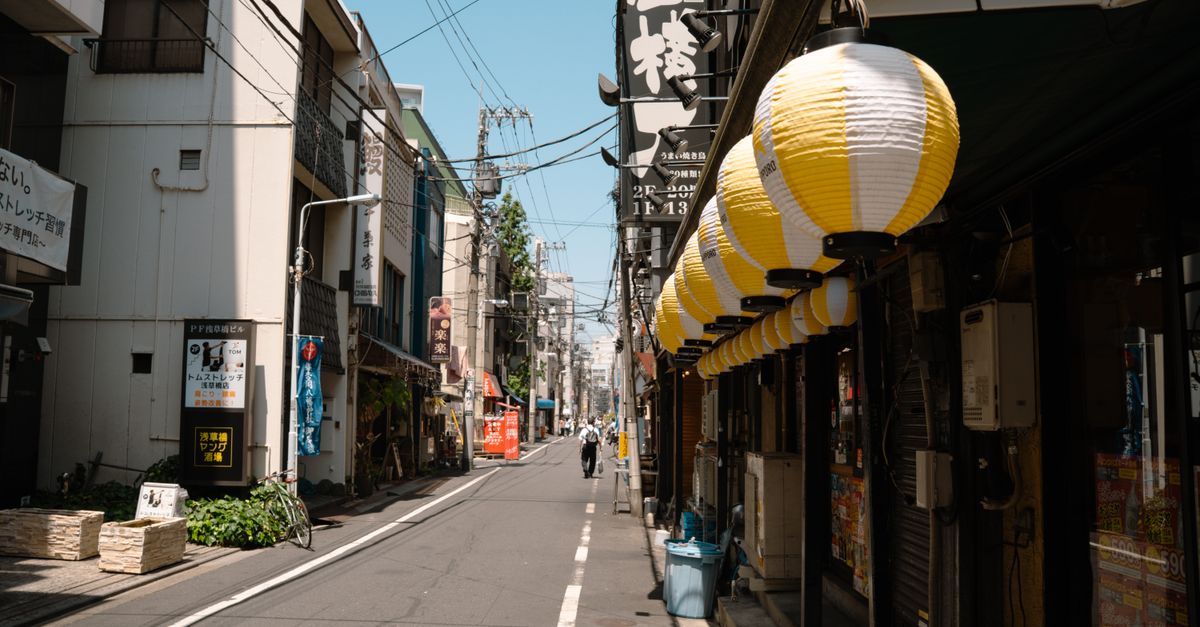
Choose Shinjuku for a versatile base and Shibuya if fashion, restaurants and going out are central to your trip. These Tokyo areas are well connected, but their lively atmosphere means you should look carefully at the room’s precise location. The name of the area alone is not enough to predict how comfortable your stay will be.
Shinjuku brings together major retailers, restaurants, offices and places to stroll. The lanes of Omoide Yokochō, the lights of Kabukichō and Shinjuku Gyoen National Garden offer very different experiences. This variety lets you alternate sightseeing and evenings out without always changing area.
The station is its main advantage, but also a challenge for newcomers. Several networks and groups of platforms meet there; an address described as “near Shinjuku” may be less convenient for the line you actually need. Map the route from the appropriate exit, not only from the station symbol on the map.
To the west, Nishi-Shinjuku combines office towers, large hotels and broad avenues. Around Kabukichō, nightlife is more prominent. The area around Shinjuku-sanchōme may suit travellers who prioritise the metro, shops and restaurants over immediate access to JR platforms.
For families or anyone sensitive to noise, a street set back from the nightlife often deserves preference. Check recent reviews concerning soundproofing, lifts and the immediate surroundings. A property’s standard alone does not guarantee quiet.
Kabukichō is not an obligatory place to sleep in this area. You can visit its illuminated signs and then return to accommodation in different surroundings. In entertainment districts, avoid touts and check the displayed conditions before entering an establishment.
Shibuya suits travellers who want shops, cafés and restaurants immediately outside the hotel. Its famous crossing is only a starting point: the shopping streets and surrounding buildings provide much of the area’s interest. It is a coherent base if your days regularly continue in western Tokyo.
Harajuku, Omotesandō and Meiji-jingū Shrine can be included in walks from this area. However, check the distances from your chosen accommodation: being in the same large ward does not mean being next door. Some streets also have slopes that are more noticeable with luggage.
For sightseeing, combine the crossing and shops with a walk through quieter streets. For sleeping, prioritise clear access to the station and surroundings suited to your rhythm. A room overlooking a busy road meets different needs from accommodation set back from the crowds.
Should you choose one rather than the other for a first trip? Look above all at where you will have dinner, any excursions you plan and the connections you need. Both bases work, but neither eliminates journeys to the temples and museums in the east.
Before booking, also compare the services that are useful after a day of walking: nearby food options, a laundry and luggage storage. Between these two poles, the exact address and your evening plans are the best deciding factors.
Ueno, Asakusa and Akihabara offer different bases despite being relatively close to one another. The first attracts visitors with its park and museums, the second with its temple and traditional shops, and the third with manga, electronics and video games. Grouping them under the label of an “authentic and cheap” Tokyo would hide their differences.
Ueno suits a cultural itinerary that also leaves room for walks. Its park contains several institutions, including the Tokyo National Museum, while Ameyoko offers a much denser shopping atmosphere. You can therefore move from a collection visit to lively streets without completely changing area.
For families, the nearby outdoor space makes it possible to alternate outings and breaks. It does not, however, guarantee a spacious room or a quiet street. Railway lines, main roads and shopping areas should be examined separately.
The Yamanote Line makes journeys to other parts of the capital easier. If you arrive from Narita, also look at the options offered by Keisei and the precise location of their arrival in relation to your accommodation. JR and Keisei stations should not be confused when calculating the final walk.
Asakusa appeals with Sensō-ji, Nakamise and the surrounding streets. It is an interesting area for observing the shopping activity around a major religious site, then continuing towards the Sumida River. Our guide to Asakusa, Sensō-ji and Nakamise helps you plan this walk.
The area is very busy around its main sights. Simply describing it as quiet would therefore be misleading: the atmosphere changes according to the street and time of day. Staying there mainly means being able to return easily to the temple area without organising another journey across the city.
Several stations carry the name Asakusa without being in the same place or serving the same lines. Check which one actually serves your route. This distinction matters with children, suitcases or accommodation away from the best-known streets.
The shops of Kappabashi are a good addition for anyone interested in tableware and kitchen utensils. This detour offers another perspective on the area beyond the souvenirs sold around the temple. It can also extend an exploration of Japanese cuisine through its objects and uses.
Akihabara is worth considering even if you do not plan to devote your entire trip to popular culture. Its station is directly served by the Yamanote Line, so you do not need to reach Ueno to use it. Specialist shops are an additional attraction, not a requirement for staying there.
The atmosphere depends greatly on shop opening hours. The activity around shops, game centres and themed cafés is different from Shibuya’s nightlife. When choosing accommodation, also look at the restaurants and services actually available on the neighbouring street.
Yanaka offers another walking option in this part of the capital, with its temples and residential streets. Accommodation near Nippori can remain well connected; there is no need to systematically rule out this area for a first stay. In the east, choose mainly between access to collections, the temple environment and your interest in specialist shops.
Ginza and the area around Tokyo Station are relevant if you are looking for shops, a varied hotel offer and convenient intercity departures. They are not, however, an equidistant centre for every attraction. Their usefulness depends on the lines you use, which side of the station you stay on and how you spend your evenings.
Ginza is associated with international luxury brands, department stores and refined restaurants. It also has accessible shops, cafés and less spectacular side streets. Its commercial identity does not mean that every meal or purchase requires a large budget.
For sightseeing, Kabuki-za Theatre adds a cultural dimension distinct from the shop windows. The area around the Tsukiji Outer Market extends the walk through food and restaurants. This shopping district should be distinguished from the wholesale activity transferred to Toyosu.
For accommodation, examine nearby metro stations and the walk to Yūrakuchō or Shimbashi if your itinerary uses JR lines. Not every hotel with “Ginza” in its name is close to the Yamanote Line. A location that is convenient for shopping may be less suitable for an early departure with luggage.
The area may suit families who prioritise comfortable accommodation and straightforward journeys. However, do not infer the size of a room from the district’s prestige. Check the bedding, available space and conditions for children on the page for the category you are booking.
Staying near Tokyo Station is useful when your trip continues to Kyoto or Osaka. Fewer connections on departure day can make handling luggage easier. This advantage must nevertheless be weighed against the journeys you will make throughout your stay in Tokyo.
Marunouchi and Yaesu are on opposite sides of the station. The former is associated in particular with office buildings and views towards the Imperial Palace gardens; the latter has its own selection of shops, restaurants and accommodation. The side you choose will directly affect your daily routes.
The words “Tokyo Station” in an advert are not enough to establish useful proximity. Locate the entrance, the route to the platforms and any underground passages. A large station can protect you from rain while making the walk longer if you use the wrong exit.
Roppongi deserves attention from art lovers thanks to the Mori Art Museum and the National Art Center, Tokyo. The area combines cultural facilities, restaurants, international hotels and nightlife. Reducing it to an expat district would overlook an important part of its appeal.
Minato is a ward, not a uniform neighbourhood. The areas around Tokyo Tower, the streets of Akasaka and the districts near Shimbashi do not offer the same access or atmosphere. Compare stations rather than choosing solely on the basis of this administrative name.
Finally, Odaiba may suit an itinerary focused on the bay and its facilities, but it requires more attention to journeys to other areas. It is not a bad base in principle, simply a more specialised choice. A comfortable stay comes from matching accommodation with your journeys, not from the prestige of the address alone.
Once you have chosen the area, compare rooms and booking conditions rather than hotel categories alone. A well-positioned address can become unpleasant if there is not enough space to open your luggage or if the bed configuration does not suit your group. Conversely, simple accommodation may be perfectly suitable for a sightseeing-focused stay.
Japanese business hotels generally offer a practical setup for independent travellers. Chains such as MYSTAYS, Toyoko Inn and Dormy Inn are worth considering, but their properties do not all offer the same services. Check the facilities at the specific address, including laundry, luggage storage and breakfast.
The labels “Superior” and “Deluxe” do not guarantee generous floor space. Look instead at the plan, published dimensions and photographs of the category you are booking. A twin room and a double room also meet different needs, regardless of the hotel’s rating.
Capsules mainly suit solo travellers who accept shared bathrooms and limited privacy. They are not generally soundproofed like an individual room. Also check how the spaces are organised, where luggage is stored and the access conditions specific to the property.
An apartment may be useful for cooking, doing laundry and having separate spaces. This guarantees neither a better price nor a more convenient location. For a longer stay, our guide to furnished apartments in Japan helps distinguish the needs of a temporary rental from those of settling in.
For a holiday rental, request information about the authorisation or registration requirements applying to the accommodation. The possible frameworks are not all identical: check the formalities with the ward office or the relevant official organisation. The presence of a listing on a platform is not, by itself, a guarantee of compliance.
A ryokan in Tokyo may suit you if you are looking for tatami and a different way of sleeping. However, an elaborate dinner, private bath or hot spring is not automatically included. Examine the exact services rather than associating the term with one fixed package.
If your itinerary passes through the Japanese Alps, you can also reserve this experience for another stop. Our selection for choosing accommodation in Takayama helps you consider how to distribute experiences between cities. There is no need to look for the same type of room everywhere.
There is no permanent price ranking between neighbourhoods. Availability, the categories still on sale and cancellation conditions can significantly change the result. Compare offers for the same dates and the same number of guests, then consult our guide to the budget for a trip to Japan to include your other expenses.
Check the total amount directly with the accommodation, including meals, possible charges and applicable taxes. For the latter, also consult the relevant public organisation; our guide to tourist taxes in Japan helps identify the points to check.
The season also affects what is available: consult the particularities of the best time to visit Japan before setting your priorities. A flexible booking may preserve more options than a slightly cheaper non-refundable offer. Always compare location, room and conditions as a whole.
Shinjuku is a versatile base for combining sightseeing, restaurants and going out. Ueno is better suited to a cultural itinerary in the east, while Shibuya works well for fashion and nightlife. The hotel’s precise location remains decisive.
Ueno is interesting for its park and museums, Asakusa for its walks and Ginza for its shops and metro access. Above all, check the bedding, the room’s actual capacity, lifts and noise levels.
No. This line serves several major hubs, but a metro station suited to your itinerary may be more convenient. Asakusa and Ginza are examples of useful bases without immediate access to the Yamanote Line.
Consider Ueno, Asakusa and Akihabara, without assuming that they will always be the cheapest. The final amount depends on the dates, room and booking conditions. Check prices directly with the property.
Changing base can be useful if your itinerary is clearly divided between distant areas. However, you must include luggage, checking out and settling in again. Well-connected accommodation often avoids this extra logistics.
Updated on 28/10/2026
Scroll to see more articles →