Tip: set up a Japan eSIM before departure so your data works on arrival.
How to organise a visit to Naoshima
Naoshima is visited as an artistic destination, but the island is more than a succession of museums. The works are spread across several areas, alongside contemporary buildings, converted old houses and outdoor installations. A little preparation will help you avoid backtracking and spend more time with the artworks.
Choosing between a day trip and staying overnight
A day trip is suitable if Naoshima fits into an already busy itinerary between Okayama, Hiroshima, Kyoto or Osaka. You will then need to select your priorities and check the connections between the ferry, bus and visiting times.
Spending the night on the island offers a more flexible pace. You can spread out your visits, enjoy the scenery of the Seto Inland Sea and reduce the pressure of catching the last ferry. Accommodation options include a museum hotel, a traditional house, an inn, an artists’ residence and a campsite. Check availability and conditions directly with each establishment.
Preparing for the museums before you leave
Check each museum’s official information before finalising your programme. Opening days, booking arrangements, photography restrictions and access conditions may vary from one place to another. Also allow some time between visits: the sites are not all in the same area.
- Group together the places located around Honmura.
- Book a time slot when the museum operates by reservation.
- Keep your tickets, confirmations and timetables accessible offline.
- Wear suitable shoes for walking and travelling between stops.
What to see beyond Naoshima’s museums
Art House Project in Honmura
The Art House Project transforms traditional houses in the Honmura district into contemporary artworks. Each space offers a different experience, connected to its architecture, light or history. Minamidera and Go’o Shrine are among the places sought out by visitors, while Kinza offers a more unusual experience and should be checked separately when planning.
This area deserves an attentive visit rather than a quick stop. The narrow streets, façades and coexistence of traditional homes and art installations are all part of the experience. Respect residential areas, remain discreet and follow the instructions given at the entrances to the houses.
Artworks in the landscape
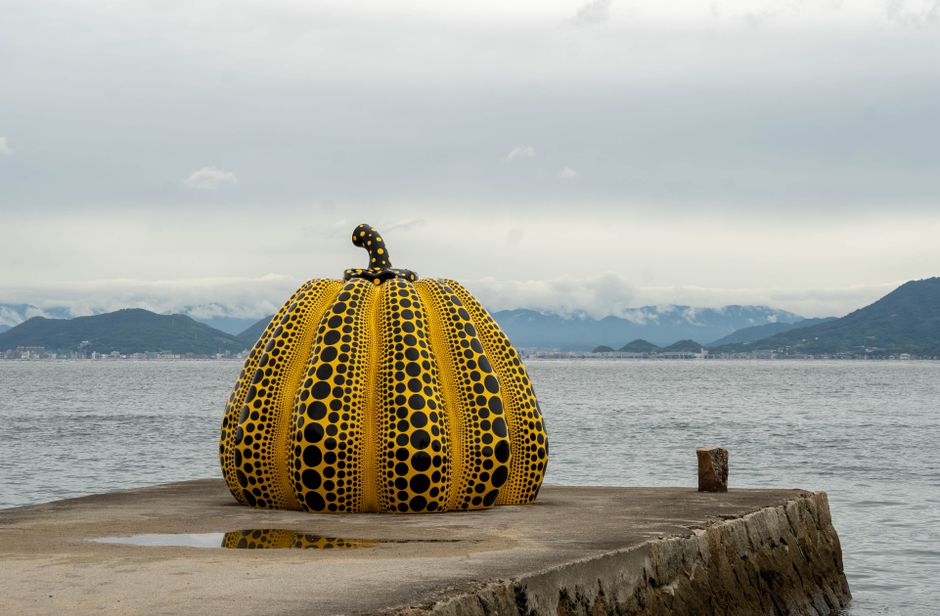
Naoshima combines art with its surroundings: the sea, hills, beaches and villages form the setting for the artworks. Yayoi Kusama’s yellow pumpkin, installed on the pier, is one of the island’s best-known landmarks. Photography conditions may vary depending on the location and visitor numbers; give priority to other visitors and the landscape.
Your visit is best enjoyed by alternating between indoor and outdoor spaces. Natural light, views over the sea and the contrast between concrete, vegetation and traditional houses are essential to understanding the island’s identity.
The main art areas
| Area or location | What you will find there | Planning tip |
|---|
| Honmura | Art House Project, traditional houses and installations | Group visits together along the same walking route |
| Benesse area | Museums, artworks in the landscape and architecture by Tadao Ando | Check access arrangements and the shuttle before setting off |
| Pier and seafront | Outdoor artworks and views of the Inland Sea | Plan this area around the ferry timetable and the weather |
| Naoshima village | Local life, accommodation and everyday transport | Behave respectfully in residential areas |
Travelling to Naoshima from Hiroshima
From Hiroshima, the journey requires a connection and should be planned around the ferry timetable. The available options include combinations of train, bus and ferry, or travelling by car and taking a car ferry. The fastest and cheapest option will not necessarily meet the same needs: compare the total journey time, changes and final destination on the island.
Before setting off, check the service status and timetables with the official ferry operator. Timetables may depend on the port chosen, the season or sailing conditions. Allow extra time if you need to reach a museum at a fixed time.
Which port should you choose?
The access points mentioned for Naoshima include Uno, on the Honshū side, and Takamatsu, on the Shikoku side. Departing from Uno can fit into a stop in Okayama, while Takamatsu is better suited to an itinerary through Shikoku. From Hiroshima, compare the connections to these ports rather than searching only for a direct route.
- From Uno: an option to consider if your itinerary passes through Okayama.
- From Takamatsu: an option to compare if you are travelling between the islands of Shikoku.
- From Hiroshima: check the full journey, from the departure station to your arrival on Naoshima.
To complete your preparations for your stay, you can also consult our guide to Japanese customs to know and our selection devoted to traditional Japanese arts.
Practical advice for your visit
Getting around
The main areas are connected by local transport and by the shuttle serving the Benesse area. Cycling may be suitable for some journeys, but choose your mode of transport according to the distances, terrain, weather and your booking times. Do not rely solely on the last bus or shuttle service without checking it first.
Respecting the island’s environment
Naoshima is both a place where people live and an artistic destination. Keep quiet near houses, do not photograph residents without their permission, do not block the streets and take your rubbish with you. In museums, follow the instructions regarding phones, photography and bags.
If you would like to continue discovering art in Japan, our guide to the Ghibli Museum and Ghibli Park lets you compare two other very different cultural experiences. For a wellness break after your visits, also consult our guide to etiquette in Japanese onsens.
A sample itinerary to adapt
- Arrive at your chosen port after checking the ferry.
- Start with the area corresponding to your reservations.
- Visit Honmura and the Art House Project, grouping together the houses accessible on the same day.
- Allow time for the outdoor artworks and sea views.
- Make your way back to the port with enough time before departure.
The best programme depends on your priorities: Tadao Ando’s architecture, Yayoi Kusama’s installations, traditional houses or the island experience as a whole. Avoid trying to see everything at a rushed pace. Transport and opening information published by operators and museums remains the reference to check before you leave.
Frequently asked questions
How do you get from Hiroshima to Naoshima?
From Hiroshima, you can compare a journey combining train, bus and ferry with travelling by car and car ferry. The choice depends on your budget, luggage and visiting hours. Check the official ferry timetables and calculate the full journey to the port, then on to your first museum.
How long do you need to visit Naoshima?
The length of your visit depends on the number of museums, houses and outdoor artworks you want to discover. A day trip means choosing your priorities, while staying overnight allows you to spread out your visits. Build your itinerary around reservations and allow extra time for ferries and local transport.
What can you do in Naoshima if you love contemporary art?
Start with the museums in the Benesse area, then explore the Art House Project in Honmura. Add the artworks set in the landscape and Yayoi Kusama’s yellow pumpkin. Naoshima’s appeal also comes from the dialogue between architecture, traditional houses, the Inland Sea and art installations.
Do you need to book Naoshima’s museums?
Arrangements may vary depending on the museum and the time of year. Check the official information before choosing your ferry, especially if you have a set entry time. Also check opening days, photography rules and access conditions for the Art House Project.
Which port should you choose to reach Naoshima?
Uno and Takamatsu are the two access points to compare, depending on your itinerary. Uno fits naturally into a trip via Okayama, while Takamatsu may suit a journey through Shikoku. From Hiroshima, compare connections, total journey time and return timetables rather than just the ferry crossing.