Why visit Kobe
Kobe stands out for its international identity, forged when its port opened to foreign trade in 1868. The city combines several attractions: renowned gastronomy featuring Kobe beef and other local specialities, a modern waterfront defined by Kobe Port Tower and the BE KOBE symbol, and easy access to Arima Onsen. Unlike Kyoto, which is centred on temples, or Osaka, known for its lively atmosphere, Kobe offers a more cosmopolitan and relaxed feel, ideal for a day trip or a two-day stay as part of a Kansai itinerary.
Main highlights
- Very close to Osaka and Kyoto (15 minutes by train)
- Varied gastronomy, from Kobe beef to Western influences
- Modern architecture and memorials to the 1995 earthquake
- Arima Onsen, a historic hot-spring resort accessible in 30 minutes
- Nankinmachi Chinatown, one of the three largest in Japan
What to see and do in Kobe
The waterfront and Meriken Park
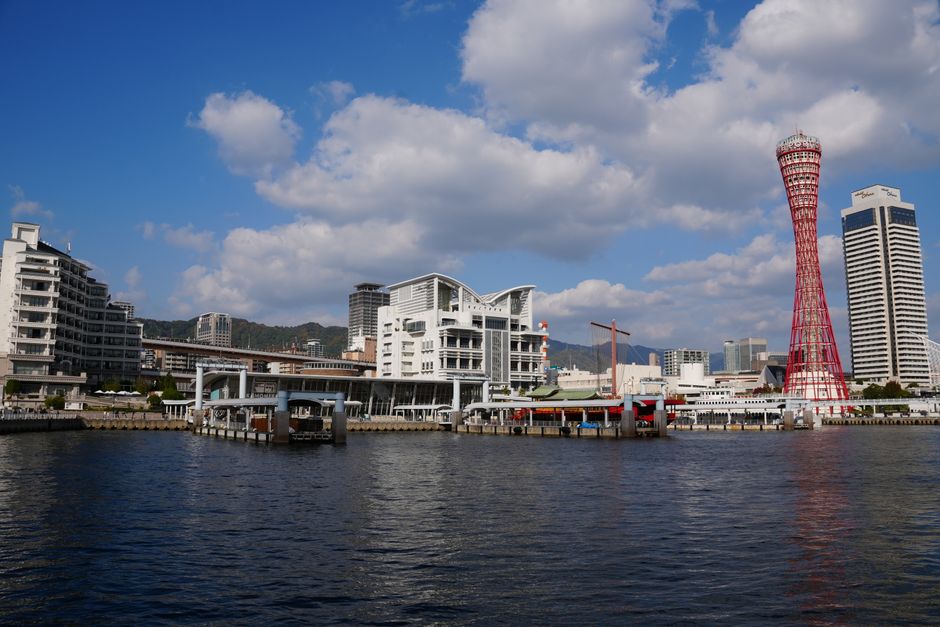
The port district is home to several iconic sites. Kobe Port Tower, built in 1963 and standing 108 metres tall, offers panoramic views over the bay and city. Meriken Park is home to the BE KOBE monument in white letters, which became a symbol of local pride after the earthquake. Port of Kobe Earthquake Memorial Park preserves a section of collapsed quay as a reminder of the 1995 earthquake. The Akashi Kaikyō Bridge, visible from the waterfront, was the world’s longest suspension bridge until 2022, with a span of 1,991 metres.
Nankinmachi, the Chinatown district
Nankinmachi (南京町) is one of Japan’s three main Chinatowns, alongside those in Yokohama and Nagasaki. Its narrow streets are lined with restaurants, souvenir shops and street-food stalls. The atmosphere is lively, especially at weekends and during Chinese New Year. It is an ideal place to try Sino-Japanese specialities at affordable prices.
Kitano-chō, the district of foreign residences
Kitano-chō, located on the hills above the city, preserves around twenty Western-style houses (ijinkan) built in the late 19th century by foreign merchants and diplomats. Some are open to visitors and display period furnishings. The district offers a rare European atmosphere in Japan, with cafés, shops and viewpoints over the city.
Arima Onsen
Arima Onsen (有馬温泉) is one of Japan’s oldest hot-spring resorts, mentioned in texts dating from the 8th century. Accessible in 30 minutes from central Kobe, it offers two types of spring: Kinsen (golden springs), rich in iron and reddish in colour, and Ginsen (silver springs), which are carbonated and clear. The water temperature ranges from 25 to 98°C. The hot-spring town retains a traditional atmosphere with its ryokan, public baths and paved streets. To learn about bathing etiquette in Japanese baths, see our guide to wagyu and Kobe beef.
Where to eat Kobe beef
Kobe beef (神戸牛, Kōbe-gyū) is produced in Hyōgo Prefecture according to strict criteria. Only Tajima-gyu cattle born, raised and slaughtered in the prefecture, with a marbling score (BMS) of at least 6 out of 12, may use this designation. The finest cuts reach a BMS of 8 to 12. The meat is characterised by fine marbling and a melt-in-the-mouth texture.
| Type of restaurant | Preparation | Indicative price range |
|---|
| Teppanyaki | Cooked on a hot plate in front of the customer | High |
| Yakiniku | Tabletop grilling, with a variety of portions | Medium to high |
| Sukiyaki/Shabu-shabu | Japanese hot pot, thinly sliced meat | Medium to high |
| Steak house | Classic steak, Western-style side dishes | High |
Teppanyaki restaurants often offer a culinary show, with the chef preparing the meat in front of you. At yakiniku restaurants, you can grill different cuts yourself. To compare the types of wagyu and understand the differences between Kobe, Matsusaka and Ōmi beef, see our detailed guide to wagyu and Kobe beef.
Other Kobe specialities
Kobe offers other local specialities that are less well known but just as delicious. Kobe Pudding, a creamy dessert that has gone viral in Japan, is available in many pâtisseries. Akashiyaki, a softer type of takoyaki originating in the nearby city of Akashi, is enjoyed dipped in dashi broth. Kobe Wine, produced in the hills north of the city, reflects Western influence. Finally, yōshoku cuisine (adapted Western-style food) has been particularly well developed in Kobe since the Meiji era.
Practical information for visiting Kobe
How to get to Kobe
From Tokyo, the Nozomi Shinkansen reaches Shin-Kobe Station in 2h50. From Kyoto or Osaka, the journey takes no more than 15 minutes by Shinkansen or 25 minutes by local train on the JR Kobe Line. Kobe Airport (UKB), located 30 minutes from the centre, offers domestic flights from Tokyo Haneda, Sapporo and Okinawa. Ferries also connect Kobe with China, Taiwan and other destinations in Southeast Asia. The Japan Rail Pass covers journeys on the Shinkansen and JR Kobe Line.
Getting around Kobe
The underground and JR train networks serve the main sights. The JR Kobe Line links Sannomiya Station (the city centre) with the port and Arima Onsen. The City Loop Bus, recognisable by its green colour, follows a sightseeing route passing Meriken Park, Kitano-chō and Nankinmachi. A day pass is available for unlimited travel. For Arima Onsen, the Shin-Kobe Ropeway offers a scenic alternative to the train.
Recommended length of stay
One day is enough to see Kobe’s main sights: the waterfront, Nankinmachi and Kitano-chō. To include Arima Onsen and enjoy a Kobe beef meal, allow two days. Kobe combines easily with Osaka, Kyoto and Nara in a five- to seven-day Kansai itinerary. To plan your itinerary in the region, see our guide to Hakodate, another historic port in Japan.
Best time to visit
Spring (March–May) and autumn (September–November) offer pleasant temperatures and colourful scenery, particularly in the Rokkō Mountains. Summer (June–August) can be hot and humid, but festivals bring the city to life. Winter (December–February) remains mild on the coast, while Arima Onsen becomes particularly appealing with its outdoor hot baths.
Frequently asked questions
What is the difference between Kobe beef and wagyu?
Wagyu refers to four breeds of Japanese cattle, whereas Kobe beef is a specific type of wagyu: Tajima-gyu cattle born and raised in Hyōgo Prefecture, with a marbling score of at least 6 out of 12. All Kobe beef is wagyu, but not all wagyu is Kobe beef.
How long does it take to visit Kobe from Osaka?
Kobe is 15 minutes from Osaka by Shinkansen or 25 minutes by local JR train. A day trip allows you to see the waterfront, Nankinmachi and Kitano-chō. To include Arima Onsen and a Kobe beef meal, allow a full day or two days.
Can Arima Onsen be visited in one day from Kobe?
Yes, Arima Onsen is 30 minutes from central Kobe by train or cable car. You can visit the hot spring resort, enjoy a public bath and have lunch at a ryokan in half a day. For the full experience with an overnight stay at a ryokan, one night there is recommended.
Which sites should you not miss in Kobe?
Must-see attractions include Meriken Park and the BE KOBE monument, Kobe Port Tower, the Nankinmachi Chinatown district, the foreign residences of Kitano-chō and Arima Onsen. The Port of Kobe Earthquake Memorial Park bears witness to the 1995 earthquake. A meal of Kobe beef completes the experience.
What is the best way to get from Kyoto to Kobe?
The Shinkansen connects Kyoto to Shin-Kobe in 15 minutes. The JR Tokaido Line (local service) reaches Sannomiya Station in around 50 minutes. Both options are covered by the Japan Rail Pass. The Shinkansen is faster, while the local train allows you to see more of the scenery.
Is Kobe a five-letter Japanese port?
Yes, Kobe is spelt with five letters (K-O-B-E) in the Latin alphabet and is a common answer to crossword clues asking for a five-letter Japanese port. It is one of Japan’s largest ports and has been open to international trade since 1868.