Yakitori: Chicken Skewers, Cuts and Best Places to Eat
Discover yakitori in Japan: chicken skewer cuts, charcoal grilling, tare sauce, ordering tips and how to find good restaurants.
Tempura is a Japanese fried dish whose thin batter and quick cooking bring out the flavour of vegetables, fish and seafood without masking it. Inspired by a Portuguese preparation, it was adapted in Japan until it became a speciality in its own right: you can find it in specialist restaurants as well as rice bowls, noodle shops and family meals.
To discover it, remember three key points: the batter is deliberately light, the ingredients vary with the seasons, and it can be served with anything from salt to a sauce made with dashi, mirin and soy sauce. Tempura’s origins shed light on its foreign influences, while its different forms show how deeply this dish has become integrated into Japanese cuisine. In Osaka, a market such as Kuromon also offers the chance to discover other Japanese specialities during the same food-focused stroll.
In brief:

Tempura was not born in Japan: it was inspired by peixinhos da horta, a Portuguese preparation of vegetables coated in batter and fried. Portuguese missionaries introduced this cooking method to the archipelago. According to the Tokyo Metropolitan Government, which presents the dish in its guide to popular foods (2020), the Japanese subsequently modified the preparation, particularly by lightening the batter and developing the ingredients used.
This origin explains why tempura is both familiar and distinctive. The principle of frying recalls European culinary traditions, but the care given to texture, ingredients and presentation belongs to Japanese cuisine. The batter should not dominate: it forms a delicate coating around a prawn, a slice of fish or a vegetable whose flavour remains noticeable.
The etymology of the word is open to several explanations. The Office québécois de la langue française links “tempura” to the Portuguese word têmpero, associated with the lean days of Lent in the history of the preparation. The ninth edition of the Dictionnaire de l’Académie française, published in 2024, instead gives the Portuguese verb temperar, meaning “to season”, as a possible source. These suggestions reflect the longstanding links between languages and cuisine, but do not allow one single origin of the word to be presented as certain.
The dish then became rooted in urban Japanese life. During the Edo period, vendors sold fried pieces from stalls where customers could eat standing up, sometimes from skewers. This simple, quick format suited passing customers. Later, during the Meiji era, specialist establishments helped turn this fried dish into a meal in its own right, with greater attention paid to cooking and service.
Tempura’s history is therefore less about an unchanged import than a gradual adaptation. Japan adopted a foreign technique, matched it to its own ingredients and table customs, and turned it into a dish that is instantly recognisable.
During the Edo period, tempura was above all street food. Fried pieces were sold at stalls and eaten without ceremony, often on the spot and standing up. This way of consuming it differs from the refined image sometimes associated with specialist restaurants today, but it reveals one of the dish’s essential qualities: it can be either an immediate snack or a carefully composed meal.
Frying was practical in busy districts: it made it possible to serve portions quickly, cooked to order. The ingredients could vary, and skewers made them easy to eat. Tempura was therefore not just a recipe, but a response to the rhythms of the city and the availability of produce. This history still explains the variety of places where it is served in Japan.
From the Meiji era onwards, the emergence of specialist restaurants changed the way it was enjoyed. In a tempura-ya, the chef can cook each piece as needed and serve it immediately, so that the coating stays crisp. The meal then becomes a succession of mouthfuls: delicate flavours can come before stronger ingredients, rather than being presented all at once on a large plate.
This development does not mean that street or fast-food tempura disappeared. Today, it exists in a range of settings: served over rice, incorporated into a noodle meal or offered as a sharing dish in an izakaya. Each format meets a different expectation. A tendon, for example, combines tempura and rice in one bowl, whereas an order in a specialist restaurant places greater emphasis on each piece and its accompaniment. For more on the setting, see our guide to izakaya.
The serving format also changes the experience. During a meal served piece by piece, diners can compare the texture of a vegetable with that of a freshly fried prawn. In a bowl of noodles, contact with the broth gradually changes the crispness. These ways of eating are not opposed: they show how the same dish adapts to the table and the occasion.
Tempura’s historical journey thus links street food with specialist gastronomy. To understand its place today, we now need to look at the ingredients and forms that make up its main families.
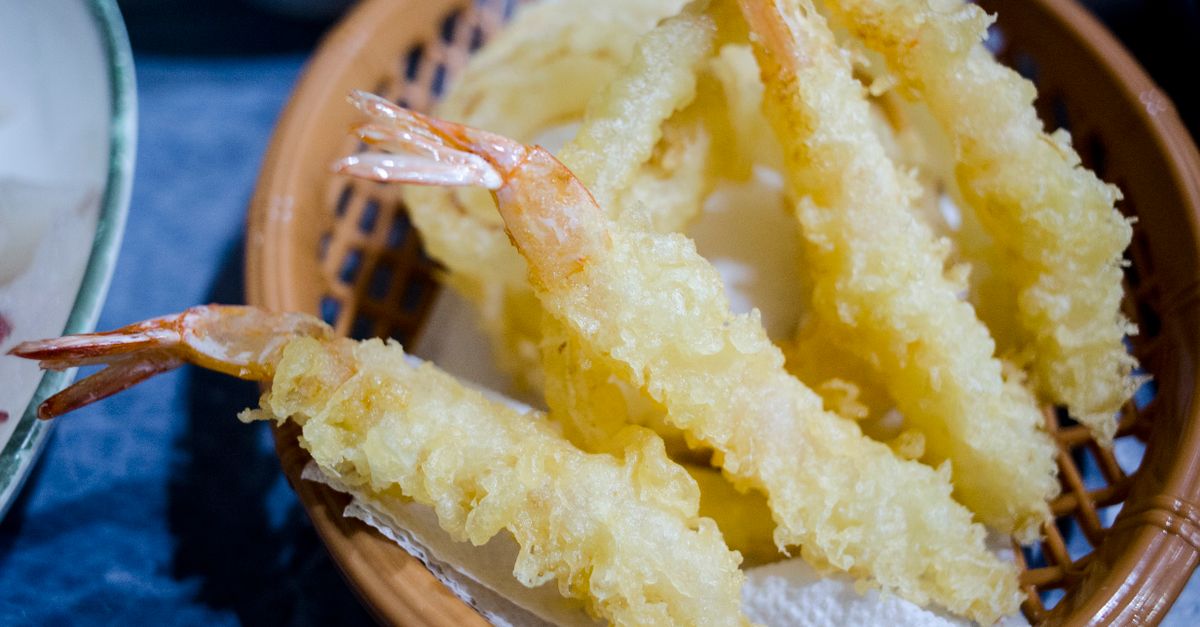
Types of tempura are first distinguished by their main ingredient. Seafood is particularly popular: prawns, squid, octopus and oysters can all be coated and fried. Prawn tempura is one of the easiest versions to recognise, with its elongated shape and tender flesh. Depending on the presentation, the tail may remain visible or be kept on to make the piece easier to pick up with chopsticks.
Vegetable tempura offers a broader range than a simple assortment of slices. You may encounter aubergine, onion, carrot or pepper, as well as shiso leaves. The cut changes the texture: a sliced vegetable retains a clear presence, while vegetables cut finely and fried in small clusters form a more compact mouthful. Choices vary according to the establishment and the produce available.
Kakiage is a preparation in which several ingredients cut into small pieces are combined into a fried fritter. It may contain vegetables or seafood, and can be served on its own or placed over rice. It is worth distinguishing it from individual pieces: its appeal lies in mixing flavours and textures in a single mouthful. It is often found in simple meals where tempura accompanies a rice base.
White-fleshed fish and mushrooms add to the possibilities. The batter should remain subtle enough not to erase the difference between a tender mushroom, a firm vegetable and a piece of fish. This is why the shape of the cut, the amount of batter and the cooking time matter as much as the choice of ingredient.
| Type | Common ingredients | How to recognise it |
|---|---|---|
| Prawn tempura | Prawns | Elongated piece, tender flesh beneath a light coating |
| Vegetable tempura | Aubergine, carrot, onion, shiso | Shapes and textures vary according to the cut |
| Kakiage | Finely cut vegetables and sometimes seafood | Fritter made from several ingredients |
| Fish tempura | White-fleshed fish | Delicate flavour, often served as an individual piece |
An assortment is a good way to compare these families. Rather than looking for one unique or “authentic” version, observe how each restaurant chooses its ingredients and balances the textures.
To get online as soon as you land, a Japan eSIM can be installed before you leave, with no need to look for a local SIM card.
Tempura is generally served very hot, often in a basket or on a plate lined with absorbent paper. This presentation helps preserve its crispness as much as possible and prevents the pieces from sitting in oil after cooking. If the chef brings them one at a time, it is best to eat them promptly: steam and moisture gradually soften the batter.
Two accompaniments are particularly common: salt and tentsuyu. This sauce combines dashi, mirin and soy sauce. Grated daikon or ginger may be added depending on how it is served. Salt highlights the flavour of the ingredient without adding liquid, while the sauce provides a salty, savoury note. There is no single correct way to eat it: choose whichever suits the mouthful.
Some establishments offer flavoured salt or powdered green tea. These options are not always available; the simplest approach is to look at the condiments served with the dish or ask the staff. With prawns and fish, whether to eat the tail also depends on the preparation and personal preference. You do not have to eat it if it is left on.
The texture begins during preparation. A batter made with flour, egg and water is mixed without being worked until completely smooth. Traditional recipes keep the water and batter cold before frying; the contrast with the hot oil helps the coating set quickly. The aim is to achieve a crisp surface without turning the centre of the food into a dry mouthful.
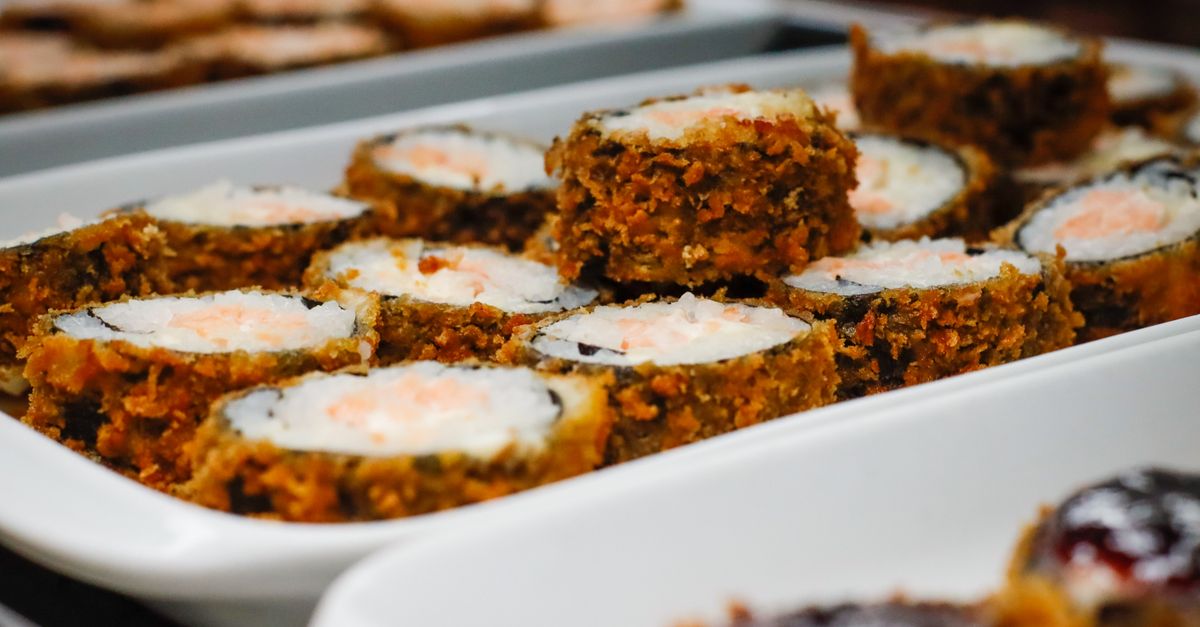
A batter that is too thick masks the ingredient and feels heavy. Conversely, a thin coating allows the shape of the prawn or vegetable to show through more clearly. Panko breadcrumbs are not necessary for the classic preparation: they create a different texture and are a variation rather than an essential element of traditional tempura.
When served over rice, tempura is called tendon. It can also accompany soba or udon, where the broth gradually changes the crispness. This difference in texture is part of the choice: eaten separately, it stays drier and crunchier; combined with noodles, it blends more into the meal.
To decide where to eat tempura in Japan, first choose the type of meal you want. Specialist restaurants, known as tempura-ya, place the ingredient and its cooking at the centre of the service. Soba or udon restaurants often offer pieces as an accompaniment, while izakaya and family restaurants may serve it to share. Counters and fast-food establishments, meanwhile, offer practical formats such as tendon.
In Tokyo, tempura restaurants cover a range of styles, from composed meals to quick orders. Piece-by-piece service allows you to appreciate the contrast between ingredients: you might begin with a delicate flavour and then move on to a more pronounced mouthful. As prices and opening hours vary by establishment, it is best to check directly with the restaurant before going.
In Osaka, Kuromon Market is an interesting place to discover products and preparations associated with local cuisine. It should not be confused with a specialist restaurant: the experience is that of a market, where you can compare several options and continue exploring with other dishes. The guide to Kuromon Market in Osaka helps place this stop among the city’s food-focused destinations.
The discovery can also continue with regional specialities that are not tempura, but which shed light on the diversity of Japanese culinary habits. In Osaka, takoyaki is enjoyed in a completely different style, with its soft batter and octopus filling; consult this guide to Osaka octopus balls to plan this other food stop.
In different cities and neighbourhoods, menus may use different terms or present tempura in several formats. Look for references to prawns, vegetables, kakiage or tendon, then choose according to your appetite and preferred accompaniment. An assortment is suitable for comparing textures, while a rice bowl offers a more complete and straightforward meal.
For a first tasting, a specialist restaurant helps you understand the care given to cooking; for a simple break, a bowl of tendon or a noodle accompaniment gives an immediate idea of how the dish fits into everyday life. The best choice therefore depends less on an “unmissable” address than on the experience you are looking for. Our guide to Japanese cuisine offers further context for exploring local dishes.
Japanese tempura was inspired by Portuguese peixinhos da horta, vegetables coated in batter and then fried. The preparation was adapted in Japan, particularly with a lighter batter and a wider range of ingredients.
Tempura refers to ingredients coated separately or served as distinct pieces. Kakiage combines several finely cut ingredients in a single fried fritter.
It is best eaten just after serving, with salt or dipped in a tentsuyu sauce. It can also accompany rice, soba or udon.
You can find it in specialist restaurants, izakaya, noodle restaurants and family establishments. Tokyo offers a wide choice; in Osaka, markets and restaurants allow you to include it in a broader exploration of local cuisine.
To book tours and activities in Japan ahead, see the options on Klook.
Updated on 26/11/2026
Scroll to see more articles →