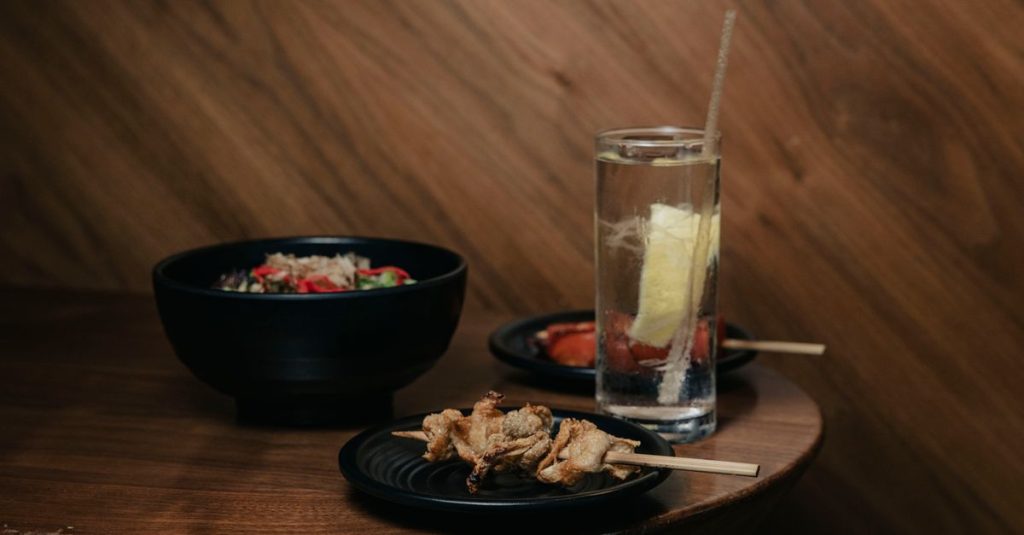
Yakitori: Chicken Skewers, Cuts and Best Places to Eat
Discover yakitori in Japan: chicken skewer cuts, charcoal grilling, tare sauce, ordering tips and how to find good restaurants.
Takayama Jinya is a former administrative office of the shogunate, located in the heart of Takayama, in Gifu Prefecture. Visiting it helps you understand how the central government organised the administration of a territory far from the capital, while discovering traditional architecture shaped by the site’s political and practical functions.
This site differs from the city’s temples and merchant districts: it reveals the other side of the picture, that of decisions, controls and resource management. To place this stop within a broader exploration of the city, also see this Takayama guide and the information about its historic old town.
In brief
What to see: administrative areas, rooms in the official residence and traditional architectural features.
What to understand: the role of the shogunate in local administration during the Edo period.
Who it is for: visitors interested in Japanese history, political organisation and cultural heritage.
What to check: confirm opening hours, prices and visiting conditions with the official organisation before setting out.

Takayama Jinya is a former local government centre connected to the shogunate. The term jinya refers to an administrative and residential establishment used by representatives of the authorities. Here, the spaces were used to conduct local affairs, receive people and carry out various administrative tasks.
Its presence in Takayama recalls that Edo’s authority was not exercised solely from the capital. Regional offices made it possible to relay decisions, monitor local resources and administer communities. The building therefore gives Japanese political history a concrete dimension: rather than studying only major figures and conflicts, you can observe the places where governance took shape in everyday life.
A historical visit helps distinguish the functions of an official office from those of a private home. The rooms, passageways and reception areas follow a precise organisation: welcoming people, working, storing documents and managing exchanges with local authorities. The site’s interest lies as much in this layout as in its old appearance.
To better place the city within its regional setting, travellers can also consult an overview of the Japanese Alps around Takayama. Jinya can then be understood as a meeting point between a centralised administration and a mountainous territory whose activities and resources required local management.
The building allows you to read the history of power at city level, rather than only through national narratives.
Takayama Jinya combines administrative spaces with an official residence. This combination is essential to understanding how the site worked: the representative of the authorities had to be able to work, receive visitors and stay there. Traditional architecture is therefore not merely decorative. It organises different uses and marks the differences between rooms intended for visitors, work or everyday life.
As you follow the route, you can focus on the floors, sliding partitions, thresholds and relationships between rooms. These elements provide a more precise reading of the space than simply looking at the façades. The materials and openings also contribute to the atmosphere of the rooms, while recalling the constraints specific to older buildings.
To get more from the visit, it is useful to ask what function each space may have served. A reception room did not have the same role as a workroom or storage area. This approach turns the discovery of architectural details into an investigation of how the administration operated.
The site should not be reduced to a collection of old objects: its value also lies in the way the spaces relate to one another. The information displayed on site helps clarify how the rooms were used and identify the preserved features. Its content may vary depending on the displays, which is why it is worth reading the panels rather than assuming a room’s function from its appearance alone.
Jinya’s architecture tells the story of how work and authority were organised as much as it reflects construction expertise.
The Edo period is often approached through the power of the shoguns, major cities and social change. Takayama Jinya completes this picture by showing how a territory was managed at local level. The site reveals the ordinary mechanisms of authority: handling matters, organising administrative work and maintaining a link between the government and the population.
This perspective is useful for visitors who already know castles or merchant districts. In a castle, the focus is often on defence, hierarchy and the power of a domain. Here, attention shifts to how the administrative office operated and how tasks continued. This difference makes the visit a complement to other historic sites in Takayama.
A room does not reveal its entire history at a single glance. You need to place it within the chain of responsibilities: decisions are made, communicated and implemented in a given territory. Takayama Jinya helps explain this circulation of power without turning the visit into an abstract lesson.
Visitors can also compare the site with the city’s old districts. The shopping streets reflect economic activity and urban life; Jinya shows the institutional framework that existed alongside them. To explore the regional landscapes further, the information about the Japanese Alps and Takayama provides another, geographical perspective.
Jinya makes the Edo period easier to understand by connecting institutions with the places where they operated.
To book tours and activities in Takayama ahead, see the options on Klook.
To get online as soon as you land, a Japan eSIM can be installed before you leave, with no need to look for a local SIM card.
Takayama Jinya fits easily into a day devoted to the historic centre, but it deserves enough time for an attentive visit. Before setting out, check opening hours, prices, any possible closing days and access conditions with the official organisation: this information may change. It is better not to organise your itinerary around outdated information found in a printed guide.
On site, move at a pace that leaves time to read the explanations and observe the details. Visitors interested in history can focus on the administrative areas and contextual panels; those interested in housing can examine the materials, partitions and room layout. In either case, making a few notes about the functions of the rooms will help you remember the differences between the spaces.
| Your priority | How to approach the visit |
|---|---|
| Political history | Follow the explanations about the role of the shogunate and local administration. |
| Architecture | Observe the rooms, partitions, materials and interior circulation. |
| Discovering Takayama | Combine Jinya with the historic districts and other sites in the centre. |
| Practical planning | Confirm opening hours and entry arrangements with the official organisation before travelling there. |
The site appeals both to history enthusiasts and to travellers seeking to understand what distinguishes Takayama from a simple stop in the Japanese Alps. To plan travel around the country, also see these tips on getting around Japan.
A well-prepared visit allows you to focus on the site rather than on practical constraints.
Takayama’s cultural heritage can be discovered through places of many different kinds: houses, old streets, religious sites and institutions. Jinya offers a specific perspective because it bears witness to the presence of administration in urban life. It complements the discovery of façades and shops by showing another form of social organisation.
This complementarity explains why the site also interests travellers whose stay is not devoted exclusively to history. A visit to Jinya can add depth to walks through the old town: after seeing places of trade and houses, you gain a better understanding of the authorities’ place in the local landscape. Heritage then emerges as a collection of functions and memories, not merely a succession of picturesque buildings.
Before or after visiting Jinya, take time to walk through the historic streets and compare how they were used. Commercial spaces and the official office were not interchangeable, even though they now form part of the same tourist experience. This comparison helps you grasp the city’s diversity and avoid a uniform reading of its past.
Takayama Jinya is therefore a particularly relevant historic visit for anyone who wants to understand how authority was expressed during the Edo period. Its strength lies in the link between building, administration and local life: this link gives the site its distinctive place in the heritage of Gifu Prefecture.
In Takayama, Jinya offers a direct gateway to Japan’s administrative history.
It is a former administrative office connected to the shogunate, which also served as an official residence for its local representatives.
The site lets you discover the administrative organisation of the Edo period and observe traditional architecture in its historical context.
The duration depends on your interest in the explanations and architectural details. Consult the official information to plan your visit and check the visiting conditions.
They may change. Check opening hours, prices and any closing days with the official organisation before your visit.
Updated on 24/11/2026
Scroll to see more articles →