Tsukiji Outer Market Tokyo: What to Eat and When
Explore Tokyo’s Tsukiji Outer Market, from sushi and tamagoyaki to seafood, with practical advice on what to eat and when to visit.
Nishiki Market is one of the best places in Kyoto to discover local food in small portions: you will find yuba, tsukemono, skewers and other Japanese specialities. To enjoy your visit without rushing from one stall to another, come in the morning or early afternoon, then check the opening hours of the shops you want to visit: they can vary from one business to another and depending on the day.
This covered shopping arcade is suitable both for tasting street food and buying products to take home. The experience lies in the variety of the stalls, but also in their size: some offer portions to eat on site, while others sell prepared foods or ingredients intended for cooking. The best time to visit therefore depends on your aim: tasting several things in a lively atmosphere, or taking more time to look at the products.
When planning a culinary stop in Kyoto, keep two simple rules in mind: do not assume that every stall allows you to eat on site, and do not rely on one general timetable for all the shops. Nishiki is a market street made up of independent businesses, whose practices and closing days may differ.
In brief

Nishiki Market is a place for discovering food in small bites rather than a single restaurant with a fixed menu. Stalls may offer fresh produce, ready-to-eat preparations and regional specialities; the selection changes from one business to another. It is therefore better to choose as you walk, looking at the ingredients and preparation methods, rather than searching for an unchanging list of dishes.
Yuba, sometimes called tofu skin, forms on the surface of heated soya milk. Its delicate texture and mild flavour make it an interesting speciality for understanding the role of soya in Japanese cuisine. Depending on how it is prepared, it may be sold fresh or accompanied by seasonings; ask the seller how to eat it if the presentation is not obvious.
Tsukemono are preserved or pickled vegetables, with flavours and textures that vary widely. They traditionally accompany Japanese meals, but can also be sampled in small quantities to compare their crunch, acidity or saltiness. A small portion is often enough to discover a product before buying more.
Skewers easily catch the eye because they can be eaten without cutlery and allow you to try a preparation in a small format. Their ingredients depend on the stall: check what is indicated or ask before ordering, especially if you avoid certain ingredients. Portions intended to take away do not necessarily mean that eating while walking is permitted.
For a first visit, choose two or three different tastings rather than immediately buying several similar portions. This leaves room to discover less familiar Japanese specialities and prevents the walk from turning into an overly heavy meal. Variety is the market’s main attraction: a simple product may give you a better idea of local culinary practices than a highly elaborate dish.
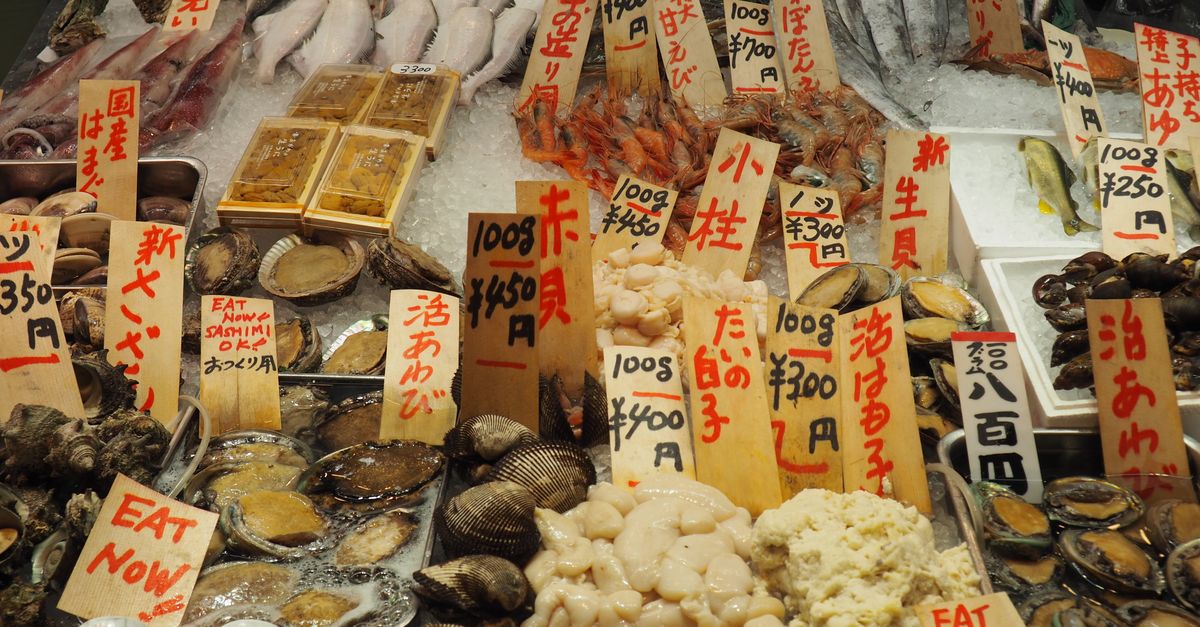
There is no single timetable that applies to every business in Nishiki. The shops are independent and may have different opening hours, closing days or break periods. To avoid a disappointing visit, check the latest information with the market or the businesses that interest you, particularly if you have a specific speciality in mind.
The morning is often a practical choice for starting the day with a walk and some tastings, while early afternoon allows you to combine the market with other visits in Kyoto. These are organisational guidelines, not a guarantee that every stall will be open. The busiest times can also make movement slower in the covered arcades.
If you mainly want to look at the products and buy a few specialities, choose a time when you have enough time to stop without obstructing other visitors. If your priority is tasting several dishes, check before setting off that the stalls you have chosen are open. On busy days, patience makes it easier to interact with the sellers and leaves more room for customers moving in both directions.
The best time to visit is therefore the one that matches your interests and the confirmed opening hours of the shops. Avoid building a tight schedule around a single stall: an unexpected closure or a long queue can change the order of your walk. To organise the rest of your stay, our two-week Japan itinerary guide can help you place Kyoto among your other stops.
Nishiki is both a place to shop and a thoroughfare. The arcades can be narrow and very busy, so keep your tasting close to the shop that sold you the product when it allows eating on site. If there is no visible indication, ask the seller where to eat your purchase instead of assuming that eating while walking is accepted.
This is particularly useful for food served on skewers or in small containers. Sauce or packaging can soil stalls and the clothes of passers-by in a crowded space. Keep your rubbish until you find a suitable place for it, and do not leave packaging on a counter without permission.
Not all the products on display are intended for immediate consumption. Some are packaged to take away or keep, while others are prepared for quick tasting. Look at the stall’s information and, if necessary, ask a brief question about the ingredients, portion size or how to eat it. This precaution also helps people with allergies or dietary restrictions, as recipes and seasonings may vary.
A sensible approach is to identify several stalls, then buy as you go rather than accumulating dishes as soon as you enter. This allows you to compare a bite of yuba with pickled vegetables, then decide whether you would like to continue with a skewer. The visit is more comfortable when it follows the market’s pace as well as the visitor’s appetite.
To get online as soon as you land, a Japan eSIM can be installed before you leave, with no need to look for a local SIM card.
Nishiki Market is easy to visit as one stop among others in the city, but it is useful to allow some extra time. The duration depends on how many businesses you want to look at, the queues and the crowds. A quick visit gives you a sense of the atmosphere; a more attentive visit gives you the chance to compare products and talk to sellers.
Before setting off, choose a priority: discovering ingredients, eating a few portions or buying products to take away. This decision helps limit impulse purchases and leaves room for the day’s other meals. If you are looking for a broader overview of Japanese food culture, also see our page dedicated to street food in Japan and our guide to Japanese cuisine.
| Type of visit | What to prioritise | What to check |
|---|---|---|
| Discovering ingredients | Looking at the yuba and tsukemono stalls | Tasting instructions and sales formats |
| Tasting several bites | Ordering small, varied portions | Whether you can eat near the stall |
| Buying products | Asking how to store or transport them | Ingredients and sales conditions |
| Avoiding closed shops | Preparing a short list of addresses | Each shop’s recent opening hours |
To place this stop within your trip, the Kyoto travel guide presents other ideas for visiting the city. Nishiki works well as part of a day devoted to discovering Japanese cuisine, provided you treat it as a lively market rather than an attraction with uniform opening hours.
A few simple checks will help you approach your visit without assuming that all the stalls operate in the same way.
Yuba, tsukemono and skewers are among the specialities to look out for. The selection varies between businesses, so choose according to what is actually available on the day of your visit.
Opening hours may vary from one shop to another, as may closing days. Check recent information with the market or the businesses you want to visit before setting off.
The morning or early afternoon are practical guidelines for organising your visit, but they do not guarantee that every stall will be open. Adapt your time slot to the shops you want to visit and your plans in Kyoto.
Do not assume that you can: instructions depend on the businesses and the arcades can be busy. Ask where to eat your purchase and avoid blocking the passage.
To book tours and activities in Kyoto ahead, see the options on Klook.
Updated on 21/11/2026
Scroll to see more articles →