Tip: set up a Japan eSIM before departure so your data works on arrival.
Why visit Nagoya on a trip to Japan
Nagoya stands apart from classic tourist destinations thanks to its authenticity and its role as a central hub. Less crowded than Tokyo or Kyoto, it offers an immersion in industrial and traditional Japan without the crowds. The city is an ideal starting point for the Japanese Alps (Takayama, Shirakawa-go) and the Kii Peninsula.
Its historical heritage rivals that of the major cities: the castle is among the country’s most imposing, while Atsuta Shrine preserves one of the three Imperial regalia. The local cuisine, renowned for its richness and distinctive character, is reason enough to visit.
A strategic position on the Tōkaidō route
Located halfway between Tokyo and Osaka, Nagoya makes combination itineraries easy. You can reach Tokyo and Kyoto in a few dozen minutes by Shinkansen, making it possible to optimise your trip without multiplying return journeys.
| Destination | Transport | Duration |
|---|
| Tokyo | Shinkansen Nozomi | 1h40 |
| Kyoto | Shinkansen Nozomi | 35 min |
| Osaka | Shinkansen Nozomi | 50 min |
| Takayama | JR Hida Limited Express | 2h20 |
The must-see sights and things to do in Nagoya
Nagoya Castle and its golden dolphins
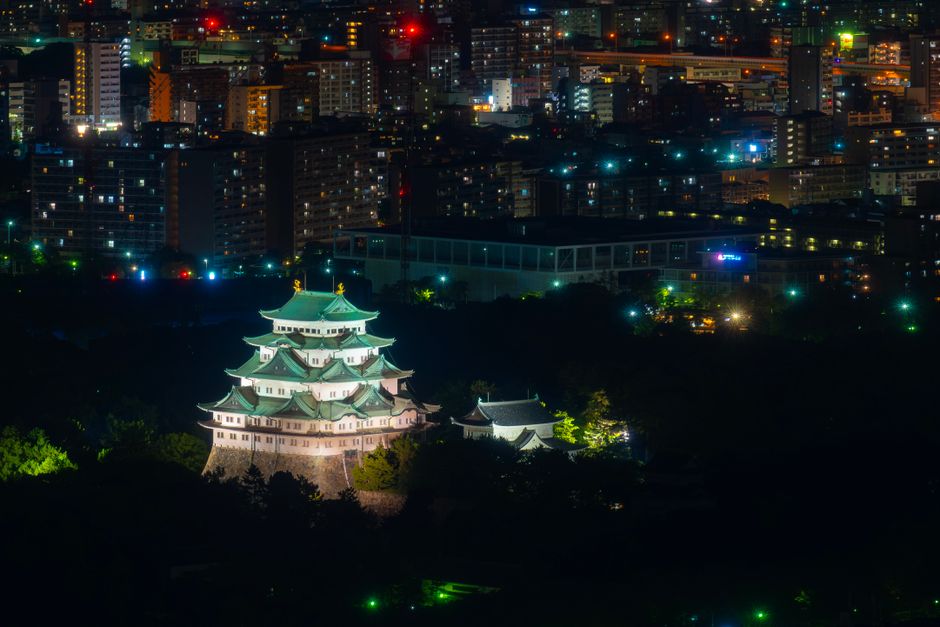
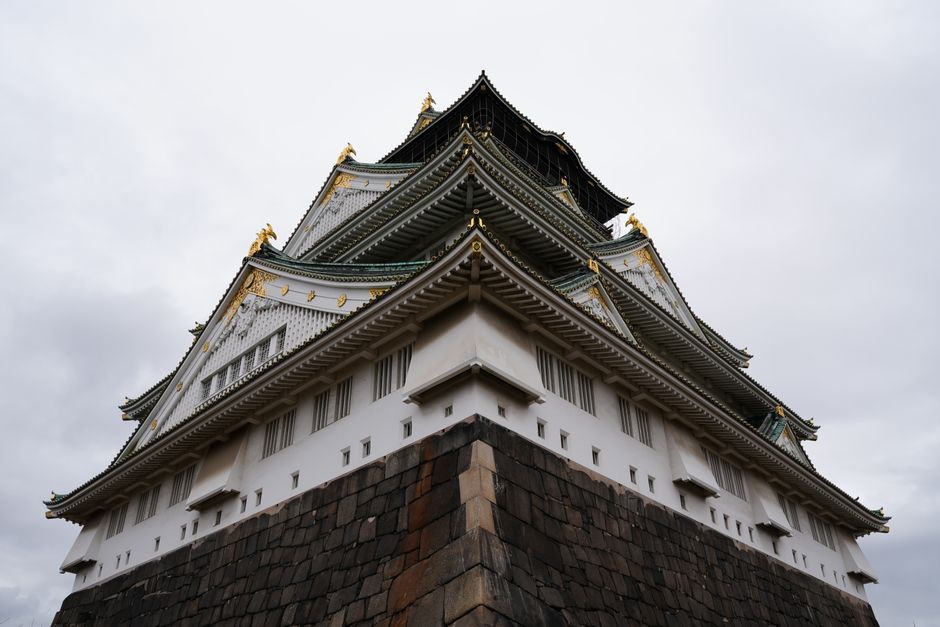
Nagoya Castle (名古屋城) impresses with its size and history. Built between 1609 and 1612 by Tokugawa Ieyasu, it symbolises the power of the Tokugawa shogunate. Its main tower reaches 48 metres and overlooks the surrounding park, planted with 1,000 cherry trees that are magnificent during the spring blossom season.
The kinshachi, golden dolphins adorning the roofs, are the city’s emblem. These sculptures served as talismans against fires. The current structure, rebuilt in concrete in 1959, houses a museum displaying armour, prints and objects from the Edo period. Admission costs 500 yen.
Atsuta Shrine and the sacred sword
Atsuta Shrine (熱田神宮) is one of Japan’s most revered Shinto sites. Traditionally founded in the 1st century, it preserves Kusanagi no Tsurugi, the mythical sword that forms part of the Three Imperial Regalia. You will not see the sword itself, as it is kept secret, but the site’s sacred atmosphere makes the visit worthwhile.
The complex stretches through an ancient forest containing more than 30 buildings. More than 7 million visitors come here every year, particularly during the New Year period. Do not miss the Kami no Michi path, lined with centuries-old trees, and Bunjin Hall, dedicated to the poetic arts.
Modern museums and attractions
SCMaglev and Railway Park delights train enthusiasts with its historic Shinkansen models and magnetic-levitation train prototype. The Toyota Commemorative Museum traces the company’s development from its beginnings in textiles to the automotive industry. Advance booking is required to visit the Toyota factory in Toyota City.
Oasis 21, a futuristic glass-and-steel structure, offers a free panoramic terrace. The JR Central Towers house an observatory (Sky Promenade) at the top of their 245-metre height. Port of Nagoya Garden combines a public aquarium with a seaside leisure area.
Nagoya specialities you absolutely must try
Nagoya cuisine (Nagoya-meshi) is characterised by bold flavours and generous portions. Less refined than Kyoto cuisine, it reflects the region’s industrious and straightforward spirit. Local red miso (aka-miso) flavours many dishes.
Signature Nagoya-meshi dishes
- Miso katsu: breaded pork cutlet covered in a thick sweet-and-savoury miso sauce, created in 1948 at Yabaton restaurant
- Hitsumabushi: grilled eel served over rice, to be enjoyed in four stages (plain, with condiments, in dashi broth, then according to your preference)
- Tebasaki: crispy fried chicken wings seasoned with a spicy sauce and sesame
- Kishimen: flat udon noodles served in a light broth, a regional speciality particularly enjoyed in winter
- Tenmusu: rice balls filled with prawn tempura, perfect as a quick snack
These specialities can be enjoyed in local restaurants, konbini for some takeaway versions, or at station stalls. To learn more, see our guide to Japanese bento.
Planning your stay in Nagoya: length and accommodation
One day is enough to see the castle and Atsuta Shrine, but two days allow you to explore the museums and enjoy the local cuisine. Nagoya also serves as a base for exploring Takayama, Shirakawa-go or the Kii Peninsula.
The Sakae and Nagoya Station districts are packed with hotels, restaurants and shops. Sakae offers a lively urban atmosphere, while the station area makes getting around easy. Capsule hotels are a budget-friendly option for solo travellers.
Public transport in Nagoya
Nagoya’s underground has six lines serving the main sights. A day pass (870 yen) quickly pays for itself if you make several journeys. The Meitetsu, Kintetsu and JR Central networks complement the underground for reaching the outskirts.
From Chubu Centrair Airport, the Meitetsu μ-SKY Limited Express train reaches Nagoya Station in 28 minutes. The bus is a cheaper but slower alternative.
Excursions from Nagoya to the Japanese Alps
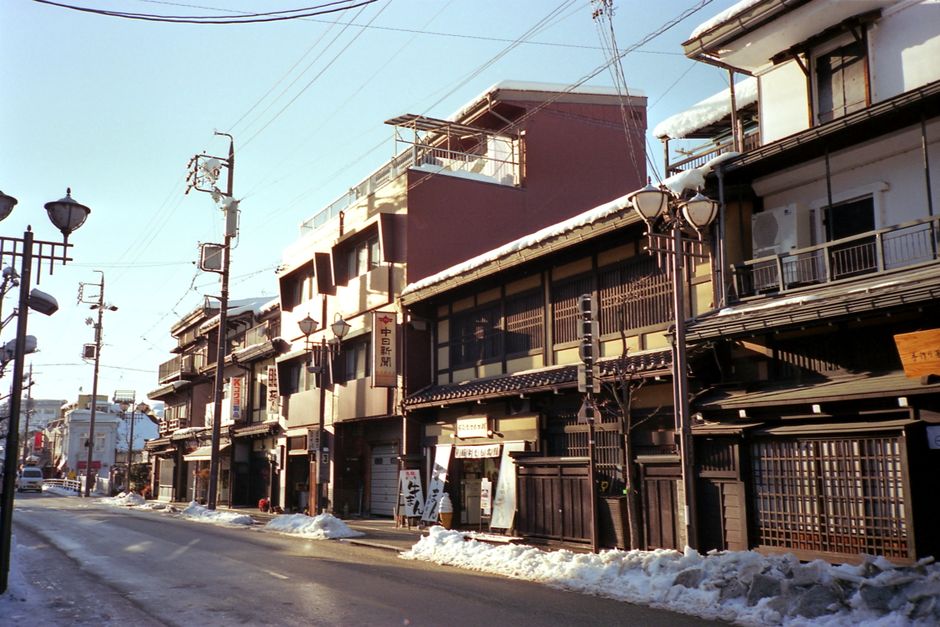
Nagoya is the preferred starting point for exploring the Japanese Alps. Takayama, a well-preserved historic town, can be reached in 2 hours 20 minutes by the JR Hida Limited Express. From there, buses serve Shirakawa-go and its thatched-roof houses (gassho-zukuri), which are listed as a World Heritage Site.
The Kiso Valley, on the former Nakasendō route, offers post towns (Tsumago, Magome) where time seems to stand still. These day trips or longer excursions greatly enrich your stay in the Chūbu region.
Frequently asked questions
How long do you need to visit Nagoya?
One day is enough to see Nagoya Castle and Atsuta Shrine, the two main sights. Allow two days if you want to explore the museums (SCMaglev, Toyota) and enjoy the local cuisine. Nagoya also serves as a convenient base for excursions to Takayama or Shirakawa-go.
How do you get around Nagoya from Tokyo or Kyoto?
The Shinkansen Nozomi connects Tokyo to Nagoya in 1 hour 40 minutes and Kyoto in 35 minutes. These trains run every 10 to 20 minutes during the day. The Japan Rail Pass covers these journeys if you take the Hikari trains (slightly slower). Night buses also run from Tokyo, taking around 5 hours.
Which specialities should you try in Nagoya?
Do not miss miso katsu (pork cutlet with miso sauce), hitsumabushi (grilled eel over rice, enjoyed in four stages), tebasaki (spicy fried chicken wings) and kishimen (flat udon noodles). These dishes reflect Nagoya’s culinary identity, which is more robust than Kyoto’s.
Can you visit the Toyota factory from Nagoya?
Yes, the Toyota factory is located in Toyota City, accessible by train from Nagoya in 30 minutes. A prior booking on Toyota’s official website is required to visit the Toyota Kaikan Museum and the factory. The Toyota Commemorative Museum, meanwhile, is located in Nagoya itself and does not require a booking.
Is Nagoya Castle an original building?
No, the current castle is a concrete reconstruction from 1959. The original castle, built between 1609 and 1612, was destroyed in the 1945 bombings. Only a few ancillary buildings and the foundations date from that period. The golden dolphins (kinshachi) were recreated based on historical models.
Is Nagoya a suitable stop between Tokyo and Kyoto?
Absolutely. Nagoya is halfway along the Tōkaidō Shinkansen line, making it a logical stop for discovering the castle, Atsuta Shrine and the local cuisine without extending your itinerary. You can spend one night there or simply devote a few hours to it between two trains.