Tip: set up a Japan eSIM before departure so your data works on arrival.
Understanding ikebana before booking
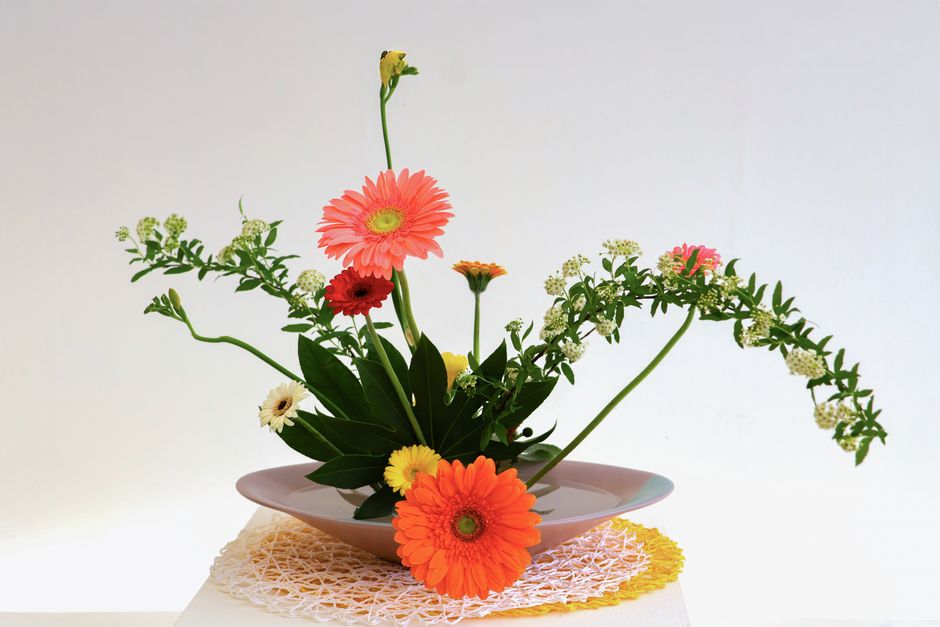
Ikebana is the Japanese art of arranging living plant materials. The term is often associated with the idea of “making flowers live”, while kadō means “the way of flowers”. The arrangement is not simply about bringing beautiful flowers together: it connects lines, volumes, directions and the spaces left empty.
This approach distinguishes ikebana from a very full Western bouquet. A branch, stem or piece of foliage can become the main element of the arrangement. The result depends on the season, the natural shape of the plants and the intention behind the arrangement. The exercise therefore requires you to observe, cut precisely and accept a less symmetrical aesthetic.
Ikebana developed in Japan over the centuries and is now an artistic and cultural practice. Classes for visitors allow you to discover its principles without undertaking a lengthy course of study. They are particularly suitable if you are looking for a calm, hands-on activity connected with Japanese traditions.
Choosing a school and style
The schools do not all offer the same experience. Your choice may depend on your interest in tradition, your desire to experiment or the city included in your itinerary.
| School | Focus | Choose it if you are looking for |
|---|
| Ikenobo | Traditional | The origins of ikebana and a highly codified framework |
| Ohara | Nature and landscapes | The moribana style or an arrangement in a bowl |
| Sogetsu | Modern and abstract | A freer approach that can incorporate non-plant materials |
Ikenobo: the traditional reference
Ikenobo is the oldest school among the three major schools featured in visitor offers. Its headquarters are in Kyoto, and its teaching focuses on classical forms. An Ikenobo class may suit people who want to connect the practice with the history of ikebana and discover a more formal framework.
Ohara: a more visible connection with the landscape
Ohara is particularly known for moribana, a form created in a bowl, as well as heika. This focus may appeal to you if you enjoy arrangements that evoke a landscape or the natural growth of plants. Ask the provider which form will actually be taught on the day of your visit.
Sogetsu: a gateway to contemporary ikebana
Sogetsu offers a more modern and abstract vision of ikebana. The school also accepts non-plant materials, which may appeal to visitors who want to create something less traditional. It is a practical option in Tokyo, particularly if you prefer a contemporary artistic activity.
Tokyo or Kyoto: which city should you choose?
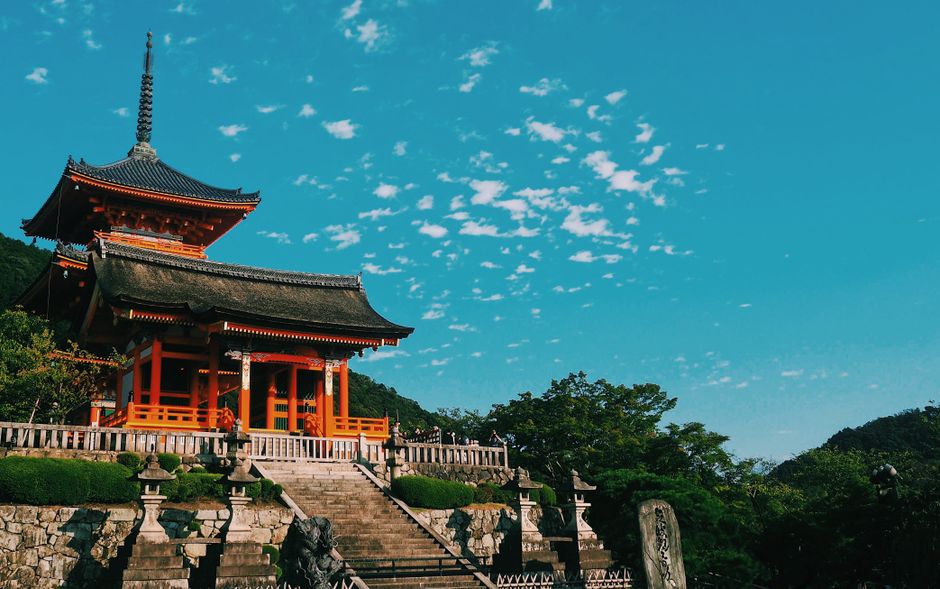
Kyoto is suited to travellers who want to combine a workshop with discovering historic districts and traditional arts. The opportunities connected with Ikenobo are particularly well suited to this search for authenticity. Tokyo offers more choice for comparing a modern school, a private lesson or a workshop that can easily fit into an urban itinerary.
The city should not be your only criterion, however. Consider the neighbourhood, travel time, language offered and course format. A small-group session can make it easier to receive corrections, while a private lesson generally allows you to ask more questions. Times shown online may vary: confirm them directly with the school or organiser.
What to check before booking
- The teaching language: English is common, but French remains limited depending on the venue.
- The level required: look for a beginner option if you have never used a kenzan.
- What is included: check in particular that flowers, the vase, the flower frog and tools are provided.
- The actual duration: distinguish between the workshop alone and a package combined with a tea ceremony or a visit.
- The group size and cancellation conditions.
- Whether you can take your arrangement away and what type of packaging is provided.
Availability may be limited, especially for French-language classes or small groups. Booking in advance is therefore preferable. Before paying, check the exact address, meeting point and any instructions sent by the organiser. Information from a third-party provider should be compared with the school’s information whenever available.
Preparing for your first session
Comfortable clothing is all you need. Plain clothes may be more suitable for an activity where attention is focused on the plants, and long hair can be tied back to make working easier. There is no need to buy equipment before the workshop: first ask what is provided and what you will be able to find locally.
A few Japanese words may help you follow the explanations:
- Sensei: teacher or instructor.
- Kenzan: metal support that holds the stems in place.
- Hasami: scissors used to cut plant material.
- Shushi: main branches that structure the arrangement.
- Kadō: “way of flowers”, another name associated with ikebana.
Do not try to reproduce the demonstration exactly on your first attempt. Observe the angle of the branches, how deeply they are inserted into the kenzan and the balance between solid areas and empty spaces. The teacher’s corrections are part of learning, not an exam.
Combining ikebana with another activity
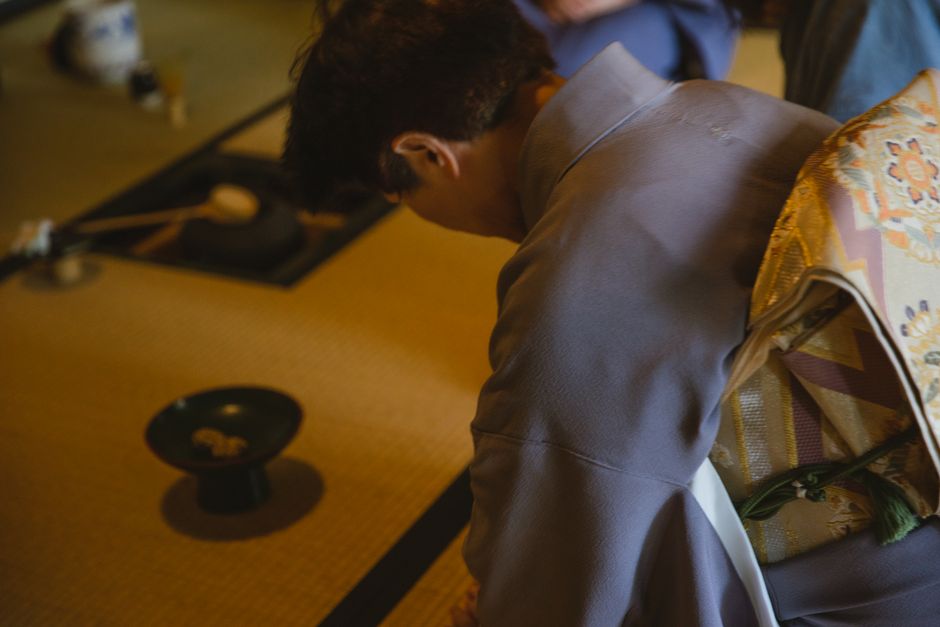
A flower-arranging workshop fits easily into a day devoted to Japanese arts. In Tokyo, you can combine it with a sushi-making class in Tokyo if you would like to alternate a hands-on activity with a culinary experience. In Kyoto, a session can be followed by a neighbourhood visit or a tea ceremony, depending on the school’s location.
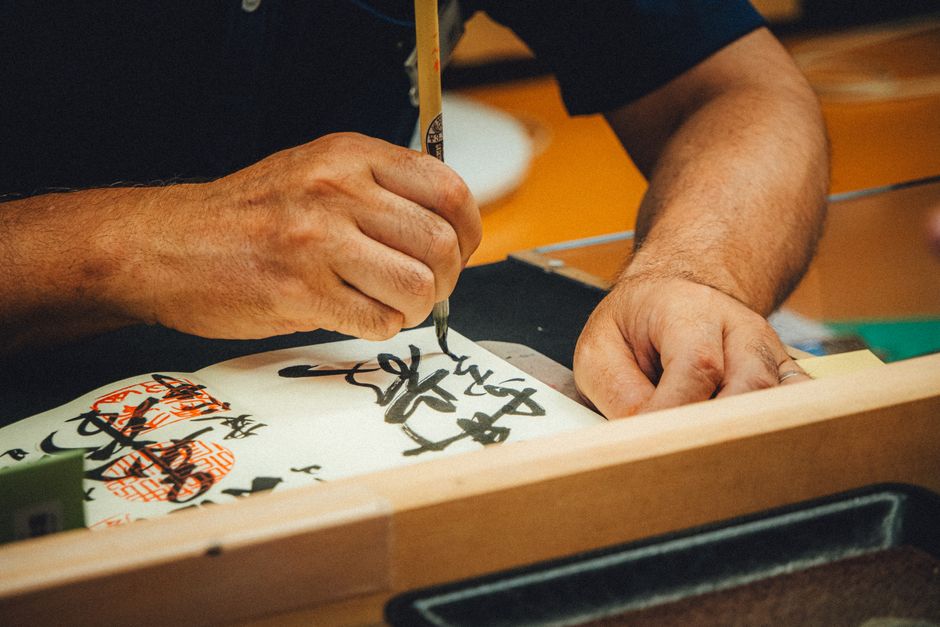
Travellers who enjoy hands-on activities can also compare ikebana with a ramen-making class in Tokyo. These experiences have different rhythms: ikebana emphasises observation and precision, while a culinary workshop is generally more focused on techniques and tasting. For a complementary artistic activity, the Japanese calligraphy class offers an approach centred on brushstrokes and concentration.
Frequently asked questions
What exactly is ikebana?
Ikebana is the Japanese art of arranging branches, flowers and foliage, with particular emphasis on lines, asymmetry and empty spaces. It is not simply a matter of filling a vase: the arrangement expresses a relationship between the plant materials, their natural form and the season.
Which ikebana class should beginners choose?
Choose a workshop that clearly states that it is suitable for beginners, provides the necessary materials and is taught in a language you understand. Ikenobo is suitable for a traditional introduction, Ohara for an approach connected with landscapes, and Sogetsu for a more contemporary practice. Ask for the exact content of the session before booking.
Can you take an ikebana class in French in Japan?
Some venues in Kyoto offer a session in French, but this depends on the schedule and the instructor. English is advertised more frequently. Check the language at the time of booking and ask whether the explanations, written instructions and exchanges with the teacher are genuinely available in French.
Do you need to bring your own equipment to an ikebana workshop?
No, tourist workshops generally include the necessary equipment, but the services differ. Check that the kenzan, tools, container and plant materials are provided. If you would like to continue practising after the class, ask the teacher which items to buy and where to find them, rather than equipping yourself at random.
Can you take your ikebana arrangement home?
This depends on the workshop and the type of plant materials used. Ask whether the arrangement can be transported, whether packaging is provided and how long it can remain in good condition. If you are continuing your journey, arrange careful transport and find out about any restrictions applicable to plant materials.