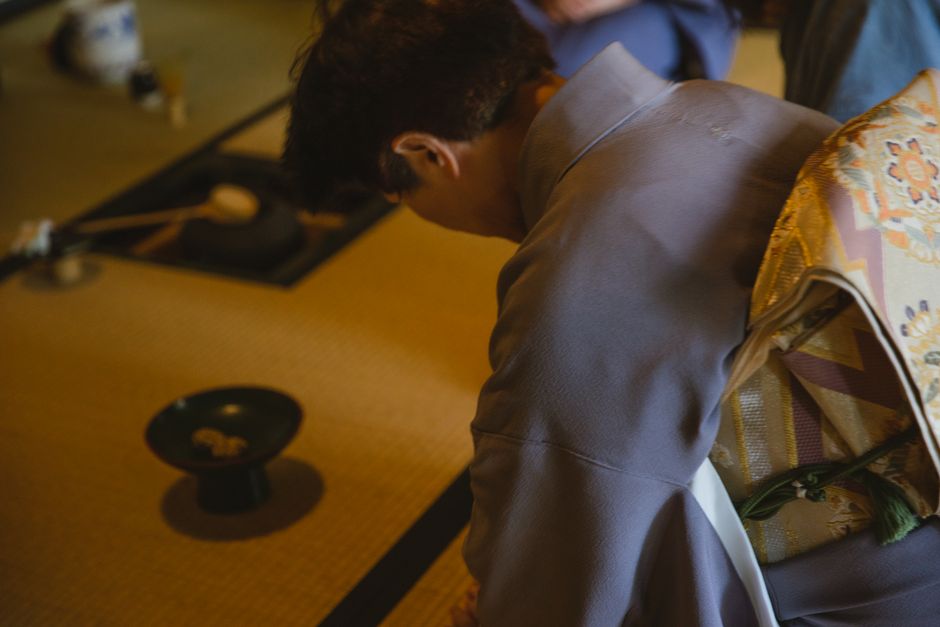

What is chanoyu?
Chanoyu (literally “hot water for tea”) was codified in the 16th century by Sen no Rikyu, tea master to three shoguns. Three main schools exist today: Urasenke (the most accessible, accounting for 70% of schools in Kyoto), Omotesenke and Mushakōjisenke.
The principle: preparing and serving matcha (powdered green tea) according to a precise ritual — purifying the utensils, rotating the bowl and performing codified movements. The philosophy is based on wabi-sabi (the beauty of imperfection) and hospitality (omotenashi).
The best addresses in Kyoto
Camellia Tea Ceremony (Gion): 2,500 yen, 45-minute introduction in French, small group (maximum 8). En (near Nanzen-ji): 3,500 yen, Urasenke school, zen garden. Chashitsu Koto: 4,500 yen, private lesson, kimono included.
For a high-end experience: Camellia Flower (a century-old chashitsu at 5,000 yen) or a private lesson at Honn-in (Buddhist temple, 6,000 yen).
How a ceremony works
Welcome by the tea master (teishu) and the assistant. Shoes are removed. Guests bow at the entrance to the chashitsu (tea pavilion). They kneel in seiza (or sit on a cushion if they are not accustomed to it).
Ritual purification of the hands, rotation of the bowl (three and a half times), drinking the matcha (which is bitter), and visible cleaning of the bowl. Conversation about the calligraphy or flowers of the season. Total duration: 45 to 90 minutes.
Practical tips
Booking: 1 to 2 weeks in advance, 1 month in April (sakura) and November (koyo). Clothing: garments covering the shoulders and knees; a kimono is not compulsory. Avoid heels and strong perfume. Tipping is prohibited — offer a word of thanks instead.
Languages: English is almost always available; French is available at Camellia and Chashitsu Koto. Group classes: 1,500 to 2,500 yen. Private lesson: 4,000 to 8,000 yen.
Combinations and themes
Seasonal themes: cha-no-yu beneath the cherry blossoms (April), an evening lantern ceremony (July–August), and a momiji maple theme (November). Addresses tested: Kyoto, Gion district, a 5-minute walk away.
For a guided introduction: Viator Kyoto offers 1- to 3-hour workshops with a French-speaking guide.
Accommodation and transport
Most chashitsu are in Higashiyama (Gion, Nanzen-ji) or Arashiyama. Hotel in Gion is ideal for evening ceremonies. Buses 100 and 206 from Kyoto Station connect the main neighbourhoods (230 yen, IC card).
To compare guided experiences: GetYourGuide Japan.
To book a guided tour: Viator Japan.
More to discover
Continue exploring Japan with our related guides.
What happens during a tea ceremony in Kyoto?
A tea ceremony in Kyoto generally combines a demonstration of matcha preparation, a tasting accompanied by a sweet, and explanations of the host’s movements. Some experiences also allow you to whisk your own bowl: this participation should be stated in the description before booking.
Chanoyu, literally “hot water for tea”, refers to a codified practice of preparation and service. Chado, or the “way of tea”, emphasises its learning dimension: welcoming others attentively, respecting the objects and giving importance to the details that shape the encounter.
Matcha and wagashi: the stages of a tea ceremony in Kyoto
The welcome usually includes an introduction to the venue, utensils and a few historical points. In a room covered with tatami mats, shoes are left at the entrance; seating then depends on the layout, either on the floor or on suitable chairs.
A Japanese sweet, called wagashi, often accompanies the tasting. It is generally eaten before the drink, following the instructions given: its sweetness prepares the palate for the bitterness and vegetal notes of the matcha.
The host then performs purification and preparation movements with the necessary accessories. The chawan is the bowl, the chasen the bamboo whisk and the chashaku the spoon used to scoop up the powder; handling them is part of the practice, not merely a visual presentation.
Matcha is mixed directly with hot water: unlike loose-leaf tea, it is not infused and then filtered. Whisking disperses the powder and, depending on the tradition followed, creates more or less foam on the surface.
When it is time to drink, the instructor shows how to receive the bowl and avoid placing your lips on its front. It is preferable to follow their instructions rather than memorise a universal number of rotations, as practices vary between schools and circumstances.
An introduction to chanoyu is not a complete tea gathering
Experiences aimed at travellers condense a much broader practice. A formal gathering, called chaji, may include a meal, several stages and different servings; it is not the same as the short format usually offered in booking listings.
By contrast, a hands-on workshop often focuses on explanations and learning how to whisk the tea. This does not diminish the activity’s cultural value: you simply need to know whether you are booking an explained demonstration, a tasting or a practical session.
History provides useful insight into this difference. In the 16th century, Sen no Rikyu profoundly influenced the aesthetics of tea, particularly through the simplicity of spaces and objects; Kyoto remains associated with the major Urasenke, Omotesenke and Mushanokojisenke schools.
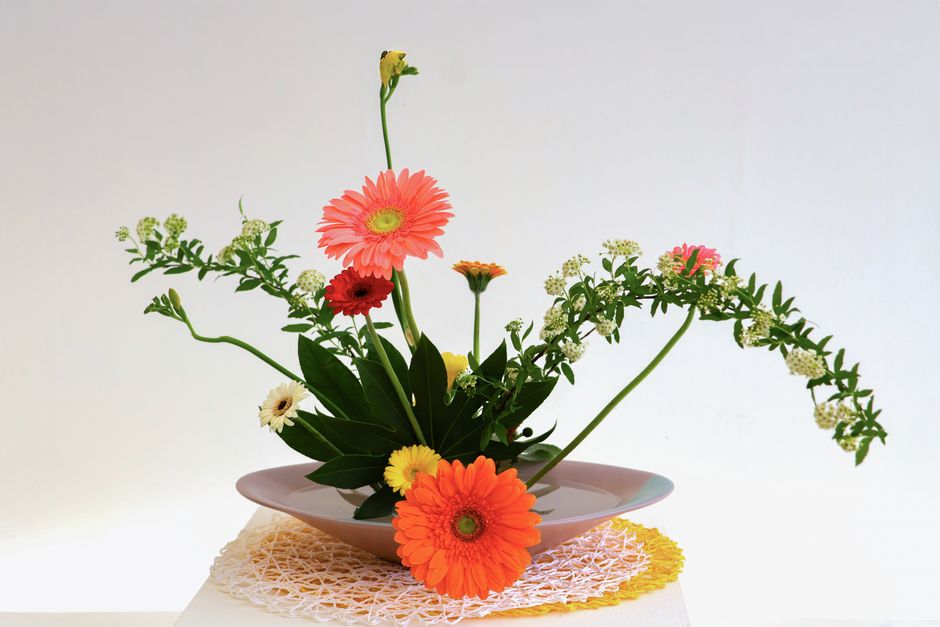
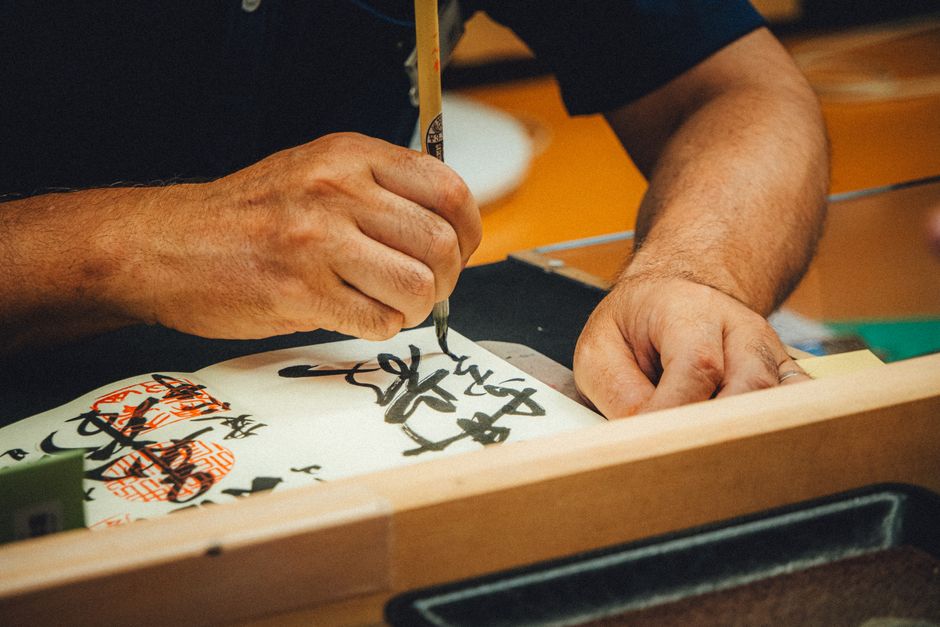
A calligraphy scroll, a floral arrangement or the shape of a confectionery item may evoke the season. These elements give meaning to the expression ichigo ichie, often understood as paying attention to a meeting that will never happen in exactly the same way again.
To explore these points before your session, the guide to the Japanese tea ceremony helps distinguish tasting from studying a traditional art. Once there, observing the choice of bowl and listening to the explanation of its use offers more than trying to reproduce every movement perfectly.
Where to book a tea ceremony in Kyoto: Gion, Higashiyama or Uji?
Gion and Higashiyama are suitable for fitting a session into a day of sightseeing, while Uji allows you to devote a longer excursion to tea culture. The neighbourhood makes planning easier, but the advertised content remains the best criterion when choosing between several establishments.
Gion and Higashiyama: a tea ceremony near Kyoto’s sights
Gion lies in the eastern part of the city, within a group of neighbourhoods often collectively known as Higashiyama. The options here are convenient for combining a tour of the old streets, shrines and a cultural activity without making numerous journeys.
A machiya, a traditional urban house, can provide an intimate and architecturally interesting setting. However, the building alone does not define the experience: check the group size, the language of the explanations and whether you can ask questions.
Camellia and Tea Ceremony Koto are among the names to consider during your search. Check their official website to identify the exact address of the option you have chosen, its current content and its conditions: the same brand may distinguish between several locations or levels of service.
Do not assume that an activity includes the presence of a maiko or geiko simply because it takes place in Gion. These encounters are separate services, and the ochaya associated with traditional entertainment are not simply salons open to anyone wanting an introduction to matcha.
If you are staying in this area, choosing accommodation in Gion can simplify journeys before or after the session. It is still best to check the actual walking route, as an address advertised as “near Gion” may be a long way from where you finish your sightseeing.
Temples and gardens: distinguishing tasting from a tea ceremony
In some temples or gardens, a bowl accompanied by a sweet is served in a rest area. This break may be remarkable for its setting, but serving matcha does not imply an explained ritual demonstration.
The description should specify whether you will observe the preparation, whether someone explains the movements and whether a separate booking is required. Also check whether admission to the site is included or whether you need to buy an entrance ticket separately.
Arashiyama can be suitable when your day is already taking place in western Kyoto. Choosing this area solely for the scenery and then travelling across the whole city between two appointments leaves less time to enjoy the activity at a relaxed pace.
Uji: extend your tea ceremony experience with a discovery of matcha
Uji is a separate city south of Kyoto, historically associated with tea production and trade. It is particularly suitable for travellers who want to connect the hands-on experience with discovering local products, specialist shops and heritage.
Nevertheless, preparation workshops, comparative tastings and genuine chanoyu sessions should be distinguished. An activity focused on grinding or aromas meets different expectations from a session devoted to protocol and hospitality.
Specialist houses, cultural centres and hotels are also relevant options, particularly when accessibility or a specific language matters more than the neighbourhood. To decide, look for a clear description of what you will observe and practise, rather than a simple promise of “authenticity”.
Price and duration of a tea ceremony in Kyoto: what budget should you allow?
As a general guide, allow a few thousand yen per person for a group introduction, and a higher budget for a private booking or an option with kimono. As for duration, many options aimed at visitors last around 45 minutes to one hour; enhanced programmes may take longer.
These guidelines are not a pricing structure that applies to every establishment. For a trip in 2026, the price displayed on the official website for your date and number of participants is the one to rely on, particularly when several options have similar names.
Comparing the prices of tea ceremonies in Kyoto on a like-for-like basis
The cost depends as much on the guidance provided as on the setting. A place in a group, an exclusively reserved room and assistance with interpretation require different resources; comparing only the final amount hides these differences.
| Format | What you are booking | Budget guide | What to check |
|---|---|---|---|
| Matcha in a temple or garden | A tasting, sometimes with a sweet | Price to be checked with the venue | Whether the demonstration and admission to the site are included |
| Group introduction | A guided presentation with other visitors | Generally a few thousand yen per person | Group size and whether you prepare your own bowl |
| Private session | A time slot reserved for your group | Generally a higher budget than a place in a group | Price per person or package price for the group |
| Option with kimono | An activity combined with dressing and rental | Package price or supplement depending on the option | Whether accessories, hairstyling and return of the items are included |
The sweet and bowl are often included, but this must be stated in the description. Some experiences are limited to watching and then tasting, while others add a second hands-on stage: this detail affects the actual level of participation, even if the advertised duration is similar.
A private experience may be charged for all participants, with a minimum booking requirement. Before comparing two prices, check the unit used and the total payable, without assuming that a highlighted rate automatically applies to each adult.
Allow for the activity’s actual duration in your day in Kyoto
The stated duration may refer only to the session, or include the welcome and preliminary explanations. Getting dressed, travelling from a rental shop and any photographs may take place outside this time slot.
A short introduction is suitable for an already busy day when the venue is along your route. A longer option generally leaves more time for questions, but does not in itself guarantee more in-depth practice: the group size and programme are equally important.
Avoid scheduling a booked train or timed visit immediately afterwards. Getting through tourist streets, removing your shoes and settling in require some leeway, particularly with children or someone who walks slowly.
Extras to check before paying
Clothing rental may include options for hairstyling, certain accessories or a particular range of garments. French-language interpretation, professional photographs or a private service may also require a separate booking.
Finally, check the cancellation conditions and any fees associated with changes. The useful budget is that of the complete experience: the activity, selected options and necessary travel, rather than just the introductory price shown in a box.
Tip: set up a Japan eSIM before departure so your data works on arrival.
When to book your tea ceremony in Kyoto and in which language?
Book as soon as your sightseeing day is set if you want a specific time slot, a private session or assistance in French. English is common in offers aimed at international travellers, but you should check the language of the selected option, not just that of the booking website.
There is no universal lead time that applies to every venue. Availability depends on the number of places, the staff on hand and the season; stays during the spring blossoms, autumn colours or major Japanese holidays require more advance planning.
Booking a tea ceremony in Kyoto in French or English
A page translated into French does not guarantee a French-speaking host. The description should explicitly state the language spoken during the activity and, where necessary, clarify whether an interpreter is present rather than a practitioner who speaks French directly.
Translated written material can make things easier to understand, but it does not replace an oral exchange. If your aim is to ask questions about schools, utensils or history, choose an option whose language of assistance is confirmed before payment.
For an experience in English, check whether the explanations are accessible to beginners. The movements can still be observed without specialised vocabulary, but understanding the instructions improves participation and helps you avoid missing the meaning of the objects being presented.
A private booking does not automatically mean that all languages are available. It may simply reserve the space and time slot for your group; any request for interpretation must be confirmed separately, along with its possible cost.
Information to check in the booking box
Before selecting a date, compare the specific details of the offer. An appealing label such as “traditional” or “premium” is less informative than a programme that clearly describes the welcome, demonstration and participation.
- Exact address: check the meeting point and whether there are several venues.
- Format: distinguish between a group session, a small group and a fully private booking.
- Language: identify the language of the spoken explanations and the type of materials provided.
- Content: confirm that wagashi is included and that you can prepare your own bowl.
- Specific requirements: mention children, allergies and any seating or accessibility needs.
- Conditions: check the rules regarding lateness, cancellations and changes to the participants.
The official website allows you to check the features stated in the boxes on this page. If you book through an intermediary, also compare the exact name of the option and its conditions: two offers at the same venue may include different services.
Arrange your appointment without rushing your Kyoto sightseeing
Preferably choose a time that fits in with the places you plan to visit nearby. A session in Higashiyama after exploring the neighbourhood avoids an unnecessary cross-city journey and reduces the risk of transport-related delays.
Keep the confirmation with the address, directions and the provider’s contact details. In a narrow lane or traditional building, the entrance may not be identifiable like that of a conventional shop; checking the instructions before setting off makes arrival easier.
Arrive at the requested time, allowing a little time to settle in, without arriving excessively early at a venue that may already be hosting a group. If your programme includes kimono rental, confirm the order of the appointments so that getting dressed does not reduce the time devoted to the activity.
Tea ceremony in Kyoto in a kimono or with children: clothing and etiquette
A kimono is not compulsory, beginners do not need to know the etiquette, and children’s participation depends on each venue’s rules. Comfortable clothing, an attentive attitude and any requirements mentioned in advance are generally enough to ensure a positive experience.
What should you wear for a tea ceremony in Kyoto?
Choose clean clothing that allows you to sit and change position easily. Flexible trousers or a sufficiently loose outfit are more suitable than tight clothing when the experience takes place on the floor.
Clean socks are recommended, as shoes are removed before entering the tatami-mat area. Avoid strong perfume, which can interfere with the perception of aromas, as well as jewellery that could touch or scratch a ceramic piece.
The kneeling position, called seiza, is not something you should endure despite being in pain. Ask about a chair or suitable seating before booking if you have difficulties with your knees or back, or with standing up; not all traditional venues offer the same facilities.
Access arrangements deserve separate consideration for people with reduced mobility. The presence of a seat does not guarantee step-free access, sufficiently wide passageways or accessible toilets.
Choosing a tea ceremony in a kimono in Kyoto
Wearing traditional clothing adds an aesthetic dimension, but does not automatically make the learning experience more in-depth. The choice mainly depends on your preference and the time available for dressing, travelling and returning the outfit.
Check whether the rental takes place in the same building and whether help with dressing is included. Also ask whether you can keep the outfit after the session: some packages cover the activity only, while others allow you to go for a walk for a set period.
Your posture and movements may feel less familiar once dressed. Allow plenty of time and mention any discomfort; paying attention to the experience matters more than creating a perfectly composed photograph.
Taking part in a tea ceremony in Kyoto with children
A short, interactive session may suit a family, provided that the provider accepts the participants’ ages. Restrictions may concern safety around hot water, handling fragile objects or the quiet needed in a shared group.
Matcha contains caffeine and its flavour may be surprising. Ask whether the child can watch, take part partially or have a different drink; none of these adaptations should be assumed to be included.
Mention food allergies before your visit, even for a small pastry. Wagashi recipes vary and may contain different ingredients: the composition and replacement options must be confirmed with the venue.
Polite gestures during the tea ceremony
Wait for instructions before eating, picking up a utensil or taking photographs. Permissions may differ for objects, the preparation and other participants; a private session does not automatically give you the right to film everything.
Receive the bowl carefully and examine it while holding it low, rather than lifting it high above the floor. There is no need to imitate a tasting sound or a movement learned elsewhere: the host will show you the customs relevant to their tradition.
The main Japanese customs provide a few additional guidelines, but sincere thanks and respect for the instructions remain essential. Tipping is not generally expected; if you would like to show your interest, ask a question about an object or the seasonal choice on display.
Frequently asked questions about tea ceremonies in Kyoto
How much should you budget for a tea ceremony in Kyoto?
A group introductory session generally costs a few thousand yen per person. A private session, interpretation or kimono rental will increase the budget: check the total price and inclusions on the official website for your date.
How long does a tea ceremony in Kyoto last?
Many sessions for visitors last around 45 minutes to an hour. More extensive programmes take longer, and dressing in a kimono may require a separate appointment.
Can you book a tea ceremony in Kyoto in French?
Yes, some experiences offer French-speaking assistance, but this must be explicitly confirmed. A booking page in French or a translated document does not guarantee that the spoken explanations will be given in that language.
Do you need to wear a kimono or remain kneeling throughout the session?
A kimono is optional. If kneeling is difficult, ask before booking whether a chair or other seating is available, as the options depend on the venue’s layout.
Is a bowl of matcha served at a temple a tea ceremony?
Not necessarily. It may simply be a tasting with a sweet, without a demonstration or explanations. To discover chanoyu, choose an experience that clearly describes the ritual preparation and guidance.