To get online as soon as you land, a Japan eSIM can be installed before you leave, with no need to look for a local SIM card.
How to choose your sumo day in Tokyo
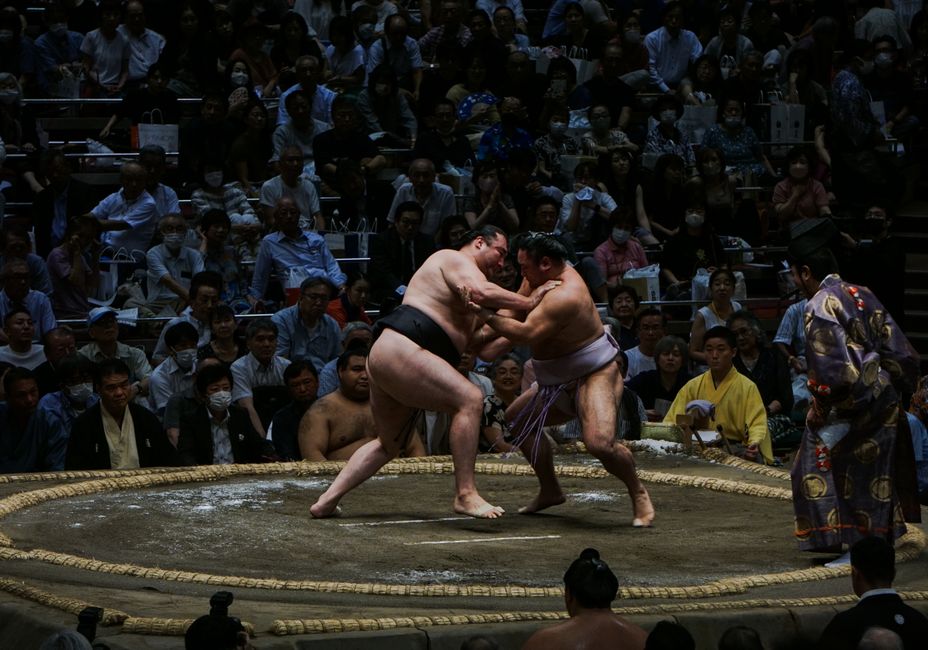
An official tournament, called honbasho, takes place over several consecutive days. You do not need to attend the entire tournament to understand the spectacle: a single day is enough to discover the rituals, the different categories of wrestlers and the atmosphere of the Kokugikan.
Your choice of date mainly depends on your schedule. The first days allow you to see the tournament get under way, while the final days may have more at stake competitively. Weekends and very popular periods can be harder to book. For the Aki Basho, the autumn tournament in Tokyo, always check the official calendar for the relevant year before planning your itinerary.
Morning, afternoon or full day
- Morning: a suitable option if you want to watch the lower divisions and then have time to visit Ryōgoku or another district.
- Afternoon: the simplest format for a first experience, with the most eagerly awaited bouts and iconic ceremonies.
- Full day: a good choice if you enjoy following the tournament’s progress and comparing the wrestlers’ styles.
The advertised times may change depending on how the day is organised. Check the information provided with your ticket and arrive early to locate your entrance, section and the services available.
Booking tickets for a sumo bout in Tokyo
Start by consulting the official website of the Japan Sumo Association, particularly the Ticket Oosumo ticket office, which visitors search for at ticket.sumo.or.jp. Registration procedures, available languages, payment methods and ticket-sale dates may change. Use the information displayed when you book rather than an old screenshot or a calendar found elsewhere.
Things to check before buying
- Identify the tournament and date that match your stay.
- Compare the seat categories that are still available.
- Read the conditions relating to collection, entry and resale.
- Carefully check the ticket holder’s name, date and number of tickets.
- Keep the confirmation in a format that can be viewed offline.
Tickets can sell out quickly for certain dates. If the official channel no longer offers the place you are looking for, consider only a clearly identified partner option and check its conditions before paying. Beware of unverifiable listings, fees added at a late stage and promises of a guaranteed ticket without details about collection.
Understanding the seats at Ryōgoku Kokugikan
The type of seat can greatly affect the experience. Traditional box seats are generally shared spaces, while individual seats offer a simpler setting for a solo traveller or a couple. Seats further away provide an overall view of the arena; positions closer to the action offer a better sense of the wrestlers’ presence, but may require greater attention to the venue’s rules.
| Type of experience | Best if you are looking for | Things to anticipate |
|---|
| Traditional box seat | A shared experience and a distinctive Japanese atmosphere | A shared space and specific occupancy rules |
| Individual seat | Simple organisation and plenty of independence | Visibility that depends on the section you choose |
| Elevated view | An overall view of the movements and ritual | Greater distance from the dohyō |
| Same-day entry | A visit decided at the last minute | Availability that varies and possible queuing |
Before selecting a category, check the venue’s official seating plan, access conditions and any restrictions. Information presented by an agency may summarise the seat without showing its exact location: ask what is included when the description is unclear.
Preparing for your visit to Ryōgoku
Ryōgoku Kokugikan is near Ryōgoku Station. Allow extra time for the journey, ticket checks and finding your way around the building. Arriving too late may mean missing part of the atmosphere or make it harder to find your seat, especially when the entrance is busy.
Ryōgoku is well suited to a cultural half-day. You can combine the tournament with a walk around the neighbourhood, a look at local history or another activity in Tokyo. To vary your experiences, also see our guide to a samurai workshop in Tokyo or our guide to the Akihabara neighbourhood, taking travel times and your departure time into account.
What you can bring
- Your ticket and identification if required under the collection conditions.
- A charged phone and an accessible copy of your confirmation.
- Comfortable clothing for several hours at the venue.
- A means of payment accepted by the services available inside the venue.
- A return route, especially if you are combining the tournament with another visit.
Rules of behaviour during the bouts
Sumo is watched in an attentive atmosphere. Follow the posted instructions and staff announcements. Avoid moving around during a bout, obstructing other spectators’ view or using a flash. Photos and videos must comply with the rules announced on site, which may differ depending on the area and the time.
Audience reactions are part of the spectacle, but shouting should remain appropriate to the situation. Do not touch the wrestlers, their belongings or any part of the arena. For food and drinks, use the designated areas and leave your seat clean. If in doubt, observe the Japanese spectators and ask a member of staff for advice.
Extend your discovery of Tokyo
A sumo tournament is a central activity, but Tokyo offers many ways to round off your stay. After Ryōgoku, you can choose a culinary experience with our guide to a ramen-making class in Tokyo or plan a panoramic visit with our comparative guide to Tokyo’s observatories. Book each activity while taking the Kokugikan’s finishing times and your tiredness into account.
For availability, the updated calendar, open categories and sales conditions, the tournament’s official source remains the reference. Partner agencies and platforms may offer practical assistance, but their services, fees and conditions should be read separately before confirmation.
Frequently asked questions
Where can you watch a sumo bout in Tokyo?
Tokyo’s official tournaments are held at Ryōgoku Kokugikan, in the Ryōgoku neighbourhood. This is the venue to look for when you want to attend a honbasho rather than a demonstration or tourist activity. Check the official calendar to find out which tournament is taking place during your stay.
When should you book tickets for sumo in Tokyo?
Book as soon as ticket sales open for the tournament you are interested in, especially if you want a specific date or seat category. Sale dates and procedures may vary. Consult Ticket Oosumo or the Japan Sumo Association for up-to-date information.
Does the Aki Basho take place in Tokyo?
Yes, Aki Basho refers to the autumn tournament held in Tokyo at Ryōgoku Kokugikan. However, the calendar and exact dates must be checked for the year of your trip. Consult the official schedule before booking your transport, accommodation or an activity on the same day.
Which seat should you choose for your first sumo visit?
For your first visit, choose a seat that matches your budget and comfort preferences. An elevated view makes it easier to understand the movements, while a seat closer to the action gives a stronger feeling of being at the heart of it. Check the seating plan and the conditions for each category before confirming.
Can you eat at Ryōgoku Kokugikan during a tournament?
Catering services are available inside the Kokugikan, but their availability and arrangements may depend on how the tournament is organised. You can also eat in the neighbourhood before or after the session. Follow the instructions concerning drinks, waste and eating at your seat.