
Akihabara at a glance
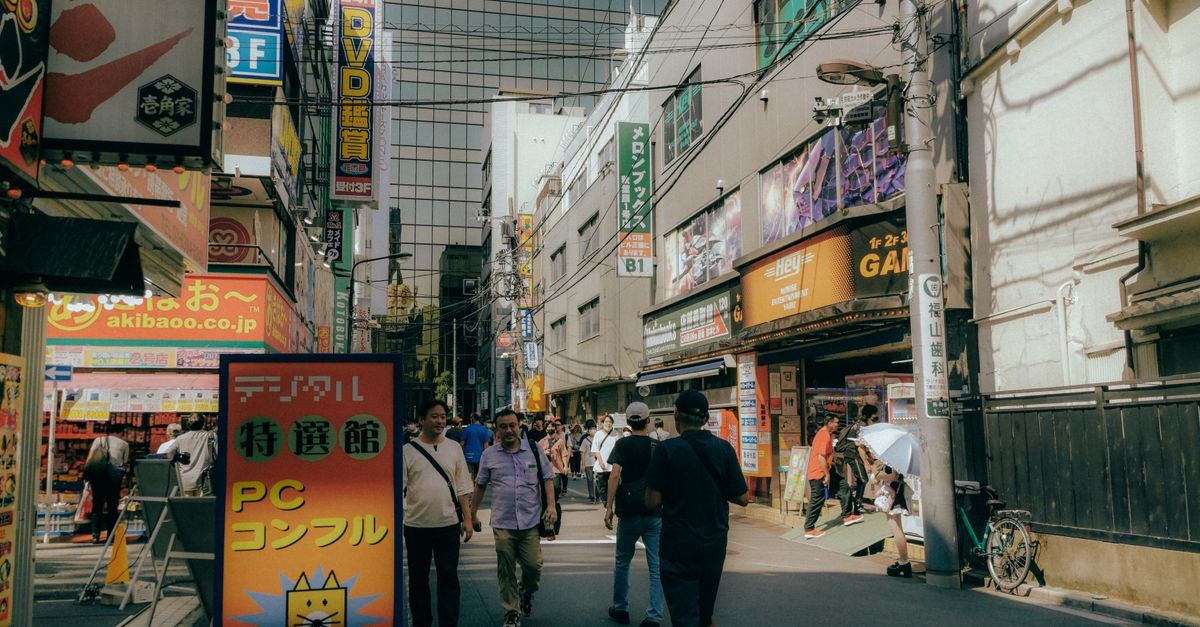
Akihabara, in Tokyo, remains one of the few districts able to condense an entire aspect of Japanese modernity into just a few streets. Facades covered in screens, floors dedicated to retro consoles, shelves of electronic components, display cases filled with figures and arcades create a very distinctive landscape, both highly local and immediately recognisable to a French-speaking visitor. Here, the district is not merely a postcard image for anime fans: it still functions as a genuine specialist shopping centre, useful for buying a charger, comparing laptops, finding a memory card or simply understanding how otaku culture has become rooted in everyday life in Tokyo.
For travellers and expats alike, organisation is key. Akihabara is easy to reach, but you need to know which exits to use, which shops to prioritise depending on your aim and when to visit to avoid the crowds. A poorly planned visit can turn a smooth outing into an exhausting wander among groups of tourists, queues for gachapon machines and queues at themed cafés. Conversely, visiting on a weekday at the right time lets you enjoy the major shops, browse Mandarake, try an arcade without the stress and leave with well-chosen purchases, sometimes tax-free, often useful and rarely forgettable.
Akihabara Tokyo: understanding the Electric Town district and otaku culture
Akihabara grew out of a very practical commercial history. After the Second World War, the district first attracted sellers of salvaged equipment, then electronics shops, before becoming Tokyo’s famous “Electric Town”. This development is no mere marketing backdrop: it explains why, even today, you can buy everything from specialised components to collectibles there, in an environment where engineering, digital entertainment and pop culture coexist. The district therefore remains as useful to tech enthusiasts as it is to anime enthusiasts. It is precisely this blend that sets it apart from other, more uniform shopping areas.
In 2026, Akihabara retains a genuine role as a specialist destination. Major retailers attract high-volume shoppers, small shops cater to DIY enthusiasts, and retro stores draw collectors. Visitors come looking for very different products: an adaptor, a camera, a Raspberry Pi board, an old Famicom cartridge, a figure in its original packaging or simply the atmosphere of a district where otaku imagery is part of the landscape. This is not a frozen museum, but a commercial space that continues to adapt. That is why a successful visit depends less on luck than on preparation.
The most useful way to understand Akihabara is to imagine it as a district operating at three speeds. The first is efficient shopping, with megastores and well-known retailers. The second, slower, is the treasure hunt through specialist shelves. The third, finally, is the cultural experience: arcades, gachapon machines, themed cafés and the pedestrianised streets on Sundays. Every visitor can find what they are looking for, provided they know where to go in and when. This approach helps both the time-pressed traveller and the expat looking for a good technical deal.
Practical guide to visiting Akihabara
Explore a typical day in the Electric Town district, with a half-day version, a full-day version and useful tips for optimising your route.
A full day in Akihabara
A balanced pace for seeing the highlights without rushing.
Practical tips
Quick search
Filter the stops on the timeline.
Quick pointers
How to get to Akihabara from Tokyo, Narita or Haneda
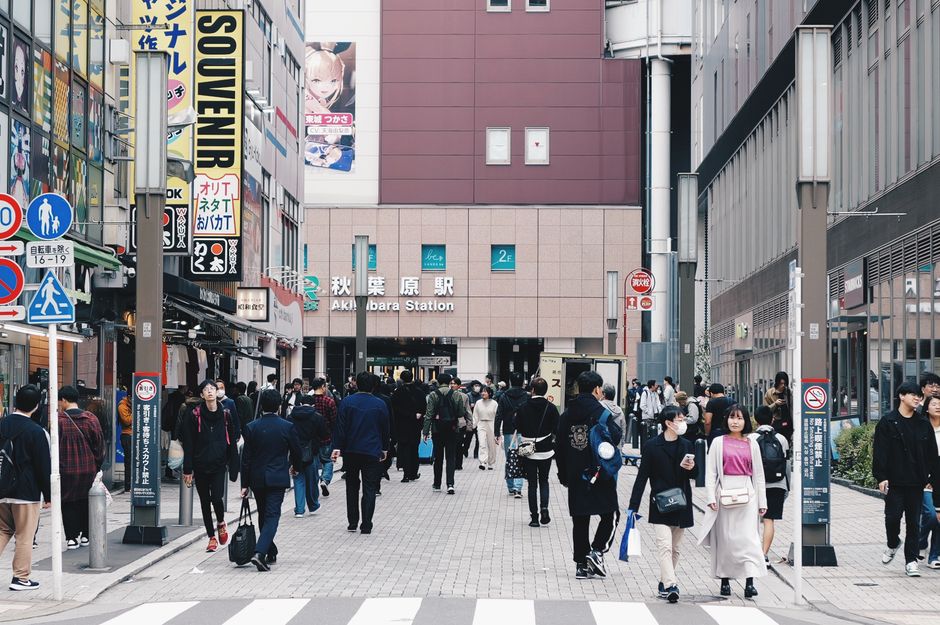
Akihabara Station is one of Tokyo’s major railway hubs, making access to the district much easier. It is served by the JR Yamanote, Sobu and Keihin-Tohoku lines, as well as the Hibiya metro line and the Tsukuba Express. For a first visit, the most convenient exit is still “Electric Town”, which puts you straight in the heart of the shopping area. From Tokyo Station, the journey takes just a few minutes on the Yamanote Line, making Akihabara an easy excursion to combine with another central district.
From Narita, the most efficient option is to take the Keisei Skyliner to Nippori or Ueno, then change to the Yamanote or Sobu Line. From Haneda, taking the monorail to Hamamatsuchō and then changing to the Yamanote is the clearest option. For a longer stay, a Suica or Pasmo card avoids buying a ticket for every journey and makes connections easier. The area is therefore very accessible, but the exit you choose and the direction of travel matter: arriving in Akihabara “by chance” works, but arriving “with a plan” works better.
One practical detail makes all the difference: on arrival, luggage lockers are available in and around the station. They are useful if you arrive with a suitcase before continuing your day elsewhere. The larger lockers are suitable for small bags, and payment with a Suica/Pasmo card is often accepted. When the lockers are full, department stores or station ticket offices may offer alternatives. Managing your bags is often what makes the difference between a comfortable visit and a cumbersome outing. Once you have lightened your load, the area is much easier to explore on foot.
The best times to visit Akihabara and avoid the crowds
The best time to visit Akihabara is still the morning on a weekday, ideally between the shops opening and the start of the afternoon. Shops often open around 10am or 11am, when the atmosphere is more relaxed. This makes it easier to compare prices, talk to staff and take your time browsing the shelves without feeling pushed along by the flow of people. If you really want to look around the floors, check product references or explore specialist shops, this is the most rewarding time of day.
Sunday has a different character. The main street, Chūō-dōri, becomes pedestrianised, making it pleasant to stroll around, but visitor numbers rise sharply. Weekend evenings are also very busy, especially around the arcades and themed cafés. Visitors looking for a lively, photogenic district will prefer these times. Those who want to shop without stress or find a specific item will be better off coming earlier. The best time therefore depends on your objective: browsing and shopping require different rhythms.
One simple rule helps avoid disappointment: if your visit is to include the major retailers, retro shops and arcades, it is best to start early and save the end of the afternoon for more leisurely activities. Many places close around 8pm or 9pm, although some arcades stay open later. In practice, it is often wiser to plan an intensive visit between late morning and late afternoon rather than arriving late, when some sections are no longer worth stopping for. In Akihabara, timing is not a minor detail: it is part of the experience.
A step-by-step itinerary for half a day or a full day in Akihabara
An efficient route often starts at Yodobashi Camera, right next to the station. The idea is not to spend two hours there without a plan, but to use this large store as a landmark. It lets you check prices, assess whether a purchase is worthwhile, look at accessories and see what the area actually sells compared with the major chains elsewhere in Tokyo. For anyone looking for a camera, a power bank, headphones or a small household appliance, it is a logical introduction to the area.
Next, walking towards Radio Kaikan and its surrounding area reveals another side of Akihabara. The floors and small shops nearby are ideal for those looking for components, gadgets, model kits or more specialised items. Then it is time for Mandarake, which is useful for manga, collectibles and retro goods. If half a day turns into a full day, the natural next step is to alternate between an arcade, a coffee break and exploring figure or retro game shops. The area can almost be explored as a series of modules, each with its own purpose.
To visualise the priorities, a simple itinerary can be summed up as follows:
- Arrive via the Electric Town Exit to get your bearings straight away.
- Visit the major retailers to compare prices and products.
- Explore Radio Kaikan and the adjoining streets for specialist equipment.
- Stop at Mandarake for manga, figures and retro goods.
- Take a break in an arcade for rhythm games, claw machines or classic cabinets.
- Finish your route in a discount store if you still need to buy accessories or souvenirs.
This approach has one advantage: it limits unnecessary backtracking and leaves room for unexpected purchases. A good visit to Akihabara is not necessarily the longest, but the best organised.
Yodobashi Camera, Mandarake and Akihabara’s must-visit shops
The district’s major retailers often serve as the base for a visit. Yodobashi Camera remains the easiest place to understand on a first visit: large floors, clear signage, staff accustomed to overseas visitors, a tax-free counter, and a wide choice of electronics, accessories and video game-related items. The store is not only convenient for shopping; it also helps you gauge the general price range in the area. For a French-speaking traveller, this is reassuring, as the environment is easy to navigate even without knowing Japanese retail conventions.
Mandarake serves a completely different purpose. The chain attracts those looking for manga, figures, collectibles and retro products. The floors devoted to vintage games or specialist items give a very precise idea of the depth of Akihabara’s market. You will find both carefully catalogued collections and items whose rarity explains their price. This is a place to explore slowly, bearing in mind that an item’s appeal is not determined solely by its price, but also by its condition, release year and availability elsewhere.
Around these two landmarks, Don Quijote rounds things off nicely for those looking for a shop that stays open late and has a very wide range of products. The point is not to buy everything there, but to stop by when you are missing a cable, a small accessory or a last-minute souvenir. In Akihabara, it is a good idea to distinguish between destination shops and supplementary shops. The former justify the journey; the latter often save the day. This distinction helps you avoid wandering around and makes your visit more efficient.
Figurine, retro game and PC hardware shops in Akihabara
Akihabara particularly appeals to those interested in figurines, retro games and computer hardware. For PC enthusiasts, the district is home to several specialist retailers where you can compare motherboards, SSDs, graphics cards and computers assembled in Japan. The appeal is both technical and practical: the models on display are often easy to examine on site, and staff can point you towards the right range. For expats who need a specific component, this concentration of shops remains very useful.
The retro side attracts a different crowd. Period consoles, old cartridges and certain collectors’ games can be found in shops such as Super Potato or in Mandarake’s second-hand sections. Stock changes, prices vary according to rarity, and condition makes a huge difference. You may come across a properly tested Famicom game next to a much more expensive title simply because it is hard to find. This variety makes Akihabara serious hunting ground for collectors, not just a backdrop for tourists.
Fans of building, wiring or microcontrollers can also explore the small shops near Radio Kaikan. You can find sensors, connectors, prototyping boards and sometimes Arduino or Raspberry Pi kits. The best approach is to come with the exact reference or a photo of the component you are looking for. Stock changes quickly and the Japanese on the labels can be confusing, but shop assistants are usually happy to help when the request is clear. For a technical purchase, precision is more valuable than lengthy hesitation.
Akihabara therefore remains one of the best places in Tokyo for buying while observing, comparing and testing. It is not a district where you can improvise completely; it is a district where a little preparation can turn your visit into a real bargain.
Arcades, gachapon and maid cafés in Akihabara: etiquette, usage and budget
Arcades are part of the district’s identity. Some occupy several floors and combine rhythm games, fighting games, simulators and claw machines. Classic machines often cost around 100 yen per play, while gachapon often fall within a range of around 200 to 500 yen, depending on the model. If a claw gets stuck, staff will usually intervene; simply press the assistance button. The atmosphere is very accessible for a Western visitor, provided you do not stand in front of a machine and block the way.
Maid cafés require more awareness. They often charge an entry fee or an hourly package, sometimes around 500 to 800 yen depending on the establishment and the time. The most important rule is simple: do not photograph staff without permission. Photos of the room or waitresses are prohibited unless officially permitted, and you must follow the posted instructions. For a Western audience, the healthiest approach is to treat these cafés as a structured, almost theatrical experience, rather than simply as a themed café. The appeal lies in the setting, not complete freedom.
In the streets, photography calls for the same caution. A cosplayer, a limited-edition shop display or a promotional set-up does not automatically give you permission to take a picture. You need to ask, especially when people are present. This discipline may seem strict, but it avoids misunderstandings and is part of local etiquette. In practice, visitors who are polite are more likely to get permission than those who act quickly without asking. In Akihabara, respecting the rules opens more doors than sheer enthusiasm.
A reasonable budget for this part of your visit depends on the number of games played and the time spent in a themed café. For half a day, setting aside a flexible amount means you do not have to limit yourself to a single ticket or machine. For a full day, it is better to reserve a specific part of your budget for arcades, as small repeated expenses can soon add up. These modest purchases are precisely what often create the feeling that you have really “enjoyed” the district.
Budget to allow for in Akihabara for half a day or a full day
The budget in Akihabara varies considerably depending on the type of visit. For a half-day focused on walking around, a few small purchases and a quick visit to an arcade, it is reasonable to set aside a moderate amount. Some will go towards transport, some towards coin-operated machines or gachapon, and the rest towards a simple meal or a drink. The district can seem expensive if you go into several shops on impulse, but it remains entirely manageable if you follow a browse-before-buying approach.
For a full day, the budget naturally increases. A meal in a themed café, several attempts at claw machines, capsules, a purchase at Mandarake or an accessory from Yodobashi can quickly push up the total. It is therefore better to set a range rather than a rigid amount. Visitors who stick to sightseeing and a few games can remain within a comfortable budget. Those coming for electronics or retro items should allow more, as certain rare pieces or sought-after editions may be considerably more expensive than expected.
| Type of visit | Main expenses | Recommended budget | Notes |
|---|---|---|---|
| Light half-day | Transport, 2 to 5 gachapon, drink, small arcade visit | Moderate range | Suitable for an exploratory visit |
| Shopping half-day | Transport, arcade, café, small electronics or manga purchase | Mid-range | Allow more if buying tax-free |
| Standard full day | Meals, arcades, themed cafés, specialist shops | Medium to high range | Retro purchases can significantly affect the total |
| Collector’s day | Figurines, retro games, components, PC accessories | High range | Prices depend on condition and rarity |
Card payments are possible in major retailers, but small shops, arcades and capsule machines often prefer cash. It is therefore wise to keep a few ¥1,000 notes on you. In such a densely packed district, the real way to save is not to buy everything more cheaply, but to buy in the right place and at the right time. This precision is what helps avoid unpleasant surprises.
Tip: set up a Japan eSIM before departure so your data works on arrival.
Cards, tax-free shopping, SIMs and practical tips for buying with confidence
In Akihabara, major retailers such as Yodobashi, Bic Camera and Don Quijote generally offer tax-free shopping for non-resident visitors, provided they show a passport. The principle is simple: an eligible purchase allows the tax to be deducted immediately, with sealed packaging that must be kept until you leave Japan. This procedure remains one of the district’s major advantages for electronics shopping, even though it does not magically turn every price into a bargain. It is better to compare prices before paying.
Connectivity also needs planning. Free public Wi-Fi is available, but it is less convenient than a tourist SIM or an eSIM. SIM cards and data plans can be found in the large shops near the station, and a portable Wi-Fi router can easily be rented. For French-speaking visitors, having Internet access from the moment you arrive makes it easier to translate labels, check a model, compare a warranty or find the right section. In such a densely packed district, your phone quickly becomes a working tool as well as a guide.
To shop wisely, three habits are often enough: check compatibility, keep your receipts and check the region or voltage when buying electronic equipment. Japan uses 100 V, and many modern devices accept multiple voltages, but not all of them do. Imported or collectible products may also be subject to regional restrictions. Buying without checking the label can therefore cost more in the long term than taking ten seconds to ask a question. In Akihabara, the best bargain is often the one you understood before paying.
Akihabara with children and nearby districts to combine: Ueno, Asakusa, Kanda
Akihabara is not just for anime or technology enthusiasts. During the day, many places are perfectly suitable for a family visit. Major retailers, arcades, figurine displays and gachapon machines also appeal to children, especially if they like games or Japanese characters. You simply need to avoid areas clearly marked 18+ and basements dedicated to adult content. With a little vigilance, the district is easy to explore as a family, especially before the end of the day.
To extend your outing, Kanda combines very well with Akihabara. Kanda Myōjin Shrine, within walking distance, provides a calmer, more traditional contrast. It is a good break after the screens and neon lights. Ueno also works well if you are looking for a more classic combination of a park, museums and long walks. Asakusa, meanwhile, is ideal for visitors who want to add a more historic district with a very different atmosphere. These combinations make it possible to enjoy a balanced day without staying in a single world.
A realistic itinerary is to spend the morning in Akihabara, then head to Kanda for a quieter break before continuing to Ueno or Asakusa, depending on how much energy you have left. This approach prevents visual overload and adds depth to the day. Akihabara then becomes not an isolated destination, but the centre of a very Tokyo-style itinerary, moving from pop culture to temples and from brightly lit shops to quieter streets. This contrast is often what makes the visit memorable.
The district truly comes into its own when it is used as one part of a wider itinerary. That is where its practical efficiency meets its cultural appeal.
Frequently asked questions about Akihabara
Which station exit should I use to go directly to Akihabara?
The Electric Town exit at JR Akihabara Station is the most convenient for reaching the heart of the district, near the major retailers and shopping streets.
How much time should I allow to visit Akihabara?
Half a day is enough to see the highlights, but a full day is preferable if you want to include specialist shops, arcades and themed cafés.
Do I need cash in Akihabara?
Yes, it is better to carry cash for arcades, gachapon machines and some small businesses, even though major retailers accept bank cards.
Can I take photos in maid cafés or of cosplayers?
Not without permission. In maid cafés, photos of staff are prohibited unless an official service is available, and you should always ask cosplayers for permission before taking their photo.
Is Akihabara still worth visiting for electronics in 2026?
Yes. The district remains a relevant destination for electronics, components, PC equipment, retro products and tax-free shopping, even though otaku culture also has a major presence.
More to discover
Continue exploring Japan with our additional guides.