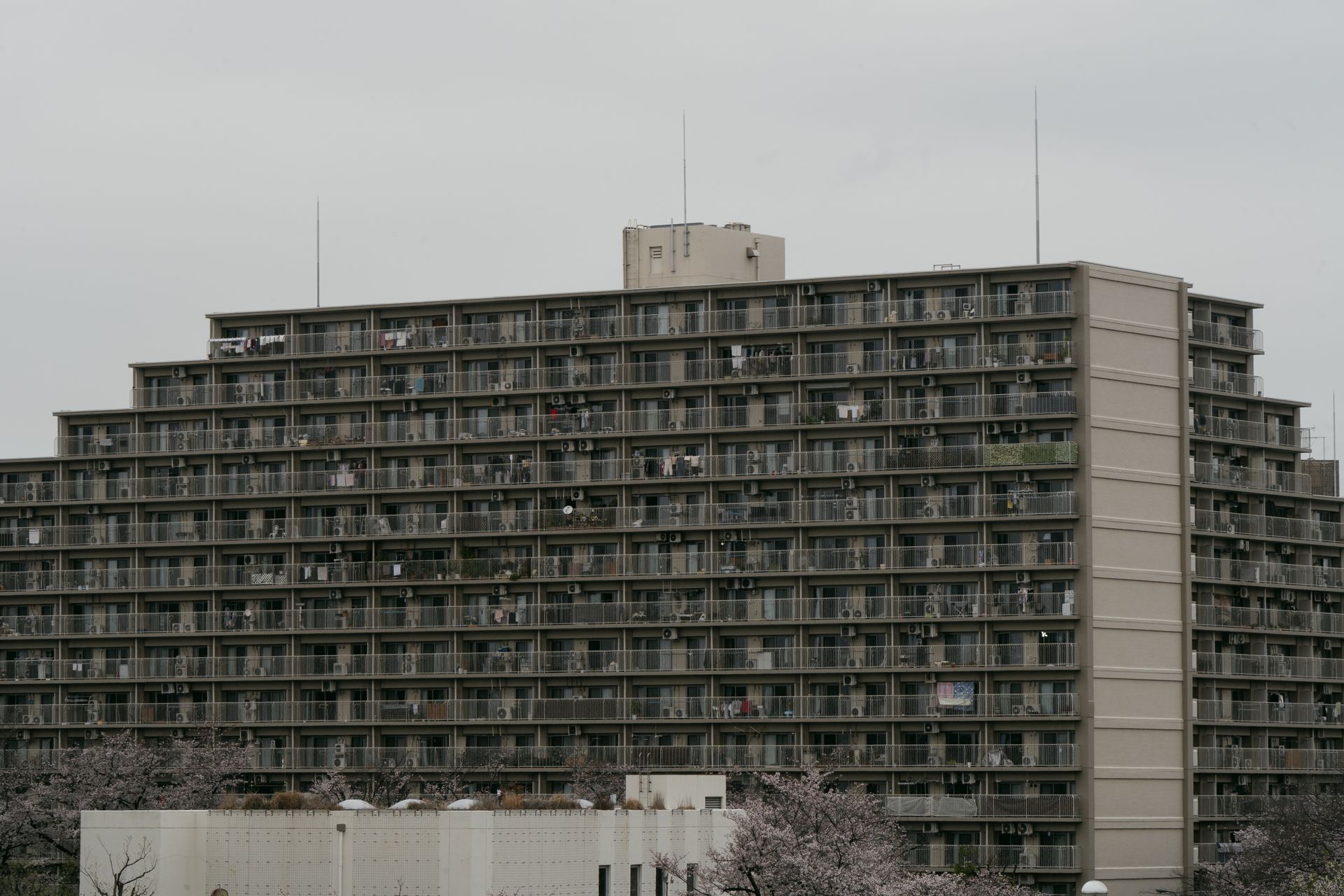
Residential buildings in a Tokyo neighbourhood at dusk
Accommodation · 2026 budget

What rent can you expect in Tokyo in 2026?

A studio flat (1 room) on the outskirts costs around ¥104 000/month (560 €), rising to ¥201 500 (1 090 €) in the city centre. Here are the detailed prices by type of accommodation, source: Numbeo (June 2026).

Rent in Tokyo mainly depends on the neighbourhood, the distance from your workplace and the type of contract. For a quick move, a furnished monthly flat or a share house reduces paperwork and initial costs. For a longer stay, a standard rental offers more choice, but requires an application, a guarantor or a guarantor company, and a larger upfront budget.

Before choosing, compare the advertised rent with charges, furnishings, transport costs and the costs payable when signing. Accommodation on the outskirts, near a well-connected station, can offer a better balance than a smaller, more expensive central address.

eSIM: online on arrival

Key points to remember

  • ✔Studio (1 room) on the outskirts: ¥104 000/month (560 €). This is the most affordable option for one person (Numbeo, June 2026).
  • ✔Studio in the city centre: ¥201 500 (1 090 €). Location almost doubles the rent for the same floor area.
  • ✔Three-room flat for a family: ¥210 000 (1 133 €) on the outskirts, ¥373 000 (2 017 €) in the city centre.
  • ✔Also budget for Japanese upfront costs (deposit, reikin, agency fees): often 4 to 6 months' rent when signing.

Sources: Numbeo (Tokyo, June 2026); conversion 1 ¥ = 0,005404 € (Wise, 19/06/2026).

How much does accommodation cost in Tokyo in 2026?

Rent is by far the largest expense for an expat in Tokyo. According to Numbeo figures (updated on 19 June 2026), a one-bedroom flat costs ¥104 368 per month on the outskirts (564 €) and ¥201 500 in the city centre (1 089 €). For a family, a three-room flat rises to ¥209 653 on the outskirts (1 133 €) and ¥373 118 in the heart of the capital (2 017 €).

These figures place Tokyo among Asia's expensive cities, although it is often cheaper than Paris for comparable floor areas. To put rent in the context of your overall expenses, see our guide to the cost of living in Japan and our advice on finding accommodation in Japan.

Rent in Tokyo by type of accommodation

Average monthly rents recorded by Numbeo in June 2026, converted at the Wise rate on 19 June 2026 (1 ¥ = 0,005404 €).

Type of accommodation Rent (¥/month) Equivalent (€)
1 bedroom, outskirts¥104 368~564 €
1 bedroom, city centre¥201 500~1 089 €
3 bedrooms, outskirts¥209 653~1 133 €
3 bedrooms, city centre¥373 118~2 017 €

Source: Numbeo, Tokyo, June 2026.

Monthly rent in Tokyo, from cheapest to most expensive

Visual comparison of monthly rents in Tokyo in euros, Numbeo data from June 2026.

1 bedroom, outskirts 564 € 1 bedroom, city centre 1 089 € 3 bedrooms, outskirts 1 133 € 3 bedrooms, city centre 2 017 € Source: Numbeo, June 2026 — coral bar = highest rent

Beware of Japanese upfront costs

In Japan, signing a tenancy agreement costs much more than one month's rent. The traditional system combines the deposit (shikikin, 1 to 2 months), the "gift" to the landlord (reikin, 1 to 2 months, non-refundable), agency fees (1 month) and often a guarantee. In total, expect to pay 4 to 6 months' rent upfront.

For a city-centre studio costing ¥201 500, that means almost ¥1 million (5 400 €) to budget before you even move in. However, more and more agencies are offering "zero reikin" accommodation. See our advice on renting a furnished flat and choosing your neighbourhoods.

What about the flight to move over?

Your relocation flight must also be added to your accommodation budget. As of 19 June 2026, a return Paris–Tokyo flight started at €704 (departing in early September, source: Aviasales/Travelpayouts). Prices vary considerably depending on the season : booking early remains the best strategy.

Compare Paris–Tokyo flights on Aviasales. For a month-by-month breakdown, see when to book your flight to Japan and our Japan travel budget.

4 tips for reducing your rent in Tokyo

  • ✔Target well-connected outer areas: 20–30 minutes by train from the centre, rent almost halves for an equivalent floor area.
  • ✔Look for "zero reikin" listings: they remove the gift to the landlord and significantly reduce upfront costs.
  • ✔Consider a share house for the first few months: lower initial costs and a more flexible tenancy agreement.
  • ✔Plan ahead for the paperwork: a guarantor or guarantor company is almost always required to sign.

Tip: set up a Japan eSIM before departure so your data works on arrival.

Frequently asked questions

What is the average rent for a studio in Tokyo?

Around ¥104 000/month (564 €) on the outskirts and ¥201 500 (1 089 €) in the city centre for a one-bedroom flat (Numbeo, June 2026).

How much does family accommodation cost in Tokyo?

A three-room flat costs around ¥210 000/month (1 133 €) on the outskirts and ¥373 000 (2 017 €) in the very centre, according to Numbeo (June 2026).

What fees must be paid when signing a tenancy agreement in Japan?

A total of 4 to 6 months' rent upfront : deposit (shikikin), gift to the landlord (reikin, non-refundable), agency fees and often a guarantor company.

Is Tokyo more expensive than Paris for accommodation?

For comparable floor areas, rents in Tokyo are often slightly lower than those in central Paris, but initial upfront costs are much higher.

Do you need a guarantor to rent in Tokyo?

Yes, almost always. If you do not have a personal guarantor residing in Japan, you use a guarantor company (hoshō gaisha), which charges a fee when you sign and then every year.

To book tours and activities in Tokyo ahead, see the options on Klook.

Sources & updates

  • •Numbeo — Cost of living in Tokyo (figures recorded on 19 June 2026).
  • •Wise — JPY/EUR exchange rate (1 ¥ = 0,005404 €, 19 June 2026).
  • •Aviasales / Travelpayouts — Paris–Tokyo flight price (figures recorded on 19 June 2026).

Rents are indicative averages and vary depending on the neighbourhood, floor area and age of the property. Exchange rates and flight prices fluctuate from day to day.

Updated on

Choosing between a monthly rental and a long-term tenancy

The options available in Tokyo mainly include monthly furnished apartments, share houses and standard rentals. The right choice depends on the length of your stay, your administrative situation and your ability to put together a Japanese rental application.

OptionWhat do you need it for?Points to check
Monthly furnished apartmentRecent arrival, work assignment, transition or stay of a few monthsUtilities included, deposit, minimum term and extension conditions
Share houseLimited budget, quick arrival or a desire to meet other residentsCommunal living, shared rules, room size and shared spaces
Standard unfurnished rentalLong-term settlement and the search for a personalised homeGuarantor, signing fees, furnishing and required documents
Long-term furnished apartmentImmediate comfort without having to buy all the equipmentOverall rent, renewal, appliances and included services

A furnished apartment allows you to settle in quickly, but the monthly amount may include services that are not part of a standard rental. To compare options and neighbourhoods, also see our guide to furnished apartments in Tokyo.

What the advertised price really includes

An advertised rent does not always correspond to the total amount paid each month. Always ask for a breakdown of communal charges, water, electricity, gas, Internet and any management fees. In furnished accommodation, furniture and appliances may be included, whereas an unfurnished rental means equipping the apartment gradually.

Questions to ask before booking

This check prevents you from comparing only two rents that do not cover the same services. It is particularly useful for monthly apartment listings aimed at foreign tenants.

Which neighbourhood should you choose to reduce your housing budget?

Central Tokyo is attractive because of its proximity to offices, shops and places of interest, but small properties are often highly sought after there. By moving away from the most central areas, you may find larger or better-equipped accommodation. However, travel time and the cost of a transport pass must also be included in your calculations.

Compare neighbourhoods using practical criteria

  1. Check the actual distance between the station, the property and your daily destination.
  2. Check timetables and connections, especially if you work early or late.
  3. Compare the floor area, layout, age of the building and natural light.
  4. Look at local shops, supermarkets, pharmacies and nearby services.
  5. Check noise levels, whether there is a railway line nearby and how easy deliveries are.

For a first stay, a temporary solution near a station can give you time to visit several areas before signing. Tourist neighbourhoods such as Asakusa, Shibuya and Shinjuku do not offer the same atmosphere or the same transport and noise-related constraints.

How to prepare for a long-term rental in Tokyo

A standard rental generally requires more preparation than a monthly apartment. Landlords or agencies may examine your identity, employment situation, income, residence status and ability to provide a guarantor. The accepted documents vary depending on the property and the intermediary.

Documents and steps to plan for

When your Japanese rental application is not yet established, a monthly rental or share house can serve as a transitional solution. This gives you time to view properties, understand the different areas and gather the documents needed for a more standard tenancy.

Reduce the overall cost of your accommodation

Rent is only one part of your budget. To keep spending down, choose a listing with clearly stated conditions, compare several agencies and ask whether certain fees can be avoided. Properties without reikin, furnished packages including utilities and flexible contracts can significantly change the upfront cost.

If you are arriving from France, also keep your settling-in budget separate from your housing budget. Ticket prices fluctuate depending on the dates and routes: our page on Paris–Tokyo flights may help you organise this part of your project.

Frequently asked questions

Can you rent an apartment in Tokyo for just one month?

Yes, furnished residences, monthly apartments and some share houses accept short stays. Conditions vary depending on the landlord: check the minimum term, deposit, included charges, cleaning fees and extension rules before booking.

Can a foreigner rent accommodation in Tokyo without speaking Japanese?

Yes, this is possible, particularly through agencies used to dealing with foreign tenants and furnished residences. For a standard rental, however, the contract and documents may be in Japanese. Have the clauses, fees and departure conditions explained before signing.

What is the difference between a share house and a private apartment?

A share house generally offers a private room and shared communal areas, such as the kitchen or living room. It often makes moving in easier and limits the amount of equipment you need to buy. A private apartment offers more privacy, but may involve more paperwork and upfront costs.

Are utilities included in the rent in Tokyo?

Not necessarily. Some furnished or monthly rental options combine several charges into a single amount, while a standard tenancy agreement often lists electricity, gas, water, Internet and communal charges separately. Ask for a written breakdown before comparing two listings.

Do you need to view the property before signing in Tokyo?

A viewing allows you to check the floor area, noise levels, condition of the facilities, natural light and immediate surroundings. If you cannot travel there, ask for a video viewing and the contract documents. Avoid paying any money without knowing the intermediary’s identity and the precise terms.