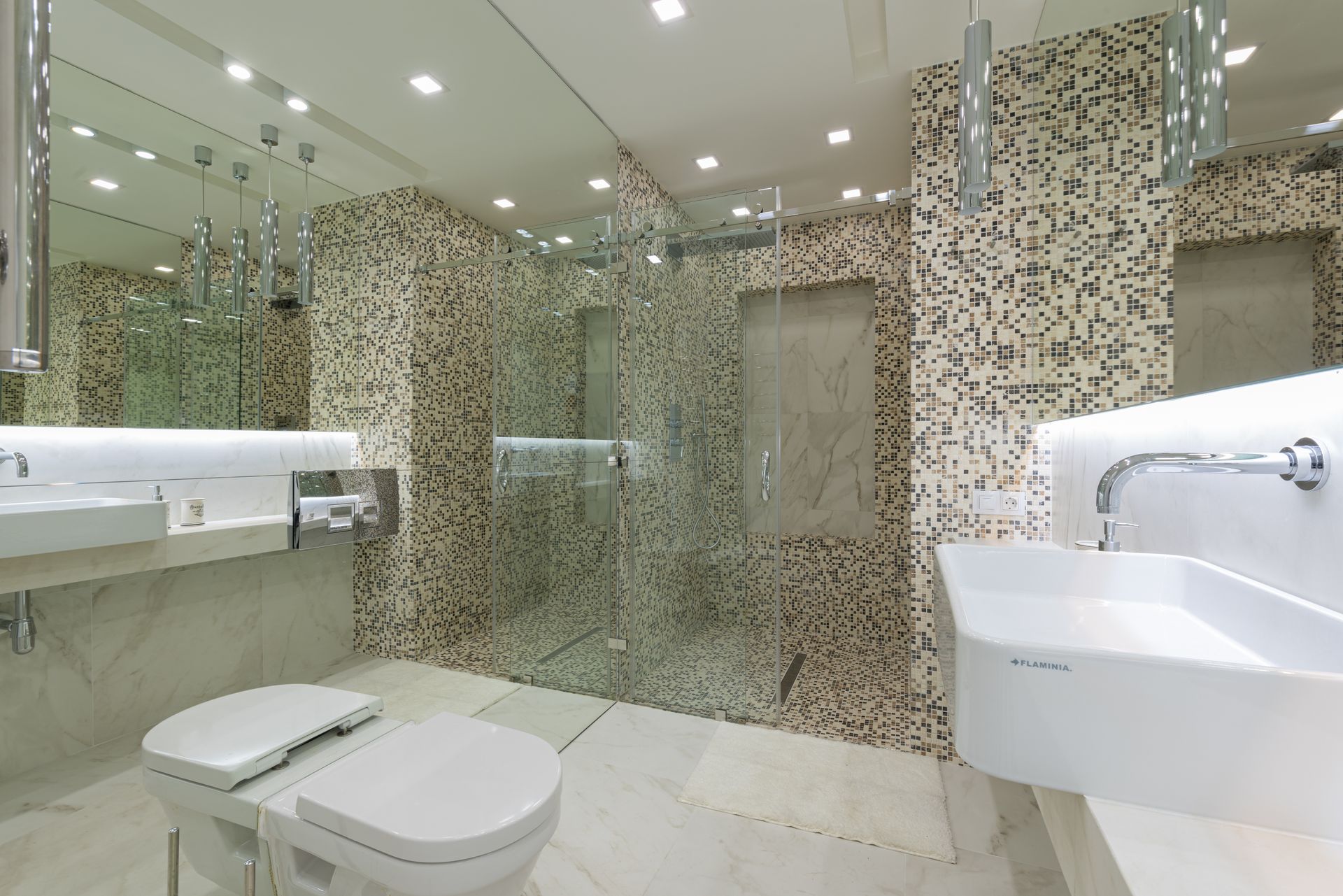
The Ultimate Guide to
Japanese Toilets
Far more than a simple everyday object, the Washlet is a symbol of Japanese hospitality and innovation. Learn how to master the “Throne of Technology” for a successful installation in Japan.
Japanese toilets generally combine a conventional bowl with an electronic seat offering water washing, pressure adjustment, a heated seat and sometimes drying or deodorising. To use one, sit down, choose the appropriate function using the pictograms, gradually adjust the pressure, then stop the spray before standing up. In a public place, follow the instructions displayed and leave the area clean.
The word “Washlet” originally referred to a brand, but it is often used to describe bidet toilets in general. In Japan, you may also come across squat toilets, basic models or public facilities with accessible controls.

A hygiene revolution in the Land of the Rising Sun
When you arrive in Japan for the first time, whether for a holiday or a long-term move, encountering the local toilets is often a memorable experience. Between high-tech models with multiple buttons and traditional squat toilets, the contrast is striking.
In 2026, more than 85% of Japanese households have so-called “bidet toilets”, often referred to by the brand name Washlet (created by the company TOTO). This is not merely a luxury, but an essential part of everyday life in Japan, combining spiritual purity with modern comfort.
The Anatomy of the Modern Washlet
A breakdown of the features that make Japanese toilets the most advanced in the world.
Heated Seat (Benza)
Essential during Japanese winters, the seat can be set to a precise temperature. Many recent models use motion sensors to heat the seat only when you enter the room, thereby optimising your energy budget.

Warm-air drying
After washing, a small turbine blows a stream of warm air. An eco-friendly feature that drastically reduces toilet paper consumption.
Otohime (The Sound Princess)
To ensure complete privacy, this function plays the sound of running water or a melody, masking natural sounds. A cornerstone of Japanese modesty.
The precision washing system
Rear Spray (Oshiri)
A warm-water spray with adjustable pressure and position. The nozzle cleans itself automatically before and after each use.
Front Wash (Bidet)
Specifically designed for feminine hygiene, with a different spray angle and gentler pressure.
Control Panel Simulator
Never feel lost in front of a Japanese remote control again. Try the interactive buttons below to understand how they work and see the corresponding kanji.
止 (Tomare): Stops all functions currently in use.
おしり (Oshiri): Activates the standard rear spray.
Washiki vs Yōshiki: A clash of cultures
Washiki (Squat Toilets)
Although increasingly rare, they can still be found in old buildings, rural stations and some temples. They consist of a floor-level bowl over which you squat facing the flush mechanism.
- More hygienic (no contact with the seat)
- Better anatomical position
- Difficult for untrained joints
Yōshiki (Western-style Toilets)
This is the current standard in all homes in Japan. It consists of a conventional bowl fitted with the famous electronic Washlet seat.
- Thermal comfort (heated seat)
- Automated cleaning functions
- Automatic lid opening and closing
Essential etiquette

The “Toilet Slippers” ritual
In Japan, the distinction between “clean” areas (inside the home) and “unclean” areas is fundamental. Toilets are considered a separate area. You will often find a dedicated pair of slippers outside the door. Golden rule: change your slippers before entering, and ABOVE ALL, remember to remove them when leaving. Nothing is more embarrassing for an expat than walking back into the living room wearing their toilet slippers!

Managing paper and flushing
Unlike in some neighbouring countries, in Japan, toilet paper is always thrown directly into the bowl. The plumbing systems are excellent and the paper is designed to dissolve quickly. For flushing, look for the kanji: 大 (Dai - Number Two) or 小 (Sho - Number One) to save water.
How to Use a Washlet (Step by Step)
Sit down
The presence sensor detects your arrival. The seat starts to warm up and a light mist (Pre-mist) lubricates the bowl.
Configure
Before you begin, adjust the water temperature and pressure on the side or wall-mounted panel. Press Oshiri or Bidet.
Washing & Drying
Use the arrows to adjust the nozzle position. Once finished, activate the drying function (Dryer) for a fresh feeling.
Flushing
It is often automatic as soon as you stand up. Otherwise, wave your hand in front of the wall sensor or turn the lever.
The history of TOTO and the evolution of comfort
It all began in 1917 with the creation of Toyo Toki (now TOTO). At the time, Japan mainly used septic tanks and wooden toilets. TOTO’s ambition was to import Western sanitary standards while improving them.
The real turning point came in 1980 with the launch of the first Washlet G Series. The idea of “washing rather than wiping” revolutionised intimate hygiene. Today, the most advanced models include electrolysed water (Ewater+) to sterilise the bowl, activated carbon filters to eliminate odours and even urine analysis for monitoring health in Japan.
Why install one at home?
Many expats, after living in Japan, find it difficult to go back to standard toilets. If you have already signed your rental contract and your flat does not have one, be aware that it is very easy to buy an electronic toilet seat separately (from 20 000 yen) and install it yourself. It is a major investment in your daily wellbeing.
Comparison of Washlet ranges (2026)
| Feature | Entry-level | Mid-range | Premium / Luxury |
|---|---|---|---|
| Warm-water washing | ✓ (Tank) | ✓ (Instant) | ✓ (Instant + Cycles) |
| Heated seat | ✓ | ✓ | ✓ (Auto-sensor) |
| Drying | ✗ | ✓ | ✓ (Powerful) |
| Deodoriser | ✓ | ✓ | ✓ (Plasma-cluster) |
| Automatic opening | ✗ | ✗ | ✓ |
Frequently Asked Questions (FAQ)
Is the water used for washing clean?
Yes, absolutely. The system uses drinking water from the city supply, the same water as from your tap or shower. The nozzles are self-cleaning and treated against bacteria.
Can you use the toilet if there is a power cut?
Most models have a hidden manual emergency lever on the side or an internal battery, allowing you to flush even without electricity. However, the washing and heating functions will not work.
Does it use a lot of electricity?
Modern models are extremely energy-efficient, especially those with an “eco” mode that learns your usage habits so that it only heats the seat at the appropriate times.
What should you do if the panel is only in Japanese?
Refer to the icons, which are fairly universal. Otherwise, use apps such as Google Lens to translate kanji in real time. See our guide to essential apps in Japan.
Is there a risk of leaks from the water jets?
No, because the jet only activates when a pressure sensor detects sufficient weight on the seat. It is impossible to “spray yourself by mistake” while standing in front of it.
Can I install a Washlet in any flat?
Most Japanese homes already have an electrical socket next to the toilet for this purpose. If yours does, installation is very easy. Always check with your estate agent.
How do you clean the nozzles?
There is a “Nozzle Cleaning” button that extends the nozzle without spraying water, allowing you to scrub it with a soft brush and a neutral cleaning product.
Where can you find clean public toilets in Japan?
Everywhere! In Konbini, department stores (Depachika), stations and parks. The cleanliness of public toilets in Japan is legendary.
Why is there a sink above the tank?
It is a brilliant eco-friendly idea: the water used to wash your hands then fills the tank for the next flush. Nothing is wasted!
Is it true that talking toilets exist?
Some high-end models or toilets in public spaces can provide voice instructions to help people with visual impairments or explain how to flush.
To get online as soon as you land, a Japan eSIM can be installed before you leave, with no need to look for a local SIM card.
Ready for your new life in Japan?
Don’t let the technology intimidate you. Mastering Japanese toilets is the first step towards a successful and comfortable integration.