Childcare
in Japan in 2026
Navigating Japan’s complex nursery and kindergarten system requires preparation. Discover our comprehensive guide to giving your children the best while pursuing your career.
La garde d’enfants au Japon repose surtout sur deux structures : la crèche, ou hoikuen, pour les parents qui travaillent ou ne peuvent pas garder leur enfant, et la maternelle, ou yōchien, davantage orientée vers l’éducation préscolaire. Pour obtenir une place, vous devez vérifier les conditions de votre municipalité, préparer les justificatifs professionnels et respecter un calendrier souvent organisé autour de la rentrée d’avril.
Les familles expatriées peuvent aussi se tourner vers une structure non agréée, une école internationale, une garde ponctuelle ou un service proposé par certains lieux de loisirs. Les règles, les horaires, la langue utilisée et les conditions d’admission varient fortement : demandez toujours une confirmation à la mairie, à l’établissement ou au prestataire concerné.

The challenge of childcare in the Land of the Rising Sun
In 2026, Japan continues to face major demographic challenges. Despite an assertive government policy to support the birth rate, the childcare system remains a bottleneck for many families, both local and expatriate. The “dual-career” concept (two parents working full-time) has become the norm, gradually replacing the traditional stay-at-home mother model.
This transition has placed immense pressure on urban infrastructure, particularly in Tokyo, Osaka and Nagoya. For an expatriate arriving through an opportunity for work in Japan, understanding the distinction between a social welfare facility (nursery) and an educational institution (kindergarten) is the crucial first step.
Integration also means accepting strict cultural codes: exemplary punctuality, parental involvement in school events and rigorous management of your child’s health. This guide will take you step by step through this administrative and human adventure.
The different childcare options
Understand the acronyms and specific features to make the right choice.
Hoikuen (保育園) - Nursery
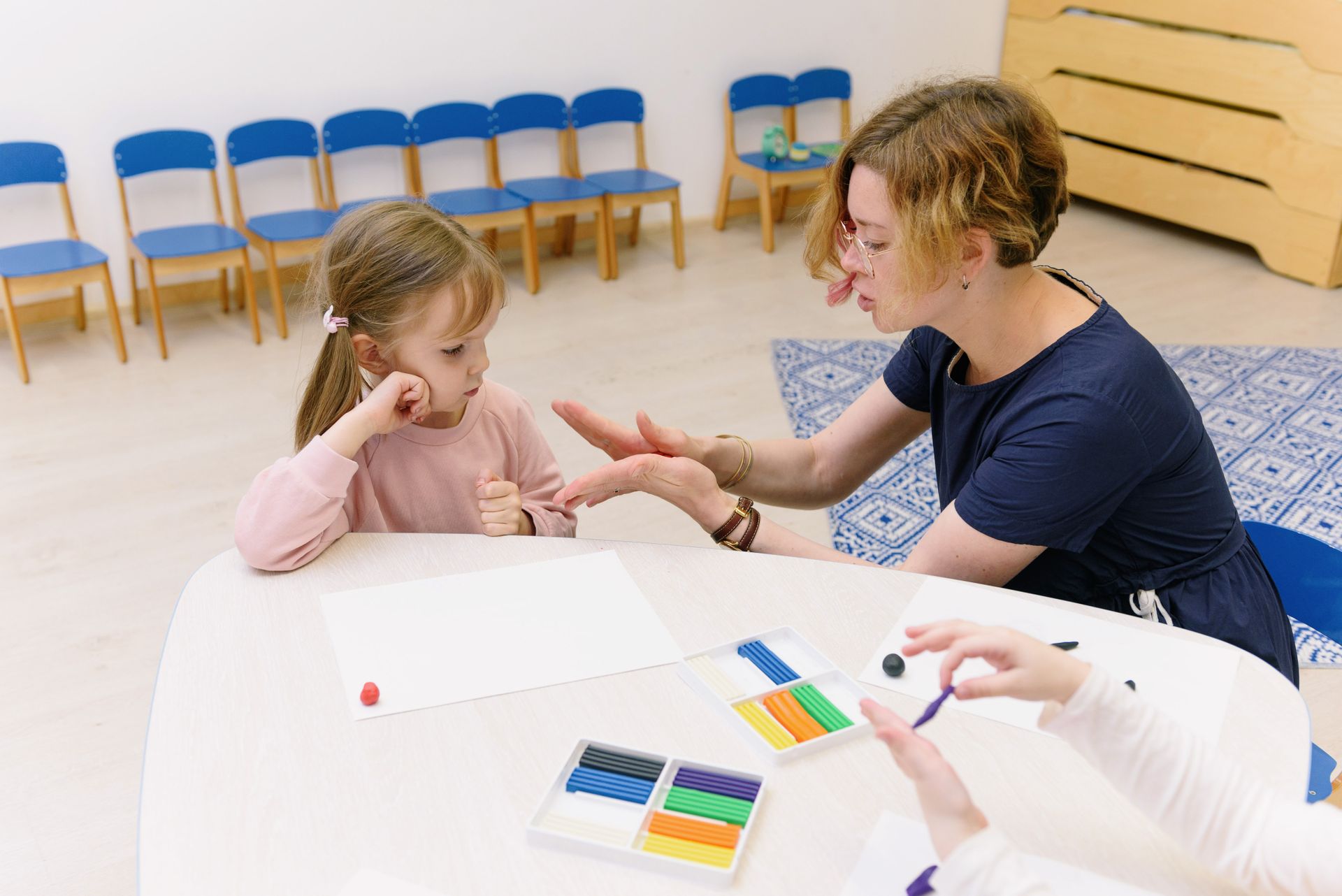
Under the jurisdiction of the Ministry of Health, Labour and Welfare, the Hoikuen is considered a social welfare facility. It welcomes children whose two parents work or cannot care for them for health reasons.
- Extended hours (often 7:30am - 6:30pm + extensions)
- Full meals prepared on site
- Admissions based on a points system
Youchien (幼稚園)
The traditional kindergarten. More focused on pre-school education and socialisation.
Special features:
Short hours (finishing at around 2pm), often requiring a homemade bento and a uniform.
Ninka (Accredited)
State-subsidised facilities that meet strict space and staffing standards. Fees are calculated according to your income.
Administrative details →Ninka-gai (Non-accredited)
Private, with more flexible hours but higher costs. Often the fallback solution when the public system is oversubscribed.
Ideal for: Self-employed people and newcomers.
International schools
For a bilingual education from an early age.
Ninka Points Simulator
The Japanese system uses Shisu (points) to prioritise admissions. The higher your points, the greater your chances of obtaining a place at a public nursery.
Estimated Points
Note: This score is an estimate based on Tokyo standards (Minato-ku). Each municipality has its own scoring system. Contact your local city office for the official calculation.
Please enter your information to simulate your admission chances.
Everyday life in a childcare facility
In Japan, a nursery is not just a childcare facility; it is a micro-society where children learn independence and respect for the group from an early age.
The Morning Ritual
Every morning, parents must fill in the Renrakucho (communication notebook), recording the child’s temperature, mood, meals the previous day and the time they last woke up.
The Importance of Mealtimes
Meals are genuine lessons in a balanced diet. At Youchien, preparing a bento is an art in which the food must be healthy, colourful and easy to eat with chopsticks.
The 37.5°C Rule
This is the critical threshold. If your child’s temperature exceeds 37.5°C, you will receive an immediate call to come and collect them. A medical certificate (Tsuen Kyoka-sho) may be required before they can return.

Facility Comparison Table
| Criteria | Public (Ninka) | Private / Non-accredited | International schools |
|---|---|---|---|
| Admissions | Municipal points system | Direct (first come, first served) | Selection / Interview |
| Monthly cost | 0 - 70,000 ¥ (Proportional) | 50,000 - 100,000 ¥ + | 120,000 - 250,000 ¥ |
| Opening hours | Standard (up to 6:30pm) | Flexible / Night-time care possible | 8:30 am - 3:30 pm (variable) |
| Language | Japanese only | Japanese (often) | English / French / Japanese |
Getting your application right: The timetable
Timing is crucial. In Japan, the school year starts in April. If you are aiming for a place in a public facility for April, the application process begins as early as the previous autumn.
October - November
Collecting application forms from the local ward office (Kuyakusho) and visiting facilities.
December
Final submission of the application with proof of employment and residence.
February
Receiving the placement results by post.
April
Official start (Nyuen-shiki).
Choosing bilingual education
For French-speaking families, there are options that allow children to maintain their connection with their mother tongue while integrating locally.
Lycée Français International de Tokyo (LFI Tokyo)
Has a nursery section from age 3. An excellent French-speaking environment following the French curriculum.
Private International Schools
Many schools in Azabu, Hiroo and Yokohama offer English-language or bilingual programmes, often from 18 months.
Frequently Asked Questions
Can you get a nursery place if you do not speak Japanese? ▼
Yes, the authorities cannot legally refuse you on this basis. However, communicating with the childcare staff will be difficult. You are strongly advised to learn a few basics or use translation apps for the communication notebook. See our guide to living without speaking Japanese.
What is the "Free Childcare" system? ▼
Since 2019, childcare fees for children aged 3 to 5 have been heavily subsidised (free at approved nurseries under certain conditions). Only the cost of meals, uniforms and special activities remains payable by parents.
Is it easy to find a babysitter at short notice? ▼
No, occasional babysitting is less common than in France. Platforms such as "CareFinder" and "KidsLine" connect parents with babysitters (often international students), but expect to pay between 2,000 and 4,000 ¥ per hour.
What are the vaccination requirements? ▼
Japan has its own recommendations. The health record book (Boshi Techo) is essential. Although many vaccinations are not "mandatory" in the strict legal sense, most facilities require them for admission. More information on the healthcare system in Japan.
How should food allergies be managed? ▼
Japanese facilities are extremely rigorous. You will need to provide a detailed medical certificate. Alternative meals (Jokyo-shoku) are often prepared specifically.
To get online as soon as you land, a Japan eSIM can be installed before you leave, with no need to look for a local SIM card.
Ready to start the process?
Moving abroad with your family is a wonderful adventure. Do not let the administration discourage you. Join our community to exchange tips with other French-speaking parents.